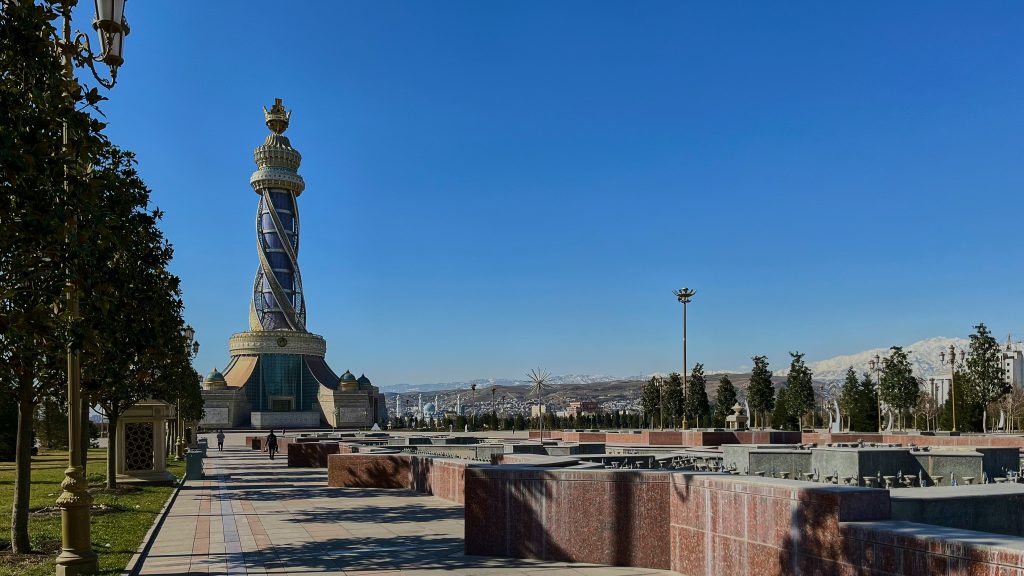
Dushanbe
7 hostels · dorms from €10
The capital: leafy, low-key and where every Pamir trip is arranged and provisioned.

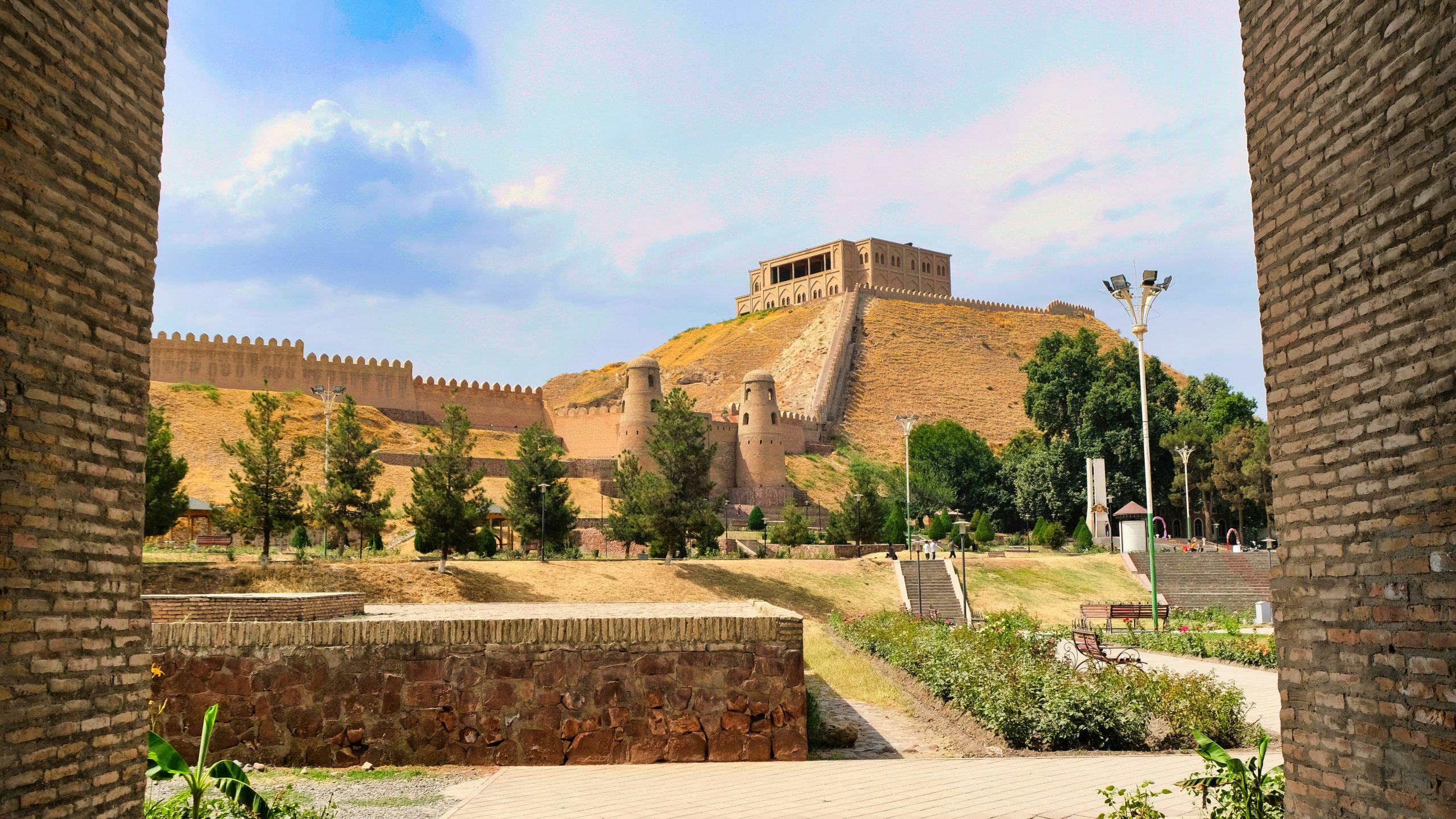
Ninety-three per cent mountains, the Pamir Highway running through them at 4,000 metres, and homestays in valleys where the road runs beside the Afghan border. The hardest and best trip in Central Asia.
Tajikistan is ninety-three per cent mountains and half of it sits above 3,000 metres. What brings people here is the Pamir Highway, the second highest road in the world, running 1,200km from Dushanbe through the Pamirs to Osh in Kyrgyzstan, over passes above 4,600 metres and along the Panj river with Afghanistan on the far bank.
It is a serious undertaking: a week to ten days by shared jeep, with homestays in villages, altitude that affects everyone, and infrastructure that is thin to non-existent. It is also, by wide agreement among people who have done it, the best overland route in Central Asia.
Around it, the Wakhan corridor has hot springs and fortress ruins, the Fann Mountains in the west offer lake trekking within reach of Dushanbe, and the capital itself is a green, low-key city with a very large flagpole and not much else. Two to three weeks is the realistic minimum for the Pamirs.
Shared 4WDs are the transport and the trip. The Pamir Highway takes a week or more.
The capital: leafy, low-key and where every Pamir trip is arranged and provisioned.
Tajikistan is an overland mountain trip. There is not really another version of it.
The Pamir Highway, and trekking in the Fann Mountains.
Pamiri homestays, Silk Road ruins and Soviet remnants.
Cheap, though the jeep is the cost.
Dushanbe for two days, mostly for logistics.
High-altitude lakes rather than coast.
Plov, bread and whatever the homestay is cooking.
The Pamir Highway is the trip. Most people run it between Dushanbe and Osh in Kyrgyzstan in seven to ten days, in a shared 4WD with a driver, stopping in village homestays. The eastern section crosses the Ak-Baital pass at 4,655 metres; the southern variant follows the Wakhan corridor with Afghanistan across the river, which is the more interesting route.
The Wakhan has hot springs at Bibi Fatima, Silk Road fortresses at Yamchun and Khaakha, and Pamiri houses whose layout encodes Zoroastrian and Ismaili symbolism — staying in one and having it explained is the cultural highlight of the country.
Closer to Dushanbe, the Fann Mountains offer trekking between turquoise lakes with no permits needed, which makes them the realistic option for anyone without three weeks.
Food here is simple and repetitive, particularly on the road. Qurutob — bread torn into pieces with yoghurt sauce, onions and herbs — is the national dish and the best of it. Plov, lagman noodles and shashlik cover the rest.
On the Pamir Highway, you eat what your homestay cooks: usually bread, tea, soup and potatoes, with meat when available. This is subsistence territory at 3,500 metres where almost nothing grows, and expecting variety is the wrong approach.
Dushanbe has a reasonable range including Georgian, Turkish and Russian restaurants, and the Green Bazaar is worth a visit. Carry snacks for the road — there is very little to buy between villages, and altitude suppresses appetite in a way that catches people out.
Dushanbe has bars, a couple of clubs and a small expat scene, and prices are low — a beer is €1.50 to €3. It is the only place in the country with anything resembling nightlife.
Outside the capital there is nothing. In the Pamirs, evenings are dinner in a homestay, tea, and bed by nine because you are on the road at six and the altitude makes everything tiring.
Alcohol is available in Dushanbe and larger towns, though Tajikistan is more conservative than Kyrgyzstan or Kazakhstan and drinking is less visible. In Pamiri villages, which are largely Ismaili Muslim, alcohol is generally not served at all.
Shared 4WDs are the transport and the trip. Pamir Highway jeeps are arranged in Dushanbe, Khorog or Osh, cost €500 to €900 for the vehicle over seven to ten days, and are split between three or four passengers. Hostels and guesthouses match travellers into groups, which is how most people organise it.
Shared taxis run between Dushanbe and Khorog in 14 to 18 hours on a rough road, and domestic flights to Khorog exist but are weather-dependent and frequently cancelled.
Roads are the defining difficulty: landslides, washouts and snow close sections regularly, and breakdowns on the highway are routine. Allow buffer days, and do not plan a tight onward connection at the Kyrgyz end.
Daily costs are very low. Dorms in Dushanbe start around €8, homestays on the Pamir Highway are €10 to €15 including dinner and breakfast, and meals are €2 to €5.
The jeep is the expense. A Pamir Highway vehicle costs €500 to €900 over seven to ten days, which is €150 to €250 a person split four ways, and that is the single biggest cost of a Tajik trip by a long way.
Cash is essential and this is important: there are effectively no working ATMs beyond Dushanbe and Khorog, and cards are useless in the Pamirs. Take enough dollars or somoni for the entire route before you leave the capital.
Crime against travellers is rare and hospitality is strong. The dangers here are altitude, roads and remoteness, and they are substantial enough to plan around properly.
Much of the Pamir Highway sits above 3,500 metres and the passes exceed 4,600. Altitude sickness affects a significant proportion of travellers, medical facilities along the route are minimal, and evacuation from the eastern Pamirs is slow and expensive. Insurance covering high altitude and evacuation is not optional.
The Afghan border runs alongside the road for hundreds of kilometres. The Tajik side is generally calm, but government advice on border areas changes and some crossings and districts are restricted. Check current advice before travelling, and note that the GBAO region has periodically seen unrest and permit suspensions.
Many nationalities, including most of Europe, the UK and the US, can enter visa-free for 30 days; others apply for an e-visa online, usually issued within a few days. Check the official position for your passport before booking.
The critical extra is the GBAO permit for Gorno-Badakhshan, the autonomous region the Pamir Highway runs through. It is requested as a tick-box addition when applying for the e-visa, or separately online if you enter visa-free, costs very little, and without it you cannot legally enter the Pamirs at all. Checkpoints do verify it.
GBAO permits have been suspended or restricted during periods of unrest, so confirm the current position before booking flights. Passports need six months' validity.
June to September, and the window is narrow. Passes are snowbound outside it and homestays close for the winter.
Average highs for Dushanbe at 800m, which gets very hot in summer. The Pamirs are an entirely different climate — Murghab at 3,650m can freeze on a July night, and the passes are snowbound from October to May.
Pick how you travel and how long for. Per night, for one person, in euro equivalents of somoni.
Transport is high because the Pamir jeep dominates it — €500–900 for the vehicle over seven to ten days, split between three or four passengers.
A short calendar, and the road season itself is the thing to plan around.
Persian new year and the biggest holiday, with several days of public celebration.
When the passes are open, homestays are running and the route is drivable.
Pamiri and Central Asian music in the mountains. Held irregularly — check before planning around it.
Parades and celebrations in the capital.
Lake trekking near Dushanbe, with no permits required.
Marked across the country, with quieter streets and family gatherings.
The highest-rated hostels in the country, live from Hostelworld. Dushanbe has almost all of them, and they are the best place to find others to share a Pamir jeep with.
The ones we get asked most.

Compare hostels across Tajikistan — live prices, real reviews and free cancellation on most bookings. Then meet the people already there in the app.

 Get the App.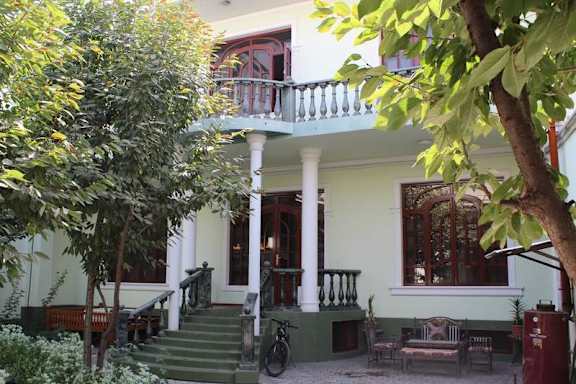
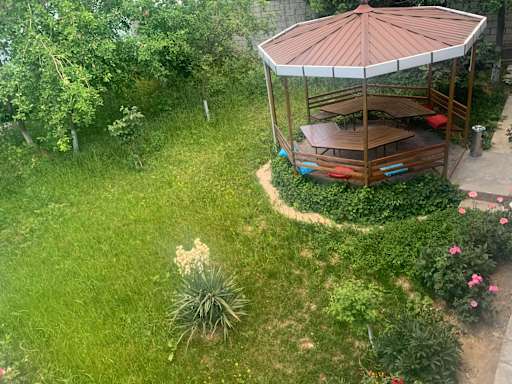
 Get the App.