Old town and Gurko
AtmosphereThe stacked houses above the gorge, with the best views, the craft street and most of the guesthouses.

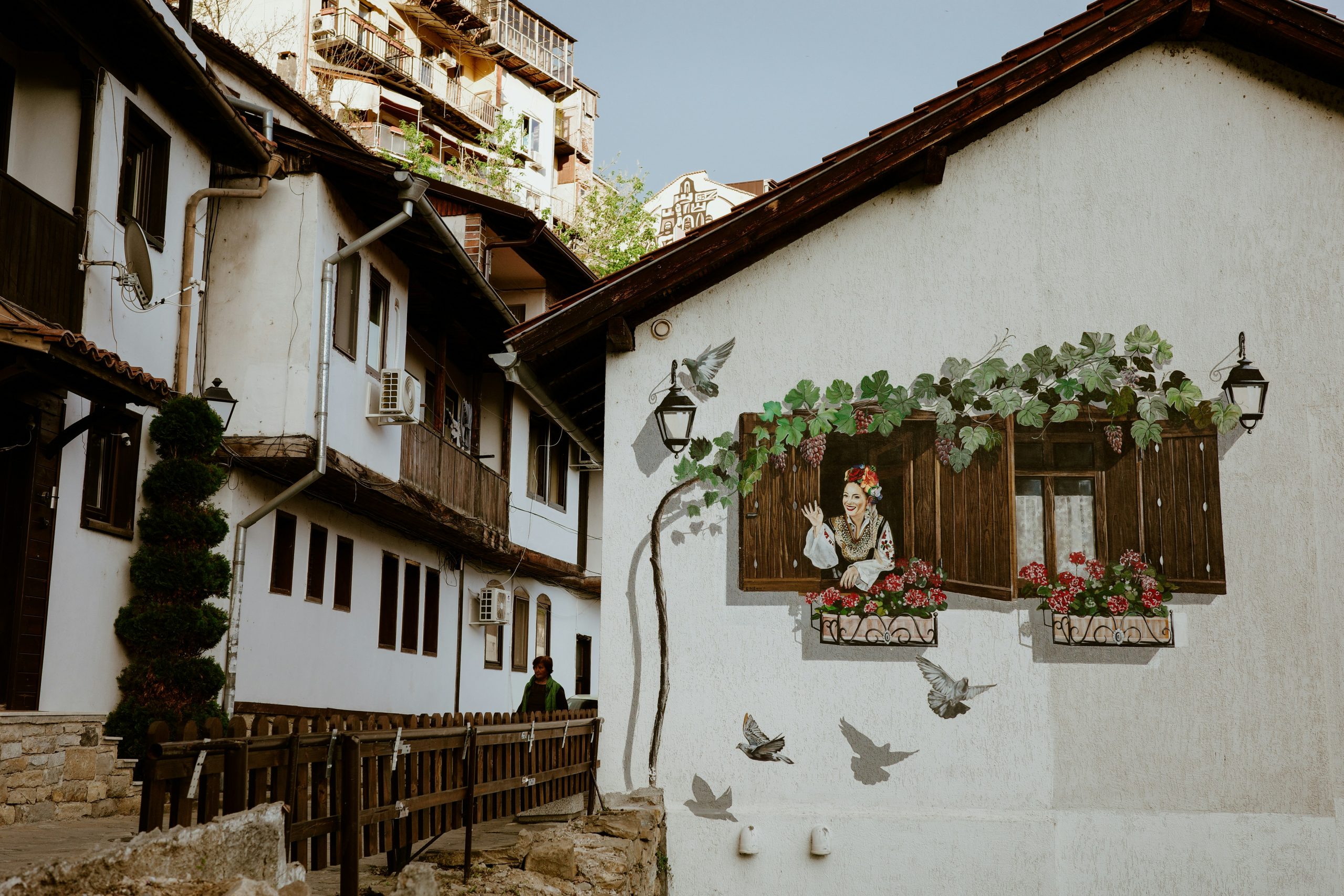
A medieval capital stacked up both sides of a river gorge, with a fortress that gets a sound and light show and houses that look like they are about to fall into the water.
Veliko Tarnovo was the capital of the Second Bulgarian Empire from 1185 until the Ottomans took it in 1393, and at its height it was one of the most important cities in southeast Europe. Its name means Great Tarnovo, and it has not been shy about it since.
The city is built across three hills above a tight loop of the Yantra river, with houses stacked on the gorge sides in a way that looks structurally optimistic.
Tsarevets, the fortress on the largest hill, was the royal and patriarchal seat, and on summer evenings it hosts a sound and light show using the whole hillside.
There is a university, which keeps the bars going, and Samovodska Charshia, a restored craft street where people still work.
Two days, and it is the best-looking city in Bulgaria.
Three hills and a gorge. Where you sleep decides how much climbing you do.
The stacked houses above the gorge, with the best views, the craft street and most of the guesthouses.
The eastern end near the fortress gate, quieter, with views of the hill lit at night.
West along the main street, flatter, cheaper, and where the student bars are.
Orange labels are neighbourhoods, dots are the 3 top-rated hostels. Map © MapTiler © OpenStreetMap contributors.
Tsarevets is the fortress and the reason the city exists — a walled hill with the royal palace foundations, a patriarchal cathedral at the top painted inside with startling modern murals, and an execution rock at the end.
Entry is about €3 and takes two hours. On summer evenings there is a sound and light show across the whole hillside, which is announced locally and worth timing for.
Samovodska Charshia is a restored nineteenth-century craft street where potters, coppersmiths and bakers still work, and it is the best part of the old town.
Gurko Street runs along the gorge side with the stacked houses that appear in every photograph of the city, and the Asenevtsi monument on a spur has the view back at all of it.
Arbanasi, a village of stone merchant houses fifteen minutes up the hill, has painted churches and the best restaurants in the area.
Gurko Street and the gorge views cost nothing and are the image of the city.
The Asenevtsi monument on its spur above the river is free and has the best panorama, particularly at sunset with the fortress lit opposite.
Samovodska Charshia is free to walk, and watching the craftsmen work costs nothing.
The sound and light show at Tsarevets can be watched from outside the walls for free on the nights it runs.
The riverside path around the gorge loop and the walk up to Arbanasi — about forty minutes, steep — are both free.
Restaurants along Stefan Stambolov and Gurko have terraces hanging over the gorge, and eating with that view costs almost nothing extra — a full meal with wine is €10 to €16.
The food is Bulgarian: shopska, kavarma in a clay pot, grilled kebapche, and banitsa in the morning.
Arbanasi, up the hill, has the region's best traditional restaurants, in stone houses with courtyards, and a taxi up is a few euros.
The student population keeps prices low in the centre, where a meal is €6 to €10.
Local wine from the Danube plain is €3 to €4 a glass, and rakia is everywhere.
The university gives a small city a decent night. Bars along Stefan Stambolov and around the centre fill from ten in term time, and there are a couple of clubs.
A beer is €1.50 to €2.50, and student prices hold everywhere.
The terraces over the gorge are the better option in summer — drinking with the fortress lit across the water is hard to improve on.
From July to September the students are away and it is noticeably quieter, which suits a city that looks best when you can hear the river.
You walk, and you climb. The city is built on three hills and almost every route involves a serious gradient — arriving with a heavy bag is a mistake people make once.
City buses cost about €0.80 and connect the centre, the bus station and the outlying districts.
Buses to Sofia take three hours for about €10, Plovdiv three, Varna three and a half, and Bucharest around four with a border crossing.
The train station is some way from the centre at Gorna Oryahovitsa, with a shuttle bus — buses are generally the better option here.
Taxis are cheap and metered, and worth it for the hill up to Arbanasi.
Cheap, and cheaper than Sofia or Plovdiv. Dorms are €8 to €16, a full meal €10 to €16 on a gorge terrace or €6 to €10 in the centre, and a beer €1.50 to €2.50.
A day is €22 to €38.
Tsarevets is about €3, the museums €3 to €5 each, and the light show is free from outside the walls.
Bulgaria switched to the euro on 1 January 2026, so prices are in euros and the lev is no longer in use. Cards work widely; carry some cash for small places.
A safe, small city with very little crime affecting visitors.
The hills and the gorge are the hazard. Paths and stairways are steep, uneven and often unlit, and some of the viewpoints along the gorge have no railings at all.
The cobbles in the old town are slippery in rain, and the descent from Tsarevets after the evening light show is done in the dark by a lot of people who have had a drink.
Summer heat is significant and the climbs make it worse — carry water.
Emergency number is 112.
Villages, monasteries and a monument that looks like a crashed spaceship.
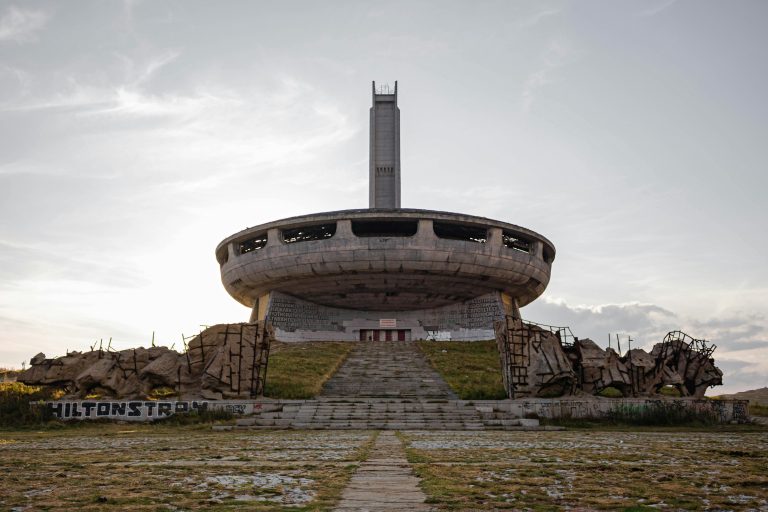
An abandoned communist monument on a mountain top, shaped like a flying saucer, decaying and extraordinary. Entry inside is prohibited.
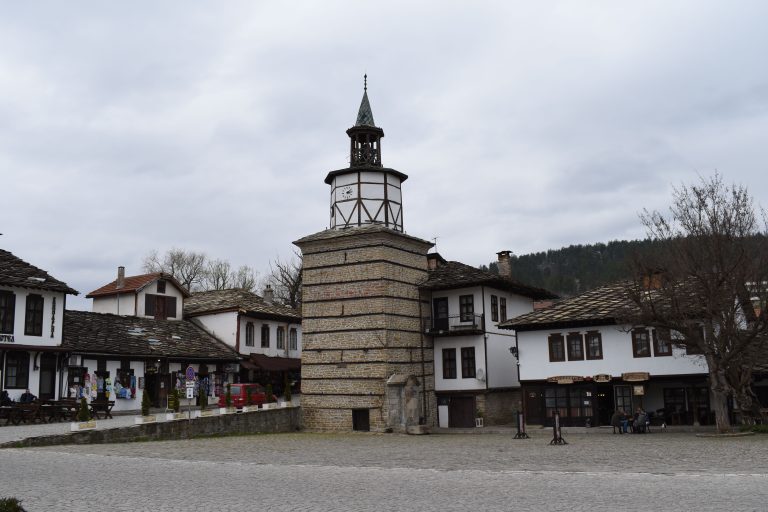
A National Revival town of woodcarvers, with a clock tower square and very few visitors.
The fortress light show is the fixture, and it is free to watch.
The whole hillside lit and scored, telling the city's history. Free from outside the walls, and schedules are announced locally.
Bulgaria declared independence here in 1908, and the anniversary is marked at the fortress.
Martenitsa tassels exchanged and worn until spring.
Music and craft events along Samovodska Charshia and the gorge terraces.
When the university is in and the bars are busy.
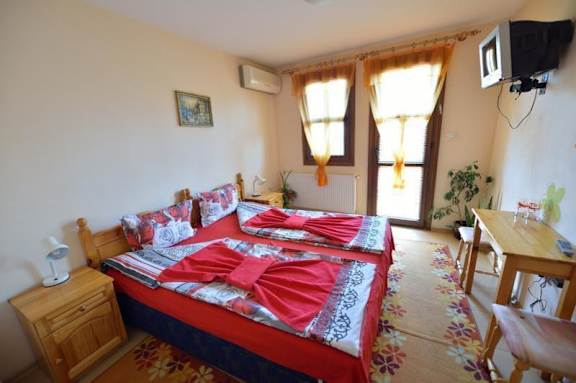
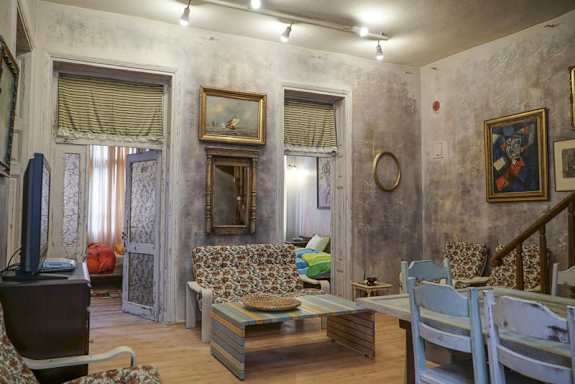
Small guesthouses and hostels in the old town, several with terraces over the gorge. Live from Hostelworld.
Spring and autumn. The light show runs on summer evenings, which is a reason to be here then.
Average highs. The city sits at about 200m in a river gorge, which holds heat in summer and mist in autumn — the mist over the gorge in October is one of the best sights in Bulgaria.
Pick how you travel. Per person per night, in euros.
A Buzludzha tour at €30–50 is the main extra.
The ones we get asked most.

Compare Veliko Tarnovo hostels — live prices, real reviews and free cancellation on most bookings. Then meet the people already there in the app.

 Get the App.
 Get the App.