
Hidden Gems in London: The Best Unseen Spots
London may be famous for Big Ben, Buckingham Palace, and the London Eye, but beyond those tourist hotspots lies a trove of hidden gems in London waiting to be explored. Tucked away in quiet alleys, leafy corners, and unassuming buildings are fascinating historic sites and quirky attractions that many visitors miss. This guide will take you off the beaten path to discover London’s unseen side – from medieval monasteries and secret gardens to neon art havens and cozy courtyards known mostly to locals. These spots offer an authentic taste of London’s history, culture, and charm without the crowds. Whether you’re a backpacker on a budget or a curious traveler on your second (or fifth) visit, get ready to delve into London’s best-kept secrets. Let’s uncover a London that Hostelworld’s community of travelers loves – full of surprise and history at every turn.

Little Venice, Maida Vale – London’s Serene Canal Oasis
At the junction of the Grand Union and Regent’s Canals in West London lies Little Venice, a picturesque waterside neighborhood that feels worlds away from the busy city. Here, narrowboats painted in cheerful colors drift along tree-lined canals, passing under elegant bridges. It’s a calm, uncrowded pocket of the city where you can slow down and watch swans glide by. In fact, Little Venice is a hidden gem in London that many tourists overlook despite its beauty. Even on sunny days, you’ll find more locals than visitors enjoying the peaceful atmosphere. Stroll the towpaths and you’ll discover floating cafés on barges, quaint waterside pubs, and the charming Canal Cafe Theatre on a moored boat.
Location
Little Venice centers around Browning’s Pool (the basin near Warwick Avenue tube station). It’s in the Maida Vale area, just north of Paddington. The canals here extend towards Camden to the east and Westbourne Park to the west.
How to Get There
Take the Tube to Warwick Avenue (Bakerloo line) – Little Venice is a 5-minute walk from the station. Paddington Station (Hammersmith & City/Circle line exit) is about a 10-minute walk along the canal. You can also catch a waterbus (canal boat) from Camden Lock to Little Venice in warmer months.
Highlights & Things to Do
- Canal Walks: Meander along the Regent’s Canal towpath. A popular route is the scenic walk from Little Venice to Camden Town (or vice versa) which takes you through tunnels and past sights like the London Zoo. You’ll pass houseboats adorned with flower boxes and whimsical decorations – a photographer’s delight.
- Waterside Cafés: Enjoy coffee and cake on a floating café. One barge, The Waterside Café, is permanently moored as a cozy spot for lunch. There’s even a puppet theatre barge for kids (and curious adults).
- Rembrandt Gardens: Relax in this small public garden overlooking the canal junction. It’s a peaceful spot to sit on a bench with a view of brightly painted boats and weeping willows reflected in the water.
Budget Tip
Little Venice is completely free to explore on foot – a great budget-friendly afternoon. Pack a picnic from a local bakery and eat by the canal for a cheap meal with a view. If you fancy a boat ride, the waterbus to Camden is around £12–£15 one-way (or about £18 return). It’s a leisurely cruise that doubles as sightseeing. For affordable lodging nearby, there are hostels in London’s Paddington/Bayswater area (just a short walk away) which you can find on Hostelworld. Staying in this area lets you walk to Little Venice and also access central London easily by Tube.
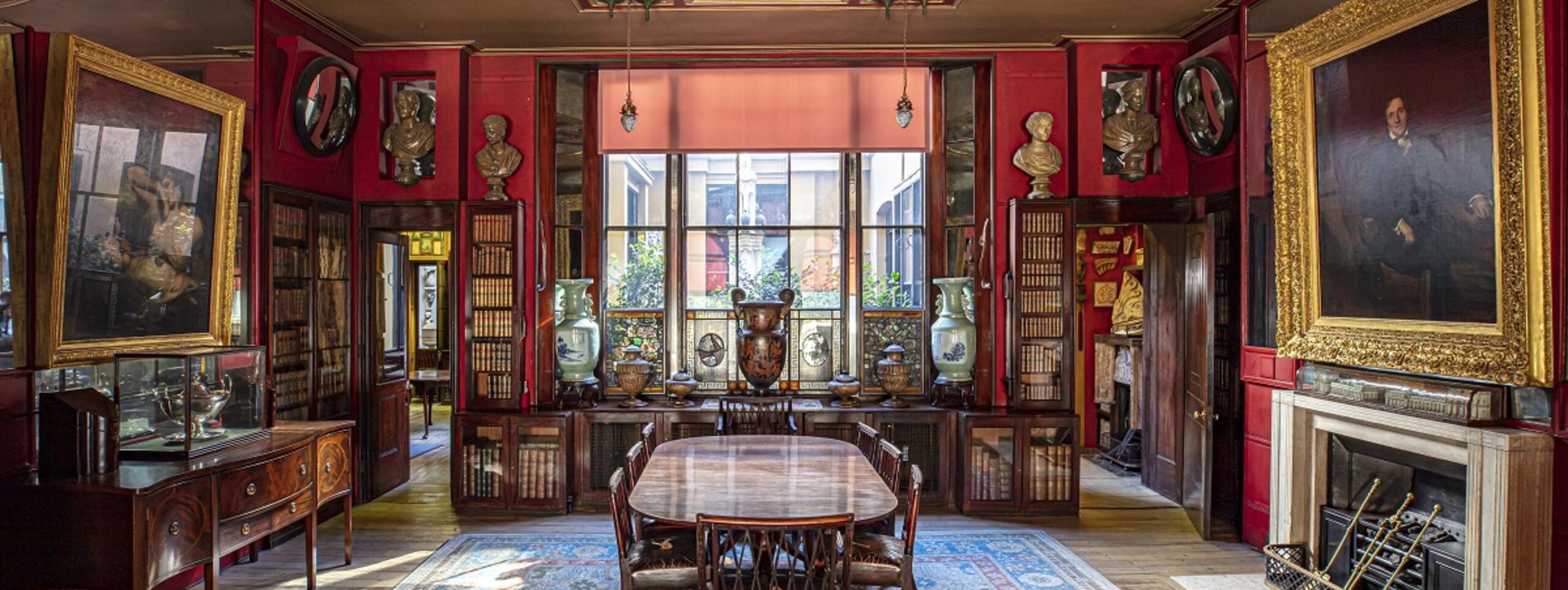
Sir John Soane’s Museum, Holborn – A Time-Capsule of Art and Antiquities
Step into the eccentric world of Sir John Soane’s Museum, and you’ll feel like you’ve discovered a Victorian time capsule. Housed in the former home of Sir John Soane – a famed 19th-century architect – this museum in Holborn is packed to the rafters with art, antiquities, and curiosities. Soane collected everything from ancient Egyptian relics (yes, there’s a Pharaoh’s sarcophagus in the basement!) to classical sculptures, architectural models, paintings by Turner and Canaletto, and even the odd piece of preserved Greek pottery. The rooms are kept almost exactly as Soane left them when he died in 1837, lit by natural light through clever skylights and mirrors. Winding your way through narrow passages and secret nooks, you’ll stumble upon oddities at every turn – a monk’s parlour here, a crypt-like chamber there – making it a delightfully unconventional museum experience.
Location
13 Lincoln’s Inn Fields, Holborn, central London. The museum faces a quiet park square in the legal district, about a 5-minute walk from Holborn Underground station (Piccadilly and Central lines).
How to Get There
From Holborn station, walk west along High Holborn and turn south onto Kingsway, then left on Lincoln’s Inn Fields. Several bus routes (e.g. 1, 68, 91) also stop nearby. The area is very walkable from Covent Garden or the British Museum (10–15 minutes on foot).
Highlights & Things to Do
-
The Picture Room: A tiny chamber ingeniously fitted with movable walls and panels that allow dozens of paintings to be displayed in a compact space. Don’t miss the series of paintings by William Hogarth, and ask a docent to show you how the panels open – it’s like a real-life puzzle revealing hidden art.
-
The Sarcophagus of Seti I: In the basement “Sepulchral Chamber” lies the enormous alabaster sarcophagus of Egyptian Pharaoh Seti I (around 3,300 years old). Soane acquired it in 1824, and it’s arguably the centerpiece of his collection. The hieroglyph-covered coffin is dramatically displayed under atmospheric lighting – spine-tingling for history buffs.
-
The Dome Area: Look up to admire the domed ceiling and peek into recesses filled with Roman busts, fragments of temples, and assorted antiquities. The museum’s layout itself is an exhibit, showcasing Soane’s architectural brilliance in making a relatively small house feel like a labyrinth of wonders.
Budget Tip
Amazingly, entry to Sir John Soane’s Museum is free for all (though donations are encouraged). It’s open Wednesday to Sunday (10am–5pm) – no booking required for general entry, but arrive early on weekends as they limit the number of people inside at once (the rooms are small and intimate). If you want a deeper dive, free highlights tours of Soane’s private apartments are offered daily at 2pm on a first-come basis. This hidden gem is perfect for rainy days, and since it costs nothing, it’s ideal for budget travelers. Just remember large bags aren’t allowed (for safety in the narrow spaces), so pack light when you visit.
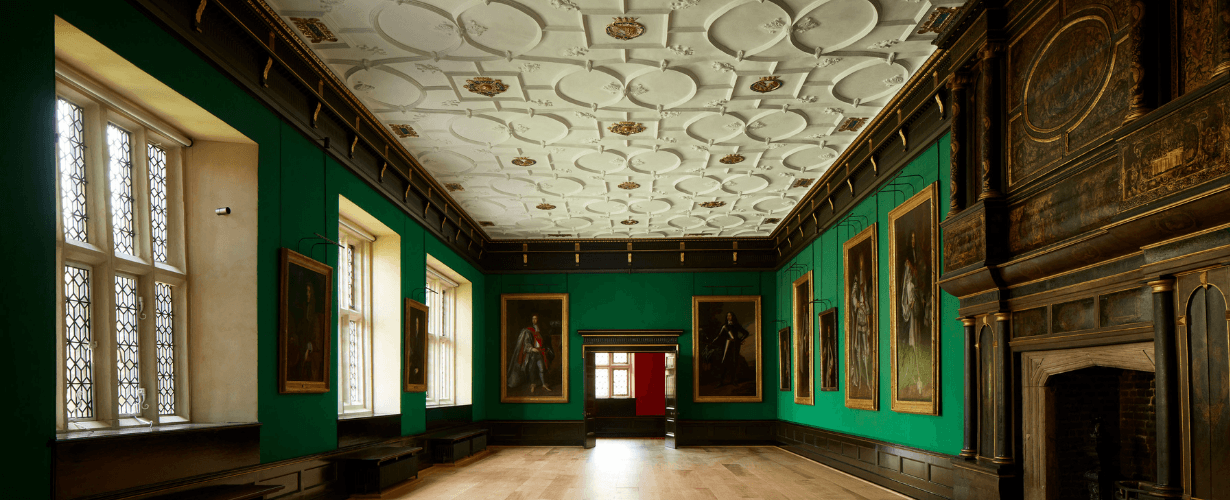
The Charterhouse, Smithfield – Medieval Monastery Hidden in the City
In a quiet square near Farringdon Station stands The Charterhouse, an ancient complex steeped in over 650 years of London history. This secluded gem has worn many hats over the centuries – it was originally a monastery founded in 1371 on the site of a Black Death plague pit, later a grand Tudor mansion, then a boys’ school, and it’s now a residence for retired pensioners (known as “Brothers”) as well as a museum. Despite being in the heart of the city, the Charterhouse remains something of an oasis: once you step through its gates into the cobbled courtyards, you’ll find yourself surrounded by Tudor brick buildings, chapel walls, and peaceful gardens that echo with history. It’s truly London’s secret historical gem, often missed even by locals.
Location
Charterhouse Square, Smithfield (Clerkenwell area of the City of London). Nearest stations are Farringdon (5-minute walk) and Barbican (5-minute walk). It’s adjacent to the Barbican complex, tucked behind modern office towers – a striking contrast of old and new.
How to Get There
From Farringdon Station (Metropolitan/Circle/Hammersmith & City lines, plus trains), take Cowcross Street east to Charterhouse Street; the Charterhouse entrance is through a gate on Charterhouse Square. From Barbican Station, walk south on Carthusian Street. Look for signs for the Charterhouse; it’s a bit hidden behind the square’s garden.
Highlights & Things to Do
-
Charterhouse Museum: Start at the small on-site museum (free entry). It provides an overview of the Charterhouse’s long history – from its beginnings as a plague burial ground (where up to 15,000 victims of the 1348 Black Death were interred), through its life as a Carthusian monastery (until Henry VIII’s Dissolution), then a lavish Tudor manor (visited by Elizabeth I), and later a charity school and almshouse. Exhibits include artifacts found on site and portraits of notable residents.
-
Chapel and Great Hall: You can visit the Tudor chapel and parts of the medieval cloister area for free during opening hours. The chapel, still used by the resident Brothers, is atmospheric and contains the tomb of Thomas Sutton (who established the almshouse in 1611). The Great Hall, with its timbered ceiling and portraits, is viewable on guided tours.
-
Guided Tours: To see the private areas and really dive into the Charterhouse’s secrets, join a Brother-led tour (ticketed). Tours take you through rooms like the Great Chamber (a grand room where Elizabeth I held court before her coronation) and the Master’s Court. You’ll hear intriguing stories – like the monks who refused to surrender to Henry VIII, or how the Charterhouse survived the Blitz. It’s a rare chance to walk through living history, guided by someone who resides within those ancient walls.
Budget Tip
Entry to the museum and courtyard is free, so you can enjoy a taste of the Charterhouse without spending a penny. If your budget allows, the guided tours (around £15) are well worth it for full access. Alternatively, there’s a shorter £10 tour focused just on the highlights. For a free experience, simply wander the open areas, peek into the chapel (often open around lunch hours), and enjoy the public Charterhouse Square garden out front – knowing beneath your feet lie layers of London history! There’s also a lovely café on site in one of the old rooms, where you can grab an affordable sandwich or cream tea and imagine the centuries of life this complex has witnessed.
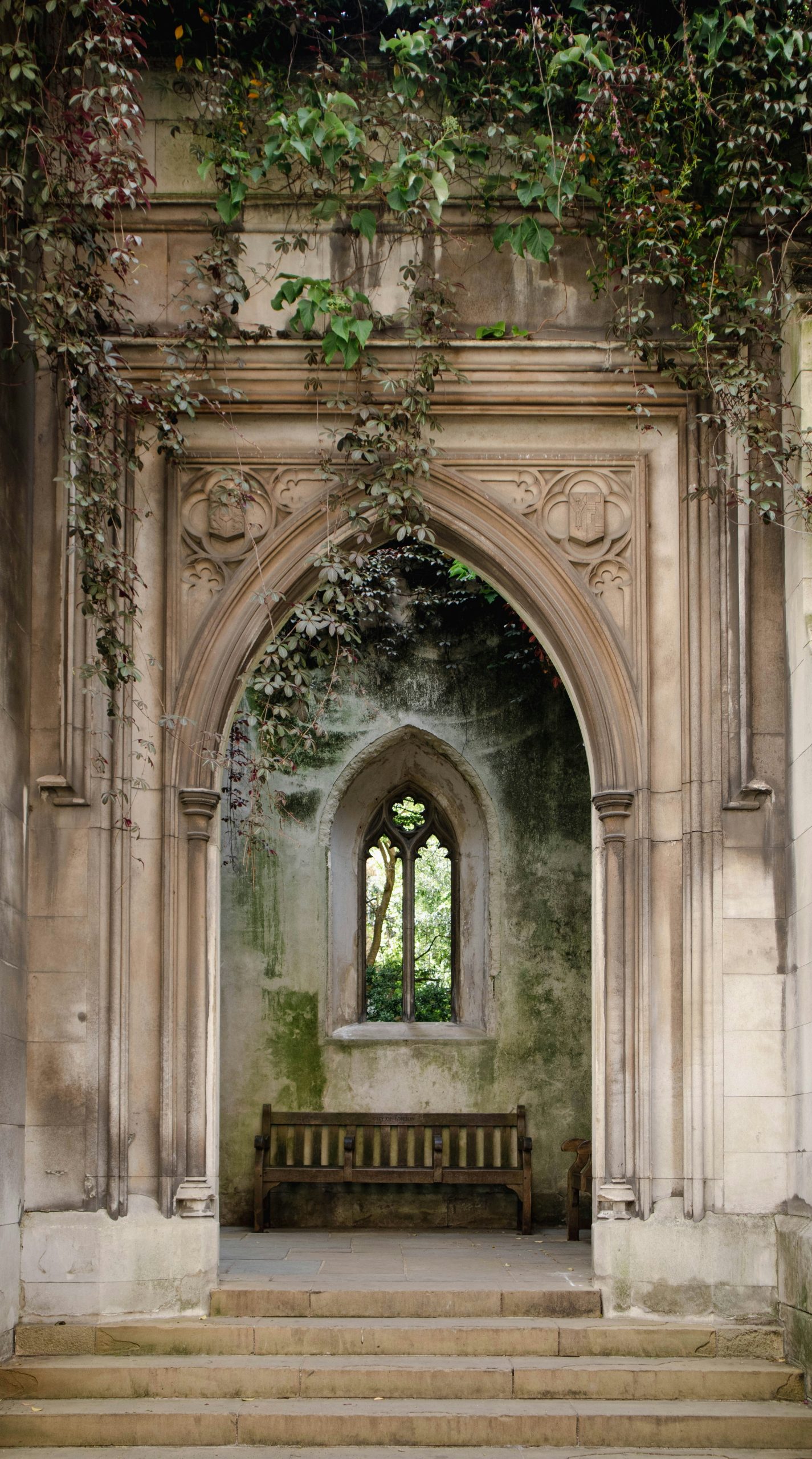
St Dunstan-in-the-East, City of London – A Bombed-Out Church Turned Secret Garden
Ruins often carry a haunting beauty, and St Dunstan-in-the-East is the perfect example. Nestled among offices in the City, this former church is now an enchanted public garden growing within the shell of a medieval church’s remains. Originally built around 1100, St Dunstan’s was severely damaged in the Blitz of 1941, leaving only its tower and some walls standing. Instead of rebuilding yet again, the city decided to transform the ruins into a public garden in the 1960s, opening it in 1970. Today, creeping vines and lush greenery weave through Gothic windows and crumbling archways. It’s a tranquil escape where you can sit on a bench under a palm tree, hearing birds chirp, all while encircled by ancient stonework – a surreal oasis amid the financial district’s hustle.
Location
St. Dunstan’s Hill, midway between London Bridge and the Tower of London (nearest Tube: Monument on District/Circle lines, a 5-minute walk). The garden is tucked just off Great Tower Street. Look for a small gate and sign; it’s easy to stroll past if you’re not looking for it.
How to Get There
From Monument Station, walk east on Great Tower St. and turn left down St Dunstan’s Hill. From Tower Hill Station, walk west along Byward St./Lower Thames St. and turn right up St Dunstan’s Hill. Multiple bus routes stop nearby (15, 25, 11, etc.). It’s also a short walk from the Tower of London – making it a great add-on after visiting the Tower, to decompress away from the crowds.
Highlights & Things to Do
-
Picturesque Ruins: Marvel at the ivy-clad Gothic arches and the tall steeple (designed by Sir Christopher Wren after the Great Fire of 1666). The church’s empty windows now frame views of the sky and surrounding greenery. Many consider this one of the most beautiful hidden corners in London – almost like a scene from a fantasy novel or a “secret garden” movie. It’s popular for photography and a quiet picnic.
-
Relaxation: Find the small fountain at the center of the garden – the gentle trickle of water, coupled with the chirping of birds, makes you forget you’re in the middle of a metropolis. Office workers from nearby come here to eat lunch in peace. With benches aplenty, it’s an ideal spot to rest your feet during a day of sightseeing.
-
Historical Vibes: Take a moment to imagine the history: a church stood here for nearly 900 years, weathering the Great Fire and rebuilt by Wren, only to be destroyed in WWII. Now nature has reclaimed it. Plaques on-site give a brief history. If you visit in spring or summer, the contrast of blooming flowers against the stone ruins is magical.
Budget Tip
Good news – St Dunstan-in-the-East Garden is completely free and open to the public. It’s usually open daily from around 8am until dusk (closes a bit earlier in winter). There’s no ticket, no queue, and usually only a handful of people. It’s the perfect budget-friendly hidden gem. Bring your own snack or coffee and enjoy a peaceful break here instead of an overpriced café – you’ll thank yourself for the experience. Also, because it’s outdoors and quiet, it can be a lovely spot to journal or plan your next travel moves.
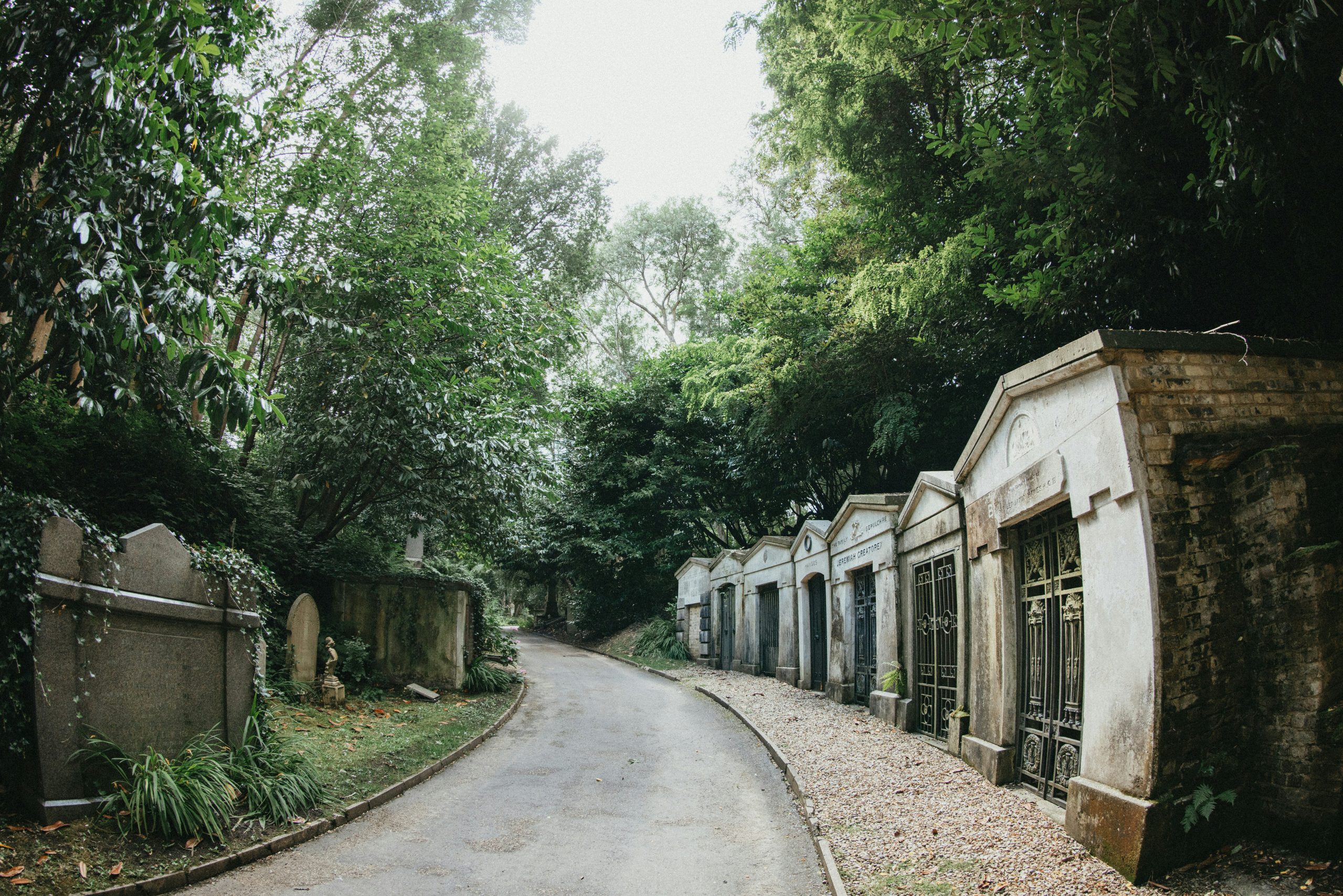
Highgate Cemetery, Highgate – Gothic Victorian Resting Place of Icons
If you have a taste for the Gothic or a fascination with Victorian history, Highgate Cemetery is a must-visit hidden gem. Opened in 1839 as one of London’s “Magnificent Seven” garden cemeteries, Highgate became the fashionable final resting place for 19th-century high society – and it shows. Wander its winding paths and you’ll find atmospheric ivy-covered tombs, towering obelisks, angel statues, and even a Egyptian-style catacomb avenue. The cemetery actually has two sides: the West Cemetery (accessible by guided tour only) and the East Cemetery (open to the public for a small fee). Both sides are overgrown with trees and wildflowers, giving Highgate a romantic, almost enchanted forest feel – as well as a decidedly creepy charm in places (which famously inspired many a Victorian ghost story, and even Hammer horror films shot on location). Highgate Cemetery is also famous for its notable interments: Karl Marx is buried here, as are novelist George Eliot, scientist Michael Faraday, and punk icon Malcolm McLaren, among thousands of others.
Location
Swain’s Lane, Highgate, North London. It’s near Highgate Village and just east of Hampstead Heath. The nearest public transport is Archway station (Northern line), then a 15-minute uphill walk or a short bus ride (buses 143, 210, 271).
How to Get There
From Archway, take bus 210 or 271 up Highgate Hill and alight near Waterlow Park, or simply walk (you’ll get a cardio workout – the hill is steep!). The cemetery entrances: East Cemetery entrance is on Swain’s Lane (opposite Waterlow Park); West Cemetery entrance is further up Swain’s Lane, on the left side.
Highlights & Things to Do
-
Egyptian Avenue & Circle of Lebanon (West Cemetery): If you take the guided tour of the West side, you’ll experience the most iconic sights. The Egyptian Avenue is a tunnel of tombs with grand columns and hieroglyphics, leading to the Circle of Lebanon – a ring of crypts built into a hillside around a massive ancient cedar tree. It’s an unforgettable slice of Victorian melodrama.
-
Famous Graves (East Cemetery): With a basic entry to East Cemetery (self-guided), you can easily find Karl Marx’s tomb, marked by a large bust of his head – one of the cemetery’s most visited spots. Nearby is the gravestone of novelist George Eliot (Mary Ann Evans). Wander and you might stumble on Douglas Adams (author of The Hitchhiker’s Guide to the Galaxy – fans leave pens at his grave), artist Patrick Caulfield (whose tombstone wryly says “DEAD”), and many more. A map from the entrance booth will point out famous plots.
-
Nature and Atmosphere: Part of Highgate’s charm is its overgrown state. Twisting oak and yew trees cast shadows over ivy-cloaked headstones. It feels less like a manicured graveyard and more like a gothic woodland that just happens to be full of Victorian monuments. In spring, bluebells and wildflowers carpet the ground, adding to the beauty. Don’t be surprised to see foxes or a shy muntjac deer wander by – it’s a little ecosystem of its own.
Budget Tip
East Cemetery: entrance ~£4–£5 (allowing you to explore at your leisure). West Cemetery: guided tour ~£12–£15 (includes admission to East as well). If you’re on a tight budget, opt for the East Cemetery only; you’ll still get a great experience of the place’s ambiance and see its most famous graves. For an extra-free bonus, walk through adjacent Waterlow Park (free) – from its high lawns you get a glimpse over the cemetery and a panoramic view of London’s skyline in the distance. Note that Highgate closes by 5pm (earlier in winter), and last admissions are about 30 minutes before closing. Also, some areas have uneven paths and steps – wear sturdy shoes, especially if it’s been rainy (mud and old stone can be slippery).

Wilton’s Music Hall, Whitechapel – Victorian Music Hall Frozen in Time
Tucked away down a nondescript alley in East London is Wilton’s Music Hall, the oldest grand music hall in the world still standing. This Grade II*-listed building dates back to the 1850s and miraculously survives as a living piece of London’s entertainment history. Walking into Wilton’s is like stepping back in time – its interior boasts peeling paint, wooden balconies, wrought iron pillars, and a beautifully distressed bar that all exude a faded Victorian glamour. In its heyday, Wilton’s was a lively venue where dock workers and locals came for raucous music hall shows (the 19th-century equivalent of variety entertainment). Over the years it served as a Methodist mission, avoided demolition multiple times, and eventually was lovingly restored into an arts venue. Today it hosts theatre productions, concerts, and events – but you can also just pop in for a drink at the Mahogany Bar and soak up the atmosphere of old London.
Location
1 Graces Alley, Whitechapel. It’s hidden off Cable Street in the Tower Hamlets borough. The nearest stations are Tower Hill (Circle/District lines, about 10 min walk) or Shadwell (DLR or Overground, 10 min walk). From the Tower of London, it’s roughly a 15-minute walk east.
How to Get There
The approach is part of the adventure – from Cable Street, look for Ensign Street and then the small Graces Alley. Wilton’s exterior is unassuming (brick facade, small sign). Keep your Google Maps handy, as it feels like you’re wandering into a back street (because you are!). When you find it, you’ll know – especially if the doors are open and you hear music or chatter from within.
Highlights & Things to Do
-
The Auditorium: If possible, catch a show or join a guided tour to see the main hall. The auditorium has a high ceiling with a partially restored Victorian baroque decor. Faded turquoise paint and bare brick walls give it an intimate, magical quality. Twinkling fairy lights often adorn the space. Even empty, it’s breathtaking to imagine the songs and laughter that once echoed here. (On a tour, you’ll hear tales of its past performers and patrons – and maybe a ghost story or two.)
-
Mahogany Bar: Wilton’s bar is one of the most atmospheric watering holes in London. It’s said to date in parts to the early 19th century. Order a pint or a cocktail and sit where sailors and music hall stars might have sat generations ago. There’s often live piano music or free events in the bar area on evenings – adding to the vibe. Prices are reasonable for London, making it a great budget night out even if you don’t see a ticketed show.
-
History Exhibits: Around the lobbies and stairs, you’ll find photos and information plaques about Wilton’s storied history – from how it nearly fell to developers (multiple times) to its painstaking restoration. For history enthusiasts, these tidbits enrich the experience.
Budget Tip
Entry to Wilton’s is free if you’re just visiting the bar. It’s usually open Monday to Saturday from late afternoon until late night. If you can’t afford a show, simply drop in during opening hours, buy an affordable drink, and enjoy the Victorian ambiance for free – you can wander the public areas and peek into the hall if it’s open. Guided tours cost around £10 and happen a couple of times a week, but keep an eye on Wilton’s website for occasional free open days or exhibitions. Also, many of the performances are reasonably priced (and sometimes they have standby or youth discounts), so you might catch an opera, a play, or a cabaret night in this stunning venue without breaking the bank.
God’s Own Junkyard, Walthamstow – Neon Wonderland in an Old Warehouse
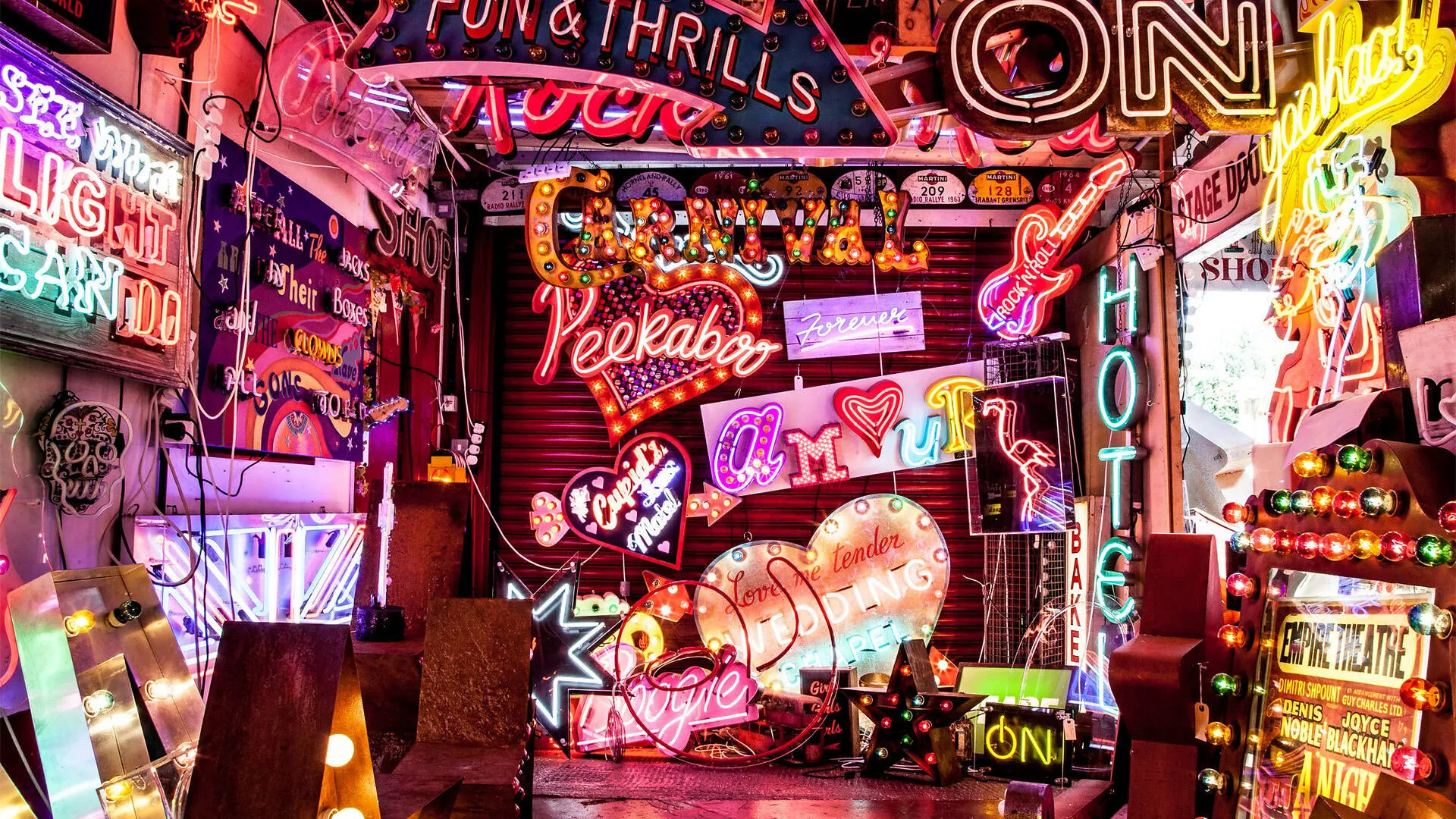
Venture out to Walthamstow in northeast London, and you’ll be rewarded with one of the city’s brightest hidden gems – literally. God’s Own Junkyard is a dazzling neon art gallery and café tucked in a warehouse on an industrial estate. Step inside and you’re greeted by a psychedelic glow of hundreds of neon signs in every color, covering practically every inch of wall (and ceiling!). The late neon artist Chris Bracey founded this treasure trove to showcase his personal collection of neon works – from vintage fairground signs to old Soho peep-show neons and props that appeared in Hollywood films. It’s a feast for the eyes and an Instagram paradise, with cheeky slogans, retro advertisements, and iconic symbols all lit up in neon. Imagine Las Vegas, a 1960s diner, and a sci-fi movie set combined – that’s the vibe here. Browsing God’s Own Junkyard is free, and there’s even a café appropriately called The Rolling Scones where you can grab cake and a coffee amidst the glow.
Location
Unit 12, Ravenswood Industrial Estate, Shernhall Street, Walthamstow. This is in London Zone 3, about 25-30 minutes from central London via the Victoria Line. The nearest Tube is Walthamstow Central, then it’s roughly a 10-minute walk. (Follow the signs or your map through residential streets – you might doubt you’re in the right place until you turn a corner and see the neon.)
How to Get There
Take the Victoria Line Tube to Walthamstow Central (end of the line). From there, you can also hop on bus 123 or 212 for a few stops to Shernhall St/Kimberley Estate stop, if you prefer not to walk. Alternatively, the Overground train to Wood Street station is about a 10-minute walk away. The Ravenswood Industrial Estate also houses a few craft breweries (like Wild Card Brewery), which can serve as landmarks. Look for the glow or ask a local – they’ll likely know the “neon place.”
Highlights & Things to Do
-
Neon Sign Heaven: Marvel at one of the largest collections of neon signs in Europe. Every sign has a story – some designed by Chris Bracey for movies (you might spot neons used in Captain America or Eyes Wide Shut among others), others salvaged from long-gone London nightclubs, and many created as art pieces. The signs are witty, artistic, and sometimes cheeky or risqué – from giant glowing lips to Jesus with neon halos (hence the name God’s Own Junkyard). It’s impossible not to smile at the absurdity and wonder of it all.
-
Café and Seating: Amidst the neon jungle are a few vintage couches and tables. Order a drink and a slice of homemade cake from the café and relax in the most surreal living room you’ve ever been in. The Rolling Scones Café offers light meals, and yes, cream teas – all reasonably priced. Enjoying an afternoon tea under neon church signs saying “Jesus Saves” is peak quirky London.
-
Photos Galore: Photography is allowed (non-commercial use), so snap away – you’ll get some of your most vibrant London trip photos here. Pro tip: because everything is neon, your pics will be neon-tinted; embrace the technicolor madness! It can get a bit crowded on weekends, but patience yields great shots.
Budget Tip
Entry is free (just remember it’s typically only open on weekends: Friday, Saturday, Sunday – roughly 11am to 10pm Fri/Sat, and till 6pm Sun). You don’t have to buy anything to look around, though it’s nice to support the place via a coffee or souvenir. As a bonus budget activity, check out the craft breweries in the same yard – they often have food trucks and outdoor seating, making for a fun (and again, affordable) afternoon/evening if you’re into craft beer. Also, Walthamstow has other attractions like the William Morris Gallery (free art museum) and Walthamstow Village – so you can make a day of exploring this up-and-coming neighborhood without spending much.
The Old Operating Theatre Museum, London Bridge – Hidden Surgical History in an Attic
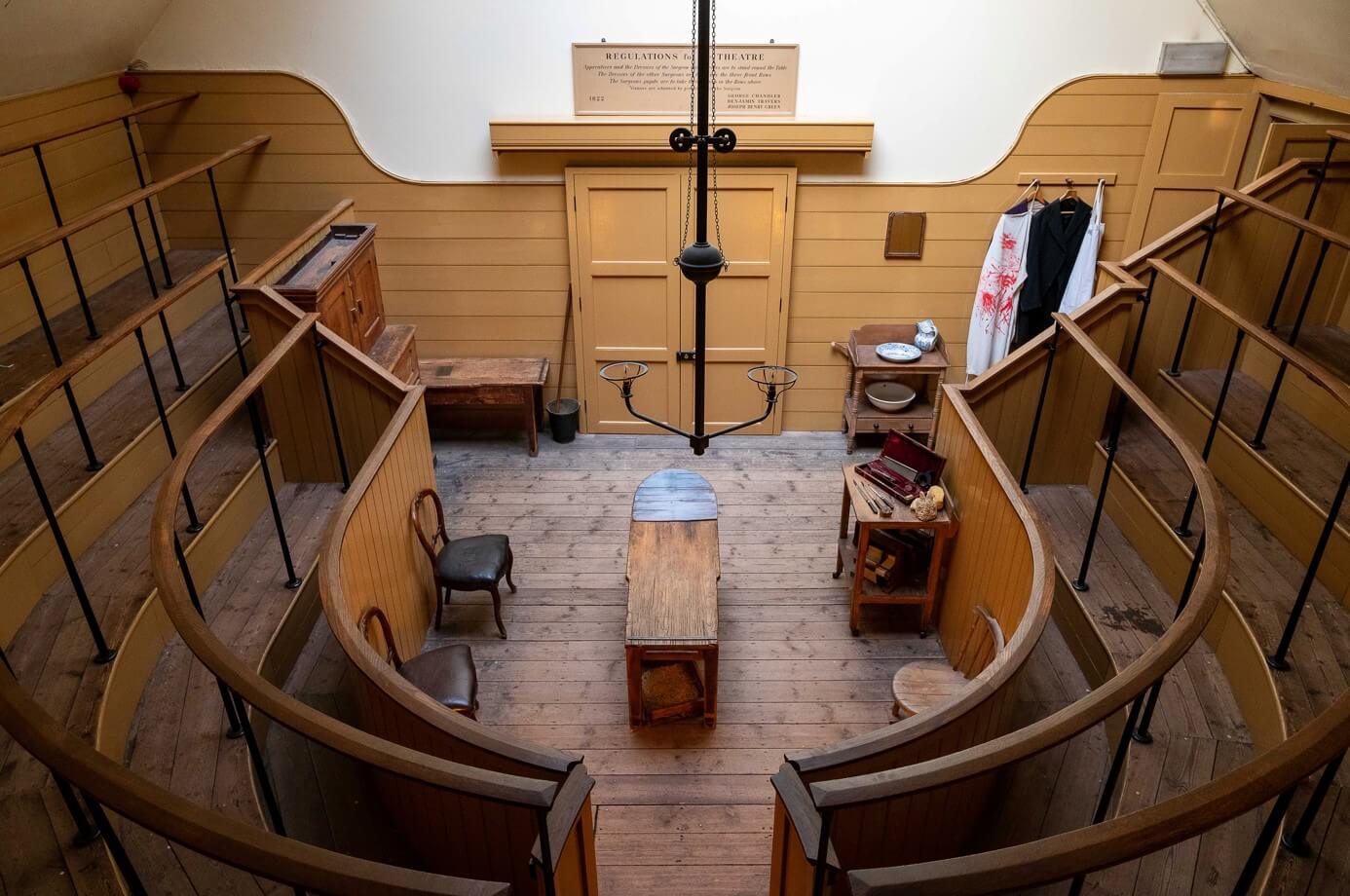
Tucked away in the attic of an old church near London Bridge is one of the city’s most fascinating small museums: The Old Operating Theatre and Herb Garret. This quirky museum is actually the oldest surviving surgical operating theater in Europe, dating back to 1822 – and it was literally lost to time for nearly a century. To find it, you climb a narrow 52-step spiral staircase into what used to be the loft of St. Thomas’s Church. There, in the low-ceilinged garret, you’ll discover a preserved 19th-century operating room where medical students once crowded in to watch surgeries performed without anesthesia or antiseptics. The wooden operating table, tiered viewing stands, and even some original surgical tools are all on display, giving a visceral sense of how surgery was done in the pre-modern era (not for the squeamish!). Adjoining the theater is the “herb garret” – once used by apothecaries to store medicinal herbs – now filled with jars of leeches, vintage medicines, and curiosities that showcase the weird and sometimes horrifying history of medicine.
Location
9a St. Thomas Street, Southwark. It’s just a block from London Bridge station (Shard exit), hidden beside the tall Guys’ Hospital building. Look for a small sign and door on the street – it’s easy to miss. The church (now a workplace wellness center) that houses it is near Borough Market.
How to Get There
Take the Tube or train to London Bridge. From the station, walk west on St Thomas Street toward Borough Market. The entrance to the museum is on the south side of St Thomas St., near the corner with Borough High St. (Guys Hospital is on the north side). If you reach Borough Market’s south end or the St. Thomas Street gardens, you’ve gone a bit too far.
Highlights & Things to Do
-
The Operating Theatre: The centerpiece – a wedge-shaped wooden room where operations took place in front of a gallery of medical students. Stand in the same spot where patients (typically poor women from the adjacent hospital) underwent amputations or other surgeries while awake (chloroform wasn’t in use until the 1840s!). The guide plaques explain the procedures and context – it’s chilling yet captivating to imagine the scene. This theater was closed and boarded up in 1862 when the hospital moved, and only rediscovered in 1956, intact.
-
Herb Garret Displays: In the surrounding attic space, explore displays of Victorian surgical instruments (saws, scarificators, forceps – some look more like torture devices), jars of early pharmaceuticals, and dried herbs that monks and apothecaries once used for remedies. There are sections on quack medicines (like opium-laced syrup for crying babies – yikes), the history of nursing, and even medieval medicine. It’s both educational and morbidly entertaining.
-
Hands-on & Demos: The museum often hosts demonstrations or talks. If you visit at the right time, you might catch a staff presentation where they reenact Victorian surgical techniques using props (thankfully, not on real people!). Check their schedule for special events like “Victorian surgery” talks – they’re usually included in admission and really enrich the visit.
Budget Tip
Admission is around £7.50 for adults (£5 concessions), so it’s a modest fee for a unique museum (consider that a fraction of big museum ticket prices in other cities). If you’re a student or under 25, bring ID for the concession rate. Once inside, you can spend a good 45 minutes to an hour; it’s a small space but packed with info. To save a bit, note that the museum is part of the National Trust’s reciprocal program (members get in free). Also, if you plan to also visit the nearby Britain at War Experience or Clink Prison Museum (other small museums), look out for combo tickets or discounts online. Lastly, because the space is small, try visiting on a weekday or early to avoid any crowds – you’ll have a more intimate experience (and better photos). Keep in mind the museum is only open Thursday–Sunday (closed Mon–Wed).
Neal’s Yard, Covent Garden – A Colorful Bohemian Courtyard Hideaway
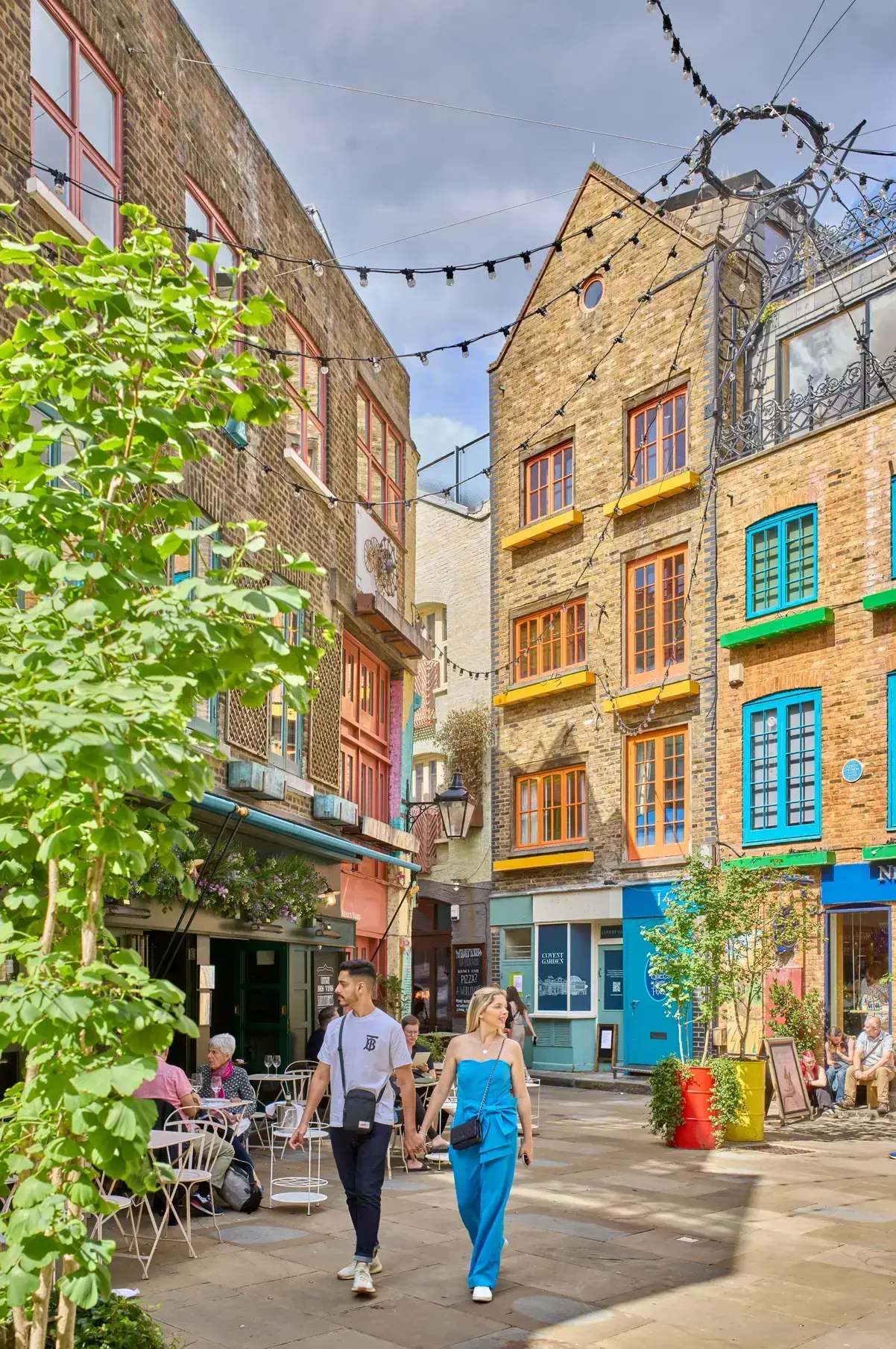
London can be a maze, and sometimes the best way to find a hidden gem is to literally squeeze through an alley. In bustling Covent Garden, Neal’s Yard is a tiny, vibrant courtyard that you’d never stumble upon unless you knew it was there. Tucked between buildings and accessible only via two narrow alleyways, Neal’s Yard explodes with colorful facades – think bright blues, yellows, oranges – and is adorned with hanging plants and quirky art. In the 1970s, this area was transformed from a dingy backlot into a hub of alternative culture. Today it’s home to wholesome cafés, a legendary natural health store, and eateries that cater to both vegans and pizza-lovers. The atmosphere feels oddly continental, like a secret Mediterranean patio plunked into central London. It’s a perfect spot to relax with a coffee or take those iconic Instagram shots with the rainbow-hued backdrop.
Location
Near Seven Dials in Covent Garden (Central London). Neal’s Yard connects Short’s Gardens and Monmouth Street via small passages. The easiest way to find it is to go to Short’s Gardens (near the intersection with Neal Street) and look for “Neal’s Yard” signage down a little alley. Alternatively, from the Seven Dials monument, head down Monmouth Street and turn into Neal’s Yard alley by Neal’s Yard Remedies store.
How to Get There
The nearest Tube stations are Covent Garden (5-minute walk) or Leicester Square (5-7 minute walk). From Covent Garden Piazza, walk north past the Apple Market onto Neal Street, then left on Short’s Gardens. It’s truly hidden – but usually you’ll spot a few people taking photos at the entrance, tipping you off.
Highlights & Things to Do
-
Food & Drink: Grab a healthy bite at Neal’s Yard Salad Bar or a coffee from Jacob the Angel café (named after an 18th-century coffee house). If you’ve got a sweet tooth, try Homeslice Pizza for huge slices or St. JOHN Bakery around the corner for donuts. For an alternative treat, 26 Grains offers delicious porridge and grain bowls in a cozy corner spot – ideal for breakfast.
-
Neal’s Yard Remedies: This is the original Neal’s Yard Apothecary, opened in 1981, known for organic skincare and herbal remedies. Even if you’re not shopping, the fragrant smells of essential oils wafting out and the rustic blue storefront are a delight. It’s a piece of the yard’s bohemian heritage that remains.
-
Atmosphere & Photos: Honestly, one of the best things to do here is simply to be. Take a seat on one of the courtyard benches or at an outdoor table and soak in the cheerful vibes. The buildings are covered in murals and there’s often mellow music playing from somewhere. This is a side of London that’s all about chill, artsy charm. Don’t forget to snap a photo looking upward – the sight of all those colorful window frames against the sky, draped with greenery, is magic.
Budget Tip
Neal’s Yard itself is free to visit and open 24/7 (it’s an open courtyard). It can be enjoyed on any budget – even if you don’t buy anything, it’s a feast for the eyes. If you are watching your pounds, consider getting takeaway from a nearby supermarket (there’s a Marks & Spencer food hall a block away on Long Acre) and eating in the courtyard to enjoy the ambiance without café prices. Also, water refill stations are available (as part of Covent Garden’s sustainability push), so you can top up your bottle for free.
Hampstead Pergola & Hill Garden, Hampstead – Overgrown Edwardian Splendor Above the Heath
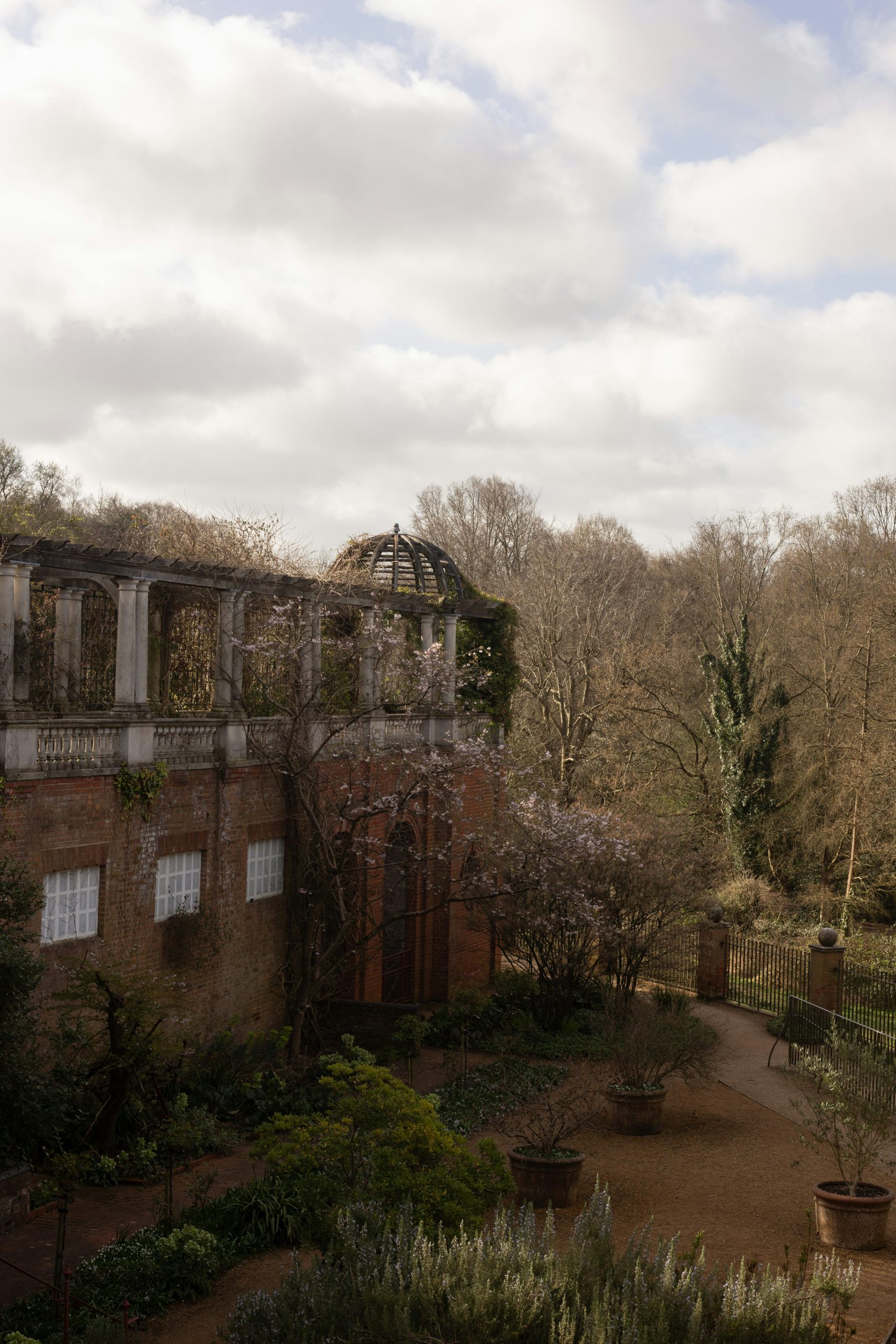
High on a hill at the edge of Hampstead Heath lies a secret garden that time forgot: the Hampstead Pergola and Hill Garden. This spectacular raised walkway, entwined with creeping vines and wisteria, was once the scene of extravagant Edwardian garden parties – now it stands in beautifully faded grandeur, quietly overlooked by many Londoners. Built starting in 1905 by Lord Leverhulme (a wealthy philanthropist and soap magnate), the pergola was intended as a glorious venue for his high-society gatherings. Marble columns, wooden trellises, and arches span along a terrace overlooking lush terraced gardens. After Leverhulme’s death in the 1920s, the Pergola fell into disrepair and nature began to take over. Today, it’s partially restored but still has an eerie, romantic decay – think moss-covered pillars, cracked steps, and tendrils of vines winding around railings. The Hill Garden adjacent is a manicured yet peaceful spot with ponds and flowerbeds. Together, they form one of London’s most undeniably hidden treasures, offering tranquility and scenic beauty with a dash of nostalgia.
Location
North End Way, on the western edge of Hampstead Heath (near Jack Straw’s Castle pub). It’s in North London’s Hampstead area. The nearest stations are Golders Green (Northern line, 15-minute walk) or Hampstead (Northern line, ~20-minute walk). Several buses (e.g. 210, 268) stop close by at “Inverforth House” stop.
How to Get There
If coming by Tube to Golders Green, you can catch bus 268 for a short ride to Inverforth House stop. By foot, from Golders Green Station walk up North End Road (which becomes North End Way) heading east toward Hampstead – it’s a bit of an uphill trek. The entrance to the Pergola is somewhat hidden: look for a small lane marked “Hill Garden & Pergola” near Inverforth House (a private residence). It’s just north of the ornate gated entrance to the private housing estate; follow the signposted path. From Hampstead Station, it’s a pleasant walk through the Heath or via Frognal and Branch Hill.
Highlights & Things to Do
-
The Pergola Walkway: Ascend the stone stairs to the raised pergola. It stretches impressively long, with sections covered by wooden lattice roof and others open to the sky. Gaps in the balustrades reveal panoramic glimpses of the Heath’s treetops and the distant city. Benches invite you to linger. In summer, wisteria and roses climb the pergola, blooming in purples and pinks, while autumn brings fiery ivy colors – each season offers a different mood. It’s a dream for photographers (engagement shoots here are common) and anyone who appreciates a slightly “secret garden” atmosphere.
-
Hill Garden: Below the pergola, wander through the landscaped gardens. A small reflecting pond, flowerbeds, and lawns create a serene environment. You might see local families or dog-walkers, but it’s rarely busy. Don’t miss the view of the pergola from the garden; it really gives you the sense of the “faded grandeur” vibe – a grand structure slowly being reclaimed by nature. It’s easy to imagine well-dressed Edwardians sipping tea here 100+ years ago.
-
Photography & Picnics: This spot is somewhat Instagram-famous now, but still peaceful. If you’re into photography, the symmetrical columns and trailing vines create stunning frames. For a budget-friendly lunch, bring a picnic – there are few better places in London to enjoy a sandwich than on a century-old terrace with birds chirping around.
Budget Tip
Neal’s Yard itself is free to visit and open 24/7 (it’s an open courtyard). It can be enjoyed on any budget – even if you don’t buy anything, it’s a feast for the eyes. If you are watching your pounds, consider getting takeaway from a nearby supermarket (there’s a Marks & Spencer food hall a block away on Long Acre) and eating in the courtyard to enjoy the ambiance without café prices. Also, water refill stations are available (as part of Covent Garden’s sustainability push), so you can top up your bottle for free.
Best Hostels in London to Book
Hostels in London offer something for everyone. From sleek design-led hostels near Shoreditch to social backpacker hubs in King’s Cross, there’s a stay for every traveller and budget. Whether you want a quiet space to unwind or a lively bar to meet new people, you’ll find your perfect base for exploring the city.
🏰 Wombat’s City Hostel London – Best for Big Energy and Big Friend Groups

📍 Whitechapel / Tower Bridge
A consistent crowd favourite, Wombat’s City Hostel delivers a lively social scene with comfort and style. The real star? The basement bar. One guest wrote, “It had an awesome atmosphere and was an excellent spot to socialize and meet fellow travelers.”
With two train stations just 8–10 minutes away, it’s super convenient for exploring. Guests rave about how easy it is to connect: “Wombat was one of the best atmospheres and was a beautiful place to meet new friends and other solo travelers.”
First solo trip? This place has your back: “This was my first solo stay internationally and I loved it! Made a ton of friends.”
🧠 Nervous about breaking the ice? Here’s how to make friends in hostels, even if you’re shy
🌍 Onefam Notting Hill – Best for Instant Connections and Free Dinners

📍 Notting Hill
Onefam Notting Hill is practically designed for making friends. Guests love the privacy of curtained beds, but it’s the social side that steals the show. As one traveller said, “Super social hostel… free dinner every night, as well as arranged drinking games. It’s so easy to meet people.”
Another added, “The social aspect is the best part… the nightly activities and family dinners just put the cherry on top.”
🍝 Learn how shared dinners and activities turn strangers into travel buddies
🎉 Urbany Hostel London – Best for Welcoming Vibes and Nightly Events

📍 Paddington
If you’re the kind of traveller who wants a full social calendar, Urbany Hostel London has you covered. Guests say it has a great backpacker energy: “Social activities every night make it easy to meet other solo travellers.”
One reviewer shared, “Everyone is so welcoming—staff and guests. Feels like you’re staying with friends.” Even nervous travellers feel at ease here: “Despite feeling nervous, they made me feel so included!”
💬 Want to level up your common room small talk? Here’s how to connect with other solo travellers
🎨 Prime Backpackers Angel – Best for Creative Community and Laid-Back Vibes

📍 Angel / Islington
Prime Backpackers Angel isn’t just social. It’s soulful. With musical instruments, books, and cozy corners, it attracts a thoughtful and creative crowd. One review says it all: “The social scene here was the best of any hostel I ever went to.”
Staff-organized events, pancake breakfasts, shared meals, and movie nights foster a communal spirit. “You make new friends from all over the world every day.”
🎲 Need ideas for ice-breaking activities? Here are 13 that help you meet people instantly
🏛️ Astor Museum Inn – Best for Inclusive Events and Central Location

📍 Bloomsbury
Just a stone’s throw from the British Museum, Astor Museum Inn is more than just location. It’s community. A solo traveller shared, “Everyone is so friendly and nice. It was so easy to meet people even though I was traveling alone.”
Another guest wrote, “Their organized night outs were so much fun—inclusive and lively.” And for queer travellers, safety and belonging are prioritized: “I felt safe and welcomed.”
🏠 London Backpackers – Best for Family Feel and Friendly Staff

📍 Hendon (North London)
London Backpackers is one of those hostels where the staff genuinely feel like friends. Guests rave: “The volunteers encourage us to go out and socialise” and “Made lots of friends here.”
With free dinners, events, and a cozy atmosphere, this hostel is a great pick if you want a place that feels like home.
🌳 Astor Hyde Park – Best for Clean Comfort and Casual Social Vibes

📍 South Kensington / Hyde Park
Set near one of London’s prettiest parks, Astor Hyde Park offers a mix of comfort, cleanliness, and connection. “The hostel is clean, cozy, and social, with plenty of chances to meet fellow travellers.” It’s not a party hostel, but the relaxed, friendly environment makes it easy to chat with others and feel at home.
Ready to discover hidden gems in London for yourself?
Now that we’ve journeyed through these unseen corners of London – from tranquil canals and secret gardens to time-warp museums and neon wonderlands – you can see how much London’s hidden gems enrich any visit. Exploring these offbeat spots offers a new appreciation for the city’s diversity and history beyond the famous landmarks. Best of all, many of them are free or budget-friendly, perfect for backpackers and curious explorers alike. So on your next trip, venture beyond the tourist trail and craft your own London adventure filled with surprises. Wander into that alley, enter that unassuming door, or hop on a bus to a far-flung neighborhood – you never know what marvels you might find! And remember, when you base yourself at a friendly hostel (easy to book on Hostelworld), you’ll not only save money but also meet fellow travelers to join you on these hidden gem hunts.
London is a city that rewards the intrepid. These lesser-known sites will give you stories to tell and a deeper connection to the city’s local heartbeat. Happy exploring – and may your London travels be filled with delightful discoveries!
Download the Hostelworld app to start booking now


FAQ: Hidden Gems in London
Are there any free hidden gems in London?
Absolutely – many hidden gems in London are free or very low cost. For example, Neal’s Yard in Covent Garden is a free-to-enter colorful courtyard with no ticket needed. St Dunstan-in-the-East Garden is a public park (free). Little Venice can be explored at no charge by walking along the canals. Sir John Soane’s Museum has free entry for everyone. The Hampstead Hill Garden & Pergola is also free to visit. Additionally, big museums like the British Museum or National Gallery (while not “hidden” per se) are free, but some smaller lesser-known ones like the Museum of London Docklands or Wallace Collection are free too and are quieter than the famous institutions. London’s many parks (like Richmond Park’s Isabella Plantation or Kyoto Garden in Holland Park) are free hidden gems for nature lovers.
Which hidden gem in London offers the best view of the city?
For stunning views, one “hidden” (or at least lesser-known) gem is the Sky Garden at 20 Fenchurch Street. It’s a lush indoor garden on the 35th floor of a skyscraper, completely free to visit – you just need to book a time slot in advance. From its observation decks, you get panoramic views of the London skyline (including the Shard, Tower Bridge, St. Paul’s) without paying like you would at the Shard’s observation deck. Another great viewpoint is Primrose Hill (a hill on the north side of Regent’s Park) – it’s open to all and offers a beautiful skyline vista, especially at sunset. If you’re up for a bit of hike and a local vibe, Parliament Hill on Hampstead Heath is another free spot with a classic view over London’s rooftops. And for a unique vantage, the Emirates Air Line cable car (Emirates Royal Docks to North Greenwich) gives a fantastic aerial view for a modest fee – it’s not crowded and can feel like a hidden treat at night when the city lights twinkle.
What is Little Venice in London and how can I visit it?
Little Venice is a charming canal district in northwest London, where the Grand Union Canal meets the Regent’s Canal. It’s known for its serene waterways lined with colorful narrowboats, waterside cafes, and leafy surroundings – often described as a hidden oasis in the city. To visit Little Venice, the easiest way is to take the Tube to Warwick Avenue station (Bakerloo line) and walk 5 minutes to the canal basin (Browning’s Pool). You can stroll along the towpaths for free; it’s a lovely walk towards Camden or Regent’s Park. Alternatively, Paddington Station is about a 10-minute walk away. Little Venice is enjoyable year-round, but on a sunny day you might grab ice cream from the boat café or take a boat ride. There are canal boat tours (like Jason’s Trip or London Waterbus) that run between Little Venice and Camden Lock – a fun, leisurely way to experience the canals. No tickets or entry fee is needed to visit the area itself since it’s a neighborhood, not an enclosed attraction.
Why is Sir John Soane’s Museum considered a hidden gem?
Sir John Soane’s Museum is considered a hidden gem because it’s an off-the-beaten-path museum with a truly unique character. First, it’s somewhat “hidden” in plain sight – located in a row of houses in Holborn, it looks like a regular townhouse from the outside. Inside, however, it houses an incredible collection of art, antiquities, and architectural curiosities amassed by Sir John Soane (a famed architect) in the 1800s. Visitors are often amazed by how densely packed and maze-like the interior is – every nook is filled with something interesting, from ancient Egyptian artifacts to Roman sculptures to beautiful paintings. The building itself is preserved as it was left in 1837, lit by clever natural light tricks and mirrors. Unlike big crowded museums, Soane’s Museum has an intimate atmosphere – only a limited number of people are allowed in at a time, so you often feel like you’re exploring a scholar’s secret treasure trove. It’s also free to enter and not heavily advertised, which means many tourists simply don’t know about it, despite it being in central London. Those who do visit often call it a highlight of their trip due to its distinct ambience – part museum, part time-capsule home, with a dash of mystery (there’s even a crypt with a sarcophagus in the basement!).
How can I visit Highgate Cemetery and do I need to book in advance?
Visiting Highgate Cemetery depends on which side you want to see. The East Cemetery can be visited without a prior booking – you can simply show up during opening hours and pay the entrance fee (around £4-£5). The East side includes famous graves like Karl Marx and is open self-guided. The West Cemetery, however, is accessible by guided tour only. It’s highly recommended to see the West side because of its Victorian architectural marvels (like the Egyptian Avenue and Circle of Lebanon). For the West Cemetery, it’s best to book a tour in advance online, especially in peak season, as group sizes are limited. You can sometimes get walk-up tickets on quiet days, but to be safe, booking ahead on the Highgate Cemetery official website is wise. Tours usually run multiple times a day. Keep in mind both sides have separate entrances on Swain’s Lane. If you book a West tour, it typically includes access to the East as well on the same day. Comfortable shoes are a must (gravel paths and some steep areas). Getting there: take the Northern Line to Archway and then bus or walk as mentioned earlier. Note the cemetery is generally open daily, but check the website for exact hours (they close earlier in winter).
Are London’s hidden gems safe to visit, especially if I’m alone or at night?
Safety in London’s hidden gems is generally good, but it varies by location and time:
By Day: Nearly all the places mentioned (museums, Little Venice, Neal’s Yard, etc.) are perfectly safe during daylight and usually have other visitors around. London is a big city, so normal city precautions apply (mind your belongings for petty theft in any tourist area), but these offbeat spots often feel more relaxed than busy tourist hubs. For example, walking around Hampstead Pergola or Little Venice by day is peaceful and considered very safe. Always be aware of your surroundings, but you’re unlikely to encounter issues in these areas in daytime.
By Night: Some hidden gems are not accessible or are closed at night (e.g., the parks/gardens like St Dunstan’s close around dusk). For those that are public spaces open in the evening (like Neal’s Yard or areas of the city), they can become very quiet. Neal’s Yard, for instance, might be a bit deserted late at night, but it’s in a busy district (Covent Garden) that has people around into the late evening. If you’re alone at night, stick to well-lit main routes when leaving these spots. For areas like Walthamstow (God’s Own Junkyard), the venue itself is bright and staffed, but walking back to the station through side streets late could feel isolated – consider taking a bus or taxi/Uber if it’s very late.
General Tips: London overall has a low violent crime rate in tourist areas, but opportunistic theft can happen, so keep valuables secure especially in less crowded spots. If you’re a solo female traveler, you’ll be pleased to know London is commonly traveled solo with few problems; still, trust your instincts (if a place feels too deserted and dark, maybe skip it). Public transport in London is well-lit and CCTV monitored, and there are usually staff or other passengers even at night on popular routes. Many of these hidden gems are in safe, often upscale neighborhoods (Hampstead, Little Venice) or well-monitored areas (City of London), which adds to security.
In summary, yes – it’s generally safe to explore London’s hidden gems solo. By day it’s no problem at all. At night, use the same common sense you would in any big city: stay alert, stick to populated areas, and have your route planned. Londoners are friendly, so if you ever feel lost or unsure, you can always pop into a shop or ask a passerby for help. Enjoy your exploring!
What’s the deal with God’s Own Junkyard – do I need tickets and can I take photos?
God’s Own Junkyard is a free-entry attraction; you don’t need tickets, just show up during opening hours (Friday-Sunday, and occasionally bank holiday Mondays). It’s located in an industrial estate in Walthamstow and has become popular, but they manage capacity by sometimes having a doorman on busy days to prevent overcrowding. Usually, you can walk right in. As for photography, yes you’re allowed (and you’ll definitely want to!). Non-commercial photography is fine – virtually everyone inside is snapping pictures of the neon signs. The space is visually overwhelming (in a good way) with neon art everywhere, so feel free to take photos for your personal social media or memories. Just be mindful of other visitors when framing your shots, as it can get a bit tight in some corners. If you’re a professional photographer or intend a serious photoshoot, you might need permission, but casual shooting is expected. One more tip: it’s a neon treasure trove, so it’s almost impossible to take a bad photo, but phone cameras can struggle with the bright lights – try using some HDR mode or adjusting exposure to capture the glow without washout. And definitely check out the café inside for a funky backdrop to your coffee break!
Can you recommend a hidden gem in London for history buffs?
For history enthusiasts, The Charterhouse is a top recommendation. It encapsulates 650+ years of London history in one site – from medieval monastic life to Tudor intrigue and beyond, and it’s truly a lesser-known attraction. History buffs will appreciate the guided tour where you walk through ancient cloisters and rooms that royalty once visited, as well as the small museum with artifacts from the Black Death era. Another gem is Dennis Severs’ House in Spitalfields: it’s a unique “still-life drama” museum where you walk through an 18th-century Huguenot silk weaver’s house frozen in time (complete with sights, sounds, and smells of the era). It’s atmospheric and historical, though you have to book a slot. Dr. Johnson’s House (the home of Samuel Johnson, who compiled the English dictionary) is a quiet Georgian townhouse museum not on many radars. And if you’re into wartime history, consider the Churchill War Rooms (Winston Churchill’s underground WWII bunker) – though not exactly hidden, it’s often less crowded than Imperial War Museum and incredibly immersive. For a really offbeat historic site: Brunel’s Thames Tunnel Shaft in Rotherhithe – occasionally open by tour, this was part of the first underwater tunnel in the world (opened 1843) and you can descend into the huge underground chamber where Victorian party-goers once danced. Keep an eye out for London Open House festival or Tunnel tours for that one. Each of these spots offers a deep dive into London’s past beyond the standard history stops.
Where can I find street art or alternative art scenes as hidden gems in London?
London has a vibrant street art scene, and the heart of it is in Shoreditch (east London). Streets around Brick Lane and Shoreditch High Street are basically an open-air gallery – you’ll find works by famous street artists like Banksy, ROA, and Shepherd Fairey hidden in alleys and on shop shutters. For a concentrated dose, the Leake Street Graffiti Tunnel (underneath Waterloo Station) is an ever-changing canvas of graffiti; it’s legal for artists to spray here, thanks to Banksy who popularized it, so there’s always fresh art and often you can catch artists at work. Another cool spot is Hackney Wick (by the canals in East London) – warehouses and walls here are covered in colorful murals, and it has a very underground artsy vibe with studios and microbreweries (great to explore on a sunny day). If you’re into alternative art venues, check out Village Underground in Shoreditch (you’ll recognize it by the old train carriages on the roof) – it’s a creative space that often has murals on its facade. Camden also has some notable street art and a generally alternative scene (like the art on the Camden market hall or the famous Amy Winehouse portrait). Lastly, keep an eye out for tiny street art “gems” like the mosaics by Space Invader on city walls, or miniature sculptures by artist Slinkachu on sidewalks (truly hidden if you don’t look down!). You can join street art walking tours in East London for insider knowledge, or just wander with a camera. It’s a dynamic hidden art world that’s free to enjoy as you explore the city.
What is the Old Operating Theatre Museum and is it worth visiting?
The Old Operating Theatre Museum is a small but extraordinary museum near London Bridge that contains the oldest surviving surgical operating theater in Europe. It’s located in the attic of an old church – historically, it was part of St. Thomas’ Hospital in the 19th century. This museum is definitely worth visiting if you have an interest in medical history or just enjoy quirky, offbeat places. Inside, you’ll see the actual wooden tiered theater where students observed surgeries in the 1820s-1860s (before modern anesthesia and antiseptic – a seriously eye-opening glimpse into the past). The museum also has a collection of frightening-looking antique surgical instruments and herbal remedies in the “herb garret” area, which was used to store medicinal herbs. It’s the kind of place that’s equal parts educational and hair-raising (learning about limb amputations done in 90 seconds flat, for instance). What makes it a gem is the hidden aspect – it was literally sealed off and forgotten for nearly 100 years and then rediscovered. The atmosphere is quite authentic, with creaking floorboards and the lingering scent of old wood and herbs. Since it’s a bit of a secret, it’s usually not crowded. The entry fee is modest (around £7-£10), and most visitors spend about an hour there. Many who visit say it ended up being one of the most memorable stops in London because it’s so different from the usual attractions. If you’re squeamish, just be prepared – the museum doesn’t shy away from the grim details of Victorian surgery. But if you’re up for it, you’ll come away with a deeper appreciation of how far medicine has come. In short, yes – it’s absolutely worth it for the niche but fascinating insight it offers.
Which hidden gem in London is best for a relaxing afternoon?
If you’re looking for a relaxing afternoon away from the crowds, Little Venice is hard to beat for a leisurely vibe – you can take a gentle walk by the canal, stop in a canal-side café, or even rent a paddle boat in nearby Paddington Basin for fun. Another supremely relaxing spot is the Hampstead Pergola & Hill Garden – bring a book or picnic and unwind among the pergola’s trailing vines and the adjacent peaceful gardens with lily ponds. Kew Gardens (though not exactly “hidden”, it’s outside central London and vast enough to feel tranquil) is wonderful for a slow afternoon amid exotic plants – note it has an entry fee, but it’s a full day’s worth of relaxation. For something more central yet calming, try the Barbican Conservatory (open Sundays) – it’s a tropical greenhouse with over 1,500 plants, tucked within the Brutalist Barbican Estate; entry is free but you may need to reserve a time slot. If you enjoy water views, consider taking the Thames Clipper boat (London’s river bus) to Greenwich and relax in Greenwich Park or by the Old Royal Naval College – the crowds there are lighter on weekdays and the riverside setting is lovely. Lastly, Holland Park’s Kyoto Garden is a small Japanese garden with a waterfall and koi pond that’s often mentioned as a hidden gem for tranquility. Go on a weekday to have it nearly to yourself – it’s free and incredibly soothing for a quiet contemplation or chat with a friend on a bench.
Is the Sky Garden really free and how do I visit it?
Yes, the Sky Garden (atop the “Walkie Talkie” building at 20 Fenchurch Street) is indeed free to visit – it’s one of the best deals in London for panoramic views. To go, you need to book a free ticket online via the Sky Garden’s official website. Tickets become available a few weeks in advance and can go quickly for popular times (sunset slots are in demand), so it’s good to plan ahead. You’ll select a date and time (they usually give you a one-hour time window to arrive). Once you have a confirmed booking, just show up with your ID and booking confirmation. The Sky Garden has airport-style security at the entrance since it’s a high-rise building. Once you’re up there, you can stay as long as you like during opening hours. The space features a lush indoor garden with observation decks and 360° views of London. You’ll see the Thames, the Shard, Tower Bridge, St. Paul’s, the London Eye – all the iconic sites from above. There’s no cost to roam around, though there are bars and a restaurant up there if you fancy a drink or meal (those are pricey, as expected). If you don’t snag a booking, note that they allow some walk-in entry during off-peak hours (usually weekdays 10am-11:30am and 2pm-4:30pm), but there may be a wait. Another tip: after 6pm on weekdays, they often relax the booking requirement – you might walk in if it’s not full (but this isn’t guaranteed). Dress code is casual, and don’t forget your camera! The Sky Garden is a fantastic hidden gem for budget travelers because it offers the kind of view you’d normally pay a lot for – just plan that booking and you’re set for a lofty London experience.
What are some hidden gem neighborhoods in London to explore on foot?
Several London neighborhoods off the typical tourist path offer great wandering without the crowds. Hampstead Village feels like a charming English village with winding lanes, historic pubs (like the Holly Bush), and cute boutiques – plus you have Hampstead Heath right there for nature. Richmond in southwest London is lovely too: a quaint town center and riverside walk, and you can combine it with a stroll in Richmond Park (maybe to see the wild deer) or along the Thames to Ham House (a historic estate). Wapping and Rotherhithe along the Thames in East London have cobbled streets, old warehouses turned flats, and riverside pubs; walking along the Thames Path there gives you views of Tower Bridge and the City from a different angle, and you can visit the Brunel Museum (tiny but interesting) in Rotherhithe. Islington’s Canonbury area is a leafy hidden gem – check out Canonbury Square and the New River Walk for a peaceful vibe, and pop into The Estorick Gallery (focuses on Italian art) if that interests you. Notting Hill beyond Portobello Road (explore side streets like St. Luke’s Mews or Ladbroke Gardens) can be surprisingly quiet and beautiful with its pastel houses once you leave the busy market area. Finally, Deptford in south-east London is an up-and-coming artsy neighborhood with a vibrant local market and street art – very different feel from west London, with influences from its Caribbean and naval heritage; nearby, Greenwich (okay, a bit more known) has lovely maritime history and markets, but you can cross the Thames via the Greenwich Foot Tunnel to Island Gardens (Millwall area) for a hidden gem park view of Greenwich across the water. Each of these areas offers a slice of local London life and architecture that’s perfect for an afternoon stroll.
What’s a hidden gem for evening entertainment in London (beyond West End shows)?
For a fun evening that’s a bit different, consider heading to Wilton’s Music Hall (mentioned above) if there’s a performance – they host eclectic shows from cabaret to jazz to theater in an intimate historic setting. If you’re into comedy, Angel Comedy Club at the Camden Head pub in Islington offers free stand-up comedy every night upstairs – it’s a small room with big laughs (arrive early to get a seat). For live music, Ain’t Nothin’ But... in Soho is a tiny blues bar that feels like a hidden gem – free entry on most nights (except maybe weekends) with excellent blues/jazz jams in a very cozy space. Vault Festival (if you’re visiting Jan-March) under Waterloo station showcases underground theater, comedy, and immersive experiences in old railway tunnels – very cool and reasonably priced. Fancy some late-night quirk? The Magic Circle (the famous magicians’ society) has occasional evening shows or open house events where you can see magic in a small theatre setting – not widely known to tourists. For a speakeasy vibe, you could find the Cahoots bar in Soho, themed like a 1940s tube station, or Evans & Peel Detective Agency (you must “solve” a case to enter the bar) – these aren’t shows, but the experiential cocktail scenes are entertaining on their own. Lastly, if you enjoy cinema, Prince Charles Cinema off Leicester Square is a cult favorite that does themed movie nights (like quote-along classics or anime marathons) often at low ticket prices – it’s where true film buffs go, a gem among London’s cinemas. All of these options provide evening entertainment that’s a little off the mainstream radar but beloved by locals in the know.
How do I find out about temporary or seasonal hidden gems (pop-ups, events) in London?
London always has something popping up! To catch those, it helps to follow a few resources: Time Out London (website or magazine) is excellent for weekly updates on new pop-ups, underground events, and limited-time exhibits – they literally have a “Things You Don’t Want to Miss this week” list. Also check Secret London (website or their Facebook page) which often highlights unusual happenings or lesser-known attractions. If you’re into markets or food pop-ups, look at Street Feast or Kerb – they organize seasonal open-air food markets in different neighborhoods (e.g., a summer-only rooftop food market or winter indoor market). For art installations, Londonist and IanVisits blogs often announce cool free exhibits, art trails or architecture open days. Another tip: keep an eye on London’s seasonal festivals – e.g., Open House London (each September) unlocks doors to buildings not usually open to the public (great hidden interiors to see), or the London Festival of Architecture (events in June) which sometimes has quirky tours. Museums and historic sites sometimes have offbeat late-night events – the Museum of London Docklands, for instance, has done ghost tours; these are on their websites. And if you’re into the underground music or arts scene, look at venue listings for places like Southbank Centre, Barbican, or smaller venues like Cafe OTO (experimental music) – they often host niche performances that feel gem-like. Social media can be your friend: following hashtags like #LondonPopUp or simply #HiddenLondon might surface current lesser-known attractions. Lastly, talk to locals – staff at hostels or small galleries might tip you off to a cool indie theater show or a secret gig. London’s scene changes constantly, so a little research right when you’re there can lead to an awesome spontaneous discovery.
Which hidden gem in London is good for families/kids?
For families, Crystal Palace Park in South London is a hidden gem – not only does it have plenty of open space, a playground, and a maze, but it famously features the Crystal Palace Dinosaurs: Victorian-era dinosaur sculptures that are somewhat inaccurate but delightfully charming for kids (and adults) to see in the wild. It’s free and usually not crowded. The London Transport Museum’s Acton Depot is another treat – it’s only open on special event days, but if your visit coincides with an open weekend, kids love the big collection of vintage trains and buses, plus interactive displays. Coram’s Fields near Russell Square is a little-known park that only allows entry to adults if accompanied by a child – inside are playgrounds, sand pits and even some farm animals, making it a great hidden oasis for those traveling with young ones. Mudchute Park & Farm on the Isle of Dogs (near Greenwich) is a city farm that’s free and has a large collection of farm animals – a surprise in the middle of the city, and kids can see llamas, sheep, pigs, etc. If your kids like quirky museums, the Horniman Museum (Forest Hill, South London) is fantastic – it has eclectic collections (from natural history to musical instruments) and beautiful gardens with a view, plus an aquarium; it’s not as famous as the big museums, thus less hectic and very family-friendly. Lastly, consider a canal boat ride from Little Venice to Camden – it’s a fun adventure for children, passing through Maida Hill Tunnel and Regent’s Park; not free, but a novel experience. All these options provide a break from the usual tourist attractions and offer hands-on, engaging fun for families exploring London.
How can I get around to all these hidden spots efficiently?
London’s public transport is your best friend for reaching scattered hidden gems. The Underground (Tube) covers a lot of ground quickly; many gems mentioned are near Tube stations (e.g., Little Venice via Warwick Avenue, Walthamstow via the Victoria line, Hampstead via Northern line, etc.). Get an Oyster card or use contactless payment for the best fares and convenience. Buses are also great for areas the Tube doesn’t directly serve (like you might bus from Archway to Highgate, or from Golders Green to the Pergola). The city’s bus network is extensive, and rides can double as sightseeing tours if you snag a front seat on the upper deck! Use a journey planner app (Citymapper, Google Maps, or TfL’s planner) to plug in the places you want to go – it will show you the optimal routes via transit or walking. Often, a combination works well: for example, take the Tube to a general area and then walk between nearby gems (like walk from Neal’s Yard to Sir John Soane’s Museum via Covent Garden/Holborn, enjoying the city along the way). Don’t shy away from walking – central London especially is very walkable and sometimes two Tube stops are actually a short walk apart. For farther flung spots like Richmond or Crystal Palace, the Overground or National Rail trains can be handy (all within the Oyster system). And consider the Thames Clippers (river bus) for a scenic transit option if you’re going somewhere like Greenwich or just traveling east-west along the Thames – it’s usually less crowded than tourist boats and you can use your Oyster/card. One more tip: plan your itinerary by cluster if possible (e.g., do East London gems in one day, West/North another) to minimize crisscrossing the city too much. Finally, if you’re comfortable with biking, Santander Cycles (public bike hire) can be a fun way to hop between spots that are relatively close – there are docking stations in many areas. Overall, with an Oyster card and a map app, you’ll traverse London’s hidden corners like a pro. Enjoy the journey as much as the destination – often you’ll stumble on unexpected curiosities just moving from place to place in this city!


 Get the App.