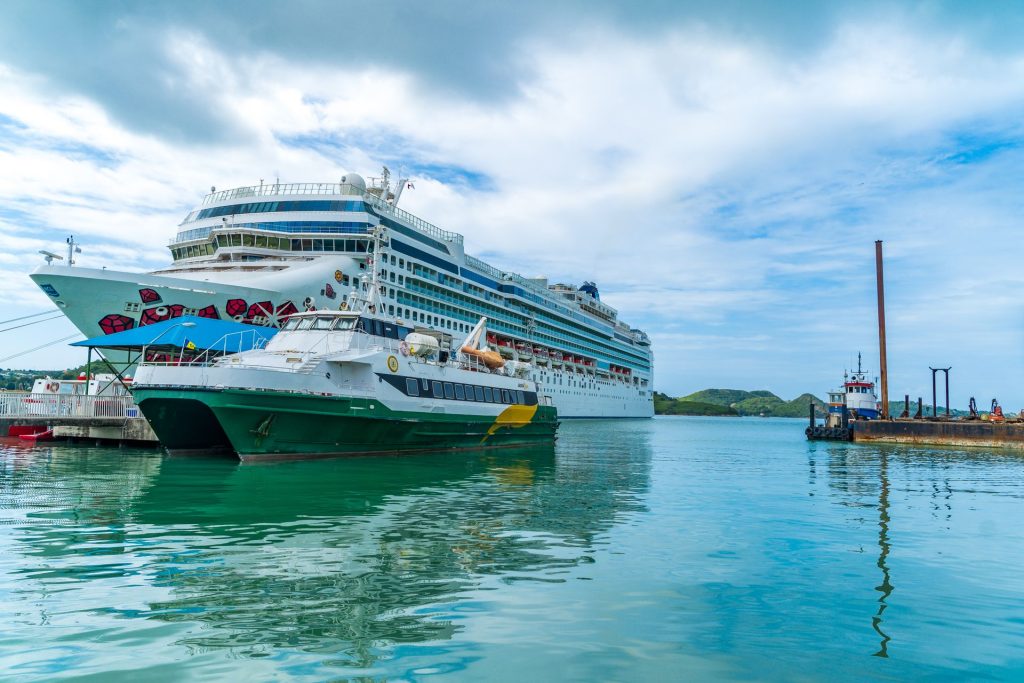
St John's
The capital: a cathedral, a market on Saturdays, and the cruise dock.

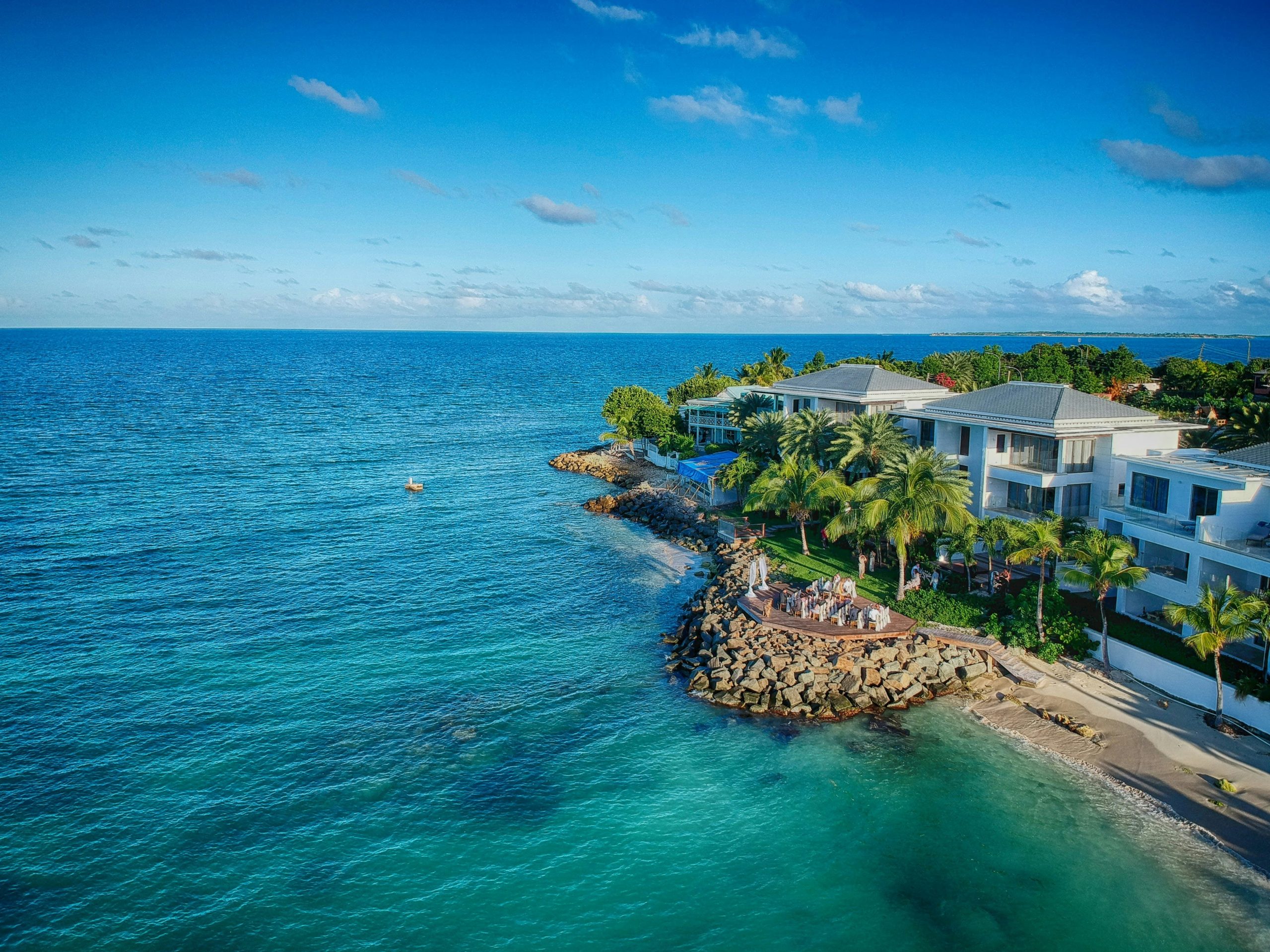
A beach for every day of the year, an 18th-century naval dockyard still in use, and a sister island with pink sand and almost nobody on it.
Antigua markets itself on having 365 beaches, one for every day of the year, and while nobody has counted them recently the point stands — the coastline is indented with bays and most of them are quiet.
The island's other distinction is naval. Nelson's Dockyard at English Harbour is a Georgian naval base from 1745, restored and still working as a marina, and it is the only continuously operating dockyard of its kind in the world. It is UNESCO-listed and it anchors the south of the island, along with a sailing calendar that peaks with Antigua Sailing Week in April.
Barbuda, the sister island 40km north, has a 17-mile pink sand beach and a frigate bird colony, and receives very few visitors. Hurricane Irma devastated it in 2017 and recovery has been slow, so check what is operating before planning a trip there.
A week covers Antigua comfortably.
Buses run from St John's to the main villages. A hire car reaches the quieter beaches.
The capital: a cathedral, a market on Saturdays, and the cruise dock.
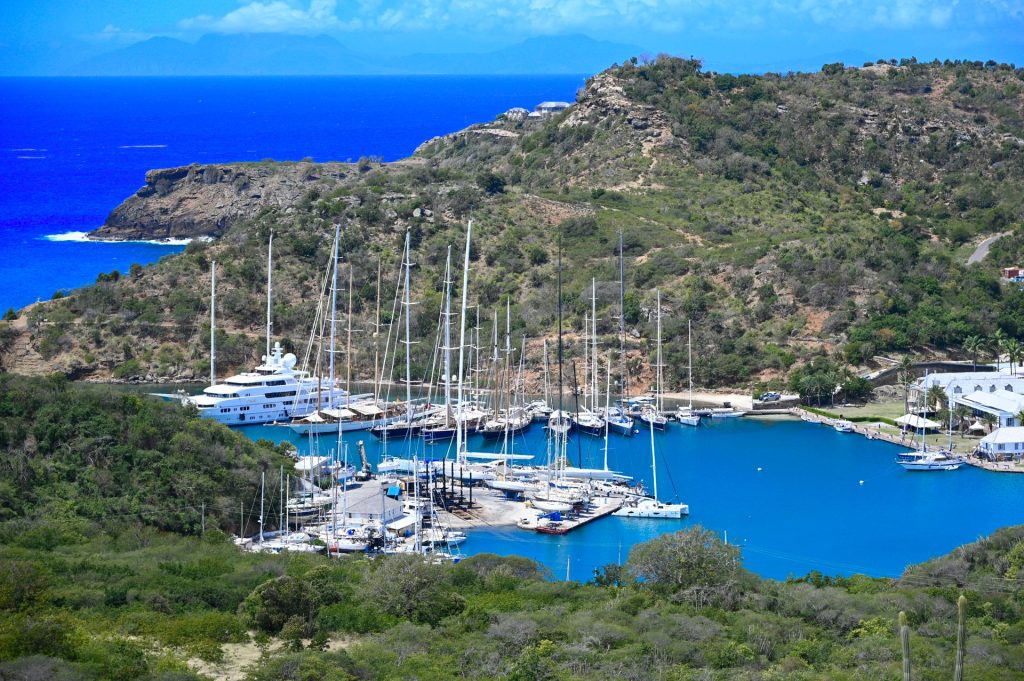
Nelson's Dockyard, the sailing scene, and the best area to stay for atmosphere.
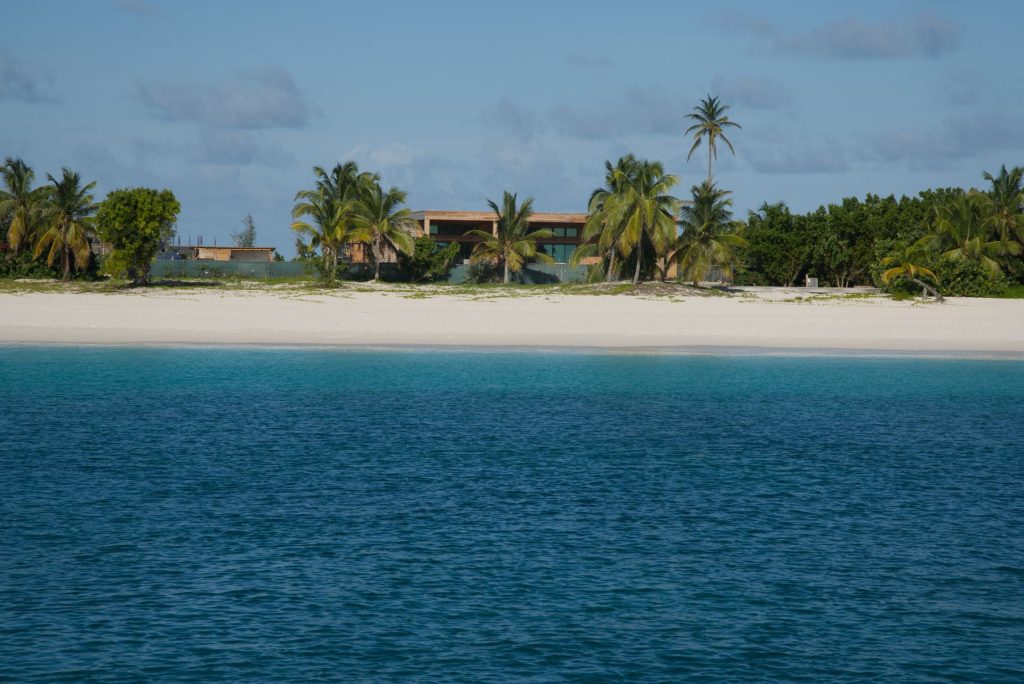
Forty kilometres north: 17 miles of pink sand and a frigate bird colony.
Antigua is a beach and sailing island with a genuinely interesting naval site attached.
The whole pitch, and it holds up.
A working Georgian dockyard and a UNESCO site.
Sailing, snorkelling and a rainforest zip line.
Fungee, pepperpot and Saturday market produce.
Shirley Heights on Sunday, and marina bars.
Expensive, with a few genuine savings.
Nelson's Dockyard is the one genuinely unusual thing here: a Georgian naval dockyard from 1745, restored, UNESCO-listed and still functioning as a working marina, with the original buildings now housing shops, a museum and a hotel. Entry includes Shirley Heights above it.
Shirley Heights on a Sunday afternoon is the island's weekly institution — a lookout over English Harbour with a barbecue, steelpan followed by reggae, and a sunset view that pulls locals and visitors alike.
The beaches justify the marketing. Half Moon Bay on the east coast is the standout, Darkwood on the west is the sunset one, and there are dozens with nobody on them if you have a car.
Barbuda's pink sand beach runs for 17 miles and its frigate bird colony is among the largest in the world. Irma caused severe damage in 2017 and recovery has been uneven, so check what is running before committing to a day trip.
Fungee and pepperpot is the national dish — a cornmeal and okra dumpling with a stew of meat and vegetables — and it is home cooking more than restaurant food, so look for it at local spots rather than tourist ones.
Roti from roadside stands is the everyday cheap meal at EC$20 to EC$35, and saltfish with antrobas is a traditional breakfast.
Antiguan black pineapple, grown in the south of the island, is genuinely sweeter than the imported kind and worth buying at the St John's Saturday market.
Eating out is expensive in the marina and resort areas — mains of EC$70 to EC$130 — and considerably cheaper at local restaurants and roadside stands away from them. Wadadli is the local beer, and rum shops exist here as across the region.
Shirley Heights on Sunday is the weekly event and the best night out on the island: steelpan from late afternoon, a barbecue, reggae after dark, and the view down over English Harbour.
English Harbour and Falmouth have marina bars with a yachting crowd, busiest during the sailing season from December to April and peaking around Antigua Sailing Week in April.
St John's has local bars and a few clubs, busiest at weekends.
Carnival at the end of July and start of August is the island's biggest celebration, with J'ouvert, calypso competitions and a road march. Wadadli beer is EC$8 to EC$15 and rum is cheaper.
Buses run from two terminals in St John's to villages across the island for EC$4 to EC$8, and they are cheap and frequent enough on the main routes. They stop running in the early evening and barely run on Sundays, which shapes plans around Shirley Heights.
Taxis are unmetered with government-set rates — agree the fare in advance, and expect EC$60 to EC$150 for cross-island trips.
Hiring a car is the practical way to reach the quieter beaches. A temporary local permit is issued with the rental for a small fee, and driving is on the left.
Barbuda is reached by a ferry from St John's taking about 90 minutes, or a short flight. Services have been less reliable since 2017, so confirm before planning around them.
Antigua is expensive, with a cruise and yachting economy that sets prices in the areas most visitors stay.
Guesthouse rooms start around EC$120 to EC$250, marina and resort restaurant mains are EC$70 to EC$130, and a beer is EC$8 to EC$15.
A day comes to EC$250 to EC$450.
The savings are specific: buses at EC$4 to EC$8, roti from roadside stands at EC$20 to EC$35, the Saturday market in St John's, and staying away from English Harbour during sailing season when rates peak.
The East Caribbean dollar is fixed at 2.7 to the US dollar, and US dollars are accepted widely, though change usually comes in EC.
Antigua is generally safe and travellers report few problems. Petty theft from beaches and parked cars is the main issue, along with occasional bag snatching in St John's after dark when the cruise crowds have gone.
The practical advice is ordinary: do not leave belongings unattended on the sand, avoid unlit areas of St John's at night, and use licensed taxis after dark.
In the water, the east coast faces the Atlantic with stronger currents, and Half Moon Bay in particular can have significant surf despite looking idyllic. The west and south coasts are calmer.
Hurricane season runs June to November and these islands are in the path — Irma caused catastrophic damage to Barbuda in 2017, and recovery there has been slow and uneven. Travel insurance covering disruption matters in those months.
Most European, UK, US and Canadian citizens enter visa-free for stays of up to six months, with the period granted at the officer's discretion.
Passports need six months' validity, and proof of onward travel and accommodation may be requested.
There is a departure tax, generally included in airfares. An online immigration form is completed before arrival.
If Barbuda is on your itinerary, confirm ferry schedules and accommodation directly before booking flights — services and facilities there have been less reliable since 2017.
December to April is the dry season and the sailing season. Hurricane season runs June to November.
Average highs for St John's, which barely change. The dry season from December to April is also the sailing season, and Antigua Sailing Week in late April fills the island entirely.
Pick how you travel and how long for. Per night, for one person, in East Caribbean dollars — 2.7 to the US dollar.
Marina and resort restaurants run EC$70–130 a main, against EC$20–35 for roti at a roadside stand. Rates in English Harbour peak during sailing season.
Sailing Week in April and Carnival in August are the two weeks the island fills.
One of the biggest regattas in the Caribbean, and the island's busiest week.
J'ouvert, calypso competitions and a road march. The biggest local celebration of the year.
Barbecue, steelpan then reggae, and the view over English Harbour at sunset.
Traditional and classic yachts racing, just before Sailing Week.
The best weather, and the sailing calendar with it.
Peaking September. Barbuda is still recovering from Irma in 2017.
The ones we get asked most.

Compare places to stay across Antigua and Barbuda — live prices, real reviews and free cancellation on most bookings. Then meet the people already there in the app.

 Get the App.



 Get the App.