City centre
Markets, ferriesAround the Place de la Victoire.

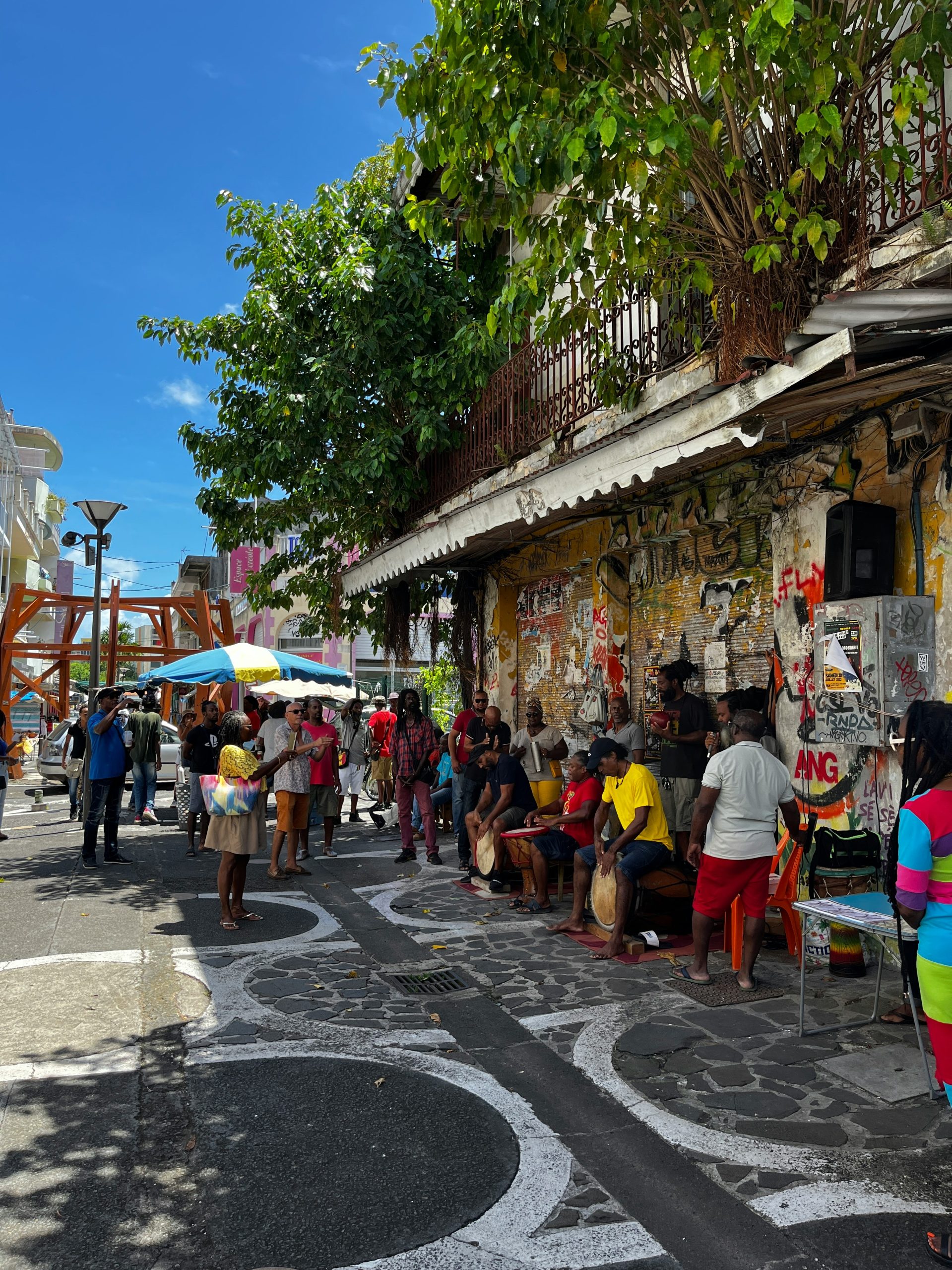
Guadeloupe's main city and port: the Mémorial ACTe, a landmark museum on slavery, the spice stalls of the Marché Saint-Antoine, colonial streets around the Place de la Victoire, and ferries to Les Saintes and Marie-Galante.
Pointe-à-Pitre is Guadeloupe's largest town and its economic centre, on Grande-Terre where the island's two wings meet. It is not the capital, which is Basse-Terre, but it is the main port and the gateway for most visitors, with the international airport 15 minutes away.
Its most important sight is the Mémorial ACTe, the Caribbean Centre of Expressions and Memory of the Slave Trade and Slavery, opened in 2015 on the site of the former Darboussier sugar factory. Its black building, wrapped in a silver lattice, holds a major permanent exhibition on slavery and its legacy.
The old centre is a grid of wooden and iron colonial buildings around the Place de la Victoire, with the iron-framed Cathédrale Saint-Pierre-et-Saint-Paul and covered markets selling spices, rum and madras cloth. Most travellers stay a day or two, or base themselves in nearby Le Gosier for beaches and nightlife.
The centre for markets and ferries, or Le Gosier and Bas-du-Fort for beaches and nightlife nearby.
Around the Place de la Victoire.
South of the centre.
The resort town nearby.
Map data from OpenStreetMap contributors.
Spend a morning at the Mémorial ACTe, which tells the story of slavery and the slave trade through objects, art and testimony, and walk its garden and the footbridge to the Morne Mémoire.
Browse the spice, vanilla and rum stalls of the Marché Saint-Antoine and the covered Marché de la Darse by the harbour. Walk the Place de la Victoire, see the iron-framed cathedral, and visit the Musée Saint-John Perse, in a colonial house, about the Nobel Prize-winning poet born here.
In Bas-du-Fort, visit the Aquarium de la Guadeloupe and the marina, then head to the beaches of Le Gosier and the Îlet du Gosier.
The Place de la Victoire, the markets and the cathedral are free, and so are the harbour and the colonial streets.
The beaches at Le Gosier and Bas-du-Fort cost nothing.
The Mémorial ACTe, the Musée Saint-John Perse and the aquarium charge entry.
Pointe-à-Pitre is the best place for cheap Creole food. Bokits, fried bread stuffed with chicken, saltfish or cheese, cost €5 to €9 from vans and stalls, and accras de morue, salt cod fritters, are sold everywhere. Lunch plates of colombo, a Creole curry, cost €12 to €18.
The markets sell fruit, juices and spices, and French bakeries are on every street.
Service is included in restaurant prices, as in France; leaving a little extra for good service is appreciated but not expected.
The city centre is quiet at night. Most nightlife is in Le Gosier and the Bas-du-Fort marina, a few minutes away, with beach bars, clubs and live music at weekends.
Ti-punch, rum with lime and cane syrup, is the drink.
Beer costs €3 to €5 and cocktails €7 to €12.
Pointe-à-Pitre airport, Pôle Caraïbes, is about 15 minutes from the centre by taxi. Ferries leave the Bergevin terminal for Les Saintes and Marie-Galante.
Buses link Pointe-à-Pitre with the main towns, but run less often in the evenings and at weekends. A hire car is close to essential, as buses are infrequent and stop early.
Traffic around the city is heavy at rush hour.
Guadeloupe is priced like France. Beds in guesthouses and gîtes start at around €30 to €60 a night. Bokits cost €5 to €9, and restaurant mains €15 to €30.
The Mémorial ACTe costs about €15. Hire cars cost about €35 to €60 a day.
Guadeloupe uses the euro, and cards are accepted almost everywhere.
Pointe-à-Pitre is fine by day, but parts of the centre are deserted and best avoided at night. Take a taxi after dark rather than walking.
Leave nothing visible in parked cars, as break-ins are common.
Tap water is treated, but supply cuts and quality notices are common, so many people drink bottled water. In an emergency, call 112.
Islands, beaches and the volcano.
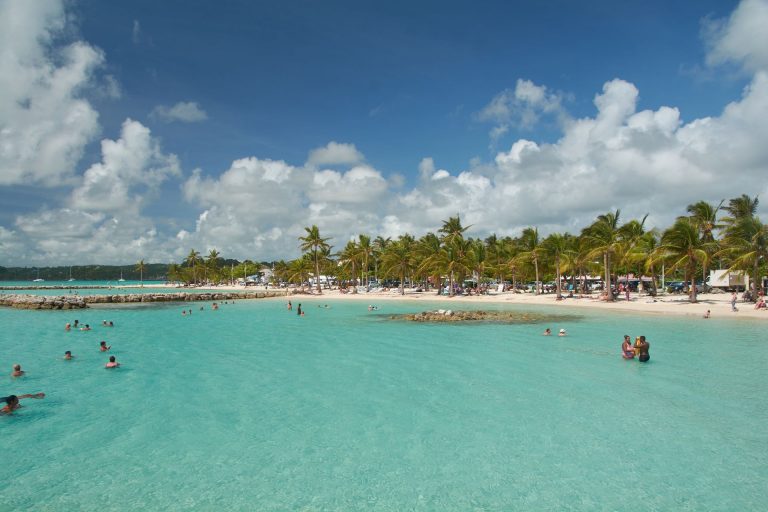
A lagoon beach town.
Carnival, cooks and sailing.
Weekly parades, driven by drums.
A parade of cooks in traditional dress.
The finish of the solo transatlantic yacht race.
December to April is the dry season, carême, and the busiest time. June to November is the wet season, hivernage, with the risk of hurricanes, peaking in September.
Average highs, rounded. Warm all year.
Per night, for one person, based on Pointe-à-Pitre prices.
Treat these as a guide. A hire car costs extra.
The ones we get asked most.

Compare places to stay across Guadeloupe: live prices, real reviews and free cancellation on most bookings. Then meet the people already there in the app.

 Get the App.



 Get the App.