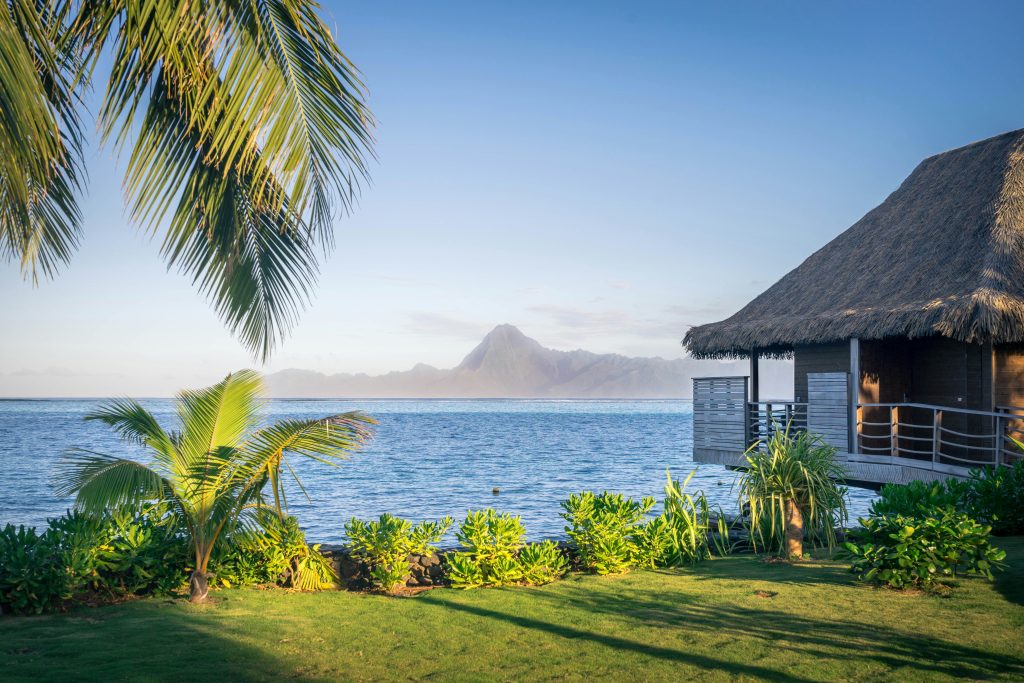
Papeete
2 hostels · dorms from XPF 4,500
Tahiti's capital: a market, roulottes food trucks on the waterfront, and the airport.

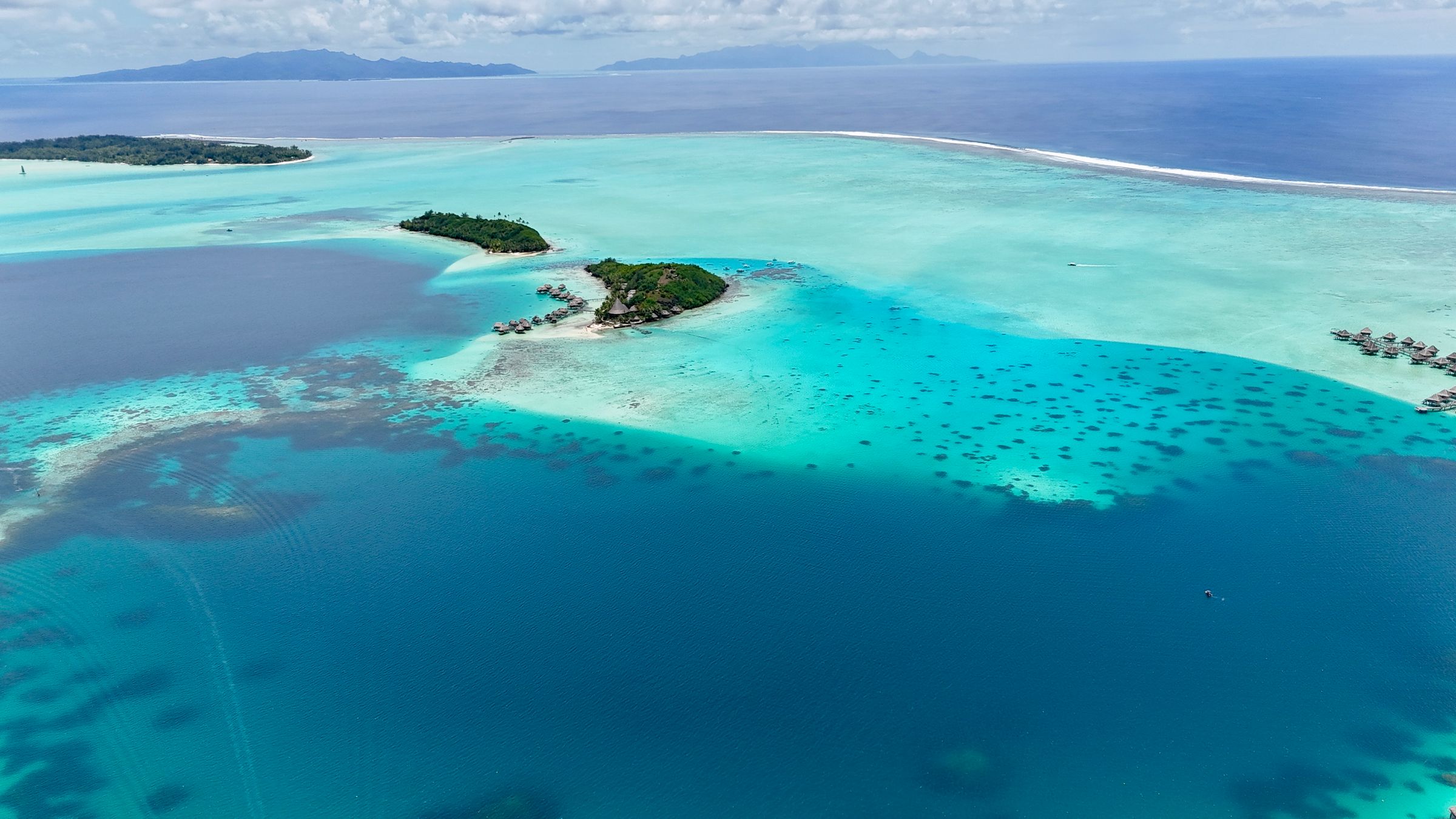
Bora Bora, Moorea and 116 other islands across an ocean the size of Europe. Famously expensive, and there is a cheaper version that involves guesthouses and ferries.
French Polynesia is 118 islands spread across five archipelagos and an area of ocean roughly the size of Europe. It has a reputation as the most expensive destination in the Pacific, earned honestly by the overwater bungalows of Bora Bora.
There is a second version. Pensions de famille (family guesthouses) exist across the islands at a fraction of resort prices, the ferry between Tahiti and Moorea costs almost nothing and takes half an hour, and markets and food trucks feed you well for very little. It is still not cheap, but it is a different order of magnitude.
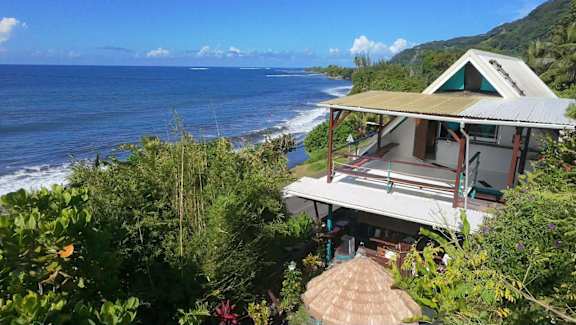
Tahiti is where you land, and Papeete's market and roulottes food trucks are worth a night. Moorea, visible across the water, is the one most travellers love: a cathedral of green ridges with a lagoon around it.
Ten days to two weeks covers Tahiti, Moorea and one more island.
Ferries link Tahiti and Moorea cheaply. Everything further needs a flight.
Tahiti's capital: a market, roulottes food trucks on the waterfront, and the airport.
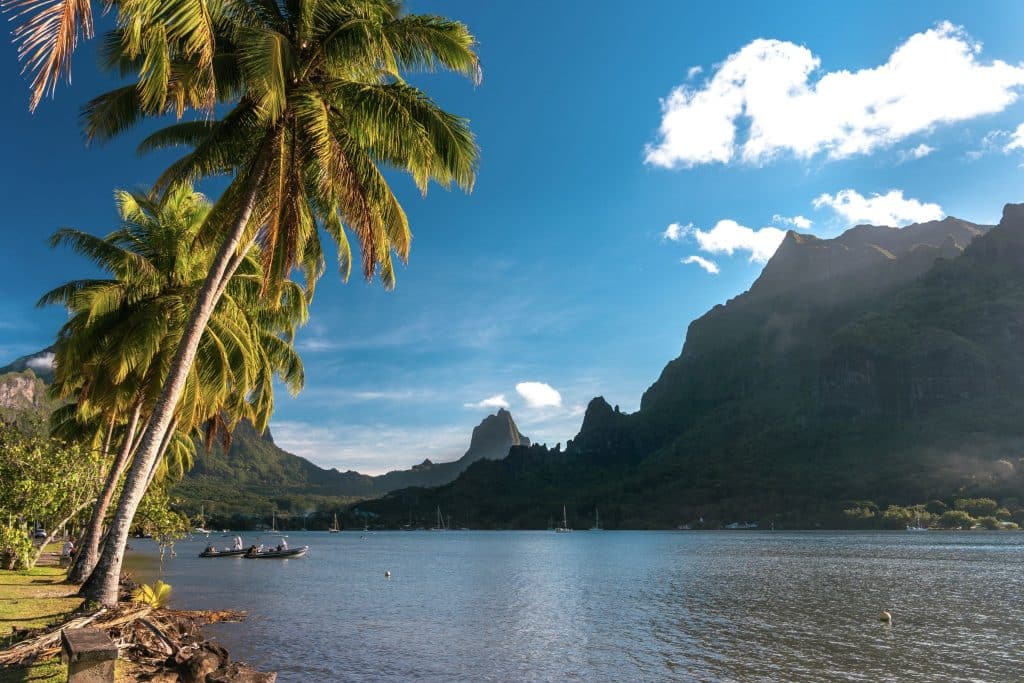
Thirty minutes by ferry: green ridges, a lagoon and the island most visitors prefer.
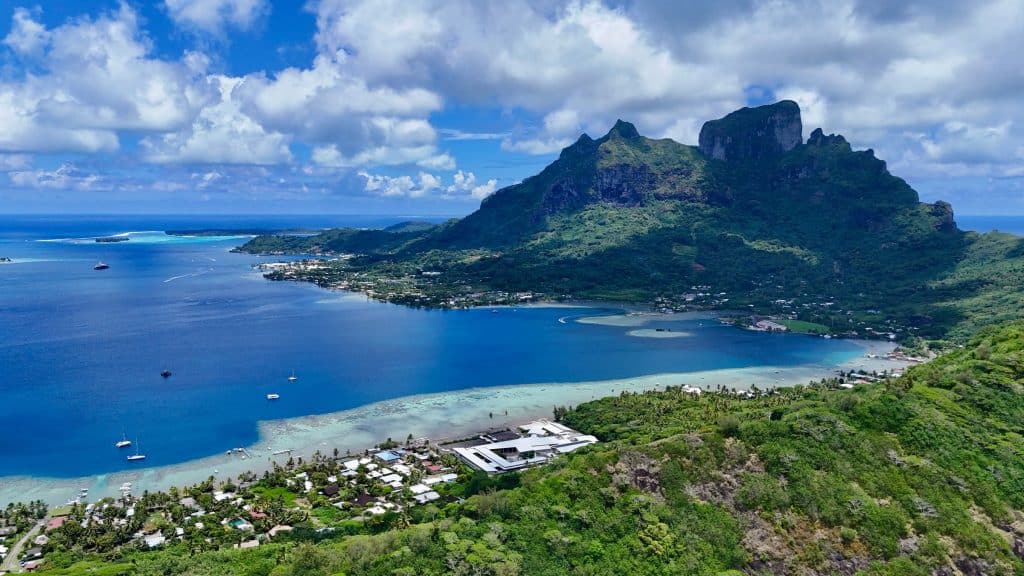
The famous one, with a lagoon that lives up to it and prices that go beyond it.
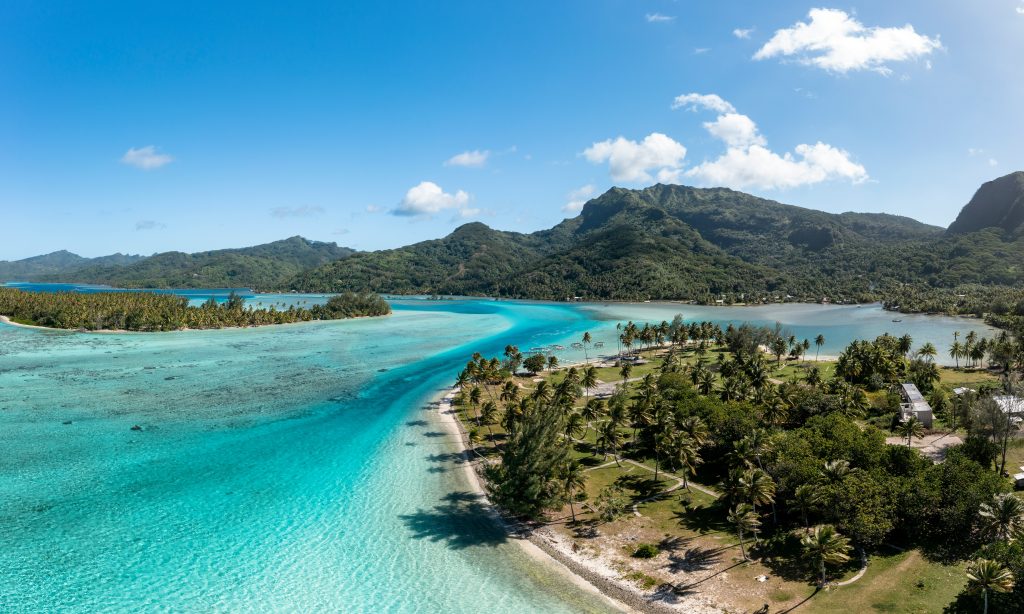
Quieter and greener, with archaeological sites and far fewer visitors.
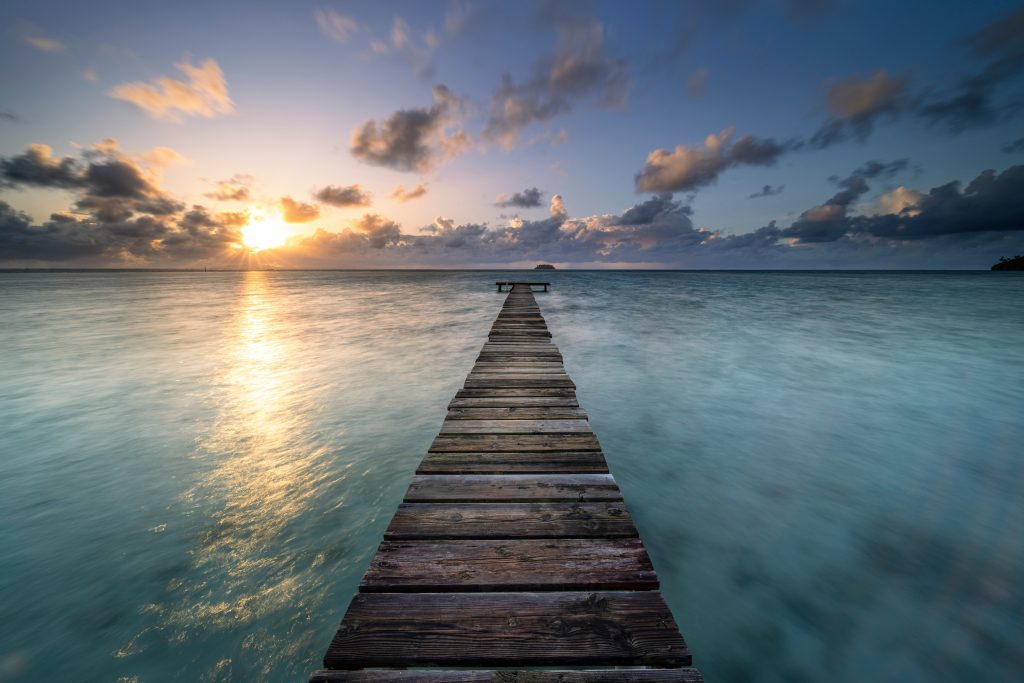
The sacred island, with Taputapuātea marae, a UNESCO site central to Polynesian history.
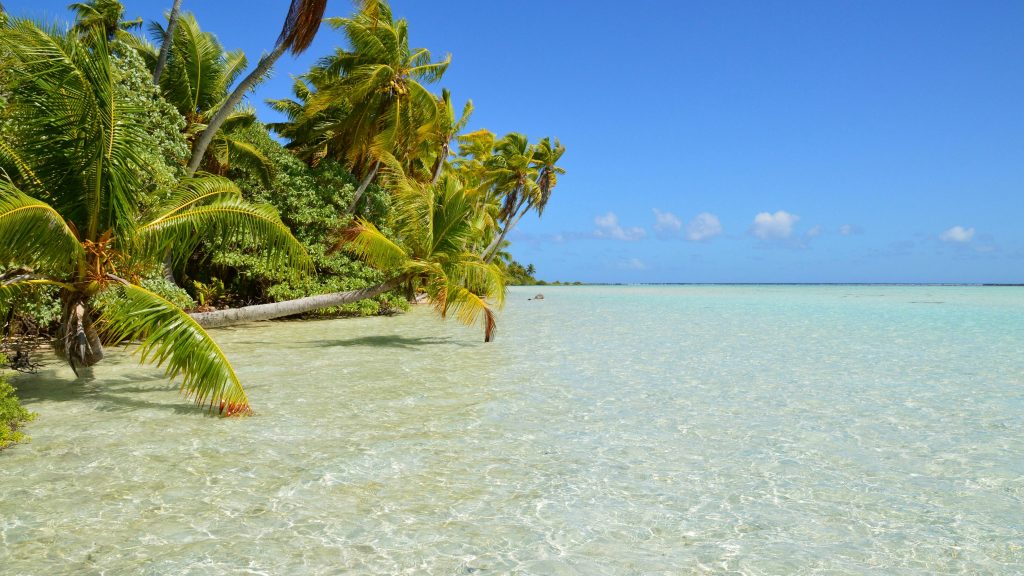
A vast atoll in the Tuamotus, and one of the great diving destinations in the Pacific.
French Polynesia is a lagoon, diving and hiking trip, and how you book it decides what it costs.
Lagoons that justify the photographs.
Diving, hiking and interior valleys nobody visits.
Marae sites, tattoo traditions and Heiva in July.
Poisson cru, French bakeries and waterfront food trucks.
Possible, with pensions and ferries instead of resorts and flights.
Papeete for a night, mostly for the market and food trucks.
Moorea is where most independent travellers end up, and rightly. Lagoon tours take you to snorkel with rays and blacktip sharks, the Belvedere lookout sits between two bays, and the Three Coconuts pass is a proper half-day hike through the interior.
Bora Bora's lagoon does live up to its reputation, and there is a way to see it without a resort: stay in a pension on the main island, take a lagoon tour, and eat at food trucks.
Rangiroa in the Tuamotus is one of the world's great dive sites, with the Tiputa pass carrying dolphins, sharks and rays through on the tide.
Raiatea's Taputapuātea is a UNESCO-listed marae complex and one of the most important sites in Polynesian culture, from which voyaging canoes set out across the Pacific.
Poisson cru (raw tuna in coconut milk and lime) is the national dish and it is everywhere, from roulottes to restaurants.
Roulottes are the answer to the cost problem. These food trucks gather on the Papeete waterfront each evening and in towns across the islands, serving steak frites, chow mein, poisson cru and crêpes for XPF1,200 to XPF2,000: a fraction of restaurant prices and considerably more fun.
The French legacy means genuinely good bread and pastries everywhere, including baguettes that are price-controlled and therefore cheap.
Market halls in Papeete and on the larger islands sell fruit, fish and cooked food, and self-catering from a supermarket is how many travellers manage a longer stay.
Papeete has the only real nightlife: bars along the waterfront, a few clubs, and a scene that is busiest at weekends. Elsewhere, evenings are your pension, the roulottes, or a hotel bar.
Heiva in July is the exception: a month of dance and singing competition between islands that is the cultural event of the year, with performances that are the opposite of a tourist show.
Hinano is the local beer at XPF500 to XPF900 in a shop and considerably more in a bar. Alcohol is expensive and imported, and buying from a supermarket rather than a resort bar makes a substantial difference.
The Tahiti to Moorea ferry is the one cheap link: thirty minutes, several times a day, a few hundred francs, and it makes Moorea an easy first stop.
Everything else means Air Tahiti, whose multi-island passes are the sensible way to combine several islands: buying legs individually costs considerably more. Flights to Bora Bora, Huahine and Rangiroa all run from Papeete.
On the islands, le truck buses have largely given way to limited local services, so most visitors hire a car for a day, rent bicycles, or rely on pensions offering transfers. Moorea's ring road is 60km and cycling it is a long but flat day.
Cargo ships serve the remote Marquesas on multi-day voyages, which is a trip in itself.
This is the most expensive destination in this guide, and the gap between the resort version and the independent one is enormous.
Pensions and dorms start around XPF3,500 to XPF9,000, against resort rates many times that. Roulottes plates are XPF1,200 to XPF2,000 while restaurant mains are XPF3,000 to XPF5,000. The Moorea ferry is a few hundred francs; internal flights are XPF15,000 to XPF35,000 a leg.
A careful day comes to XPF9,000 to XPF18,000. The levers are pensions rather than hotels, roulottes rather than restaurants, supermarket shopping, and staying on Tahiti and Moorea rather than flying between distant islands.
The CFP franc is pegged to the euro, which makes conversion simple for European travellers.
French Polynesia is safe, with low crime and good infrastructure by Pacific standards: it is a French overseas collectivity, and health and emergency services reflect that, particularly on Tahiti.
The hazards are in the water. Lagoon passes have very strong currents on an outgoing tide, and drift diving there is for experienced divers with guides. Coral cuts infect fast, and stonefish sit in shallow sandy areas: reef shoes are sensible.
Sharks are common in the lagoons and are generally blacktips and lemon sharks that ignore people; feeding them, which some tours do, is discouraged and changes their behaviour.
Cyclone season runs November to April. Ciguatera, a toxin that accumulates in some reef fish, is present: locals know which fish and areas to avoid, and following their lead is the practical protection.
French Polynesia is a French overseas collectivity but is not in the Schengen area, so it has its own entry rules. EU citizens can enter and stay with an identity card or passport. UK, US, Canadian and Australian citizens generally enter visa-free for up to 90 days, though a Schengen visa does not automatically apply here.
Passports need to be valid for the stay, and proof of onward travel is commonly requested.
Check the current position for your nationality before booking, as the rules differ from mainland France in ways that catch people out.
May to October is the dry season and the best time. November to April is hotter, wetter and carries cyclone risk, though prices drop.
Average highs for Tahiti, which barely change. The Tuamotu atolls including Rangiroa are drier year-round, and the Marquesas run on a different rainfall pattern again.
Pick how you travel and how long for. Per night, for one person, in CFP francs.
The CFP franc is pegged to the euro. Internal flights at XPF15,000–35,000 a leg sit outside these figures: Air Tahiti multi-island passes are cheaper than buying them separately.
Heiva in July is the cultural event of the year across all the islands.
A month of dance, singing and sport competition between islands. The cultural event of the year.
Humpbacks calving in the warm water, with regulated swimming tours.
A three-day outrigger canoe race between islands, and a national obsession.
The best weather, visibility and diving conditions.
The rising of the Pleiades, marking the traditional season of abundance.
Hotter, wetter and cheaper, with some risk attached.
What is bookable here, live from Hostelworld. Pensions de famille and small guesthouses are the affordable option, concentrated on Tahiti and Moorea.
The ones we get asked most.

Compare places to stay across French Polynesia: live prices, real reviews and free cancellation on most bookings. Then meet the people already there in the app.

 Get the App.

 Get the App.