

The best-value Salar de Uyuni tour for most backpackers is a shared three-day jeep tour booked in Uyuni town. It takes in the salt flat, the high lagoons and the geysers, and you can finish at the Chilean border. Whatever you book, keep 186 bolivianos in cash per person for the entrance fees, which tours usually leave out of the price: 150 Bs for the Eduardo Avaroa reserve, 30 Bs for Isla Incahuasi and 6 Bs for the Polques hot springs, according to the Nomades tour listing checked in November 2026.
Below you’ll find which tour length suits you, the full cost, when the mirror effect happens, how to pick a safe operator, what to pack and where to stay. If you’re still planning the rest of the country, our list of places to visit in Bolivia is a good place to start.
1-day or 3-day tour?
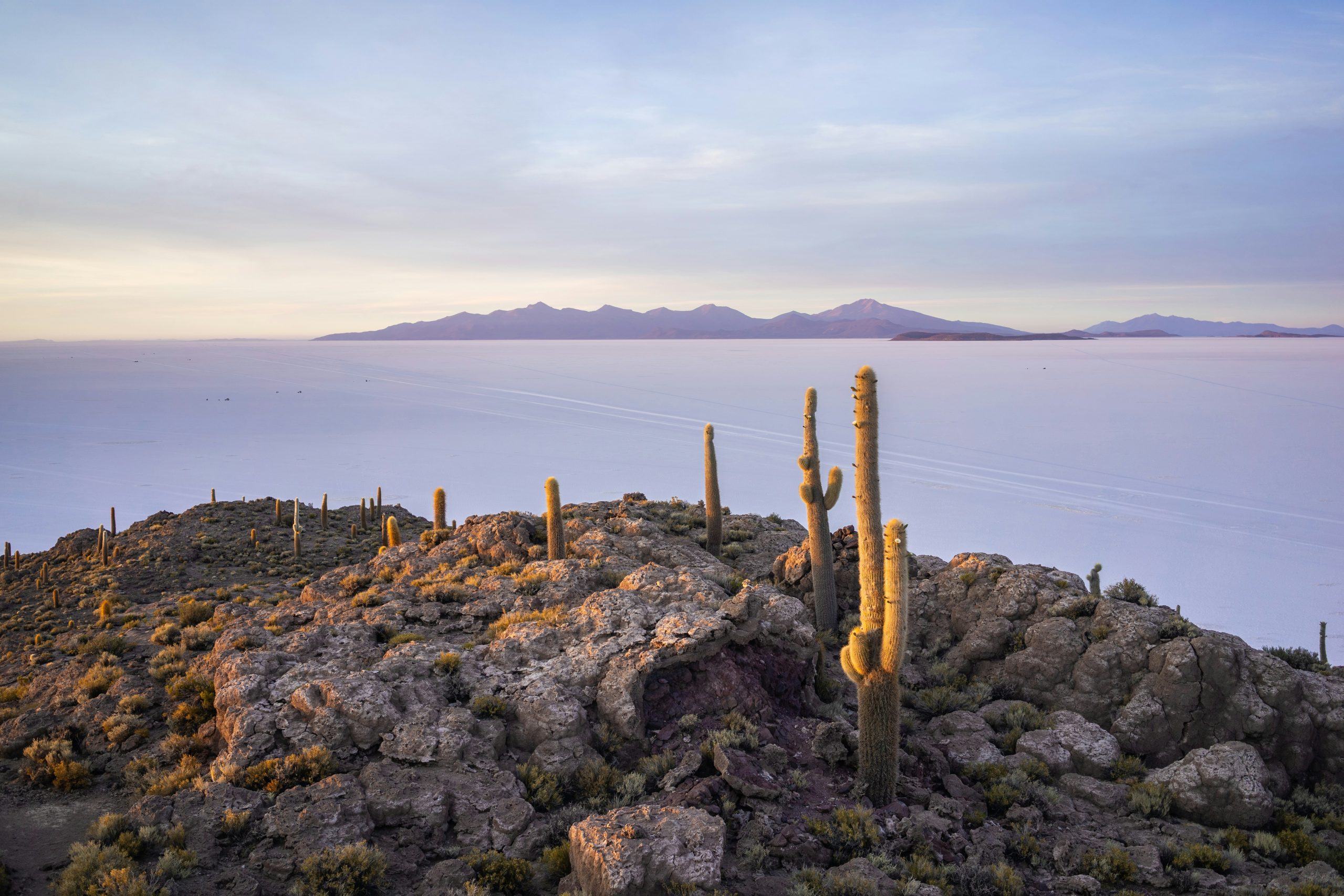
Pick the three-day tour if you have the time. The one-day trip only covers the salt flat itself, usually with the train cemetery outside Uyuni and Isla Incahuasi, the cactus-covered island in the middle of the flat. You’re back in town the same evening.
The three-day tour adds the high-altitude south: coloured lagoons with flamingos, geysers and a dip in the hot springs. Most finish back in Uyuni, but many will drop you at the Chilean border so you can carry on to San Pedro de Atacama, which saves a long trip back. Our guide to backpacking Chile picks up from there.
Coming from the south? Four-day tours start in Tupiza and cross the same lagoons before ending on the salt flat. Nomades listed one at US$280 per person in November 2026, with a minimum of five passengers and the entrance fees on top. You can find hostels in Tupiza for the night before.
How much does a Salar de Uyuni tour cost?
Budget around US$300 per person for a shared three-day tour, plus 186 Bs (about US$15) in cash for entrance fees. A guided three-day tour listed on Travelocity started at US$287 when we checked in November 2026, and like most listings it leaves the park and site fees out of the price.
These are the fees you’ll pay in bolivianos along the way, with dollar figures at about 12.09 Bs to the US dollar (the reference rate on 2 November 2026):
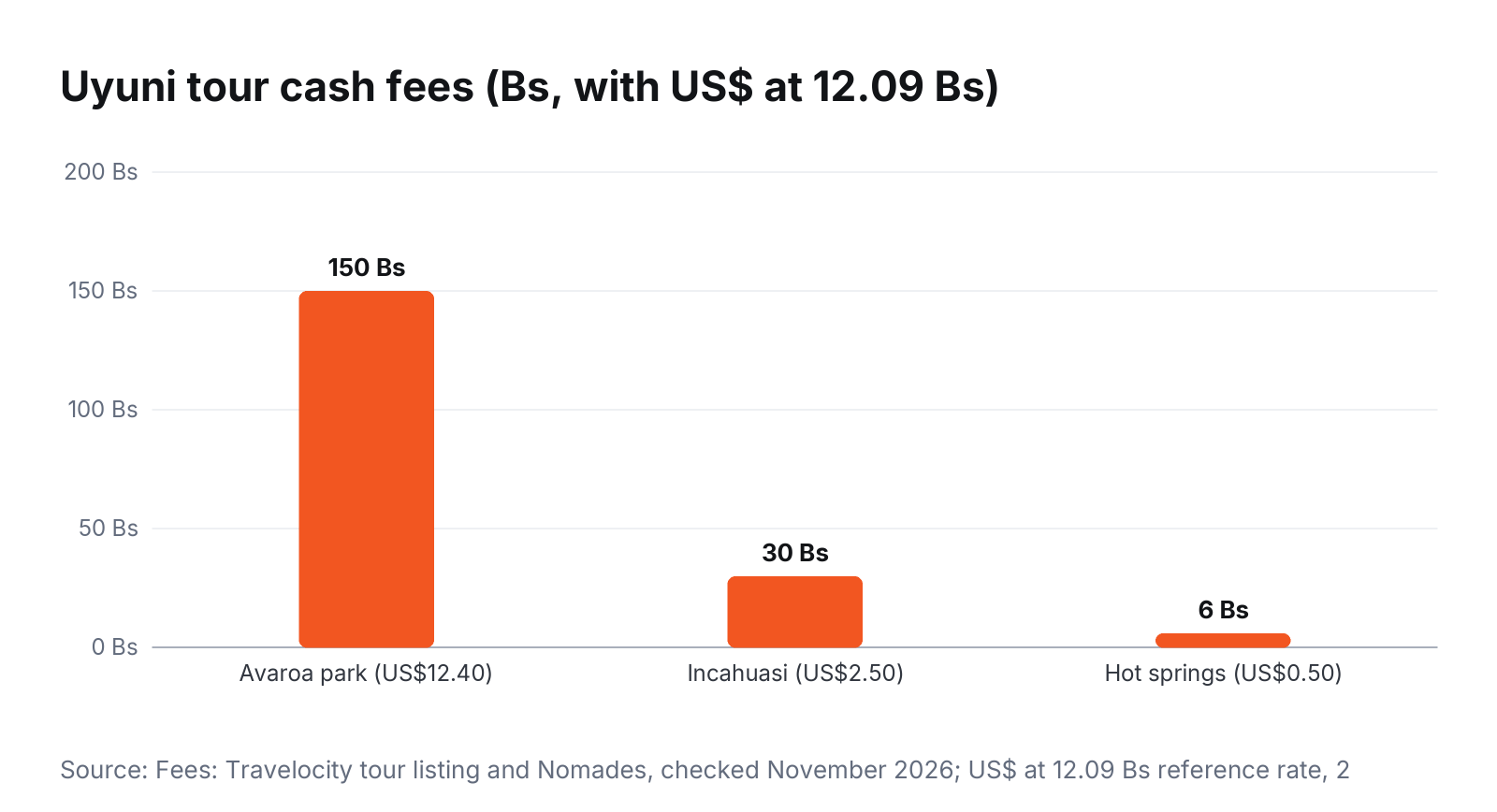
- Eduardo Avaroa Andean Fauna National Reserve: 150 Bs (about US$12.40)
- Isla Incahuasi: 30 Bs (about US$2.50)
- Polques hot springs: 6 Bs (about US$0.50)
Bring those fees in bolivianos, and a little extra for toilets, snacks and drinks. Nomades suggests carrying about 300 Bs per person for the fees and extras on its three-day Uyuni tour. Bolivia let the boliviano float in late June 2026, ending a 15-year peg to the dollar, and by September it had slid to about 12.26 per US dollar, the Rio Times reported. The rate still moves day to day, so dollar prices for the same fee shift slightly from week to week. Change money in Uyuni town before you leave: there are no ATMs on the salt flats or in the lagoon region, as this three-day tour guide warns. US dollars are easy to exchange in Bolivia but are generally not accepted for small payments, as Bushop explains.
Get your bed sorted before you arrive too, since most tours leave in the morning. Our Uyuni travel guides cover the town itself.
When can you see the mirror effect?
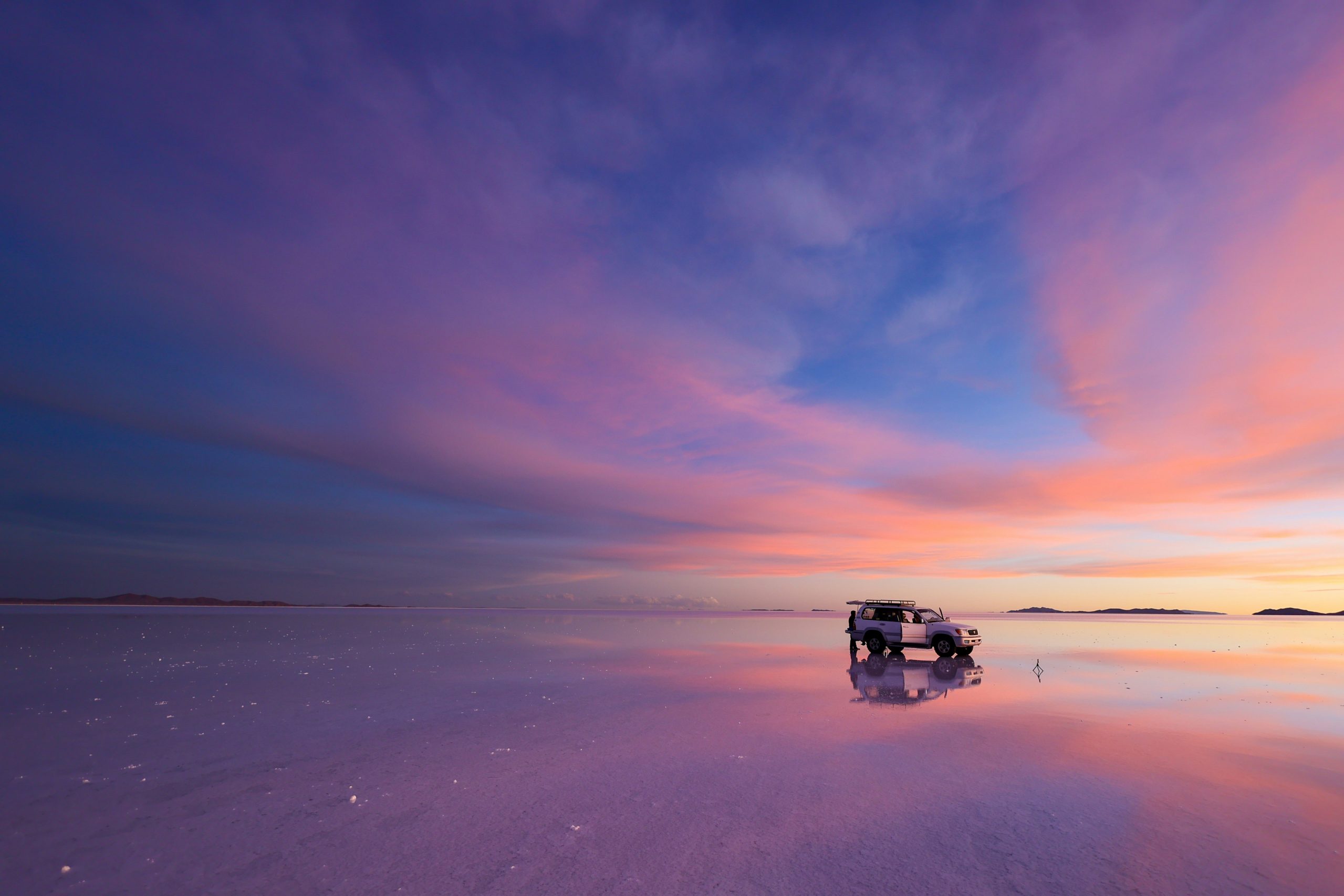
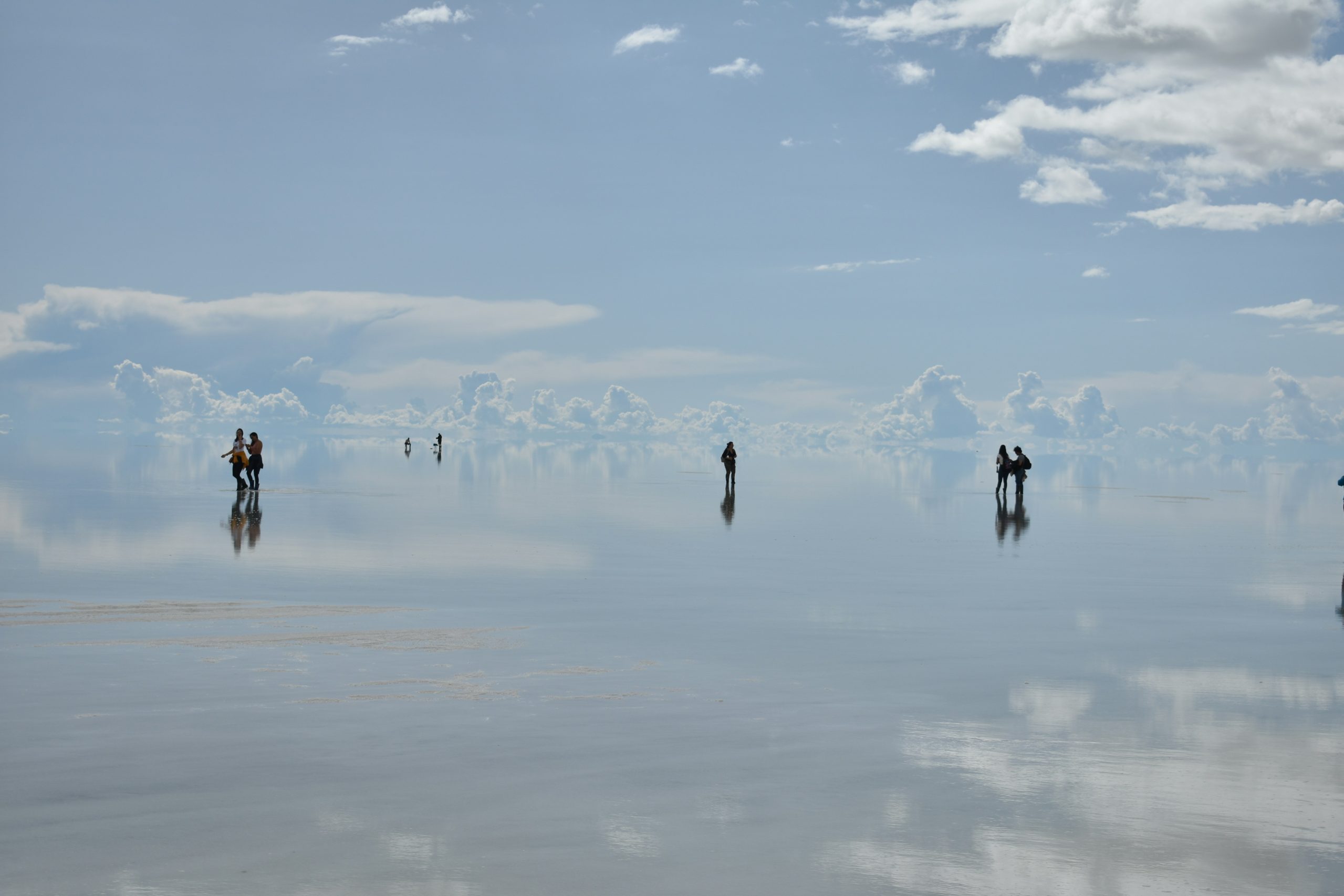
Go in the rainy season, and aim for January or February if the mirror is the reason you’re going. A thin layer of rainwater on the salt turns the flat into a giant reflection, and Bushop says the mirror is most reliable from late December to March, with January and February the deepest. Sources don’t agree on exact months, because it depends on how much rain falls that year, so treat these as a guide.
The trade-off is access. In the wet months Isla Incahuasi is usually closed to tours (Bushop says roughly January to March), deep water can make parts of the flat impassable, and three-day tours sometimes change their route to the lagoons. If you book the three-day tour in this season, ask the agency which stops are actually running that week.
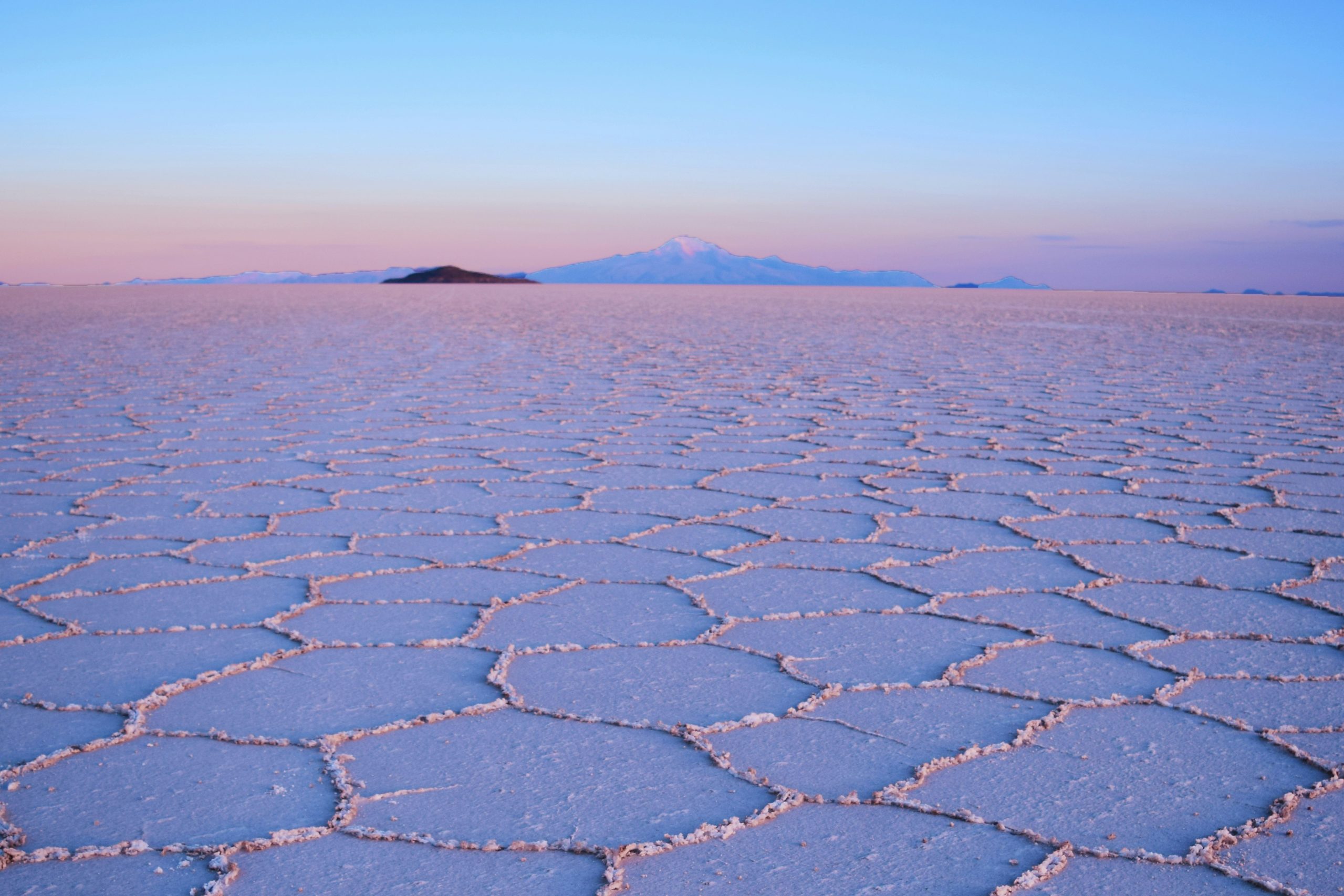
The dry season, about May to November, is the opposite. The crust is hard, jeeps can cross the whole flat to Incahuasi, and you get the white hexagon patterns in the salt, but no mirror. It’s also much colder: nights in the reserve can fall to -20°C between June and August.
For more places in the country worth planning around, the Bolivia travel guides cover the rest of the route.
How to pick a safe tour operator
Choose your operator on the jeep and the driver, and only then on price. Tour vehicles have crashed on the salt flat before: in June 2019 two 19-year-old British travellers and their driver died when their jeep overturned, and police said it was apparently going over the speed limit, HuffPost UK reported. Most tours run without trouble, but you’ll spend up to three days in one vehicle at over 4,000 metres, a long way from a hospital, so the kit matters.
The Bolivian travel site Bolivian Life recommends operators with radios, oxygen, seatbelts and recovery gear, and drivers experienced with high altitude and wet-season conditions. Use this checklist at the agency desk before you pay:
- Are there working seatbelts in every seat, including the back row?
- Does the jeep carry a radio or satellite phone?
- Is there oxygen on board in case someone gets altitude sickness?
- Is there a spare tyre and recovery gear? Between June and August, also ask about winter tyres.
- How many people go in each jeep? Bolivian Life suggests six at most for a comfortable trip.
- Is the driver also your guide, and do they speak English, or only Spanish? If you want an English-speaking guide, ask what it adds to the price.
- How long has the driver been doing this route, and what happens if the jeep breaks down?
Read reviews from the last few months, not the last few years, because the same agency can change drivers and vehicles. Look for comments about careful driving and the jeep’s condition, and treat mentions of speeding or drinking drivers as a deal-breaker. Booking in Uyuni town helps here: you can walk between agencies, ask to see the jeep you’d actually ride in and test the seatbelts yourself. If a driver speeds on the trip, ask them to slow down, and report it to the agency when you’re back.
Picking a careful, well-reviewed local operator is also part of being a more responsible traveller on a fragile route. If you have access needs, our guide to backpacking South America with a disability has tips worth raising with the agency before you book.
What to pack for the salt flats
Pack for winter at night and strong sun by day. The refuges on a three-day tour sit high up and have little or no heating, so the cold is what catches most people out, especially between June and August. Your main bag usually rides on the jeep roof, so keep warm clothes and the day’s essentials in a small bag with you.
- Warm layers: a fleece, a down or insulated jacket, a hat, gloves and thick socks, plus thermals to sleep in.
- A sleeping bag. Some agencies include one and others rent them out, so ask at the desk whether it’s in the price, and bring a liner if you’re using a rented bag.
- Sunglasses, high-factor sun cream and lip balm, because the white salt bounces the light straight back at you at altitude.
- Cash in bolivianos for the entrance fees, toilet stops and drinks, as there are no cash machines once you leave Uyuni.
- Snacks, a refillable water bottle and a head torch, since power in the refuges can be limited.
- Swimwear and a small towel for the hot springs.
- In the rainy season, boots you don’t mind getting wet. Ask your agency whether it can lend or rent rubber boots for the mirror.
Bring a prop or two for the perspective photos. The flat is so even and white that a toy figure, a bottle or a snack packet held near the lens can look giant next to your friends further back. It’s why the Salar made our list of beautiful views around the world, and the rusting engines at the train cemetery, one of our favourite abandoned places to explore, are worth some charge left on your phone too.
Where to stay in Uyuni
Spend at least one night in Uyuni town before your tour, two if you can. Most people arrive on the overnight bus from La Paz, which tour listings on Expedia show getting in around 7:30am, and jeeps tend to leave mid-morning, around 10:30am. That leaves very little time to compare agencies, change money and check a jeep, which are the things that keep a tour cheap and safe.
A night in town also gives your body a day to adjust. The salar sits at about 3,660 metres, according to Bushop, and the town on its edge is at much the same height, so take it easy on the first evening, drink plenty of water and go to bed early. Nights in town get cold too, so look for a hostel with heating or plenty of blankets, and a hot shower before two days of refuges.
Book the night after as well if your tour loops back to Uyuni. If you’re crossing into Chile instead, sort out a bed in San Pedro de Atacama before you leave, because you’ll arrive tired after a long day on the road. Hostelworld lists 27 hostels in San Pedro de Atacama (checked November 2026), and you can compare San Pedro hostels while you still have wifi in Uyuni, or browse hostels across Chile for the rest of the route. Travelling as a pair and want a door that locks? Our guide to hostels for couples explains how private rooms in hostels work.
Here are hostels in Uyuni to start from, with live prices and availability:
Book the tour once you arrive
Book your tour in Uyuni town the day before you want to leave. Walk between two or three agencies on the streets around the centre, ask each one the same questions from the safety checklist above, and compare what’s actually included: the sleeping bag, the route that week, the drop-off at the Chilean border and which entrance fees you’ll pay on top. With a couple of quotes in hand, you have room to ask for a better deal without cutting corners on the jeep.
Shared tours only leave when a jeep is full, so finding your own group helps. In the Hostelworld app, City Chats put you in a group chat with travellers staying at any hostel in Uyuni, which is an easy way to find a few people who want the same route and the same departure day. Turn up at the agency as a ready-made group and you get to pick your jeepmates instead of being placed with strangers. No booking yet? A Social Pass opens up the chats anyway. Some hostels also post Linkups, such as group dinners, which are another way to meet people before the trip.
Then plan where you’re heading after the salt. If your tour loops back to Uyuni, the usual next stops are Potosí, the old silver-mining city, and Sucre beyond it, or the long road back to La Paz. You can find hostels in Potosí, hostels in La Paz and hostels in Sucre while you still have wifi in town. If you’re carrying on north into Peru afterwards, our guide to backpacking Peru covers the next leg, and Machu Picchu is one of the stops in our guide to spiritual places around the world. For the wider continent, browse our South America travel guides.

 Get the App.
Comments