Centro
Budget, sightseeingAround Plaza 14 de Septiembre, with colonial arcades, the cathedral and most budget hostels.

The city of eternal spring, Bolivia's food capital, and the base for the dinosaur footprints and canyons of Torotoro. Warm, green and easy-going at 2,550 metres.
Cochabamba sits in a fertile valley in the middle of Bolivia, at around 2,550 metres, with a mild, sunny climate that has earned it the name 'city of eternal spring'. It is the country's fourth-largest city, a busy, working place rather than a postcard, with a lively student life and a reputation across Bolivia as the place to eat.
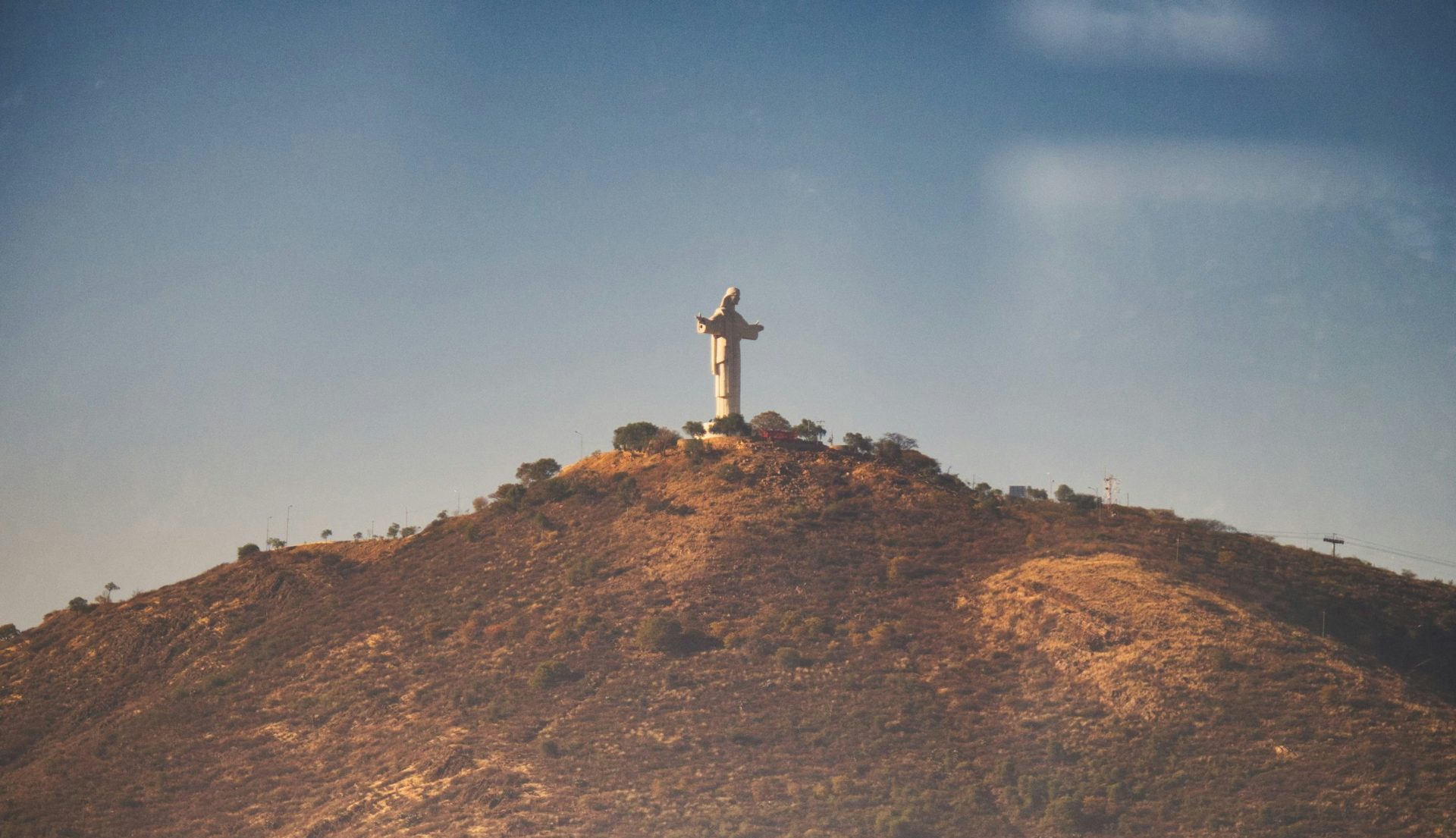
Overlooking it all is the Cristo de la Concordia, a statue of Christ on a hill east of the centre that is taller than the one in Rio de Janeiro. Below, La Cancha is one of the largest open-air markets in South America, a maze of stalls selling everything from fruit and spices to car parts.
For most travellers, Cochabamba is a comfortable stop on the way between La Paz and Santa Cruz or Sucre, and the base for Torotoro National Park, a few hours south, with its dinosaur footprints, deep canyon and caves. Two days in the city plus two or three in Torotoro makes a great detour.
Stay in the centre around Plaza 14 de Septiembre for budget hostels and sights, or north towards El Prado and Recoleta for restaurants and nightlife.
Around Plaza 14 de Septiembre, with colonial arcades, the cathedral and most budget hostels.
The tree-lined Avenida Ballivián, north of the centre, with cafés, bars and restaurants.
Further north, with upmarket restaurants and bars. Calm by day.
Orange labels are neighbourhoods, dots are the 5 top-rated hostels. Map data from OpenStreetMap contributors.
Ride the cable car, or climb the steps if you have the energy, up to the Cristo de la Concordia, where the views stretch over the city and the valley to the mountains. In the centre, Plaza 14 de Septiembre is surrounded by colonial arcades and the cathedral, and the Palacio Portales, a mansion built for the tin baron Simón Patiño, shows the wealth of Bolivia's mining era.
La Cancha is the city's great sight. The market sprawls over several blocks south of the centre and is busiest on Wednesdays and Saturdays; go with a guide or a friend, and keep a close eye on your belongings.
Outside the city, Torotoro National Park is the reason many travellers come: dinosaur footprints along the riverbeds, a deep canyon with a waterfall at the bottom, the Umajalanta cave and the strange rock formations of Ciudad de Itas. Guides are required for most sites and are hired at the park office in Torotoro village.
The colonial centre around Plaza 14 de Septiembre is free to explore, with arcades, the cathedral and plenty of benches for people-watching.
The walk up to the Cristo is free if you take the steps rather than the cable car, though the climb is long, so go early in the day and with company. El Prado, the tree-lined Avenida Ballivián, is the city's main promenade and lovely in the evening.
Wandering La Cancha costs nothing, and it is one of the best ways to see everyday Bolivian life, as long as you keep valuables safe.
Cochabambinos are proud of their food, and portions are famously big. Silpancho, a thin breaded steak on rice and potatoes topped with a fried egg and salsa, was born here, and pique macho, a mountain of beef, sausage, chips, eggs and chilli, is the classic dish to share.
Chicha, a fermented corn drink, has been brewed in the valley for centuries, and you will see white flags outside houses where it is sold. Salteñas and empanadas are the mid-morning fix, and the markets have huge choice for cheap almuerzos.
The north of the city, around El Prado and Recoleta, has the widest choice of restaurants and cafés.
With a large student population, Cochabamba has a lively nightlife. The streets around El Prado and Calle España are lined with bars, cafés and clubs, busiest from Thursday to Saturday.
The mild evenings make terraces popular, and the atmosphere is relaxed and local, with fewer travellers than in La Paz.
Use radio taxis or ride-hailing apps to get home late at night.
The centre is walkable, and micros and trufis cover the rest of the city cheaply. Taxis and ride-hailing apps are easy to find and safer at night.
Cochabamba's airport is a short taxi ride south-west of the centre, with flights to La Paz, Santa Cruz and Sucre. The bus terminal, near the centre, has services to La Paz, Santa Cruz, Sucre and Oruro.
For Torotoro, minibuses and buses leave from the south of the city and take around four to five hours. Check road conditions in the rainy season and for blockades at any time.
Cochabamba is very good value. Dorm beds run from around €7 to €12, a silpancho or almuerzo costs a few euros, and portions are enough for two.
Torotoro adds park entry, a guide for each site and transport, all cheaper when shared with a group.
Carry cash in small notes, as cards are not accepted everywhere, and check current exchange advice before you travel.
Cochabamba is generally safe, but La Cancha market is notorious for pickpockets and bag slashing. Carry as little as possible, keep your phone out of sight and go with someone who knows the market.
The Cristo hill has had robberies on the steps, so walk up in a group in daylight or take the cable car. Use radio taxis or apps at night, and avoid the area around the bus terminal after dark.
The Chapare region, between Cochabamba and Santa Cruz, has had serious security problems and several governments advise against travel there. In an emergency, call 110 for police or 118 for an ambulance.
Pilgrimages, carnival and folklore fill the calendar.
One of Bolivia's biggest religious festivals, with huge folkloric dance parades.
Parades, water fights and folklore.
The highest-rated hostels in Cochabamba, straight from Hostelworld. Prices and availability are live on each property page.

Cochabamba is pleasant all year. April to October is dry and sunny; November to March brings rain, which can affect the road to Torotoro.
Average highs, rounded. Nights are cool, especially from June to August.
Per night, for one person, based on Cochabamba prices.
Treat these as a guide, as prices and exchange rates have moved a lot. Torotoro costs extra.
The ones we get asked most.

Compare hostels in Cochabamba: live prices, real reviews and free cancellation on most bookings. Then meet the people already there in the app.

 Get the App.



 Get the App.