Centro
Convenient, restaurantsThe streets around the Plaza de Armas and the Malecón Tarapacá.

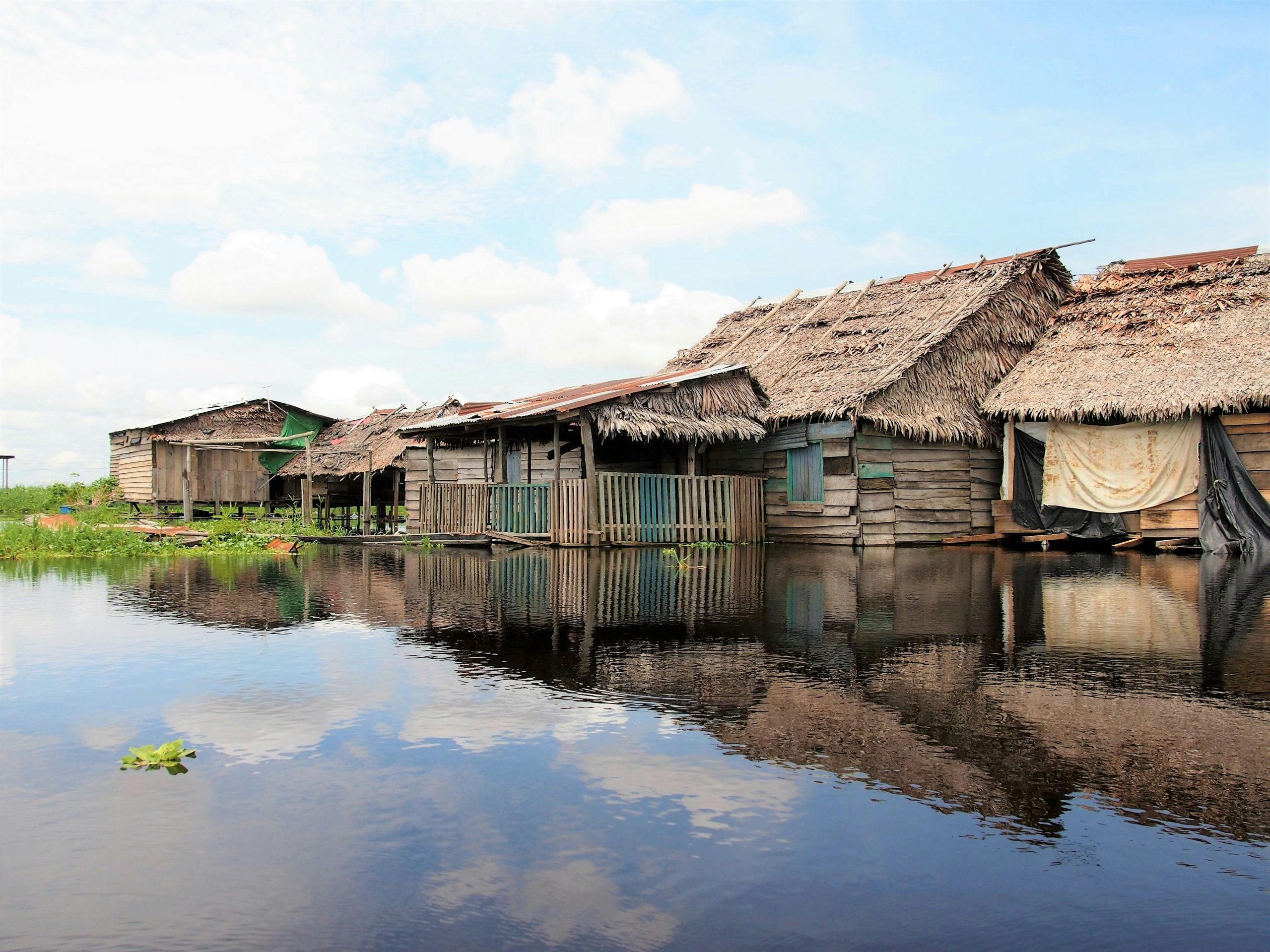
A loud, steamy river city deep in the Amazon, reachable only by plane or boat. The base for jungle lodges, river trips, pink dolphins and one of the wildest markets in South America.
Iquitos is the largest city in the world that cannot be reached by road. It sits on the Amazon river in north-east Peru, surrounded by rainforest, and everything arrives by plane or boat. It grew rich during the rubber boom of the late 19th and early 20th centuries, and the tiled mansions of the rubber barons still line the riverfront, alongside thousands of mototaxis buzzing through the streets.
For travellers, Iquitos is the gateway to the Peruvian Amazon. Jungle lodges up and down the rivers offer stays of a few days, with canoe trips, night walks, piranha fishing, pink river dolphins, monkeys, sloths and birds. Further away, the Pacaya-Samiria National Reserve is one of the largest protected areas of flooded forest in the Amazon.
Give Iquitos four or five days: a day or two in the city, for the Belén market, the riverfront and the animal rescue centres, and three days or more at a lodge. Iquitos is also a centre for ayahuasca retreats, which carry serious health and safety risks.
Stay in the centre, near the Plaza de Armas and the Malecón Tarapacá, close to restaurants and agencies.
The streets around the Plaza de Armas and the Malecón Tarapacá.
The riverfront promenade, busy in the evenings.
Orange labels are neighbourhoods, dots are the 4 top-rated hostels. Map data from OpenStreetMap contributors.
Spend a few days at a jungle lodge. Most lodges are one to three hours from the city by boat, and packages include transport, meals, guides and activities: canoe trips through flooded forest, jungle walks by day and night, swimming in black-water lakes, spotting pink and grey river dolphins, sloths, monkeys and caimans, and visits to river communities. Choose a lodge with good reviews and responsible practices.
In the city, visit the Belén market, a huge, chaotic market of jungle fruit, fish, medicinal plants and grubs. Below it, the floating district of Belén is built on stilts and rafts; visit only with a local guide. Walk the Malecón Tarapacá, the riverfront promenade with views over the river, and look out for the rubber boom mansions with tiled façades.
The Pilpintuwasi butterfly farm and animal orphanage and the Amazon Rescue Center, which cares for orphaned manatees, are both worth a visit and close to the city. For a big trip, the Pacaya-Samiria reserve needs several days.
The Malecón Tarapacá is free and lively in the evening, with views over the river and street food stalls. The Plaza de Armas and the rubber boom buildings around it are free to see.
The Belén market costs nothing to explore by day, though go with a guide into the floating district.
Most activities around Iquitos involve boats and guides, which cost money.
Amazonian food is unlike anything else in Peru. Try juane, rice with chicken and spices wrapped in a bijao leaf, tacacho con cecina, mashed green plantain with smoked pork, and fish such as paiche, one of the largest freshwater fish in the world, now farmed. Suri, grilled palm grubs, are sold in the market for the brave.
Jungle fruit is everywhere: camu camu, aguaje and cocona make excellent juices. The Belén market and the Malecón have cheap food stalls.
Avoid dishes made from wild animals or protected species.
Iquitos has a lively nightlife for a jungle city. Bars along the Malecón and the Plaza de Armas are busy, and clubs play cumbia and reggaeton until late.
The evenings are warm and the city stays up late, especially at weekends.
Take mototaxis at night, and keep valuables at the hostel.
Mototaxis are everywhere and the easiest way around the city. Agree the price before you get in.
The airport is around 15 to 20 minutes from the centre, with flights to Lima in under two hours and some to other Peruvian cities. There is no road connection to the rest of Peru.
Cargo boats go upriver to Yurimaguas and Pucallpa in several days, with hammocks on deck. Fast boats go downriver to the triple border with Colombia and Brazil at Santa Rosa, Leticia and Tabatinga, in around 10 to 12 hours.
The city is cheap. Dorm beds start around €8, with well-rated hostels from €9 to €15, and mototaxis and street food cost very little.
Jungle lodges are the main expense, with packages usually priced per day, including transport, meals and guides. Compare carefully and check what is included.
Carry cash in soles for the market, mototaxis and lodge tips. ATMs are in the centre.
Iquitos needs normal city care. Petty theft happens in the market and at night. Use mototaxis after dark and keep valuables hidden.
Touts at the airport and in the street sell jungle tours and lodges; book with established, well-reviewed operators instead. Ayahuasca retreats are unregulated, and travellers have been seriously harmed and killed; there have also been assaults. If you choose to take part, research the centre very carefully.
Mosquitoes carry dengue and malaria in the region, and yellow fever vaccination is recommended for the Amazon. Use repellent and long sleeves. In an emergency, call 105 for police or 106 for an ambulance.
The rainforest, the rivers and a triple border.
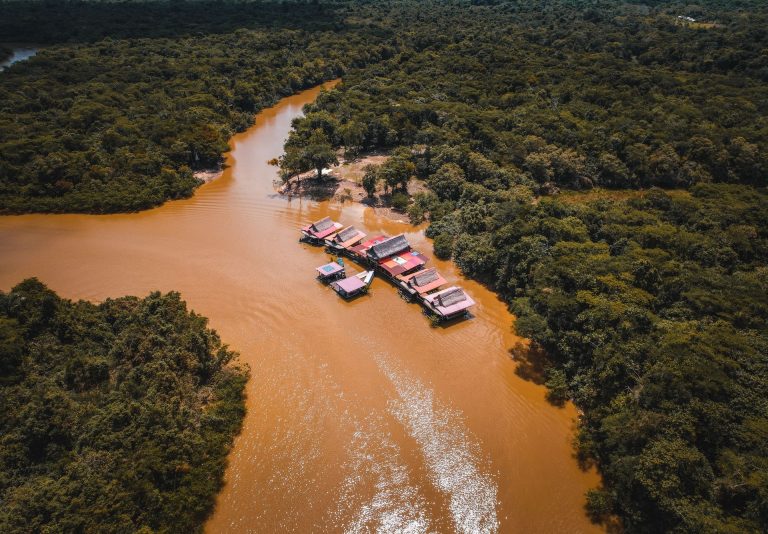
Canoe trips, wildlife and jungle walks.
River seasons and the festival of San Juan.
The biggest festival in the Amazon, with juane, music and dancing.
Explore the flooded forest by canoe.
River beaches and more jungle walking.
The highest-rated hostels in Iquitos, straight from Hostelworld. Prices and availability are live on each property page.
Iquitos is hot and humid all year. December to May is high water, when boats can explore the flooded forest. June to November is low water, with beaches on the rivers and more jungle walking.
Average highs, rounded. Rain is possible every day.
Per night, for one person, based on Iquitos prices.
Treat these as a guide. Jungle lodges cost extra.
The ones we get asked most.

Compare hostels in Iquitos: live prices, real reviews and free cancellation on most bookings. Then meet the people already there in the app.

 Get the App.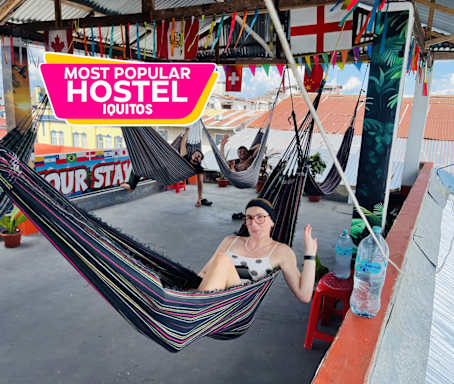




 Get the App.