


🦁 8 Best Safari Parks in Europe for Wildlife Adventures
Have you ever caught a glimpse of a lynx padding through the snow? Or seen the ocean turning black as a sperm whale glides under your boat? Seeing an animal in its natural habitat can be the best bit of your trip (and provides dreamy photo potential). The good news is that you definitely don’t have to fork out for a long-haul ticket to have a brush with Mother Nature. A safari in Europe can mean bears in Spanish mountains, bison in Poland’s ancient forest or a drive-through safari park with giraffes outside your car window. Get planning your trip with the best safari parks in Europe, and browse more ideas in our Europe travel guides!
Best safari parks in Europe:
- The Azores, Portugal
- Călimani National Park, Romania
- Camargue Regional Nature Park, France
- Merfelder Bruch Nature Reserve, Germany
- Skinnskatteberg, Sweden
- Somiedo Natural Park, Spain, Asturias
- Białowieża, Poland
- Coa Valley, Portugal
Prefer to stay in the car? Skip to our pick of drive-through safari parks in Europe, including the biggest safari park in Europe.
1 Whale Watching in The Azores, Portugal 🐋
When you see pictures of The Azores’ lush green pastures and volcanic lakes, you could be forgiven for thinking that this string of nine islands is in the tropics. In fact, it’s a region of sunny Portugal! Between April and June, some of the ocean’s most gentle giants glide by on their yearly migration, including blue, fin and sei whales. Sperm whales live around the islands all year round (with the best chances in summer), gorging themselves on squid and growing up to 20m long, while humpbacks are an occasional, lucky sighting. Summer is also the best season for dolphins.
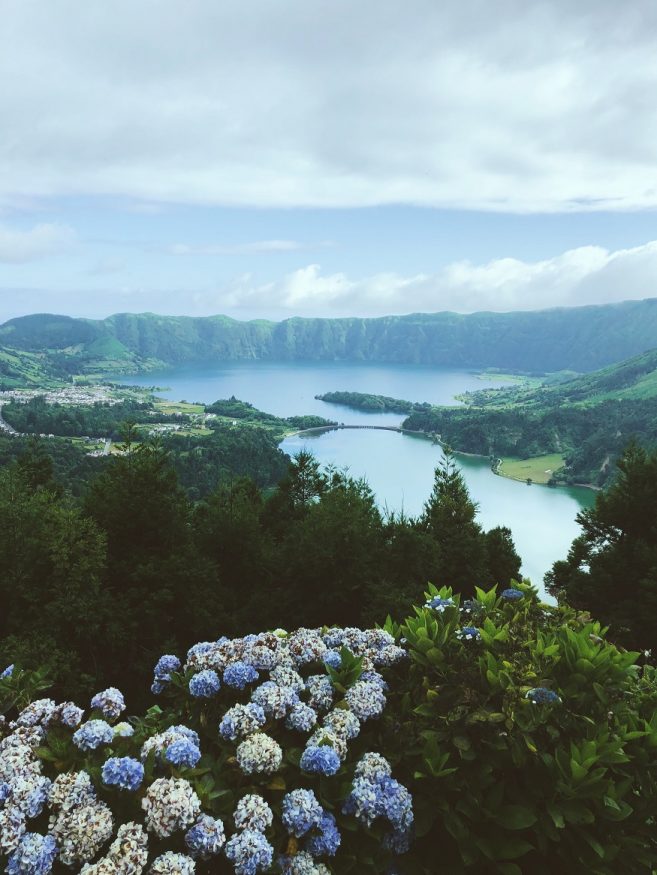
Most boat trips leave from São Miguel, so base yourself in one of the hostels in Ponta Delgada.
🐳 Highlights:
-
Best Time to Visit: April to June for migrating whales; sperm whales all year
-
Wildlife: Sperm whales, blue whales, fin whales, dolphins
-
Activities: Boat tours with expert marine guides
2 Tracking Lynx in Călimani National Park, Romania 🐆
With its epic ridges, gravity-defying fir trees and volcanic peaks, Călimani National Park (protected since 2000) is one of Europe’s great wildernesses. Brown bears, wolves and red deer all roam freely, but most elusive of all is the Eurasian lynx, a fur-ocious wild cat that looks like a cross between a leopard and your average tabby. Sightings are rare, but in winter, snow makes tracks far easier to read, and ranger-led routes give you a good chance of finding traces of the park’s wild animals.

Villages such as Vatra Dornei have guesthouses on the park’s doorstep. For a city stop before or after, check out the hostels in Cluj-Napoca or browse all hostels in Romania.
🌲 Highlights:
-
Best Time to Visit: Winter for tracking in the snow; summer for hiking
-
Wildlife: Eurasian lynx, brown bears, wolves, red deer, chamois
-
Activities: Ranger-led wildlife tracking, hiking, ski touring
3 Flamingo Watching in Camargue Regional Nature Park, France 🦩
Soar above the Camargue in a plane and you could be forgiven for thinking that this stretch of marshland in the Rhône Delta, west of Marseille and south of Arles, is bright pink. In fact, it’s home to thousands of greater flamingos. Breeding gets going between April and June, and right through to September you can watch fluff-ball chicks taking their first wobbly steps. All together now: “Aaawww”! For close-up views, the Pont de Gau bird park (founded in 1949) has 60 hectares of trails and hides with more than 200 bird species.
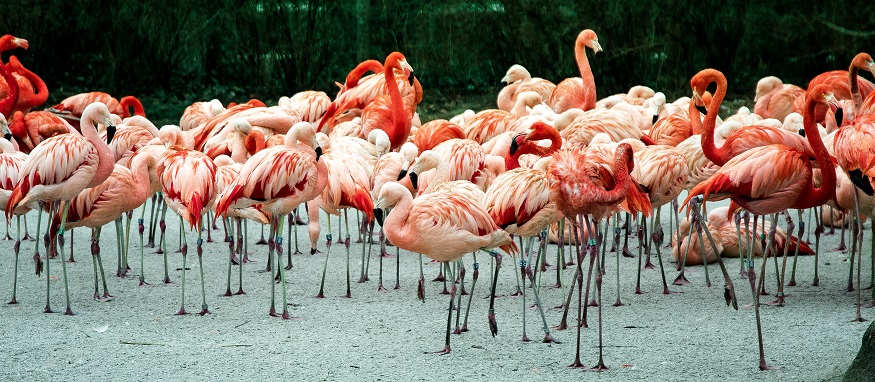
Make it part of a trip around France and stay in one of the hostels in Marseille or Arles.
🦩 Highlights:
-
Best Time to Visit: April to September
-
Wildlife: Greater flamingos, wild horses, herons
-
Activities: Bird-watching tours, photography sessions
4 Observing Wild Horses in Merfelder Bruch, Germany 🐎
Spot a Dülmen pony frolicking in the Merfelder Bruch Nature Reserve and you’re pretty much looking back in time in one of the best safari parks in Europe. Germany’s last wild horse herd (nearly 400 of them) roams a reserve of around 3.5 square kilometres, and their family tree can be traced back more than 700 years. Although they live without human intervention for most of the year, the young stallions are rounded up and auctioned off on the last Saturday of May (29 May in 2027) to stop the herd becoming bigger than the reserve can handle. Watching the wranglers gather them with their bare hands, a tradition going since 1907, is quite the show, and the money raised goes towards protecting the rest of the herd.
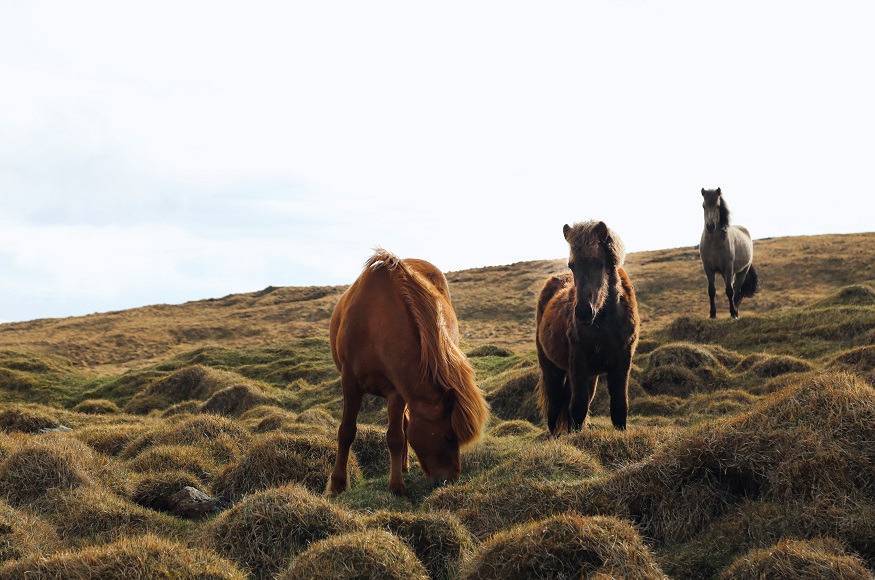
Base yourself in the nearby university city with one of the hostels in Münster, then carry on exploring Germany.
🐴 Highlights:
-
Best Time to Visit: Late May (the annual roundup)
-
Wildlife: Wild ponies, deer, various bird species
-
Activities: Guided tours, photography
5 Moose and Wolf Safaris in Skinnskatteberg, Sweden 🦌
What could be more adrenaline-inducing than watching the moon rise above a Swedish forest while the eerie howls of the local wolf pack echo between the tree trunks? In Skinnskatteberg, around two hours from Stockholm, evening moose safaris run through the summer, with May, June and July the peak months for sightings, and foxes, deer and owls often putting in an appearance too. Wolves are much harder to see, but from June to September you can spend a night in wolf territory with an expert guide, listening out for howls before bedding down under canvas. Visit between May and September for the best chance of spotting moose in one of the best safari parks in Europe.

📷 Eva Blue
When you’re ready to leave the wild, check into Generator Stockholm, a well-located hideaway with serious design credentials, or compare all hostels in Stockholm. Not sure which neighbourhood to pick? Read our guide to where to stay in Stockholm.
🏕️ Highlights:
-
Best Time to Visit: May to September
-
Wildlife: Moose, wolves, beavers, owls
-
Activities: Evening moose safaris, overnight wolf tours
6 Bear Watching in Somiedo Natural Park, Spain 🐻
You may associate bears with the wilds of North America, but northern Spain has its own population in the stunning Cantabrian mountains of Asturias. The official 2020-21 census counted around 370 Cantabrian brown bears, and Somiedo is one of the best places to see them. It’s not at all unusual to spot mothers and their cubs ambling across the slopes, particularly during April, May and June when they’ve just emerged after the chilly winter and are on the hunt for food. Bring binoculars: viewing is usually from a respectful distance across the valley.

Asturias’ capital is the easiest base, with a handful of hostels in Oviedo.
🌿 Highlights:
-
Best Time to Visit: Spring (April to June)
-
Wildlife: Cantabrian brown bears, wolves, chamois
-
Activities: Guided bear-watching tours
7 Bison Safaris in Białowieża Forest, Poland 🇵🇱
10,000 years ago, most of north-eastern Europe was densely covered in primal forest. Today, the Białowieża Forest on the Poland-Belarus border is the last significant tract left. In March 2025, Białowieża National Park counted 870 European bison in the Polish part of the forest, and these bulky ‘kings of the wilderness’ are Europe’s heaviest land animal. Sadly, they were hunted to extinction in the wild at the start of the 20th century, but have been reintroduced with the help of a careful breeding programme, and Poland’s national herd passed 3,000 for the first time in 2025. Late autumn to early spring is the best time to spot them, when they gather in meadows to feed, and a walk through this ancient forest in the snow is a magical experience. Just remember to pack your warmest coat, as temperatures regularly drop well below freezing… brrr!
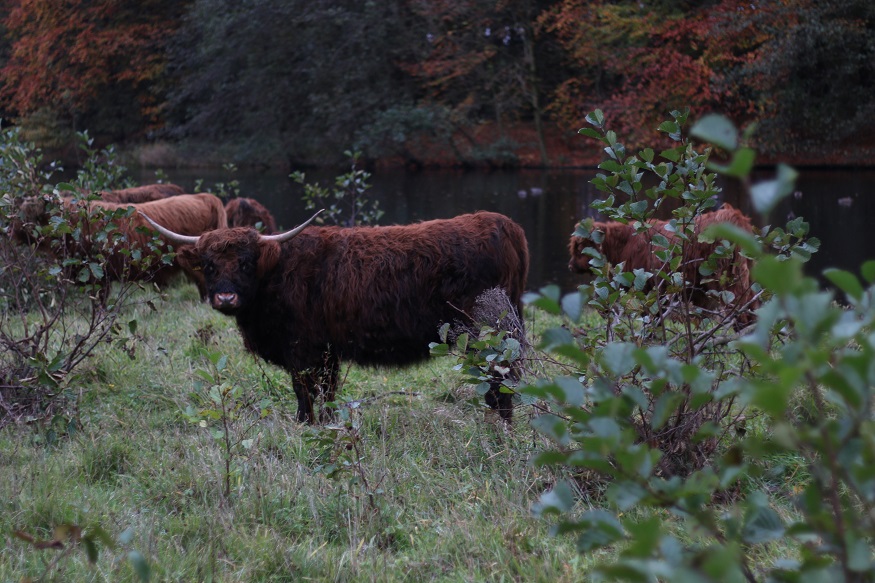
Most travellers come via the capital, so pick from the hostels in Warsaw before heading east. Our hostel packing list will help you pack for a winter trip.
🌳 Highlights:
-
Best Time to Visit: Late autumn to early spring
-
Wildlife: European bison, lynx, wild boar
-
Activities: Guided bison tracking tours
8 Egyptian Vultures in Coa Valley, Portugal 🦅
The hills of the Coa Valley in north-east Portugal are covered with startling shades of citrus yellow and parsley green, making for some seriously pretty hiking. The valley is famous for its open-air Palaeolithic rock art, with thousands of engravings across more than 70 sites, and above the rocks you’ll find the craggy cliff nests of Egyptian vultures. They’re instantly recognisable by their bright yellow faces and the fact that they’re the smallest vultures in Europe, typically weighing just 2kg. They spend the winter in Africa and return to breed between March and September, when griffon vultures are also a near-daily sight on the morning thermals over the Faia Brava reserve, Portugal’s first private nature reserve. Keep your eyes peeled for other airborne icons such as golden and Bonelli’s eagles too.
The nearest major city is Porto and it’s full of character. Porto Spot Hostel is in a 1935 Estado Novo building that has kept its original character, with a bar, patio and shared kitchen. Compare more hostels in Porto, find the right neighbourhood with our guide to where to stay in Porto, and plan a few day trips from Porto, including the Douro Valley on the way to Côa.
🌿 Highlights:
-
Best Time to Visit: March to September (spring and early autumn avoid the summer heat)
-
Wildlife: Egyptian vultures, griffon vultures, golden eagles, Bonelli’s eagles
-
Activities: Bird-watching tours, hiking, rock art tours, photography
🚙 Prefer a drive-through? Classic safari parks in Europe
If you’re after giraffes, rhinos and lions rather than wild tracking, Europe has some big drive-through safari parks, and many are easy day trips from a city base. Opening seasons vary, so check each park’s website before you go.
Serengeti-Park Hodenhagen, Germany: the biggest safari park in Europe
Opened in 1974 in Lower Saxony, Serengeti-Park bills itself as Europe’s largest safari park. Its drive-through safari route passes 16 wildlife areas, and the park is home to more than 1,500 animals. It sits between Hamburg and Hanover, so grab a bed in one of the hostels in Hamburg (our Hamburg neighbourhood guide will help you choose).
Thoiry ZooSafari, France
The best-known safari park in France sits about 45km west of Paris, with an 8km self-drive circuit through an African reserve where animals roam freely around your car. Make it a day trip from one of the hostels in Paris.
Zoosafari Fasanolandia, Italy
Italy’s largest wildlife park covers 140 hectares in Fasano, Puglia, with a drive-through route of around 6-7km among free-roaming animals, plus a zoo and amusement park. It’s about 40 minutes’ drive from Bari, where you’ll find plenty of hostels in Bari.
Longleat Safari Park, England
The one that started it all: Longleat in Wiltshire opened in 1966 as the first drive-through safari park outside Africa. It’s an easy add-on to a trip around the south west of England.
Safari in Europe: quick answers
What is the biggest safari park in Europe?
Serengeti-Park Hodenhagen in northern Germany is widely described as the largest safari park in Europe. Italy’s Zoosafari Fasanolandia is the largest in Italy.
Where is the best safari in Europe?
It depends on what you want to see. For wild animals, Somiedo in Spain is one of the best places in Europe to see brown bears, Białowieża in Poland is the place for bison, and the Azores is the top choice for whales. For a classic drive-through safari, head to Germany, France, Italy or England.
When is the best time for a European safari?
Spring and summer suit most trips: April to June for bears and migrating whales, April to September for flamingos and vultures, and May to September for moose. Winter is best for bison and for tracking lynx in the snow.
🌟 Ready to Plan Your European Safari?
Europe is full of incredible wildlife adventures, proving you don’t have to go far to experience a true safari. Whether you’re spotting whales in the Azores, tracking lynx in Romania, watching bears in Spain or driving past giraffes in Germany, there’s a wild adventure waiting for you! Linking a few together? Our backpacking Europe guide has route ideas.
🌍 Ready to go? Find the best hostels near these wildlife destinations on Hostelworld and start planning your safari today!
Travelling solo? Download the Hostelworld app to chat with other travellers heading the same way, join Linkups organised by your hostel, or get a Social Pass to connect before you book. You can also check what’s on in each city on our Events pages.
Have you spotted any of these incredible creatures in the wild? Or perhaps you have more tips about the best safari parks in Europe? Let us know in the comments!
Special contribution for this article:
Imogen Lepere is a travel writer with a soft spot for anything quirky, surprising and incongruous. Her adventures include teaching in Kathmandu, riding the Trans-Mongolian railway and living with a nudist colony in Greece. She currently splits her time between London and Melbourne, where she can normally be found with a glass of wine in one hand and a pen in the other. Read more of her work on her blog or follow her on Instagram.

 Get the App.
Comments