St Thomas
1 hostel
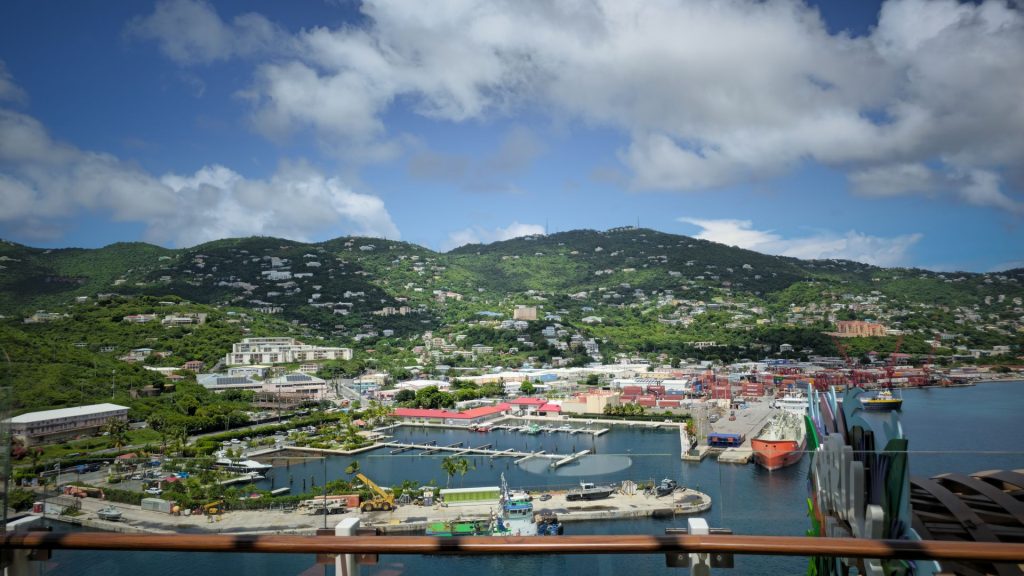
The busiest island: Charlotte Amalie, the cruise port, and the most places to stay.

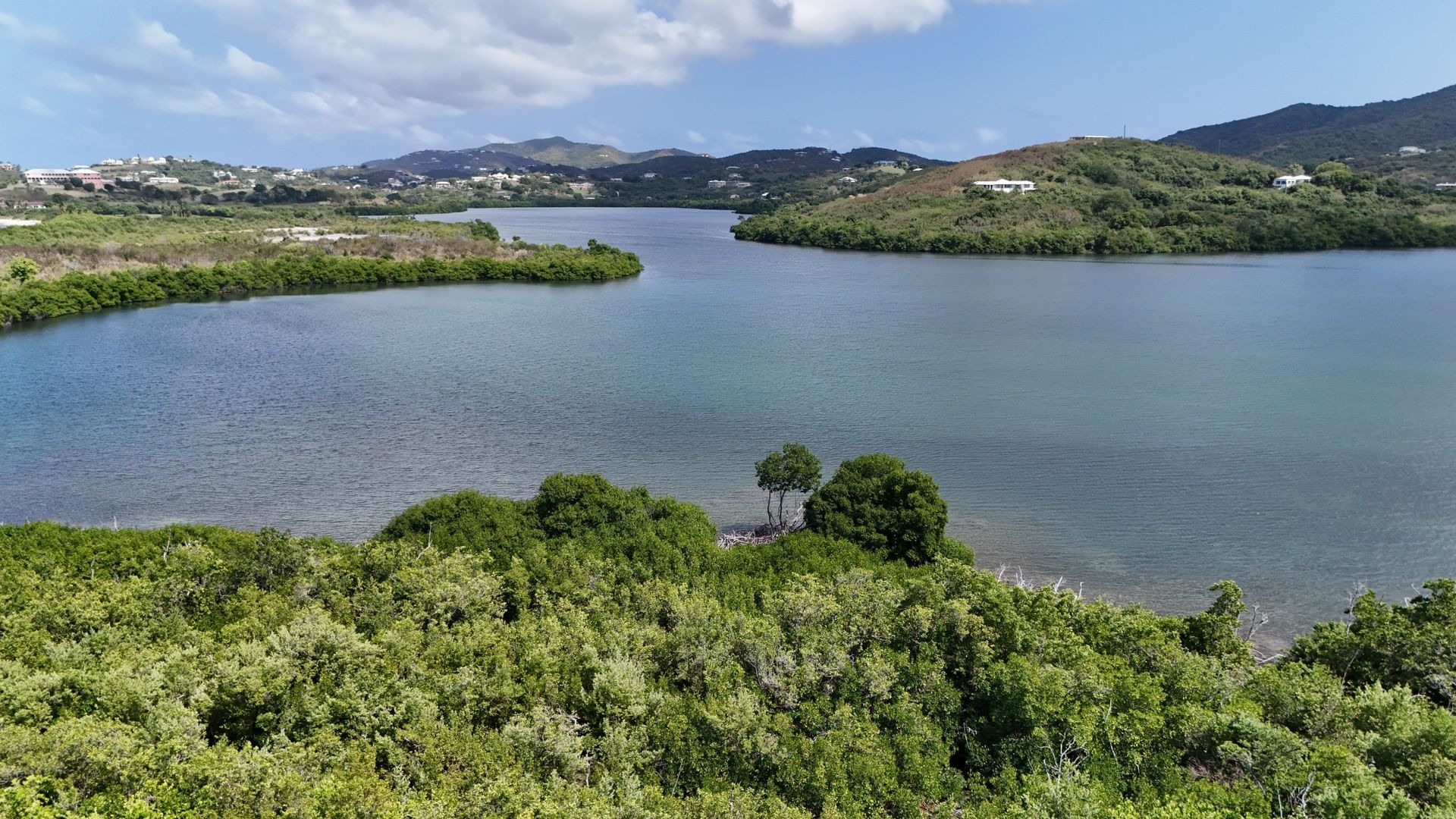
Three islands where around 60 per cent of one is a national park, US dollars and no passport needed for Americans. Expensive, and the water is exceptional.
The US Virgin Islands are a US territory bought from Denmark in 1917, which means dollars, US phone coverage and no passport control for Americans arriving from the mainland.
St Thomas is the busiest, with the cruise port at Charlotte Amalie, the most accommodation and the shopping that draws day visitors. St John is the reason to come: around sixty per cent of the island is the Virgin Islands National Park, donated by Laurance Rockefeller, with Trunk Bay and Cinnamon Bay among the best beaches in the Caribbean and hiking trails through the interior. St Croix, further south, is larger, quieter and has Danish colonial towns and one of the country's few underwater national monuments.
Hurricanes Irma and Maria hit hard in 2017 and rebuilding has been extensive since.
A week covers two islands, linked by frequent ferries.
Ferries link St Thomas and St John constantly. St Croix needs a longer ferry or a short flight.
The busiest island: Charlotte Amalie, the cruise port, and the most places to stay.
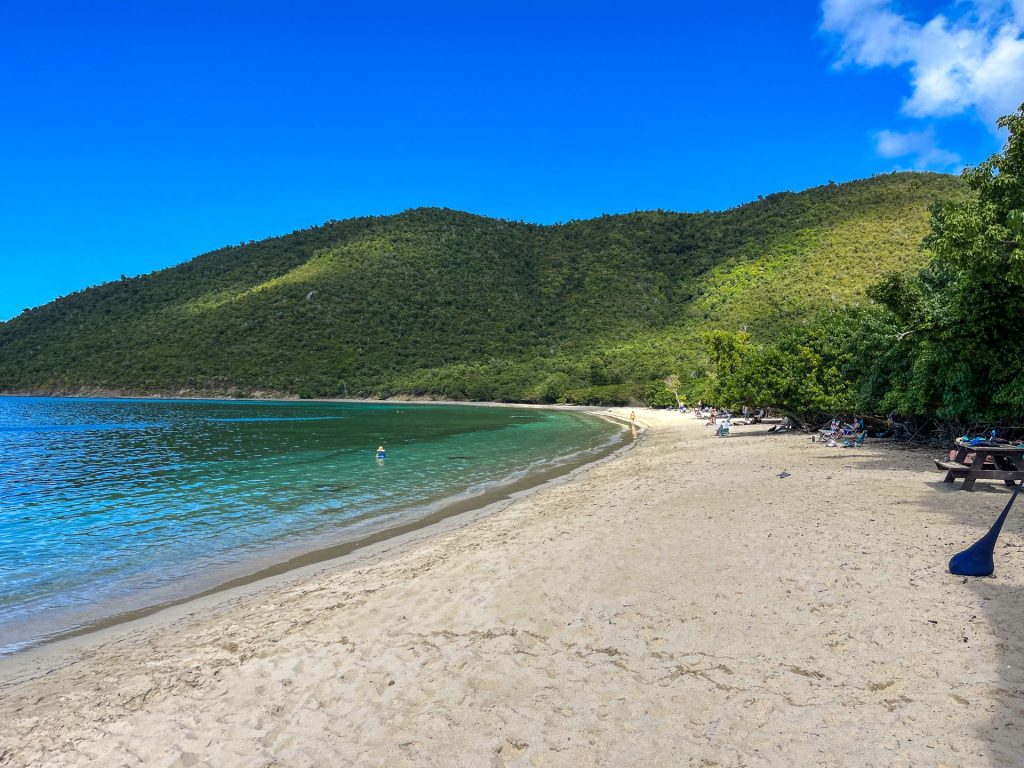
Around 60 per cent national park, with the best beaches and trails in the territory.
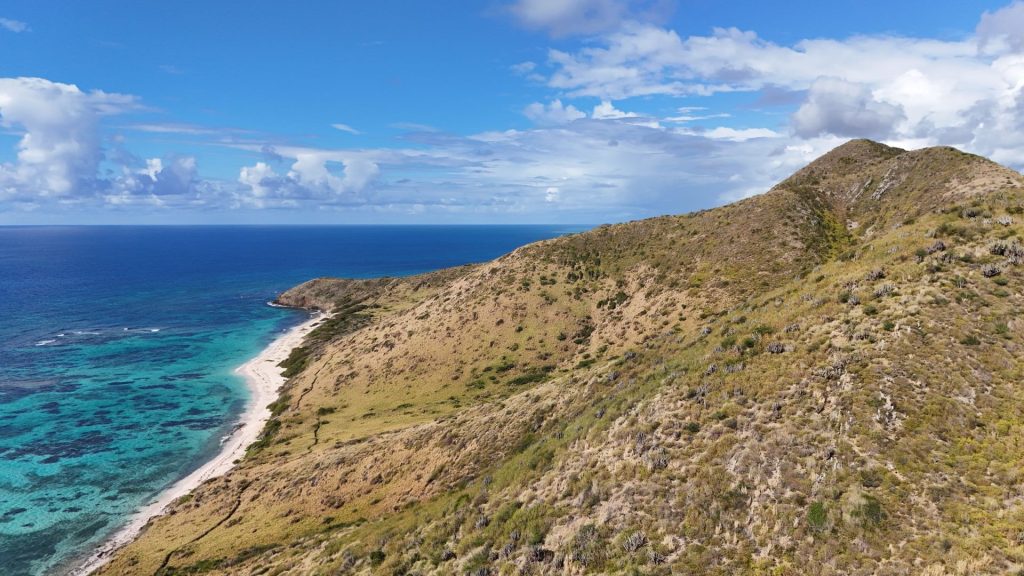
The largest and quietest island, with Danish colonial towns and reef diving.
The USVI is a beach, snorkelling and hiking trip, with a national park doing most of the work.
Some of the best in the Caribbean, and protected.
Park trails, reef and an underwater monument.
Danish colonial architecture and emancipation history.
Caribbean cooking and a strong food truck scene.
Cruz Bay and Frenchtown, and both are low-key.
Hard. Camping and food trucks are the levers.
St John is the whole argument. Around sixty per cent of the island is national park, entirely free to enter except for a small fee at Trunk Bay, and it holds beaches that regularly top Caribbean lists: Trunk Bay with its marked underwater snorkelling trail, Maho Bay where turtles graze in the shallows, and Cinnamon Bay with a campground behind it.
The Reef Bay trail descends through forest past petroglyphs to a beach and a ruined sugar mill, and is the best hike in the territory.
On St Croix, Buck Island Reef is a national monument with its own underwater trail, reached by boat from Christiansted, and the island's Danish colonial towns are the most intact in the territory.
St Thomas offers Charlotte Amalie's harbour and shopping, and is where most people land and stay before ferrying across.
Fish and fungi is the territorial dish (fried or stewed fish with a cornmeal and okra side), and it is found at local restaurants rather than waterfront ones.
Johnny cakes, fried dough, and pates, savoury turnovers filled with saltfish or meat, are the cheap everyday food at €3 to €6 and are sold from roadside stands and food trucks.
Food trucks are the budget answer generally. Cruz Bay on St John and various spots on St Thomas have clusters of them, doing full plates for €10 to €17 against €25 to €45 in restaurants.
Everything is imported and supermarket prices reflect it. Cruzan rum is made on St Croix, and painkillers (rum, pineapple, orange and coconut cream) originated in the neighbouring BVI and are drunk throughout.
Cruz Bay on St John is the liveliest, and it changes character when the last ferry leaves and the day visitors go: bars fill with people who live and work on the island, and it runs late by Caribbean standards.
Frenchtown and Charlotte Amalie on St Thomas have bars and restaurants, busiest when cruise ships are not in port, which is counterintuitive but true.
St Croix's Christiansted has a boardwalk of bars and the quietest scene of the three.
Beer is €4 to €7 and cocktails €9 to €14, with US tipping expected on every round. The islands run on US alcohol laws with a drinking age of 21, though open containers in public are legal, which surprises American visitors.
Ferries between Red Hook on St Thomas and Cruz Bay on St John run roughly hourly, take twenty minutes and cost around €7 each way; this is the main link and it is easy.
St Croix is further: a ferry takes around ninety minutes and runs less frequently, or a short seaplane or flight from St Thomas.
On the islands, safari taxis (open-sided trucks with bench seats) run set routes at fixed per-person rates and are the cheap option. Regular taxis are unmetered with published rates, so agree the fare first.
Hire cars are useful on St John and St Croix. Driving is on the left, which catches out Americans, while the cars themselves are left-hand drive US imports, an odd combination that requires attention.
These are expensive islands. Guesthouse rooms start around €50 to €130, restaurant mains are €25 to €45, and a beer is €4 to €7, with US tipping at 15 to 20 per cent on top.
A day comes to €100 to €190.
The savings that work: camping at Cinnamon Bay on St John, food trucks and pate stands instead of restaurants, the €7 ferry instead of taxis, and the fact that the national park itself is free: the best beaches and every trail on St John cost nothing beyond a small fee at Trunk Bay.
US dollars, US cards and US phone plans all work normally, which removes the friction Americans face elsewhere in the Caribbean.
The islands are generally safe for visitors, though St Thomas and St Croix have higher violent crime rates than mainland US averages, concentrated in areas away from tourist districts. St John has very little crime.
Practical advice: do not leave anything in a parked car, particularly at trailheads and beaches where break-ins are the most common problem; avoid unlit areas of Charlotte Amalie at night; and use taxis after dark.
In the water, currents around headlands are strong and several beaches lack lifeguards. The national park beaches on St John are generally the safest for swimming.
Hurricane season runs June to November and these islands are directly exposed: Irma and Maria both struck in September 2017 and caused severe damage. Insurance covering disruption matters in those months.
The US Virgin Islands are a US territory, so US entry rules apply. US citizens travel here as they would domestically, with no passport control, though a passport is useful for onward travel in the region.
Everyone else needs whatever the United States requires: an ESTA under the Visa Waiver Program for most European, UK and Australian citizens, or a US visa. There is no separate territorial entry process.
Note a useful quirk: there is no US customs check on arrival, but there is one on departure to the US mainland, so allow extra time at the airport.
The neighbouring British Virgin Islands are a separate country with their own entry requirements, and day trips there mean clearing immigration both ways.
December to April is the dry season and peak. Hurricane season runs June to November and these islands are directly exposed.
Average highs for Charlotte Amalie, which barely change. September and October are the quietest and cheapest months and also the riskiest, as many restaurants and some accommodation close entirely.
Pick how you travel and how long for. Per night, for one person, in euro equivalents of US dollars, before tipping.
Add 15–20% tipping to food and drink. Camping at Cinnamon Bay on St John and the free national park beaches are the main ways to bring a trip down.
Each island runs its own carnival at a different time of year.
Weeks of calypso, food fairs and a parade. The largest in the territory.
Culminating around 4 July, with a parade and food fair in the smallest island's biggest week.
A month of events ending with parades in early January.
Marking the 1917 transfer from Denmark to the United States.
The best weather, clearest water and highest prices.
Peaking September, and these islands are directly exposed.
What is bookable here, live from Hostelworld. Options are limited and concentrated on St Thomas; camping at Cinnamon Bay on St John is the budget alternative.
The ones we get asked most.

Compare places to stay across the US Virgin Islands: live prices, real reviews and free cancellation on most bookings. Then meet the people already there in the app.

 Get the App.




 Get the App.