Maun
Gateway to the Okavango Delta, with campsites, mokoro trips and scenic flights.

Botswana has some of Africa's best wildlife: the Okavango Delta's channels by mokoro, Chobe's huge elephant herds and the endless salt pans of the Kalahari. It is built for high-end safaris, but backpackers can do it on a budget from Maun and Kasane with campsites, buses and community-run trips.
Botswana is a large, landlocked country in southern Africa, mostly covered by the Kalahari. Around 40% of the country is protected as national parks, game reserves and wildlife management areas, and it has one of the largest elephant populations in the world.
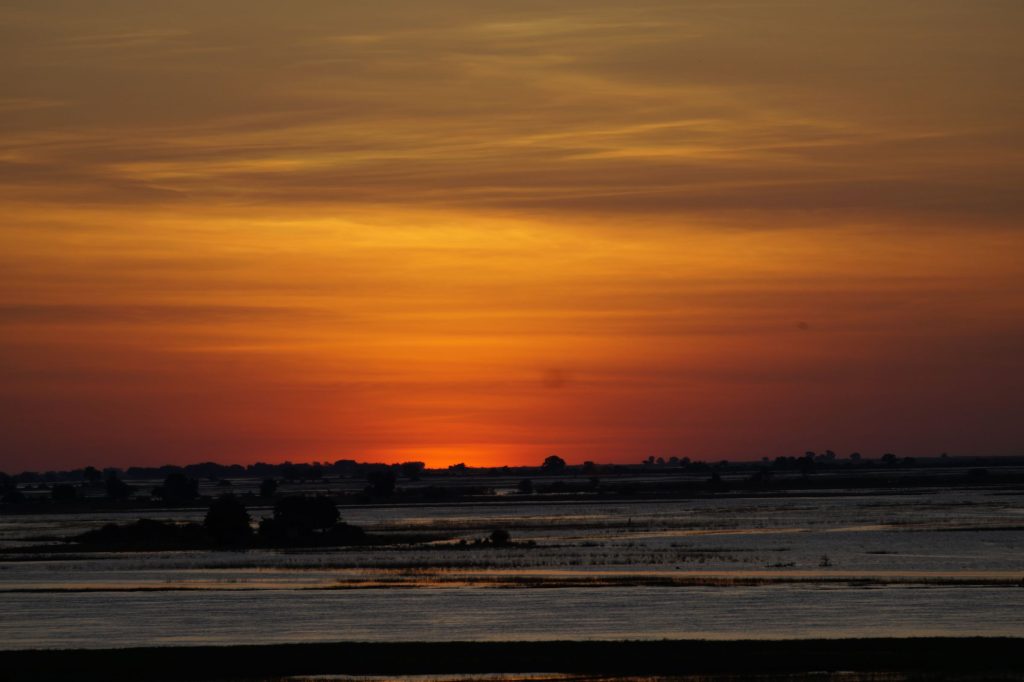
The Okavango Delta, in the north-west, is the highlight. Every year, floodwater from the Angolan highlands spreads into the Kalahari, creating a maze of channels, lagoons and islands full of wildlife. The classic way to explore it is by mokoro, a traditional dugout canoe poled by a local guide. Maun is the gateway town.
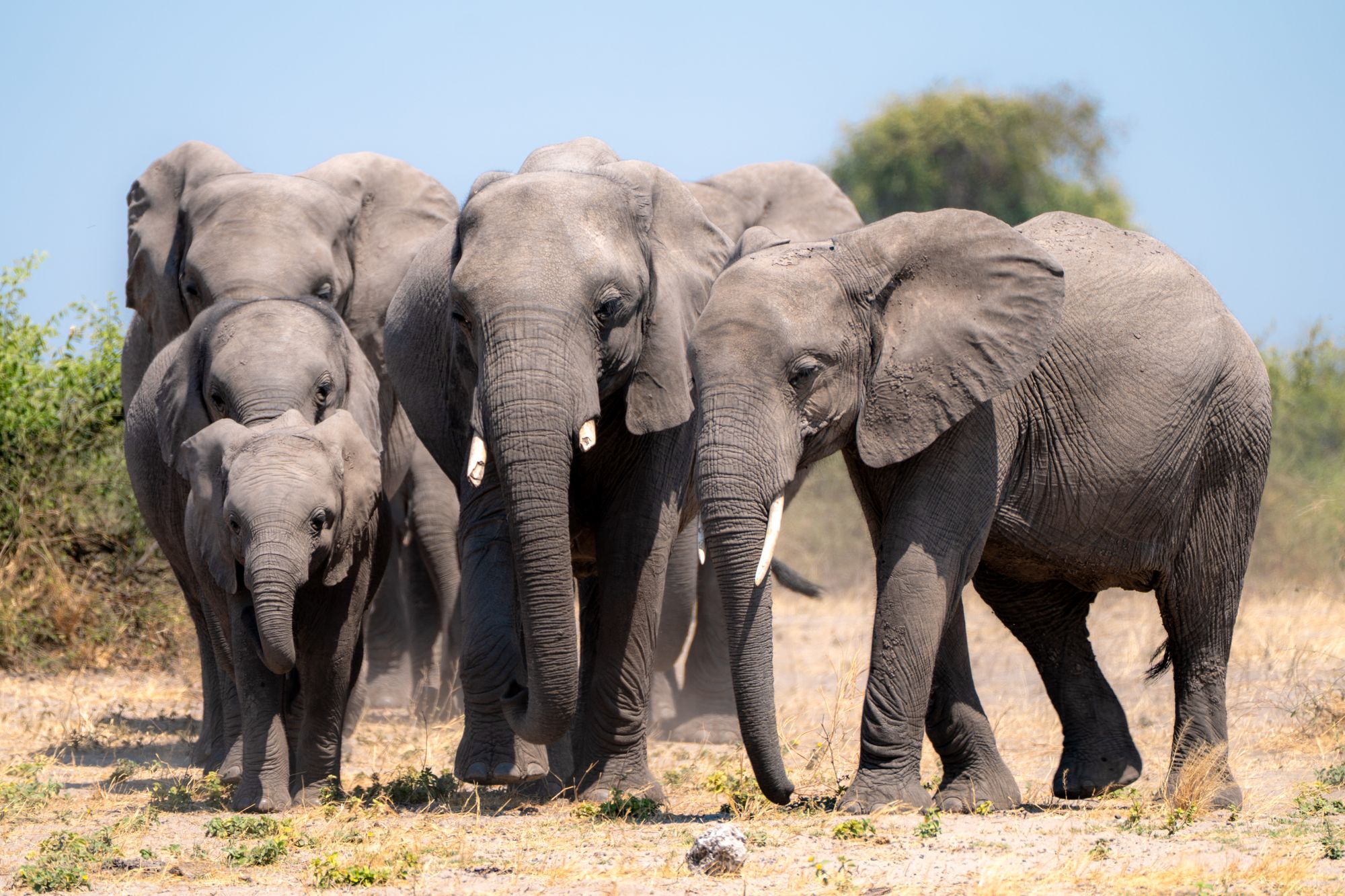
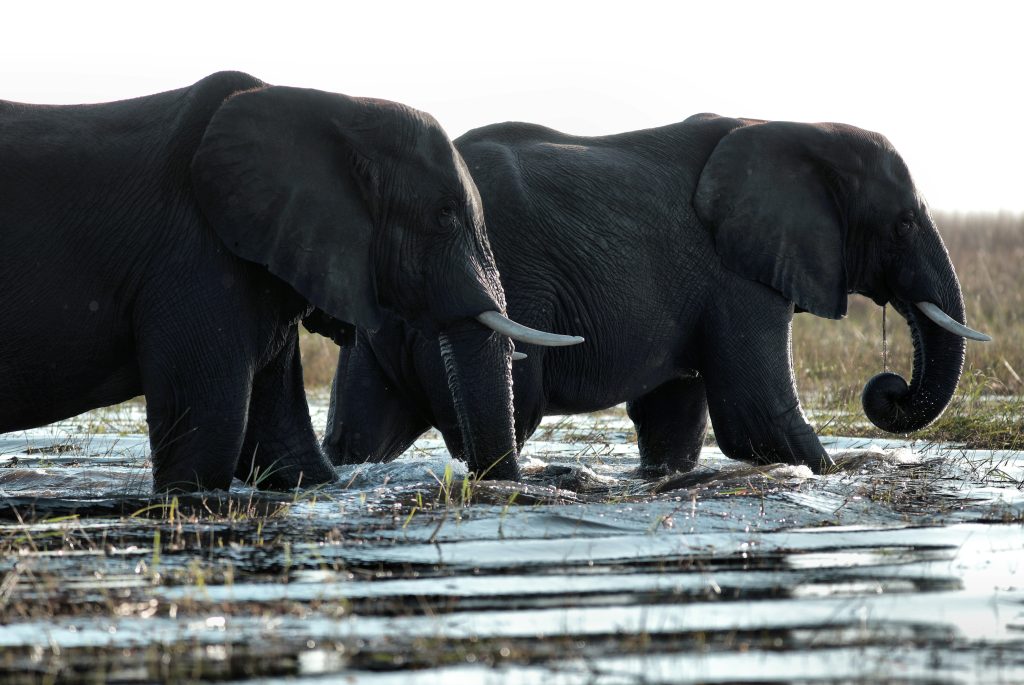
In the north-east, Chobe National Park, near Kasane, is famous for its elephants, especially along the Chobe river in the dry season, where boat cruises bring you close to herds drinking and swimming. Kasane is just across the border from Zambia and an hour from Victoria Falls, so many travellers visit on a day trip.
Between the two, the Makgadikgadi and Nxai salt pans are among the largest in the world, with meerkats, zebra migrations and huge night skies. Further south, the Central Kalahari Game Reserve is one of Africa's biggest and wildest reserves.
Botswana follows a "high-value, low-volume" tourism model, so many lodges are expensive. But the country is safe, stable and well run, with good tarred roads between towns, and budget travellers can get by with campsites, buses and day trips from Maun and Kasane.
Gaborone, the capital, is a calm, modern city in the south-east, near the South African border, and a transport hub rather than a destination.
Most trips focus on the north: Maun and the Okavango Delta, Kasane and Chobe, and the salt pans between them. These are the stops that earn their place, with live hostel counts and dorm prices from Hostelworld.
Gateway to the Okavango Delta, with campsites, mokoro trips and scenic flights.
Riverside town at Chobe National Park, with elephant cruises and the Kazungula bridge to Zambia.
Botswana is all about wildlife and wilderness. Pick one or two of these and plan your route, as distances are long and transport is limited.
Glide through the delta's channels in a dugout canoe, camp on islands and fly over the waterways.
Cruise the Chobe river among elephant herds and hippos, and take a game drive along the riverfront.
Meet the meerkats, sleep under the stars on the Makgadikgadi and see Baines' Baobabs at Nxai Pan.
Visit the rock paintings of Tsodilo Hills and learn about San culture in the Kalahari.
Track rhinos at Khama Rhino Sanctuary and see flamingos and pelicans at Nata Bird Sanctuary.
From Kasane, cross to Livingstone or Victoria Falls in an hour and see the falls from both sides.
The Okavango Delta is a UNESCO World Heritage site and one of Africa's great wildlife areas. From Maun, you can take a mokoro trip into the delta with a local poler, gliding through papyrus and water lilies, with walks on islands to look for elephants, giraffes, zebras and antelope. Day trips and overnight camping trips are possible. Scenic flights over the delta, often shared between a few people, show the scale of the channels and herds.
Moremi Game Reserve, on the eastern side of the delta, is one of the best places in Africa to see wild dogs, lions and leopards.
Chobe National Park, near Kasane, is home to one of the largest concentrations of elephants in Africa. Boat cruises on the Chobe river, especially in the afternoon, bring you close to elephants, hippos, crocodiles and buffalo, and game drives explore the riverfront.
The Makgadikgadi and Nxai Pans, between Maun and Nata, are huge salt flats. In the dry season you can see habituated meerkats, quad-bike across the pans and sleep under the stars. In the rains, zebras and wildebeest migrate through the area. Nxai Pan has Baines' Baobabs, a famous group of ancient trees.
Tsodilo Hills, in the far north-west, is a UNESCO site with thousands of San rock paintings, sacred to the San people.
Khama Rhino Sanctuary, near Serowe, is a community-run reserve where you can see white and black rhinos on game drives.
The Central Kalahari Game Reserve is a vast, remote reserve for self-sufficient 4x4 travellers, with black-maned lions and desert-adapted wildlife.
Botswana's national dish is seswaa, beef or goat boiled for hours, then pounded and shredded with salt. It is usually served with pap (bogobe), a stiff maize porridge, and morogo, wild spinach.
Magwinya, fried dough balls similar to fat cakes, are a popular breakfast and snack, and you can buy them on the street.
Phane, or mopane worms, are a traditional delicacy, dried or fried with tomato and onion.
Beef is excellent and cheap, as Botswana is cattle country, so braais (barbecues) and steakhouses are popular.
In Maun, Kasane and Gaborone, restaurants and cafés serve burgers, pizzas, steak and international food. Supermarkets such as Spar, Choppies and Shoprite are good for self-catering, which most budget travellers do at campsites.
St Louis is the local lager, and chibuku is a traditional sorghum beer. Tap water is generally safe in towns, but check locally.
Botswana is not a nightlife destination. Evenings are about sundowners on the river and campfires under the stars.
In Kasane, sunset cruises on the Chobe river end the day, followed by drinks at a lodge bar overlooking the water.
In Maun, the bars at the campsites and lodges along the Thamalakane river are where travellers meet, with a few local bars and clubs in town.
Gaborone has the most nightlife, with bars and clubs around the malls.
Don't walk around at night in towns, and watch for wildlife, such as elephants and hippos, near lodges and rivers after dark.
Botswana's main roads are tarred and in good condition, and buses link the main towns. Buses run from Gaborone to Francistown, Maun and Kasane, and from Francistown to Nata, Maun and Kasane. From Kasane, Mahube Express runs buses to Francistown. To travel between Kasane and Maun, change at Nata, where the routes meet. It is a long day, so start early.
Combis (minibuses) and shared taxis run short routes in towns. Licensed taxis and combis have blue number plates.
Air Botswana and other airlines fly between Gaborone, Maun and Kasane, and from Johannesburg and Victoria Falls.
Many travellers hire a 4x4 to explore the parks independently. Wildlife and livestock wander on the roads, so avoid driving at night. In remote areas, carry water, fuel and supplies, and book campsites in the parks months ahead.
Kasane is the gateway to Zambia, via the Kazungula bridge, and Zimbabwe, by road to Victoria Falls, about an hour away. Many travellers visit Chobe on a day trip from Victoria Falls or Livingstone.
Botswana uses the pula (BWP). In October 2026, €1 is about BWP 15.4. ATMs are common in towns, and cards are widely accepted, but carry cash for buses, park gates and markets.
Botswana is one of the more expensive countries in southern Africa for travellers, because of its high-value tourism model. Lodges in the parks can cost hundreds of euros a night.
On a budget, it is possible to keep costs down. Hostelworld lists hostels in Kasane with dorm beds from about US$14. Campsites in Maun and Kasane cost around BWP 100 to BWP 150 per person.
Park fees are a big cost. From April 2026, international visitors pay BWP 270 a day for Chobe and Moremi, and BWP 500 for the Makgadikgadi, Nxai Pan and the Central Kalahari. Vehicles cost extra.
Activities from Maun and Kasane, such as mokoro trips, boat cruises and game drives, cost from around BWP 300 to BWP 600 each, plus park fees. Shared scenic flights over the delta split the cost between a few people.
On a budget, allow around €40 to €60 a day, before activities and park fees.
Botswana is one of the safest and most stable countries in Africa, and attacks on tourists are rare. But the UK says violent crime is rising, especially in Gaborone, Francistown and Maun, with house burglaries by armed gangs and robberies at restaurants. Keep valuables out of sight, lock your room and use the safe.
Lodges in the Chobe area, especially along the river, have had isolated break-ins, so lock doors and windows.
Thieves sometimes target cars at traffic lights. Keep doors locked and windows closed, and don't pick up hitchhikers.
Wildlife is the biggest risk. Elephants, buffalo and other animals wander through towns and onto roads, especially at night. Follow your guide, never swim in rivers or lakes because of crocodiles, hippos and water-borne disease, and keep your distance.
Same-sex sexual activity was decriminalised in 2019, but attitudes are conservative. Drug penalties are severe, up to 25 years in prison. Don't photograph military or government sites, and ask before photographing people.
Use licensed taxis with blue plates. Malaria is present in the north, including the Okavango and Chobe, so take advice before you travel.
UK, EU and US passport holders, and many other nationalities, can visit Botswana without a visa for up to 90 days.
Your passport must be valid for at least six months after you arrive and have at least three blank pages. Make sure your passport is stamped on arrival.
Children aged 17 and under need an original or certified copy of their full birth certificate. If one parent is not travelling, they must sign an affidavit consenting to the trip.
You must declare cash worth BWP 10,000 or more on arrival.
You need a yellow fever certificate only if you are coming from a country with yellow fever risk. Botswana may also screen travellers from areas affected by Ebola, so check current rules.
The KAZA visa, sold in Zambia and Zimbabwe, allows day trips into Botswana through Kazungula. If you need a visa for Botswana and plan to stay longer, check the rules with the Botswana High Commission.
The dry season from May to October is the best time for safaris, when wildlife gathers at rivers and waterholes and the bush thins out. The Okavango floods peak from about June to August, despite the dry weather. The rains run from November to March, when the salt pans attract migrating zebras.
Temperatures are average daily highs in Maun (weather2travel climate data). Desert nights in June and July can drop close to freezing. Crowd levels are our own rough estimate.
Pick a travel style and the number of nights to see a rough total. Figures are per person per day in euros, based on hostels or campsites, self-catering, buses and a mix of activities.
Rough figures for 2026, converted from pula prices. Park fees, lodges and flights can add hundreds of euros.
National holidays and cultural festivals in Maun and the Kalahari shape the Botswanan calendar.
Music, dance, crafts and parades celebrating the town and the delta.
Public holiday for Botswana's first president.
San music and dance festival in the Kalahari.
Public holiday marking independence in 1966.
Public holidays.
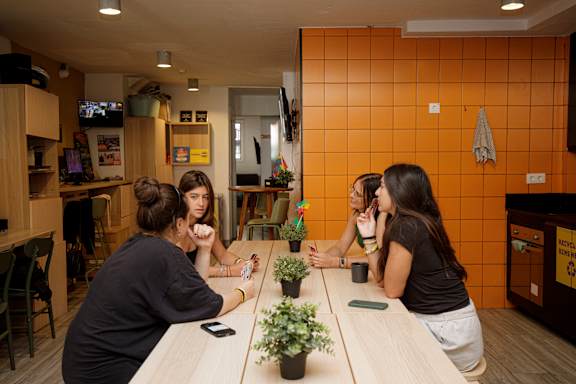
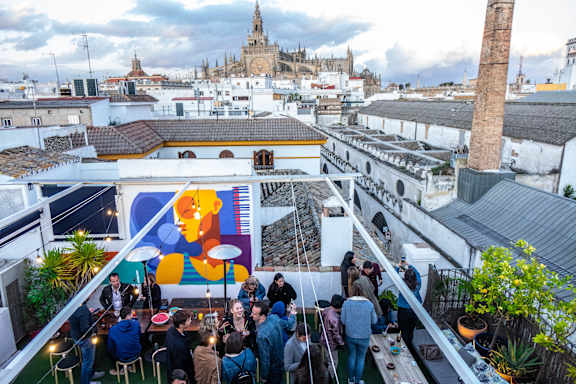
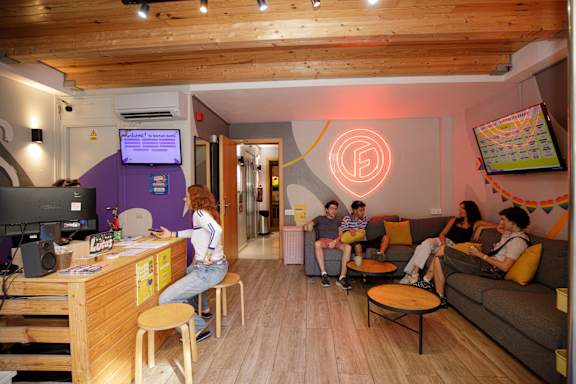
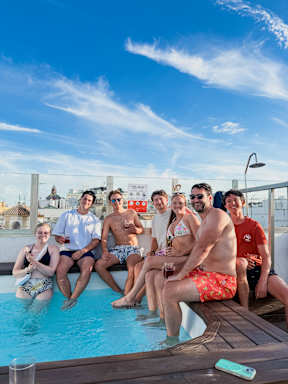
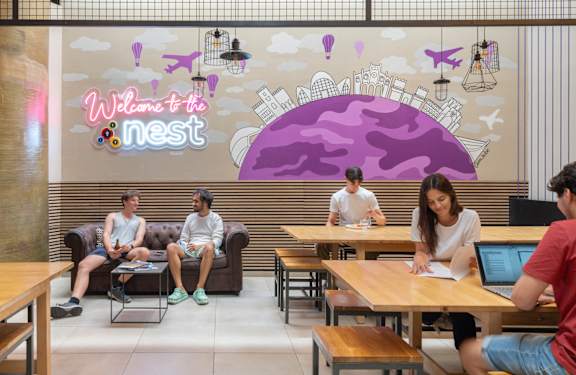
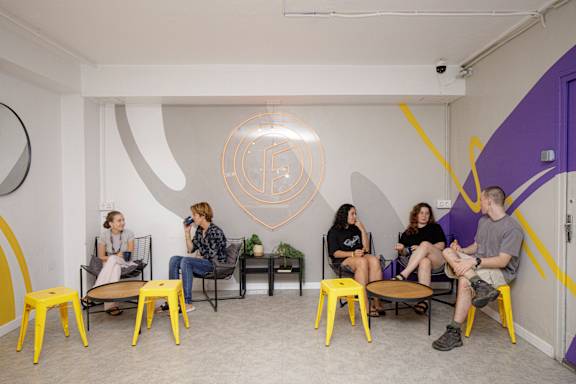
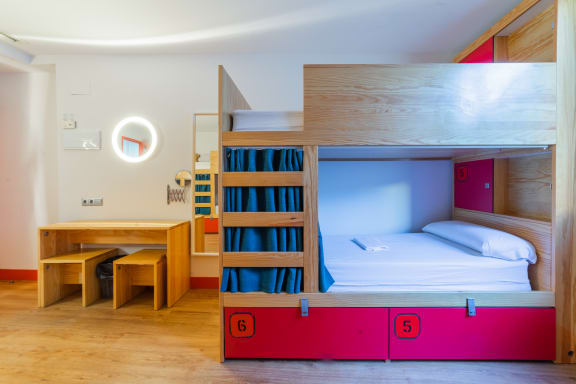
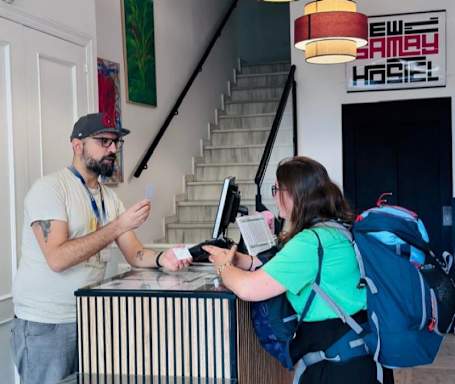
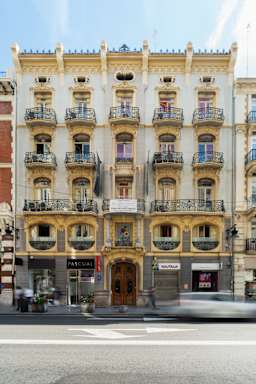
Botswana has only a handful of hostels, mostly in Kasane, near Chobe. These are the best-rated right now, with live prices.

Visa, price and timetable details were checked in October 2026. Rules change, so confirm with official sources before you travel.

Compare Botswana hostels: live prices, real reviews and free cancellation on most bookings. Then meet the people already there in the app.

 Get the App.

 Get the App.