Town centre
First-timers, no carThe old colonial streets around Sam Nujoma Avenue, the Woermannhaus, the jetty and the Mole beach. Restaurants, cafés, bakeries and tour offices are all a short walk apart.

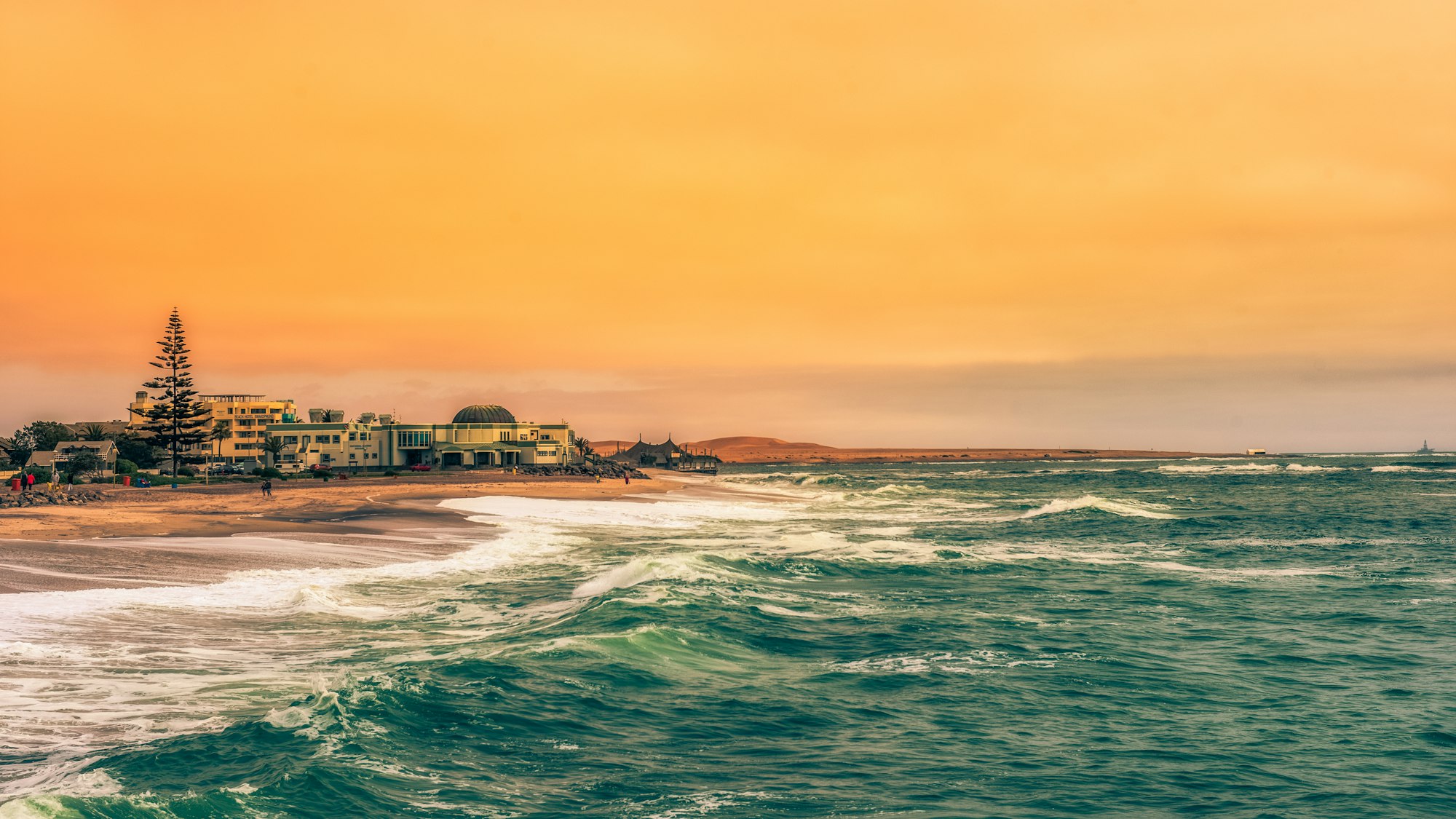
Swakopmund is where the Namib Desert runs into a cold, foggy Atlantic: sandboarding and quad bikes in the morning, flamingos, seals and dolphins down the coast at Walvis Bay, and German bakeries in between. It is Namibia's adventure base, and a town with a colonial past that deserves an honest look.
Swakopmund sits on the Atlantic about 350 km west of Windhoek, where the B2 finally runs out of desert. It's the place most Namibia trips stop to rest after days on gravel, and it's the country's adventure capital: sandboarding, quad biking, skydiving and 4x4 trips into the dunes all leave from here. Walvis Bay, the port town 30 minutes south, has the lagoon, the flamingos and the boat cruises, and many people combine the two.
The first surprise is the weather. The cold Benguela Current keeps the coast cool, and a thick sea fog rolls in most mornings and often stays all day. Daytime highs sit around 18–23°C all year, the sea is 13–18°C, and it almost never rains. After the heat of Sossusvlei, you'll want a fleece.
The second is how German the town looks. Swakopmund was founded in 1892 as the main port of German South West Africa, because the deep harbour at Walvis Bay belonged to Britain. The half-timbered buildings, the Woermannhaus tower, the old jetty, the bakeries and the German street signs all date from that time. Plenty of visitors treat it as a quaint seaside town and leave it there.
That leaves out the most important part. During the genocide of 1904–08, the German colonial army killed tens of thousands of Ovaherero and Nama people. Swakopmund had its own concentration camp, where prisoners were forced to build the town's harbour and railways, and around 2,000 Herero died here. A small, community-run Genocide Museum now tells that story, and it's well worth an hour.
Give Swakopmund three days: one for the dunes, one for Sandwich Harbour or the Walvis Bay cruise, and one for the Living Desert tour or the Moon Landscape drive. Add a day if the fog is thick and you want to wait for clear skies. Most people stay in the centre, walking distance from the beach, the jetty and the restaurants.
Swakopmund is small, and the centre has almost everything you'll need, including the hostels. Tour companies pick up from anywhere in town, so you don't need to be near the dunes. Langstrand, halfway to Walvis Bay, suits people with a car.
The old colonial streets around Sam Nujoma Avenue, the Woermannhaus, the jetty and the Mole beach. Restaurants, cafés, bakeries and tour offices are all a short walk apart.
Residential suburb just north of the centre along the seafront, with guesthouses and self-catering flats. A 15-minute walk into town.
Quiet residential area on the south-east side of the centre, close to the road towards Walvis Bay and the dunes.
Swakopmund's township, north-east of the centre, created under apartheid. Visit on a guided tour or with a local, which often includes a home-cooked meal.
Northern edge of town by the coast road to Henties Bay, known for its big caravan park and campsite. You'll need a car.
Small holiday settlement on the coast road between Swakopmund and Walvis Bay, with dunes behind and the sea in front. Little to walk to.
Orange labels are neighbourhoods, dots are the 3 top-rated hostels. Map data from OpenStreetMap contributors.
Start in the dunes just south and east of town. Sandboarding comes in two versions: lie-down, where you go head first on a sheet of hardboard and can reach up to 80 km/h, and stand-up, which is like snowboarding and needs some confidence. A morning session with pick-up costs around €50. Quad biking runs in one-, two- and three-hour trips, from about €32 for an hour with Desert Explorers, and two hours is the popular choice. Combos of both cost less than booking them separately. Check that your travel insurance covers both.
The Living Desert tour is the one people talk about afterwards. Guides track the "Little Five" through the dunes between Swakopmund and Walvis Bay: web-footed geckos, shovel-snouted lizards, snakes, chameleons and scorpions. It runs 8am to around 12:30pm, costs N$1,000 (about €54) including park fees, and is paid in cash.
Sandwich Harbour, about 42 km south of Walvis Bay, is where huge dunes drop straight into the Atlantic beside a lagoon. You can only get there by 4x4 on the beach, and the route depends on the tide. The half-day tour with Sandwich Harbour 4x4 costs N$3,095 (about €167) in 2026, rising to N$3,400 in 2027, and ends with oysters and sparkling wine on a dune. It's the most expensive day here, and worth it.
In Walvis Bay, the lagoon is a Ramsar wetland where big flocks of flamingos feed in the shallows. Walk the Esplanade early for the best light, free of charge. Catamaran Charters' morning cruise (N$1,450, about €78) takes you out to the Pelican Point fur seal colony, around 60,000 strong, looking for Heaviside's dolphins on the way, with whales possible from July to November.
The Moon Landscape and Welwitschia Drive are a self-drive half day east of town. Get the permit for Welwitschia Drive from the Ministry of Environment office in Swakopmund before you set off.
Swakopmund's beaches, promenade and old town cost nothing, and the best of them is the jetty. The steel jetty was started in 1914 as the German colony tried to fix its harbour problem, and it became a walkway once South Africa took over the territory. Walk out to the end for the surfers, the waves and a look back at the town in the mist. Then follow the beach south past the Mole, the old breakwater that silted up within a few years and created the sheltered beach where people actually swim, briefly, in very cold water.
Wander the old town for the colonial architecture: the Woermannhaus with its tower (now a public library), the old railway station, the Altes Gefängnis prison from 1909 and the half-timbered houses along the side streets. Pair the walk with the context below rather than treating it as a postcard.
The Swakopmund Genocide Museum, on the outskirts of town, was set up by local activist Laidlaw Peringanda to document the 1904–08 genocide and the concentration camp in Swakopmund. It's tiny, and the visit is as much a conversation as an exhibition. Ask your hostel how to arrange a visit, and leave a donation.
The flamingos at the Walvis Bay lagoon are free to watch from the Esplanade, a 30-minute drive south. Go at low tide in the morning, when the birds feed close to the shore. On the way, the dunes between the two towns, including Dune 7 near Walvis Bay, are open to walk up, though the climb in soft sand is harder than it looks.
The Moon Landscape viewpoint, about 30 km inland on the C28, has no gate or fee. You need a car, and you only need a permit if you continue to the welwitschia plains. Sunset on the beach is free most evenings when the fog clears. If it doesn't, the fog itself, rolling over the dunes, is something to see.
Swakopmund is the best place in Namibia to eat fish, and the reason is the same cold Benguela Current that brings the fog. Kingklip, kabeljou and hake are on every menu, often grilled with chips. Oysters are farmed in Walvis Bay and are cheap by European standards. The Sandwich Harbour tour and the Walvis Bay cruise both serve them, but the oyster bars in town are the place for a proper plate.
The Tug is the classic splurge: a restaurant built around an old tugboat by the jetty, good for seafood and sunset if the fog lifts. Book ahead in the busy months. Kücki's Pub in the centre has served seafood and steak to backpackers and locals for years and is one of the easier places for a group dinner.
The German past shows up in the bakeries and coffee houses. Café Anton, in the old Schweizerhaus building, is famous for Black Forest cake, apple strudel and coffee. Other bakeries sell Brötchen, pretzels and rye bread, ideal for packing lunches before a day in the dunes. Look for Swakopmund's own Hansa beer as well as Windhoek Lager.
For something more local, Mondesa township tours often include lunch in a family home, a chance to try oshifima, stews and other Namibian dishes most visitors never see in town. In Walvis Bay and around the township markets, look out for kapana stands, the grilled beef strips with spice and salsa that you'll know from Windhoek.
Self-caterers have big supermarkets in town, and most hostels have kitchens and a braai. Cooking for yourself saves a lot, which helps balance out the adventure activities. Prices for dinner out are similar to Windhoek, but seafood and the better restaurants cost more. Cards are widely accepted in restaurants. Carry some cash for tips, small cafés and the Living Desert tour, which is cash only.
Swakopmund is a seaside resort, not a party town. Evenings revolve around long dinners, a few pubs and swapping stories about who fell off their sandboard. Most adventure tours leave early in the morning, and the fog makes the nights cold, so people tend to eat, have a few drinks and go to bed.
Kücki's Pub is the reliable choice for a mixed crowd of travellers, locals and overland groups, with seafood, steaks and a proper bar. The Tug and the bar at the end of the jetty are good for a sundowner when the weather plays along. Hostels often run braais and bar nights of their own, and these are usually the most sociable evenings in town.
On weekends, especially during the December holidays when Namibians and South Africans pour into the coast, the town gets livelier. A handful of bars and clubs stay open late and fill with local holidaymakers, and Walvis Bay has its own bars and clubs for a change of scene. Ask your hostel what's on, as venues change. Mondesa has its own bars and shebeens, which are much more fun than the tourist pubs, but go with a local or a guide rather than walking in on your own at night.
Swakopmund's German-speaking community keeps its traditions going, including a carnival with parades and parties, usually towards the end of winter. If it's on while you're in town, expect fancy dress, beer and brass bands.
Getting home is simple in the centre. Most bars, restaurants and hostels are within a few blocks of each other. Still, keep to the lit main streets, avoid the beach after dark, and take a taxi your hostel recommends for anything further or from Walvis Bay. The fog makes nights colder than you'd expect, so bring a warm layer even in summer.
Most backpackers reach Swakopmund from Windhoek, about 350 km east along the B2, which is tarred the whole way. There are three main options. Intercape runs a coach between Windhoek and Swakopmund, continuing to Walvis Bay. The trip takes about five to five and a half hours. Fares are usually around €16–26 one way when booked online, and the Windhoek stop is opposite the Intercape office on Bahnhof Street. In Swakopmund, it stops on Hendrik Witbooi Street behind the Pick n Pay. Recent reviewers mention late departures, so don't plan a tight connection.
Town Hoppers runs a daily shuttle bus that picks up and drops off at your accommodation, which matters if you're arriving late or carrying a big bag. It leaves Windhoek at 2pm and Swakopmund around 7am, takes about four hours with a toilet stop in Usakos, and costs from around US$20–29 (€17–25). Other door-to-door shuttle companies run similar services; your hostel can book one.
Shared minibus taxis also leave from the long-distance ranks in Windhoek for the coast. They're the cheapest option (around N$220, about €12, to Walvis Bay at the end of 2025) but leave when full and can be cramped. If you're driving yourself, the B2 takes about four hours. Fill up before leaving Windhoek and stop in Karibib or Usakos. Watch for animals near the road and don't drive it at night.
In town, you walk. Every adventure and tour company picks you up from your hostel, so you won't need a car until you head inland. Taxis cover longer hops. Walvis Bay is 30 minutes south along the coast road, by shared taxi, on a tour with pick-up, or in your own car. Walvis Bay airport has flights to Windhoek and Cape Town and is the closest airport to Swakopmund.
From Swakopmund, most road trips continue north to Cape Cross and Spitzkoppe or inland to Sossusvlei, the last mostly on gravel.
Swakopmund is where Namibia's budget tends to blow up, not because beds or food are expensive but because everything worth doing is a paid activity. At around N$18.5 to €1 (October 2026), and with the rand accepted at par, plan your spending around which tours you really want.
Beds cost a bit more than in Windhoek. On Hostelworld, dorms at Swakopmund's two hostels start at around €25–27 a night, and private rooms from around €35. Book well ahead for December and January, when holidaymakers fill the coast, and for July to October.
Food can be cheap or expensive. Supermarket shopping and hostel kitchens keep costs low. A pub dinner of fish and chips or a steak costs roughly what it would in a cheap European city, and oysters are good value. The Tug and the seafood restaurants are the splurge.
The activities are the big costs. Quad biking starts from about €32 for an hour, and sandboarding is about €50 for a morning. The Living Desert tour costs N$1,000 (about €54), cash only. The Walvis Bay catamaran cruise is N$1,450 (about €78). Sandwich Harbour costs N$3,095 (about €167) for a half day in 2026, and the full-day combo with the cruise costs N$4,545 (about €246). Prices go up in 2027. Pick two or three and you'll still have a great time.
Free things help. The jetty, the beaches, the old town, the flamingos on the Walvis Bay Esplanade and the Moon Landscape viewpoint cost nothing but fuel. Getting here costs €12–26 one way by shared taxi, coach or shuttle from Windhoek. Cards work in most restaurants, shops and activity offices, but carry cash for the Living Desert tour, tips and small cafés. Use ATMs inside shops and banks during the day.
Swakopmund feels much calmer than Windhoek, and most visitors have no trouble at all. The usual risks are petty theft and car break-ins, plus the very real hazards of the desert and the sea. Keep valuables in your hostel locker, take only what you need to the beach, and never leave bags visible in a parked car, even for a few minutes at a viewpoint.
The centre is fine to walk around by day and in the early evening, when restaurants are busy. Late at night, stick to lit streets and don't walk along the beach or the dunes after dark. Mondesa and the other townships are best visited by day with a guide or someone local, as in Windhoek.
The Atlantic here is cold, rough and has strong currents. Swim only at the Mole or other sheltered spots, and only briefly. Don't swim alone, and never after drinking. Adventure activities carry real risk. Sandboarding and quad biking injuries are common, so listen to the safety briefing, wear the helmet and don't go faster than you can control. The FCDO advises checking that your travel insurance covers quad biking, sandboarding and similar activities. Book with established operators your hostel recommends.
The desert is unforgiving for self-drivers. Driving on the dunes is only allowed in designated areas, and the Sandwich Harbour route depends on the tide, so leave it to the tour companies. If you drive the Moon Landscape and Welwitschia Drive, carry water, get the permit, tell someone your plan and be back before dark. Coastal roads can be slippery from the fog, and the salt roads north of town look smooth but can be treacherous when wet.
Keep in mind the fog and the cold. Visibility on the B2 near the coast can drop fast in the morning, and nights are chilly all year. A warm layer and patience on the road solve both.
The coast and the desert around Swakopmund are made for day trips. Some need a 4x4 and a guide, others just a car, a permit and a full tank.
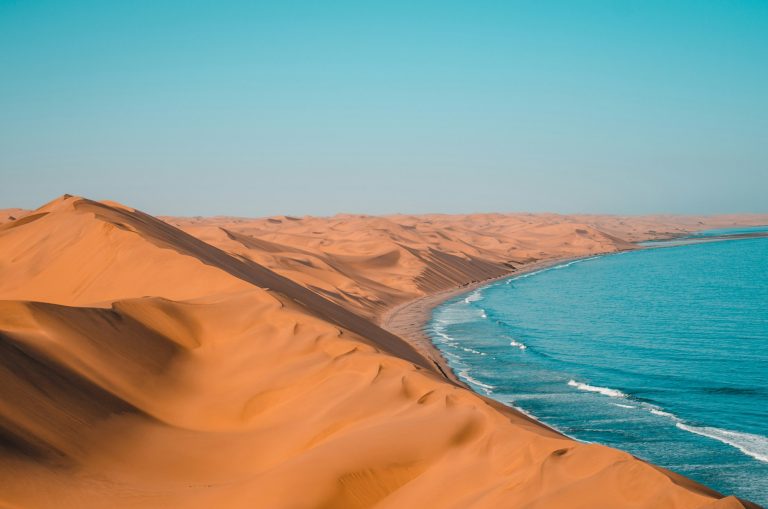
Huge dunes dropping into the Atlantic beside a lagoon, about 42 km south of Walvis Bay. Tide-dependent, 4x4 only, and the best day on the coast.
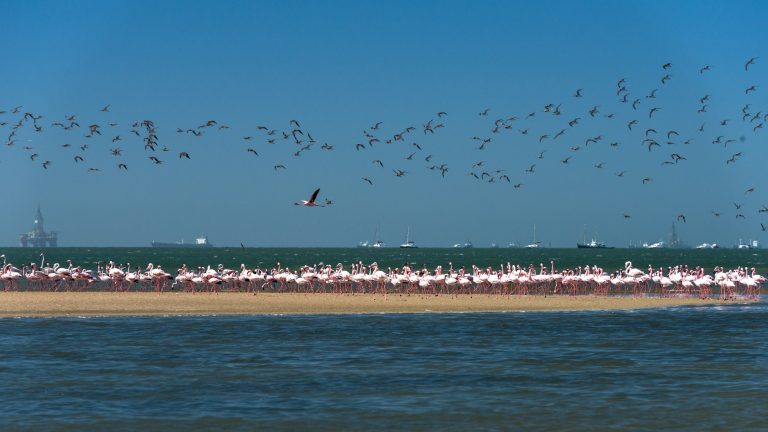
Flamingos on the lagoon, then a boat out to the Pelican Point seal colony with dolphins and, from July to November, whales.
Eroded valleys off the C28 about 30 km inland, then on to the welwitschia plains, where some plants are thought to be over 1,000 years old. Permit needed for the Welwitschia Drive.
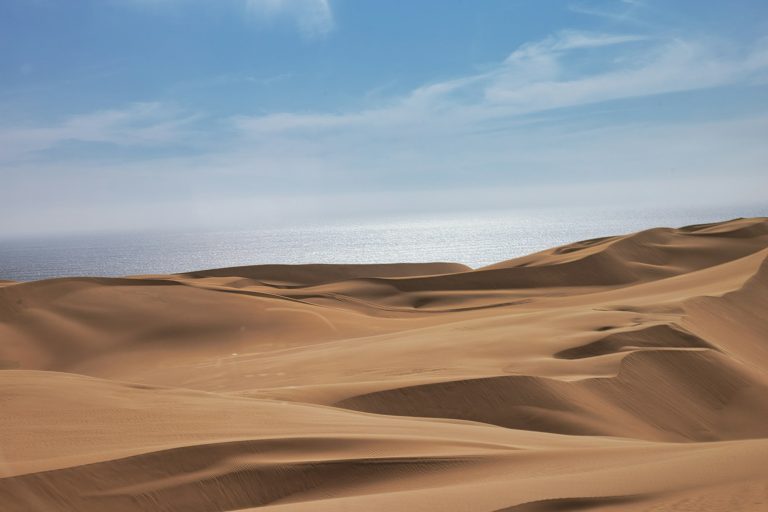
Tracking the Little Five through the dunes between Swakopmund and Walvis Bay. Starts at 8am, pick-up included.
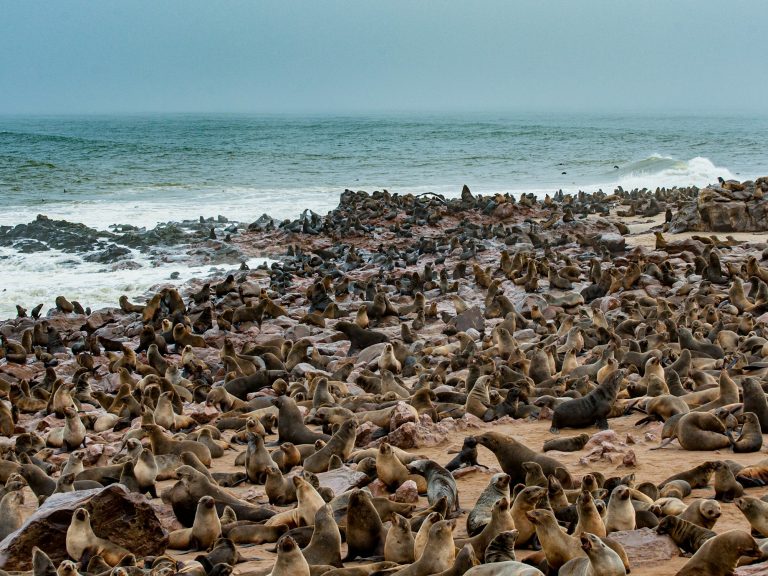
Huge Cape fur seal colony up the Skeleton Coast road to the north. Loud, smelly and impressive. Combine with a stop at a shipwreck.
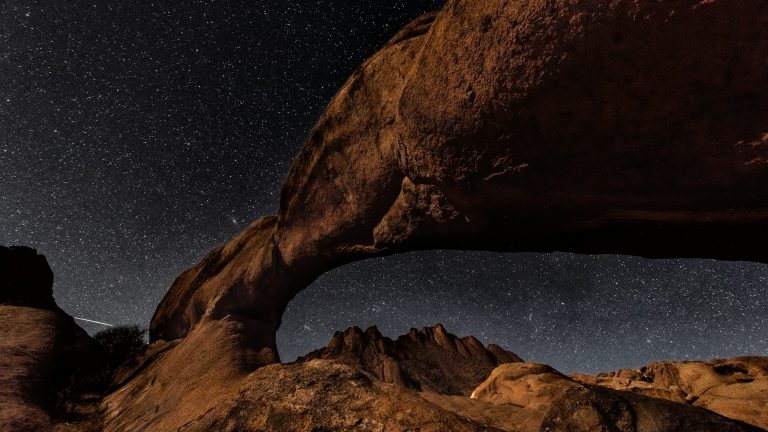
Granite peaks rising out of the plains inland from the coast, with rock art, arches and sunset hikes. Better as an overnight stay if you can.
Swakopmund's calendar is small. The biggest moments are the December holiday rush and the German community's carnival. Okahandja's Herero Day is a road trip away.
Namibia's independence from South Africa in 1990, marked with ceremonies and parties.
The coastal German-style carnival, with parades, fancy dress and beer halls.
Ovaherero commemoration in Okahandja, with processions in traditional dress and uniforms. About four hours' drive from Swakopmund.
Southern right and humpback whales are seen regularly on cruises out of Walvis Bay.
Namibians and South Africans fill the coast. Busy beaches, full restaurants and more nightlife.
Swakopmund has only a couple of hostels, both close to the centre and the beach and both very well rated. They fill quickly in December, January and the July to October season, so book ahead.
Rated 10 on Hostelworld from over 300 reviews, about 1.4 km from the centre.
Rated 9.7 from over 90 reviews, the closest hostel to the centre at about 650 m.
Swakopmund's weather barely changes. Highs sit between 18°C and 23°C all year, the sea stays cold, and fog is common in every month. Summer brings the most sunshine and the most visitors. Winter can bring a few hot, dusty days when the east wind blows in from the desert.
Average highs are for Swakopmund from weather2travel, rounded to the nearest degree. Crowd scores are our own rough guide, based on Namibian and South African school holidays and peak international travel season.
Choose a style and the number of nights for a rough total. The doing column assumes a big activity every second day.
Our estimates in euros per day at around N$18.5 to €1. They cover a dorm or private room, self-catering or eating out, taxis and an average share of tours and activities. Check live dorm prices below. December and January cost more.
Prices and permit rules change. Check with operators and the official sources before you travel.

Compare Swakopmund hostels — live prices, real reviews and free cancellation on most bookings. Then meet the people already there in the app.

 Get the App.



 Get the App.