Namibia
Namibia country guide

Namibia Travel Guide

Red dunes at Sossusvlei, desert elephants in Damaraland and floodlit waterholes in Etosha, joined up by thousands of kilometres of empty gravel road. Namibia is a self-drive country: buses link the towns but not the parks, so most backpackers share a hire car or join a camping tour from Windhoek. Give it two to three weeks, and budget for the car before anything else.

€1 ≈ N$18.3
Rough exchange rate, October 2026
N$280
Daily park fee per adult for Etosha and Sossusvlei since April 2026
2
UNESCO sites: the Namib Sand Sea and Twyfelfontein
Jun–Oct
Dry season, best for Etosha game viewing

Big distances, empty roads and a car you'll get to know well

Namibia is more than twice the size of Germany with around three million people, which makes it one of the emptiest countries on earth. That emptiness is the point. You'll drive for an hour without passing another car, camp under some of the darkest skies anywhere, and have a dune or a canyon viewpoint almost to yourself. The trade-off is distance: Windhoek to Sossusvlei is around five hours, and Etosha is 400 to 450 km north of the capital.

Most first trips are a loop from Windhoek. Head south-west to the Sesriem gate for Sossusvlei and Deadvlei (two nights), then cross the desert to Swakopmund on the coast for sandboarding, quad bikes, seal-and-dolphin kayaking at Walvis Bay and a few nights of decent coffee and cold weather. From there, drive north through Spitzkoppe and Damaraland to the rock engravings at Twyfelfontein, then spend two or three days in Etosha before heading back to the capital. That's ten days at a push and two weeks at a comfortable pace.

With more time, the south has the Fish River Canyon, Lüderitz and the sand-filled ghost town of Kolmanskop. The Zambezi Region in the far north-east is a different country altogether: green, wet, full of rivers and an easy hop to Victoria Falls and Botswana's Chobe. The Skeleton Coast and Kaokoland in the north-west are remote and need a proper 4x4, spare fuel and a plan.

Be honest about the logistics. There are no passenger trains running, Intercape buses connect towns but not the parks, and hitching is banned inside national parks. That's why Namibia costs more than South Africa for a backpacker: the car, fuel and park fees make up most of the budget. Camping is how people keep costs down, and splitting a 4x4 with a rooftop tent between two to four people is the classic way to do it.

If you're near the northern border, Angola is now an easy add-on. UK, EU, US and Australian passport holders can visit visa-free for up to 30 days per trip, and the Oshikango to Santa Clara crossing runs 24 hours. It's Portuguese-speaking, cash-based and has almost no hostels, so it suits people who are comfortable travelling rough. Lubango and the Serra da Leba pass are the usual first targets.

Two weeks covers the classic loop. Three weeks lets you add the south or the Zambezi Region without spending every day behind the wheel.

Where to go in Namibia

Windhoek and Swakopmund are the only places that feel like cities. Everywhere else is a park, a desert camp or a small town you'll pass through for fuel. Most travellers link Sossusvlei, Swakopmund, Damaraland and Etosha in one loop.

Windhoek

Windhoek

4 hostels

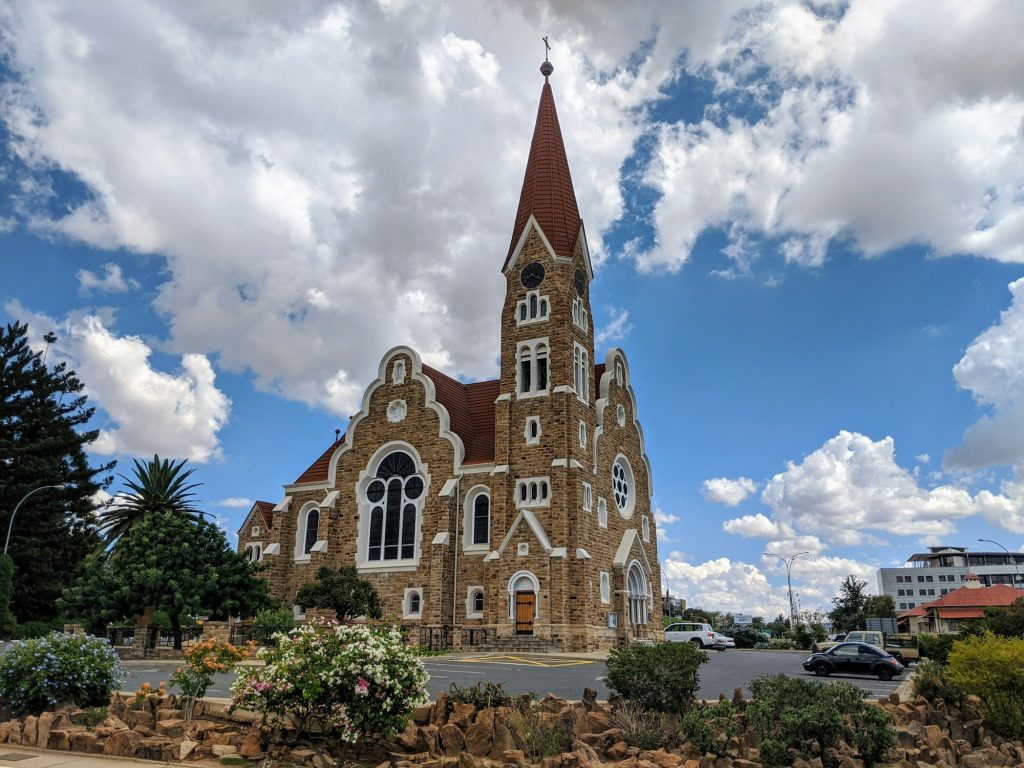
The small, tidy capital and where almost every trip starts: pick up your hire car, stock up on supplies and try kapana in Katutura before heading out.

Beautiful City. Friendly Community. Best experience ever. Amazing People.

A traveller, on Hostelworld
The Windhoek guide
Swakopmund

Swakopmund

3 hostels

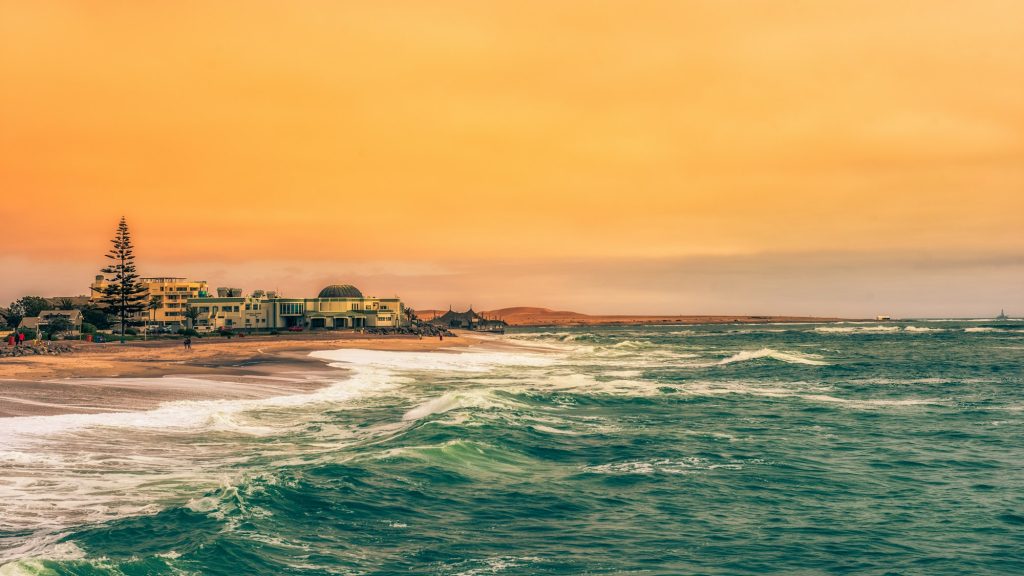
Namibia's adventure base on the Atlantic, with sandboarding, quad bikes, skydiving and Sandwich Harbour trips, plus German bakeries and cool sea fog.

The Swakopmund guide

Pick your kind of Namibia trip

Almost every trip here is a road trip, so the real question is what you stop for. Dunes and desert, Etosha's waterholes, adrenaline on the coast or long hikes in the south each need a different route and a different kind of vehicle.

Road trip in Namibia

The classic Namibia trip: a hire car, a rooftop tent and a two-week loop from Windhoek through the desert, the coast and Etosha.

What to do

  • Self-drive 4x4 with camping gear
  • gravel-road driving
  • wild-ish camping at community sites
  • sunrise starts

Spots to visit

  • Sossusvlei
  • Swakopmund
  • Spitzkoppe
  • Twyfelfontein
  • Etosha

Best cities for it

Things to do

Dunes at dawn, waterholes at dusk

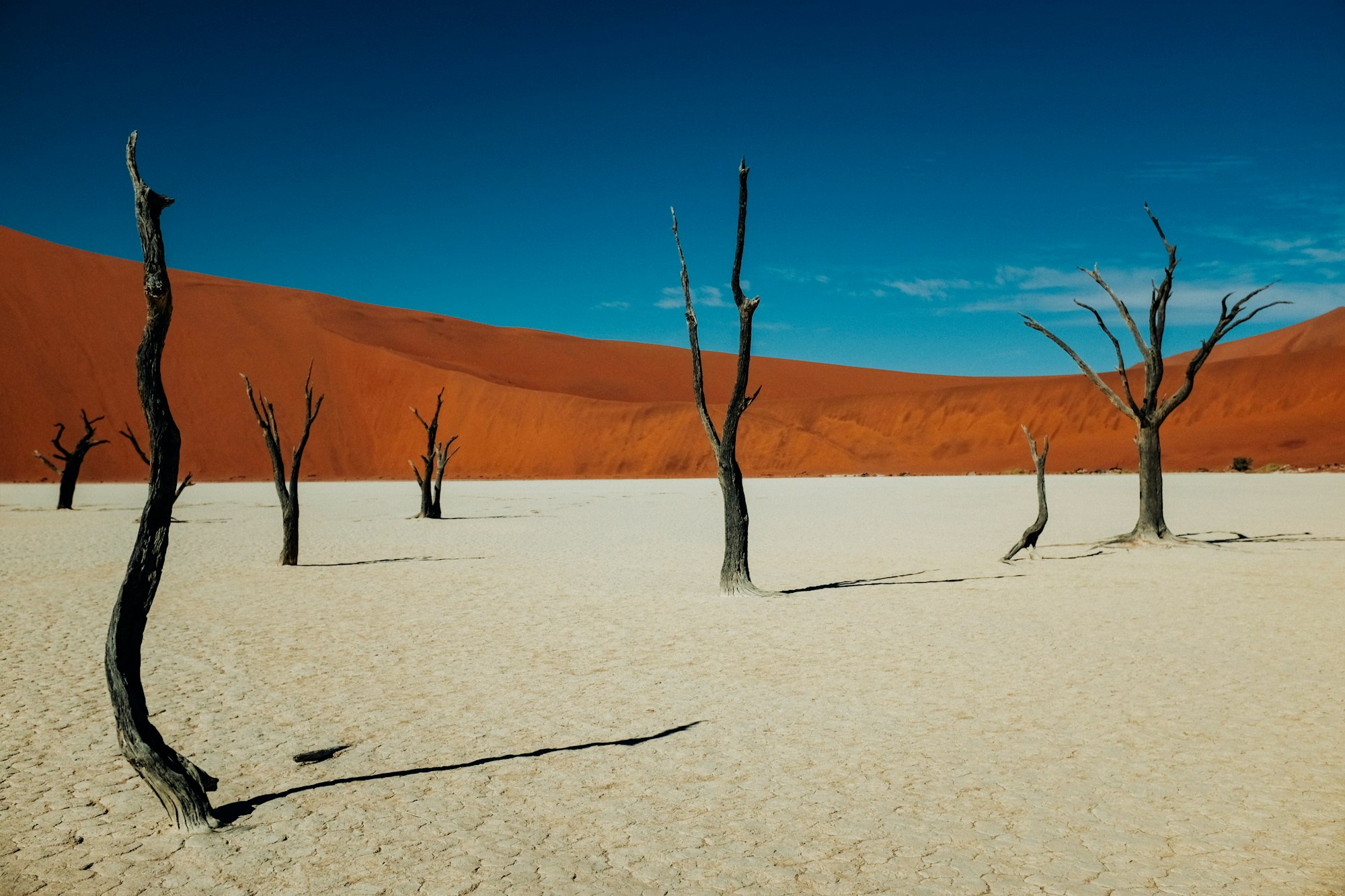
Sossusvlei is the picture everyone comes for: orange dunes over 300 metres high around white clay pans dotted with dead camel thorn trees at Deadvlei. The main Sesriem gate opens at 06:00 from September to April and 06:45 from May to August, closing at 18:00. Only people staying inside the park fence, at the Sesriem campsite or Sossus Dune Lodge, can use the inner gate an hour earlier, which is the only way to reach Dune 45 (45 km from the gate) before sunrise. The last 5 km to Deadvlei is deep sand for 4x4s only; park at the 2x4 car park and take the shuttle (about N$250 return in 2026) or walk.

Etosha is one of the easiest big-game parks in Africa to do yourself. The roads are flat and graded, and the trick is to sit at waterholes rather than chase animals. In the dry months (June to October), elephants, lions, rhinos and huge herds of zebra and springbok come to drink. The camps at Okaukuejo and Halali have floodlit waterholes, so the best viewing often happens after dinner. Gates open around sunrise and close around sunset, and you must be inside your camp before they shut.

Swakopmund is Namibia's adventure base: sandboarding and quad bikes in the dunes, skydiving, the Living Desert tour that finds geckos and chameleons in the sand, and 4x4 trips to Sandwich Harbour where the dunes drop straight into the Atlantic. Walvis Bay, 30 minutes south, has kayaking with Cape fur seals and boat trips with dolphins.

Damaraland has Twyfelfontein's rock engravings, a UNESCO World Heritage Site, desert-adapted elephants along dry riverbeds, and the granite domes of Spitzkoppe, where the community campsite is one of the best places to sleep in the country. In the south, the Fish River Canyon is around 550 metres deep and the 88 km hike to Ai-Ais takes about five days. Permits are only issued from 1 May to 15 September, you need a doctor's fitness certificate, and groups must be at least three people.

Food and drink

Kapana, game steaks and a German bakery in the desert

Namibian food is meat-first and unapologetic about it. The street food to look for is kapana: strips of beef grilled over open fires and cut to order, dipped in chilli salt and eaten standing up with fat cakes (fried dough) and a cold drink. Windhoek's Single Quarters market in Katutura is the best-known place to try it, ideally with a local or on a guided township walk.

Game meat is on most restaurant menus. Oryx, kudu and springbok steaks are lean, cheap by European standards and often better than the beef. A braai (barbecue) is the default dinner on any camping trip, and every NWR campsite has a braai stand. Biltong and droëwors (dried sausage) from butcheries and petrol stations are the road-trip snack, and potjiekos, a slow stew cooked in a three-legged iron pot over coals, turns up at campsites and lodges.

The German colonial years left more than street names. Swakopmund and Windhoek have bakeries selling Brötchen, apple strudel and Black Forest cake, and the national beer, Windhoek Lager, is brewed to the old German purity law. In the north, the staple is oshifima, a stiff porridge made from mahangu (pearl millet), eaten with stews and dried mopane worms if you're feeling brave.

The coast is the place for seafood. Walvis Bay and Lüderitz farm oysters in the cold Benguela current, and they're cheap enough that even backpackers order a dozen. Fish and chips and kingklip are on most Swakopmund menus.

Self-catering is how you save money. Stock up at the big supermarkets in Windhoek, Swakopmund, Outjo or Tsumeb before you head into a park, because camp shops are small and marked up. Fill up on water too: you'll want five litres a person a day in the desert. Tip about 10% in restaurants.

Nightlife

Campfires, star fields and the odd Oktoberfest

Namibia is not a party destination, and it doesn't pretend to be. Most of your evenings will be around a campfire with whoever is in the next pitch, swapping notes on road conditions and which waterhole had lions. That's not a downside. The NamibRand Nature Reserve, south of Sossusvlei, was Africa's first International Dark Sky Reserve, and the Milky Way is bright enough to cast shadows almost anywhere you camp.

Windhoek has the only real bar scene. It's a small, spread-out city, so nights out mean a few bars and beer gardens rather than a club strip, and Windhoek's backpacker hostels have their own bars and pool tables where most travellers end up. The city takes its German beer heritage seriously, and late October brings an Oktoberfest with brass bands and steins. Don't walk between venues after dark: the UK Foreign Office warns that muggers target tourists in Windhoek, so book a reputable taxi through your hostel.

Swakopmund is quieter but has a handful of bars and restaurants that stay busy with tour guides, overlanders and the adventure-sports crowd, especially on weekends. Sundowners on the jetty or at the beachfront are the town's social ritual.

In the parks, the waterhole is the nightlife. At Okaukuejo you can sit on the benches by the floodlit waterhole late into the night, watching black rhinos come down to drink in silence. Halali has a smaller one with fewer people.

Drink-driving is a serious problem in Namibia and the roads are unforgiving, so never drive after drinking, and avoid the roads on Friday and Saturday nights and around month-end paydays when locals drive home from bars.

Getting around

Gravel roads, two spare tyres and the bus that doesn't go to the parks

Most travellers hire a car, and it's worth getting right. A Toyota Hilux double-cab 4x4 with rooftop tents and camping gear costs from about N$2,200 to N$2,500 a day in 2026 (€120 to €137), cheaper for long rentals and in low season. Standard insurance often leaves a N$30,000 excess; zero-excess cover adds about N$450 a day and tyre and windscreen cover about N$150. Split between three or four people, that's affordable. A 2WD is fine for Etosha, the tar road into Sossusvlei and the main gravel roads in the dry season, but a high-clearance 4x4 is needed for the Skeleton Coast, Kaokoland and the Zambezi parks. Minimum age for a 4x4 is usually 25.

Gravel driving is what causes most accidents. The speed limit is 80 km/h on gravel (120 on tar, 60 in towns), and on loose surfaces even that can be too fast. Rollovers usually happen when a driver overcorrects in gravel, so slow down for corners and oncoming dust clouds. Carry two spare tyres, lots of water, and don't drive after dark because of wildlife and livestock. Fill up whenever you pass a station: many take cash only. In October 2026 petrol was N$26.58 and diesel N$27.86 a litre at Walvis Bay, a little more inland.

Public transport covers towns, not parks. Intercape runs from Windhoek to Swakopmund and Walvis Bay, north to Ondangwa and Oshikango (about 12 hours overnight), to Rundu and Katima Mulilo (about 16 hours), on to Livingstone in Zambia twice a week, and south to Cape Town (about 23 hours). Town Hoppers and Welwitschia shuttles link Windhoek and Swakopmund in about four hours.

Shared taxis and combis (minibuses) leave when full and are cheap, but they're crowded and more accident-prone. Passenger trains have been suspended since 2021. Hitching is banned in parks. So for Sossusvlei, Etosha or Damaraland without a car, book a camping tour from Windhoek or Swakopmund.

For Angola, Intercape reaches Oshikango, and the Santa Clara side has buses to Lubango (about 8 to 9 hours, roughly 7,000 to 7,500 kwanza). Ruacana, further west, is open 08:00 to 18:00. Ask your rental company in writing before taking a Namibian car across.

Costs

Cheap beer, expensive wheels

Namibia uses the Namibian dollar (N$), pegged one-to-one with the South African rand. Rand notes and coins are accepted everywhere in Namibia, but Namibian dollars aren't accepted in South Africa, so spend them before you leave. In October 2026, €1 bought about N$18.3.

Day to day, Namibia is cheaper than Western Europe. Supermarket food, beer and game meat are good value, and a dorm bed in Windhoek or Swakopmund costs much less than in Cape Town. What drives the cost up is the car and the parks, which together can easily be two thirds of the total.

Park fees went up sharply on 1 April 2026. International adults now pay N$280 (about €15) a day to enter Etosha, Namib-Naukluft (including Sossusvlei), the Skeleton Coast, Fish River Canyon, Waterberg and Cape Cross, plus N$60 for a car. Smaller parks such as Bwabwata, Mudumu and Daan Viljoen cost less. Fees are paid at the gate and last 24 hours.

Camping inside the parks is run by Namibia Wildlife Resorts (NWR) and isn't as cheap as you might think: about N$460 per person a night at Okaukuejo in Etosha (N$560 from July to October), and around N$670 at Sesriem near Sossusvlei. Book these months ahead for the dry season. Community and private campsites just outside the parks are often cheaper and have more space.

Cards work in towns, supermarkets and lodges, but carry cash for fuel, remote campsites and tips. Petrol attendants fill your tank and clean the windscreen; tip them N$5 to N$10. Tour guides on a camping trip usually get a tip at the end, and about 10% is normal in restaurants. Watch out for card skimming at some hotels and lodges and keep your card in sight.

Safety

The road is the risk, not the lions

Namibia is one of the safer countries in the region, and most trips are trouble-free. The real danger is the road. Single-vehicle accidents on gravel are common, and the UK Foreign Office points out that many insurance policies won't cover crashes that don't involve another vehicle or an animal. Keep to 80 km/h or less on gravel, slow right down in the rainy season (January to April), never drive at night, and take a break every couple of hours. Long days on corrugated roads are tiring.

Crime is mostly opportunistic and concentrated in Windhoek. The FCDO warns that muggers target tourists there, sometimes violently and at any time of day, and that gangs try to get into cars at busy intersections. Thieves also target vehicles at service stations, so don't leave your car unattended while you pay. Keep doors locked, bags out of sight, and don't hail taxis on the street. Ask your hostel to book one. Don't enter townships at night without someone who knows the area.

The desert itself needs respect. Carry far more water than you think you need, wear a hat, and don't climb dunes in the midday heat. Tell someone your route if you're heading somewhere remote, and in the Skeleton Coast or Kaokoland travel with a second vehicle if you can. Phone signal disappears quickly once you leave the main roads.

Wildlife is rarely a problem if you follow the rules: stay in your car in Etosha except at fenced areas, keep your distance from elephants in Damaraland, and don't leave food in tents. The north-east, especially the Zambezi Region and the Kavango and Kunene rivers, carries malaria risk, mostly in the rainy season, so talk to a travel clinic before you go.

If you cross into Angola, the rules change. The FCDO warns of landmines and unexploded ordnance on some roads and verges, so stick to established routes. Expect frequent police checkpoints and carry your passport. Avoid photographing government buildings, and don't travel at night. It advises against all but essential travel to Cabinda province outside Cabinda city, and says to visit the diamond-mining Lunda Norte and Lunda Sul provinces only if absolutely necessary.

Save the numbers: 10111 for police, and NAMPOL's Tourist Protection Unit on +264 61 209 3456.

Entry and documents

New visa rules, three blank pages and a side door into Angola

Since 1 April 2025, Namibia has charged a visa to 33 nationalities that used to enter free. They include the UK, the US, Canada, Australia, New Zealand, Japan, Ireland, Germany, France, Italy, Spain, Portugal, the Netherlands, Belgium, Austria, Luxembourg, the Nordic countries and Switzerland. Many other passports, including several EU ones, were already on the visa list before. Some, including South Africa, Botswana, Brazil and Angola, are still visa-free. Check the Ministry of Home Affairs list for your own passport.

You can buy the visa online as an e-visa on the eservices.mhaiss.gov.na portal, or on arrival at Hosea Kutako International Airport, Walvis Bay Airport and the main land borders, including Noordoewer and Ariamsvlei from South Africa, the Trans-Kalahari and Mohembo from Botswana, Ngoma, Katima Mulilo and Impalila in the north-east, and Oshikango and Ruacana from Angola. It costs N$1,600 (about €87) for non-African nationals aged 12 and over, N$800 for children aged 6 to 11, and nothing for under-6s, paid by card. The airport visa desk had long queues in the first months, so the e-visa is the less stressful option.

The FCDO says you're given the period you request. Ask for your full stay and check the stamp before you leave the desk, because overstaying can mean fines or detention. Your passport needs six months of validity from arrival and at least three blank pages. Children under 18 need a full birth certificate showing both parents, plus a consent affidavit if a parent isn't travelling.

Angola makes a good side trip from the north. Under a 2023 decree, tourists from 98 countries, including the UK, all EU states, the US and Australia, can enter visa-free for up to 30 days per visit and 90 days a year. Bring a return or onward ticket and proof of funds. If you plan to come back into Namibia, check whether your Namibian visa covers re-entry, or budget for a second one.

When to go to Namibia

Namibia is dry and sunny most of the year. The rains fall mainly from November to April in the centre and north, while the coast stays cool and foggy all year. June to October is the dry season and the best time for Etosha. It's also when campsites fill up, so book ahead for July and August.

30°
Jan
Hot, rainy season in the north, South African holidays
29°
Feb
Wettest month, green landscapes, quiet parks
27°
Mar
Rains easing, Independence Day on 21 March
26°
Apr
Cooler, Easter crowds, Ruacana Falls flowing
23°
May
Dry season starts, Fish River hike opens
20°
Jun
Cold desert nights, Etosha game viewing improves
21°
Jul
Peak season, book campsites early
23°
Aug
Busiest month, dry and clear
27°
Sep
Warming up, excellent game viewing
29°
Oct
Hot, animals crowd waterholes, Windhoek Oktoberfest
30°
Nov
First rains possible, good value
31°
Dec
Hot, holiday traffic from South Africa
Bar height is temperature. Colour is how busy it gets: quiet busy peak

Average highs are for Windhoek (weather2travel, using CRU, Met Office and KNMI data), since most trips start there. Swakopmund and the coast are far cooler, often around 20°C. Sossusvlei and the south are hotter, and desert nights in winter can drop close to freezing. Crowd scores are our own rough guide, based on European summer holidays, South African school holidays and the dry season.

What a day in Namibia costs

Pick a travel style and the number of nights for a rough total. Park fees, flights and tours like Sandwich Harbour come on top.

Our estimates in euros per person per day, at about N$18.3 to €1 (October 2026). Shoestring assumes dorms and campsites, self-catering and Intercape buses or a hire car shared by four. Middle of the road assumes a 4x4 with camping gear split between two or three people, plus fuel. Comfortable adds lodges and guesthouses. Etosha and Sossusvlei cost N$280 a person and N$60 per car each day on top.

—
  • Beds—
  • Food and drink—
  • Getting around—
  • Doing things—
What's on

Festivals and events in Namibia

Namibia's calendar is small but distinctive, mixing German traditions, Herero and Owambo culture and some serious endurance sport. Windhoek fills up around Independence Day and the Oktoberfest.

Namibia travel FAQs

Visa rules, park fees and fuel prices change. Check the official sources before you travel.

Do I need a visa for Namibia?
Yes, if you hold a UK, US, Canadian, Australian, New Zealand, Japanese or one of many EU passports. Since 1 April 2025 these nationalities need a visa, which costs N$1,600 for anyone aged 12 and over and can be bought online as an e-visa or on arrival at the airport and main borders. Your passport needs six months' validity and three blank pages.
Is Namibia safe for backpackers?
Yes, for the most part. The biggest risk is road accidents on gravel, so drive slowly, never at night, and carry two spare tyres. In Windhoek, don't walk around after dark, keep car doors locked at intersections and book taxis through your hostel.
Do I need a 4x4 in Namibia?
Not for the classic loop in the dry season: a 2WD can handle Etosha, the tar road into Sossusvlei and the main gravel roads. You need a 4x4 for the last 5 km to Deadvlei (or take the shuttle), the Skeleton Coast, Kaokoland and the Zambezi parks. A 4x4 with rooftop tents also doubles as your accommodation.
How many days do you need in Namibia?
Ten days is the minimum for Sossusvlei, Swakopmund and Etosha. Two weeks lets you add Damaraland at a sensible pace. Three weeks covers the south (Fish River Canyon and Lüderitz) or the Zambezi Region as well.
Can you travel Namibia without a car?
Partly. Intercape buses and shuttles link Windhoek, Swakopmund, Walvis Bay and the northern towns, but none go into the parks and hitching is banned inside them. Without a car, book a camping tour from Windhoek or Swakopmund for Sossusvlei and Etosha, or find people at your hostel to split a rental.
How much does a trip to Namibia cost?
Around €65 a day on a tight budget with dorms, campsites and a shared car, and about €120 for a typical shared 4x4 camping trip. On top of that come park fees of N$280 (about €15) per adult and N$60 per car a day for Etosha and Sossusvlei.
When is the best time to visit Namibia?
May to October is dry, sunny and best for Etosha, with July and August the busiest months. November to April brings heat and rain to the centre and north, but quieter parks and green landscapes. The coast is cool and foggy all year.
What time do the Sossusvlei gates open?
The main Sesriem gate opens at 06:00 from September to April and at 06:45 from May to August, and closes at 18:00. Guests at the Sesriem campsite or Sossus Dune Lodge can use the inner gate an hour earlier, which is the only way to reach Dune 45 for sunrise.
Is Namibia good for solo female travellers?
Many women travel Namibia solo, usually by joining a small-group camping tour or teaming up with people from hostels in Windhoek or Swakopmund to share a car. Driving alone on remote gravel roads isn't a good idea for anyone, mainly because of breakdowns and accidents. Take the usual care in Windhoek after dark.
Can you visit Angola from Namibia?
Yes. UK, EU, US and Australian passport holders can enter Angola visa-free for up to 30 days per visit and 90 days a year, and the Oshikango to Santa Clara border runs 24 hours. Lubango is about 8 to 9 hours north by bus. Angola is Portuguese-speaking and runs on cash. Expect simple guesthouses rather than hostels, at around €12 to €35 a night. The southern provinces you'd reach from Namibia carry no specific FCDO warnings. The FCDO advises against all but essential travel to Cabinda province (except Cabinda city), and says to visit Lunda Norte and Lunda Sul only if absolutely necessary.

Say yes to hostels, meet the world

Compare Namibia hostels — live prices, real reviews and free cancellation on most bookings. Then meet the people already there in the app.

Get the App. QRGet the App.
Get the App. QR  Get the App.
Scroll to Top