Zell am See town
First-timersThe lakefront and the small old centre: the cable car, the station, restaurants and most of the beds.

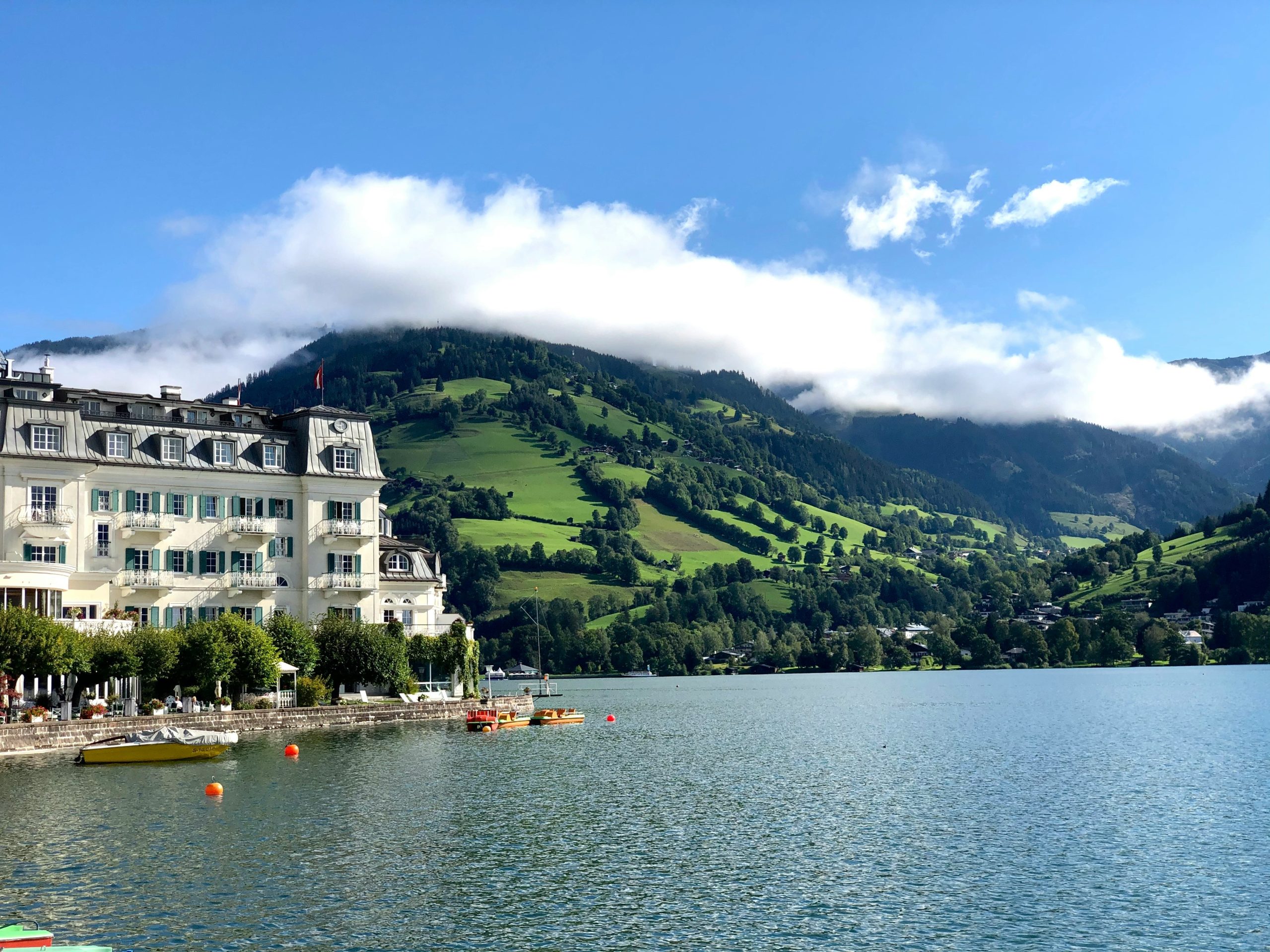
A lake you can swim in below a glacier you can ski on, in the same week. One lift pass covers both, and the train from Salzburg takes ninety minutes.
Zell am See sits on a lake at 750 metres with the Schmittenhöhe rising behind the town and the Kitzsteinhorn glacier at 3,029 metres twenty minutes down the valley at Kaprun. The combination is the selling point: in June you can ski on the glacier in the morning and swim in the lake in the afternoon.
The lake is clean enough to drink from and warm enough to swim in from late June to September, with a path all the way around it.
In winter the Zell am See-Kaprun pass links the town mountain and the glacier, giving a long season that runs from October on the glacier to April in the valley.
Three or four days, and it works as a base for the Grossglockner road and Krimml falls, both among the best things in the Alps.
The town on the lake, or up the valley at Kaprun nearer the glacier.
The lakefront and the small old centre: the cable car, the station, restaurants and most of the beds.
South of the centre near the lake's end, cheaper, with the Areitbahn gondola and a bus into town.
Twenty minutes up the valley: the Kitzsteinhorn lifts, a quieter village and the reservoirs above.
Map © MapTiler © OpenStreetMap contributors.
Swim in the lake and ski on the glacier, ideally on the same day in June, which is the thing this place is built for. The lake has public bathing areas around it, several free, and the water is drinking quality.
The Kitzsteinhorn glacier above Kaprun runs lifts to 3,029 metres, with a viewing platform, an ice gallery cut into the glacier and skiing from October through to early summer.
The Schmittenhöhe cable car from the town goes to 2,000 metres, with a panorama of thirty three-thousand-metre peaks and walking trails down.
The Grossglockner High Alpine Road, an hour south, is a 48-kilometre toll road over a 2,500-metre pass with 36 hairpins, and it is one of the great drives in Europe.
The lake path runs about ten kilometres around the water, is flat and takes two to three hours on foot or an hour by bike.
Several lakeside bathing spots are free, and the water is clean enough to drink.
The guest card most accommodation gives you includes summer cable cars, the lake boat and local buses, which turns a lot of paid things into free ones — ask for it at check-in rather than assuming.
Walking trails start from the town and from every lift station, and the valley paths towards Kaprun and the Kitzsteinhorn are free and well marked.
Salzburg-region mountain food: Kasnocken, Kaiserschmarrn — shredded pancake with plum compote, big enough for two — and Pinzgauer specialities like Bladln and Kasnudeln.
A main in town is €15 to €24, and the mountain huts do the same for less with the view thrown in.
Lake fish appears on menus in summer and is worth ordering.
The town is resort-priced and the supermarkets are not; self-catering or a hut lunch saves a lot over a few days. A half-litre of beer is €4.50 to €5.50, and Almdudler, the herbal lemonade, is the non-alcoholic default.
Seasonal and resort-shaped. In winter the après-ski bars at the bottom of the Areitbahn and around the town centre fill from four in the afternoon and run late, with a heavily international crowd.
In summer it is quieter and more mixed, with lakefront terraces and a few bars in the old centre.
A beer is €4.50 to €5.50.
The town has a notable Gulf Arab summer clientele, which shapes the season — July and August are busier and later than most Alpine towns, with shops and restaurants open past midnight.
The train from Salzburg takes ninety minutes and costs about €20, and the station sits on the lakefront in the middle of town.
Local buses link Zell am See, Schüttdorf and Kaprun every twenty minutes or so and are free with the guest card — get it at check-in.
The Pinzgauer Lokalbahn, a narrow-gauge line, runs west up the valley towards Krimml and is a scenic trip in its own right.
For the Grossglockner road you need a car or a tour; it is a toll road, closed from roughly November to early May, and there is no bus. Ski buses in winter are free with a lift pass.
Resort pricing, softened by the guest card. Beds are €25 to €55, a main €15 to €24, and a beer €4.50 to €5.50.
A day is €60 to €100 in season, less in the shoulder months.
The lift pass is the main cost: a winter day is €60 to €70 across Zell am See-Kaprun, and a summer Kitzsteinhorn return about €40 unless your guest card covers it.
That card is the thing to ask about — in summer it includes cable cars, the lake boat and the buses, and it is free with most accommodation. A lot of visitors never find out they have one.
The town is safe and the mountains are the whole risk picture.
The Kitzsteinhorn is a glacier at 3,029 metres. Crevasses are real, marked routes exist for a reason, and the temperature at the top can be below freezing in July while the lake is at 22 degrees.
Avalanche bulletins are published daily through the winter and off-piste terrain here is serious.
The lake is cold in early season and deep quickly; it warms to swimmable by late June and drops again in September.
The Grossglockner road is high, exposed and closed in winter, with weather that changes fast. Emergency number is 112, and 140 for mountain rescue — check your insurance covers it.
Two of the best things in the Austrian Alps are within an hour.
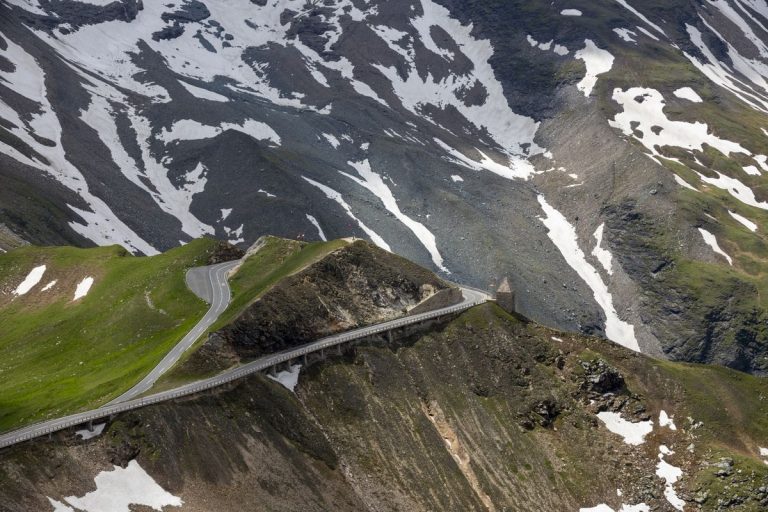
Forty-eight kilometres over a 2,500-metre pass with 36 hairpins, marmots, and a glacier at the end. Closed November to early May.
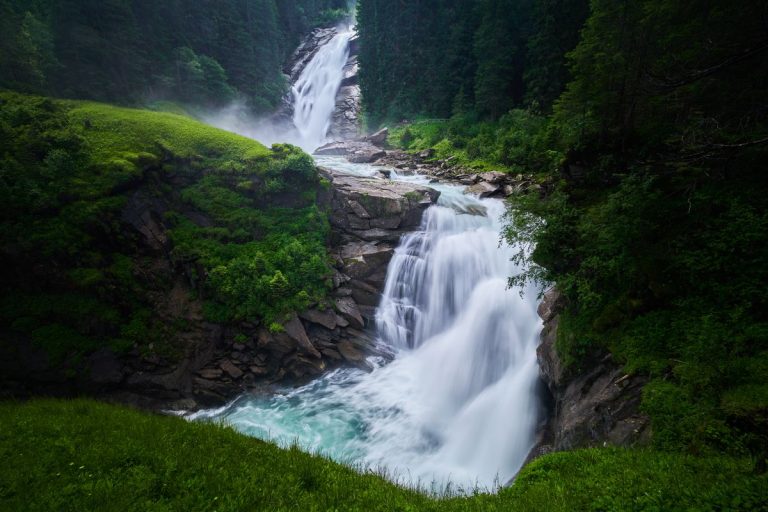
The tallest waterfall in Austria at 380 metres, climbed on a path beside it through spray.
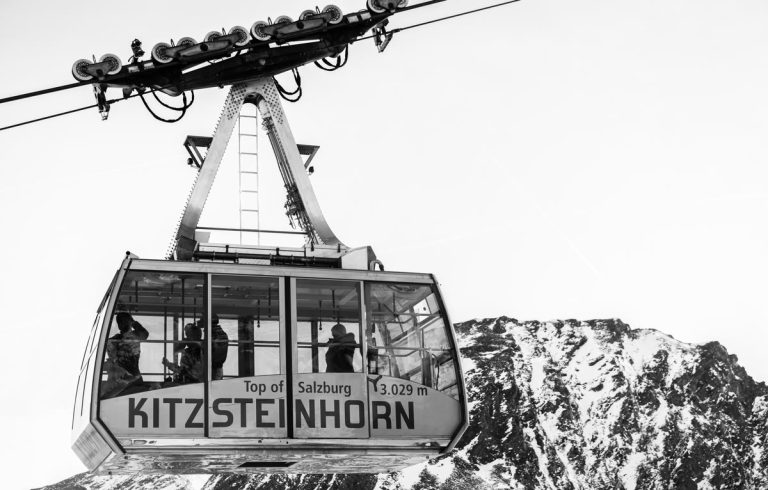
A glacier at 3,029 metres with an ice gallery, a viewing platform and skiing from October.
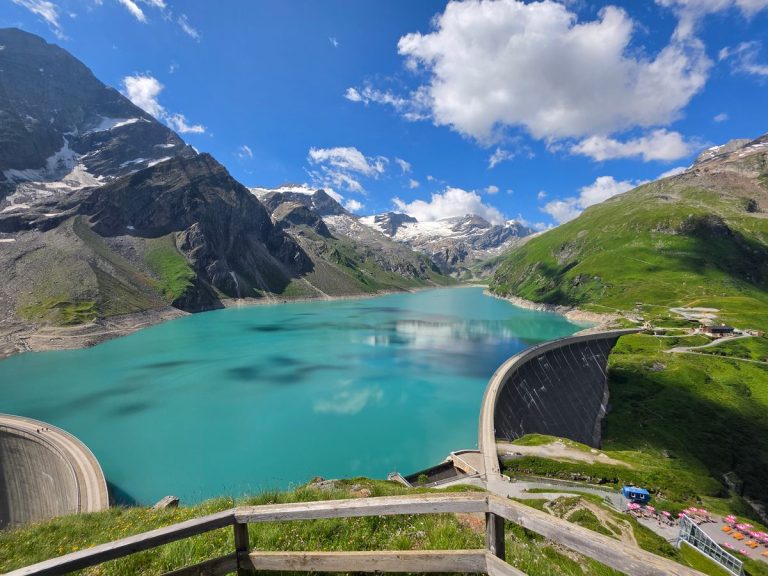
Two high dams at 2,000 metres, reached by a bus up hairpins and an inclined lift, with a walk between them.
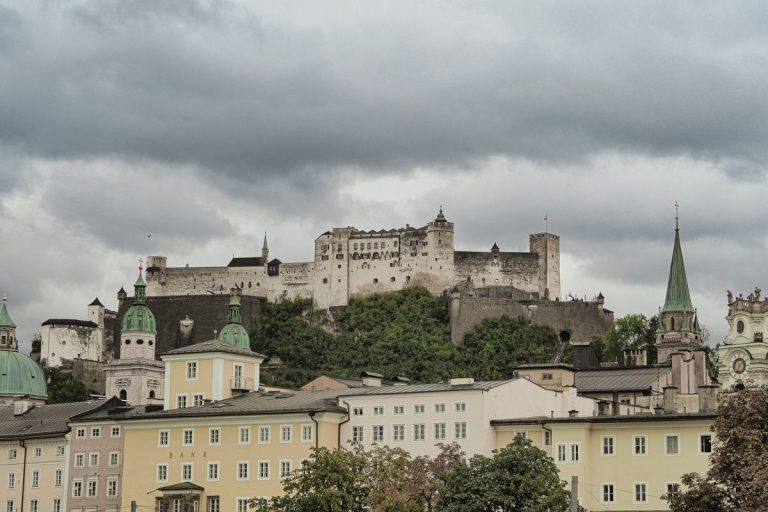
The baroque city, easily done as a day out from the lake.
The seasons are the calendar, plus one enormous bike race.
One pass linking the town mountain and the glacier, with a long season.
When the valley has no snow and the glacier does.
Drinking-quality water, free bathing spots, and warm enough by late June.
A long-distance triathlon using the lake and the surrounding roads.
When the high Alpine road is open. It closes with the first serious snow.
Two full seasons and short gaps between them. June is the month you can do both.
Average highs at lake level. The Kitzsteinhorn at 3,029m is around twenty degrees colder, which is what makes a swim-and-ski day possible in June.
Pick how you travel. Per person per night, in euros, in season.
The doing line assumes a lift pass in winter or a glacier trip in summer. With the guest card and the lake path, a summer day can cost almost nothing.
The ones we get asked most.

Compare Zell am See hostels — live prices, real reviews and free cancellation on most bookings. Then meet the people already there in the app.

 Get the App.
 Get the App.