Upper Town
First-timersThe Great and Small Squares, the churches, the towers and most of the beds.

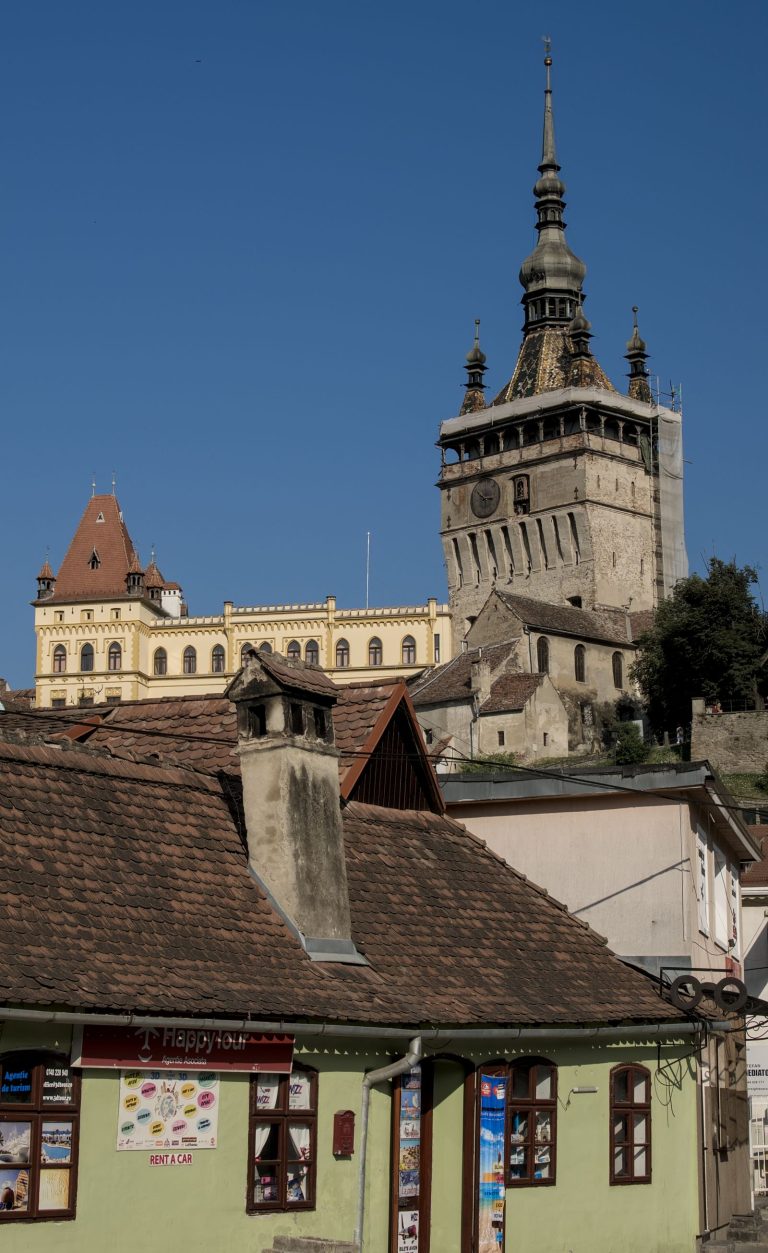
The prettiest of the Saxon towns: rooftops with windows shaped like half-closed eyes, a Bridge of Lies, and one of the largest theatre festivals in the world every June.
Sibiu was the main city of the Transylvanian Saxons, the German-speaking settlers who arrived in the twelfth century, and its upper town is the most complete and best-restored of their towns.
The detail everyone notices is the roofs. Many of the old houses have small attic dormers in the shape of half-closed eyelids, used to ventilate grain stores, and the effect from the squares is of the buildings keeping an eye on you. Locals call them the eyes of Sibiu.
The town was European Capital of Culture in 2007, which funded a restoration that left it looking better than almost anywhere else in Romania.
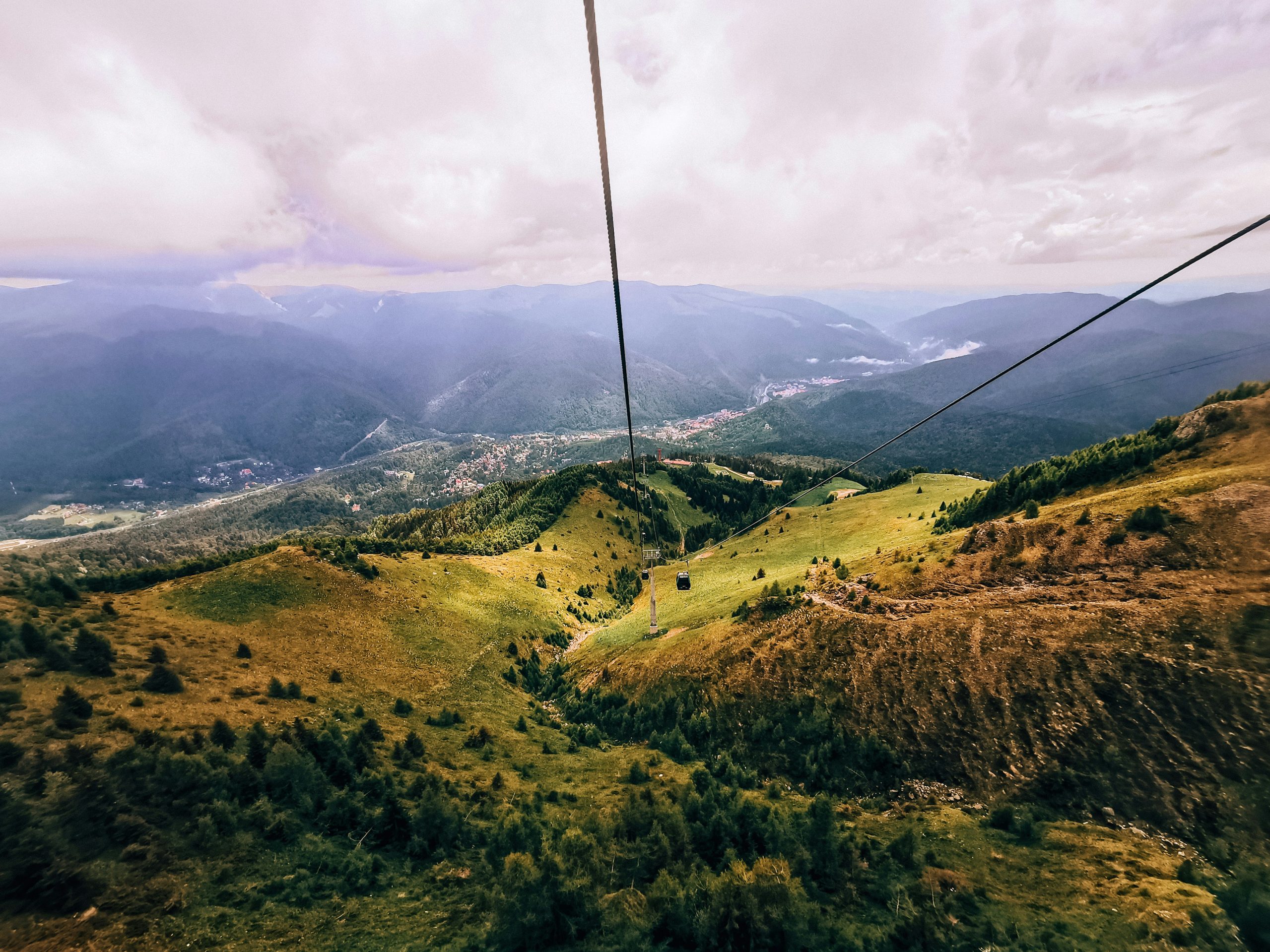
Just outside it is ASTRA, one of the largest open-air museums in Europe — some three hundred traditional buildings across ninety-six hectares of forest and lake.
An hour south is the Transfagarasan, a mountain road climbing over the Fagaras range in a sequence of switchbacks that a British television programme once called the best road in the world.
Two days.
A walled upper town and a lower town below it, joined by stairways and passages.
The Great and Small Squares, the churches, the towers and most of the beds.
Below the walls: older, less restored streets and guesthouses a short climb from the squares.
Orange labels are neighbourhoods, dots are the 1 top-rated hostels. Map © MapTiler © OpenStreetMap contributors.
Walk the squares. The Great Square, the Small Square and Huet Square are linked by passageways and stairs, and the whole upper town can be covered in an unhurried morning. Look up for the eye-shaped dormers.
The Bridge of Lies, a cast-iron footbridge from 1859 between the squares, is free and carries a legend about collapsing if anyone tells a lie while standing on it. It has not collapsed.
Climb the Council Tower, about 5 lei (€1), for the view over the roofs to the Fagaras mountains.
The Brukenthal Museum, about 40 lei (€8), was one of the first museums in south-eastern Europe, opened in 1817 in the palace of the Habsburg governor, and holds a strong European painting collection.
ASTRA, just outside town, is the thing to give time to: about 35 lei (€7), three hundred traditional buildings moved from across Romania, and big enough that you should allow half a day.
In summer, drive or tour the Transfagarasan — road conditions permitting.
The upper town, its three squares and the Bridge of Lies are free.
The eye-shaped dormers are free to spot, and once you notice them you see them everywhere.
The Passage of Stairs, linking the upper and lower towns, is free and the most atmospheric walk in the town.
The old fortifications along Cetatii street, with several towers still standing, are free to walk.
The Lutheran cathedral is free or nearly so and holds a large fifteenth-century fresco of the Crucifixion.
Transylvanian and Saxon influences. A main is 35 to 60 lei (€7–12).
The standard Romanian dishes appear — sarmale, mici, ciorba — alongside Saxon ones with more pork, cabbage and smoked meat.
The region around Sibiu is a centre of traditional shepherding, and the sheep's cheese and smoked products from the surrounding villages are the thing to buy at the market.
Sibiu has one of the better café cultures in Romania, much of it around the squares.
A beer is 10 to 18 lei (€2–3.50), and the Transylvanian wine regions nearby produce good whites.
Modest and pleasant. The bars and cellar pubs are concentrated in the upper town, several of them in vaulted medieval basements under the squares.
A beer is 10 to 18 lei (€2–3.50) and cocktails 25 to 40 lei (€5–8).
Sibiu has a university and a reasonable student crowd in term.
June is the exception: the Sibiu International Theatre Festival brings hundreds of productions and street performances to the town over ten days, and the evenings run late across every square.
The rest of the year it is a place for a good dinner and a quiet drink.
The upper town is walkable and the lower town is a short climb below it.
Buses cost about 3 lei (€0.60) and reach ASTRA, which is about five kilometres out.
Trains from Brasov take about three hours, and from Bucharest considerably longer — Sibiu is not well served by rail. Buses and minibuses are often faster.
Sibiu airport has budget routes from several European cities and makes a practical entry point to Transylvania.
The Transfagarasan is about an hour south and needs a car or a tour. It is usually open only from around July to October, closing whenever snow arrives, and the dates change each year.
Romanian roads, and mountain ones especially, are genuinely dangerous — take care or take a tour.
Cheap. Dorms are 45 to 100 lei (€9–20), a main 35 to 60 lei (€7–12), and a beer 10 to 18 lei (€2–3.50).
A day is €28 to €50.
You pay in lei. Cards work widely in the centre.
The old town is free, and the paid sites are cheap — the tower about 5 lei (€1), ASTRA about 35 lei (€7), the Brukenthal about 40 lei (€8).
June is the exception, when the theatre festival fills the town and beds book out well ahead at higher prices.
Sibiu is among the safest towns in Romania and crime against visitors is minimal.
The practical risks are outside the town. The Transfagarasan is a high mountain road with hairpins, sheer drops, livestock and sudden fog; drive it slowly or take a tour. Do not drive it in bad weather and check that it is open before setting out.
Brown bears live in the Fagaras mountains and are regularly seen near the Transfagarasan, particularly around Balea Lake and the lower forest sections, where people feed them from cars. Do not feed them, do not approach them and do not get out of your car near one. It is dangerous and it teaches bears to come to roads.
The old town has steep stairways and uneven cobbles that are slippery in rain and ice.
Emergency number is 112.
A mountain road, fortified churches and shepherds' villages.
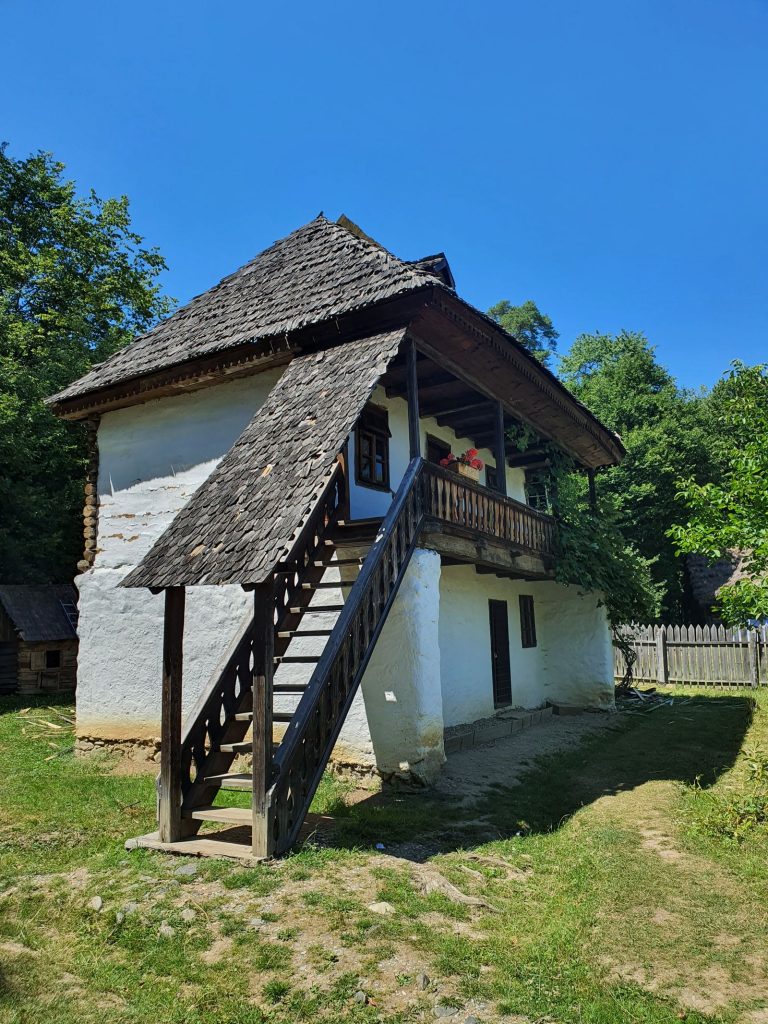
About three hundred traditional buildings from across Romania, set in forest and around a lake.
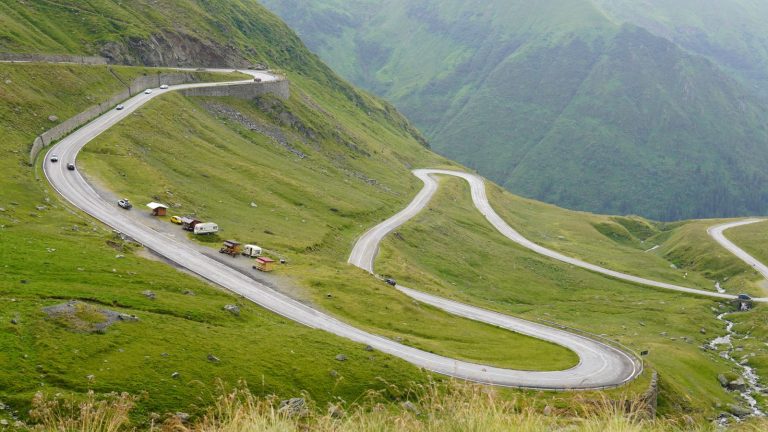
A switchback mountain road over the Fagaras range to a glacial lake at 2,000 metres. Roughly July to October only.
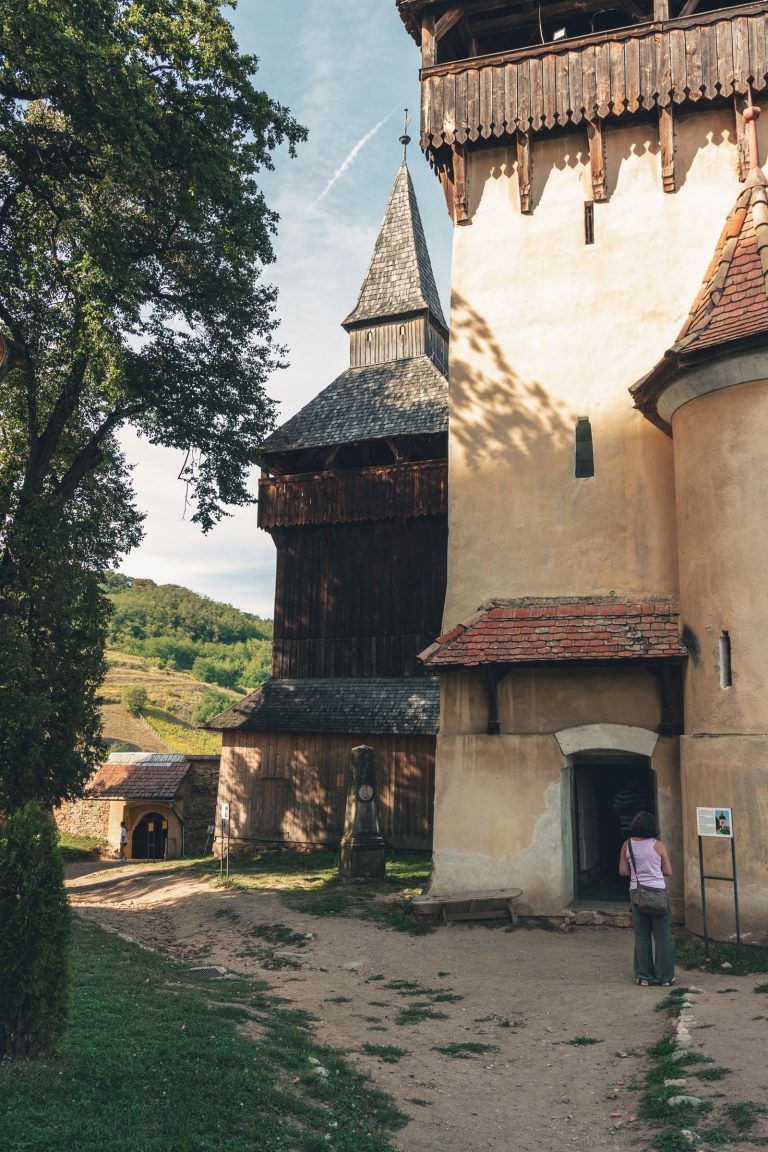
A UNESCO-listed Saxon fortified church on a hill above its village, with a marriage room where quarrelling couples were locked up.
An inhabited medieval citadel and Vlad Tepes's birthplace.
One of the largest theatre festivals in the world, every June.
Among the largest theatre festivals in the world, with hundreds of productions and street performances over about ten days. Beds book out well ahead.
Consistently rated among the best Christmas markets in Romania, on the main Saxon square.
When the mountain road is open. Dates vary with the snow.
Crafts, costume and music in the squares.
A documentary film festival with a strong regional programme.
A modest scene in the upper and lower towns, tightest in June. Live from Hostelworld.
May to October, and July to September if you want the Transfagarasan.
Average highs. The Transfagarasan opens and closes with the snow, typically around July to October — check the current status before planning a trip around it.
Pick how you travel. Per person per night, in euros — you will pay in lei, at roughly 5 to the euro.
Shown in euros for comparison; you pay in lei. A Transfagarasan tour at €30 to €60 sits outside these figures.
The ones we get asked most.

Compare Sibiu hostels — live prices, real reviews and free cancellation on most bookings. Then meet the people already there in the app.

 Get the App.
 Get the App.