

Sri Lanka is small. The island is just 432 km from top to bottom and 224 km across at its widest, according to the country’s Department of Census and Statistics. Yet it holds rainforest, misty cloud forest, elephant plains and blue-whale waters. Because they’re packed so close together, you can travel between most of them in a day, and that’s what makes a nature lover’s itinerary to Sri Lanka work in just two weeks.
This route does it by train, bus and tuk-tuk, with the season for each highlight, park fees and a hostel on Hostelworld at every stop. It’s also up to date for 2026: the famous Kandy to Ella train still doesn’t run end to end after Cyclone Ditwah, though the stretch through Ella reopened in June 2026, so we show you the way around the gap.
Along the way you’ll get tips from Barbara Sinalyova, Hostelworld’s social media manager, who travelled the island from late January to early February 2026.
When is the best time to visit Sri Lanka for nature?
Sri Lanka has two monsoons, and they hit different sides of the island at different times. According to the Department of Meteorology, the southwest monsoon soaks the south coast and hill country from about May to September. The northeast monsoon then brings rain to the north and east from about December to February. This route runs through the hills and down to the south coast, so its driest window is roughly December to April. The north and east are better mid-year.
Each wild highlight also has its own season. Here’s what each one is, and when to go:
- Whales off Mirissa (November to April): Mirissa is a laid-back beach town on the south coast, and blue whales, the largest animals on Earth, are the most common sighting on boat trips from its harbour. Sperm whales and Bryde’s whales turn up too. Boats run from November to April, and the rest of the year the monsoon makes the sea too rough, says Nomadic Boys.
- The Gathering at Minneriya (about June to October): Minneriya and neighbouring Kaudulla are national parks on the dry plains of the north-central region, each built around a big reservoir, known locally as a tank. As the water drops, fresh grass grows on the tank beds and pulls in herds of 100 to 150 elephants, sometimes up to 300. It starts around June and peaks in August and September, according to The Sri Lanka Travel Blog.
- Adam’s Peak (December to May): Also called Sri Pada, this cone-shaped mountain rises out of the forest at the edge of the hill country. A footprint-shaped rock on its summit is sacred to Buddhists, Hindus, Muslims and Christians, so the climb is a pilgrimage as much as a hike. The season runs from the Unduwap poya (full moon) in December to the Wesak poya in May, reports Ada Derana.
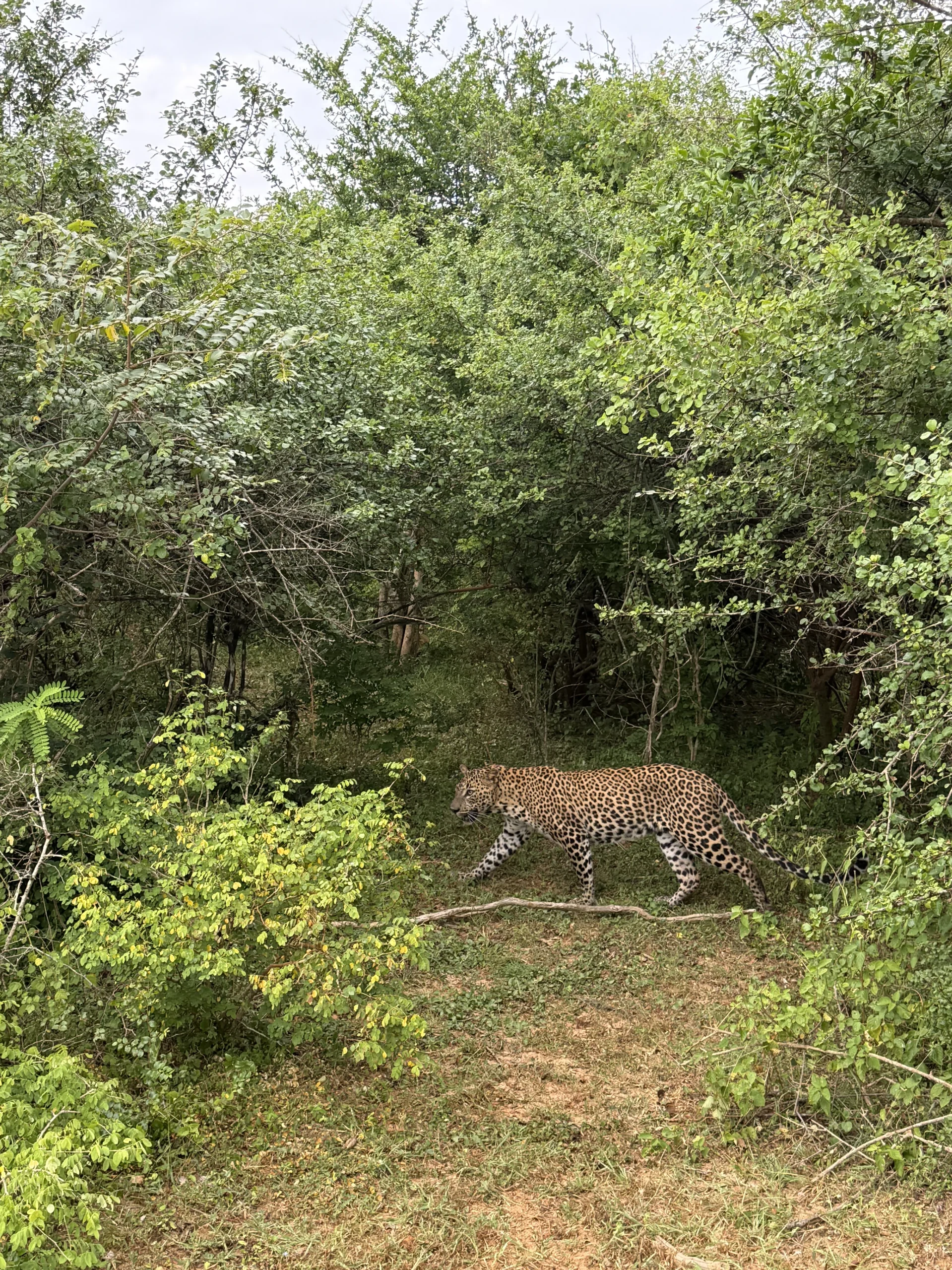
- Leopards in Yala (most of the year): Yala is a national park of dry scrub, lagoons and forest in the far southeast. National Geographic says its leopards are more densely packed than anywhere else in the country, especially in Block 1, alongside elephants, sloth bears and crocodiles. Blocks 1 and 2 close in the hottest, driest weeks. In 2026 that was 14 September to 15 October, while the other blocks stayed open.
- Horton Plains (clearest around January to March): This is a high, windswept plateau of grassland and cloud forest near Nuwara Eliya, and part of UNESCO’s Central Highlands of Sri Lanka World Heritage Site. Its big sight is World’s End, a sheer drop off the edge of the plateau. Go early: Lonely Planet recommends between 6am and 10am, before the clouds roll in.
Quick tip: Barbara travelled from late January to early February 2026 and found it warm and dry, with just one brief storm. That’s a good window for pairing the hills with the south coast.
Days 1 to 3: Sigiriya, Pidurangala and the elephant parks
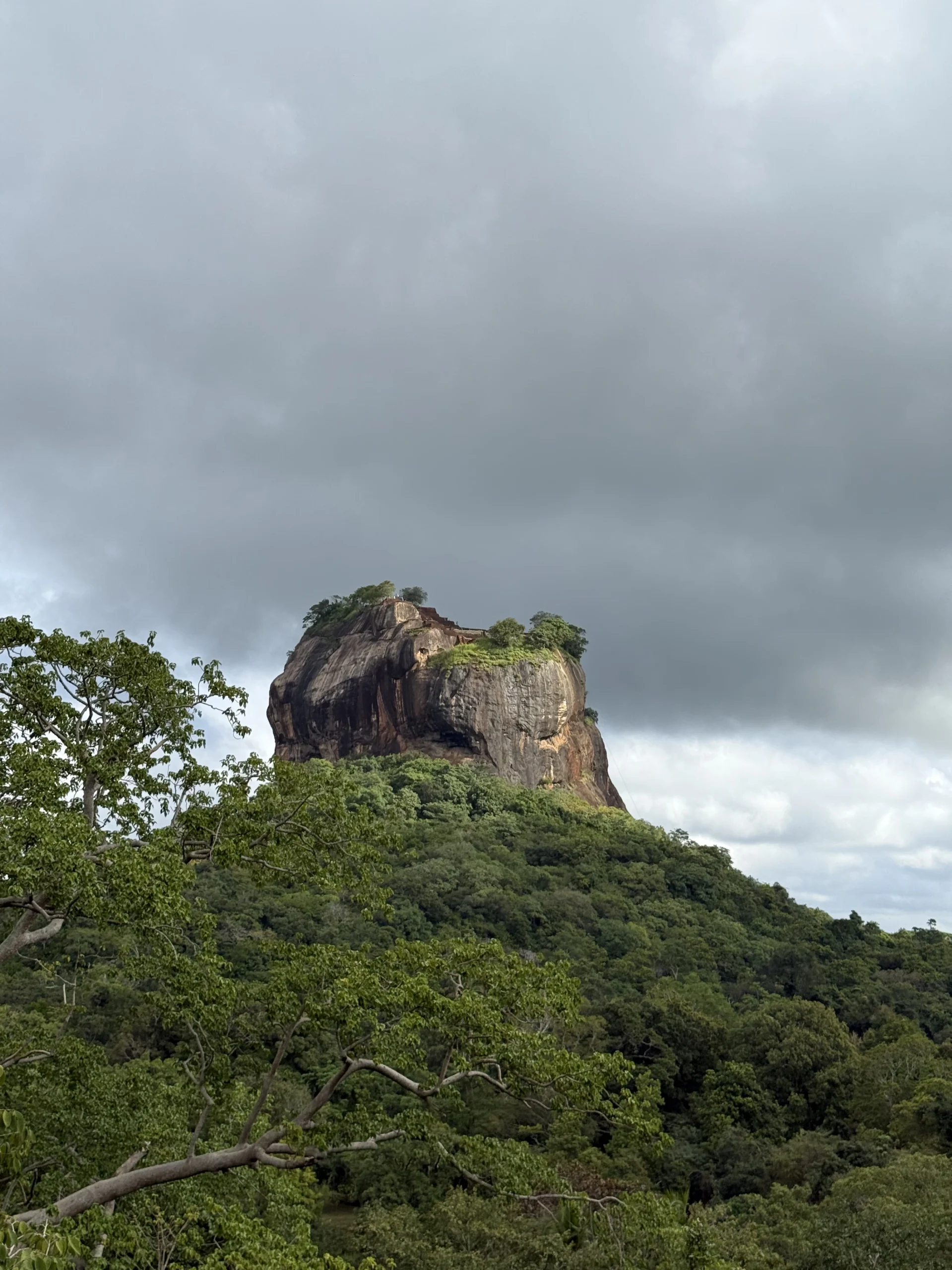
Start in the Cultural Triangle, the dry, flat heart of the island. Sigiriya is a small village at the foot of a huge rock fortress, and it puts you within reach of two sunrise hikes and the best elephant parks in the country.
Getting there: take a bus from Colombo’s Bastian Mawatha terminal to Dambulla. Rome2Rio lists the ride at about 4 hours, with departures every 15 minutes and fares around Rs 510 to 570. From Dambulla, a local bus or tuk-tuk covers the last stretch to Sigiriya.
Day by day:
- Day 1: arrive, check in and walk the village at sunset.
- Day 2: climb Pidurangala at sunrise for the classic view of Sigiriya Rock. It’s temple-run, with a fee of about Rs 1,000. Sigiriya itself costs US$35 for foreign adults, according to Tuk Tuk Rental’s fee guide (checked against official rates in March 2026), so nature lovers can skip it if money’s tight. Barbara saw the rock from several angles and thinks it’s worth the stop.
- Day 3: an afternoon jeep safari at Minneriya or Kaudulla, depending on where the herds are that week. Entry is US$25 per adult, plus a service charge, 18% VAT and jeep hire of about Rs 7,000 to 8,000 for a half day, so split the jeep with people from your hostel.
Where to sleep: Sigiriya has 49 hostels on Hostelworld (checked October 2026). Tree House Hostel (9.5, dorms from €10.81) and Another World Hostel (9.6, from €6.89) are the top-rated picks. Barbara stayed at Funk Bunks (9.4, from €18.01).
Days 4 and 5: Kandy and the Knuckles Range
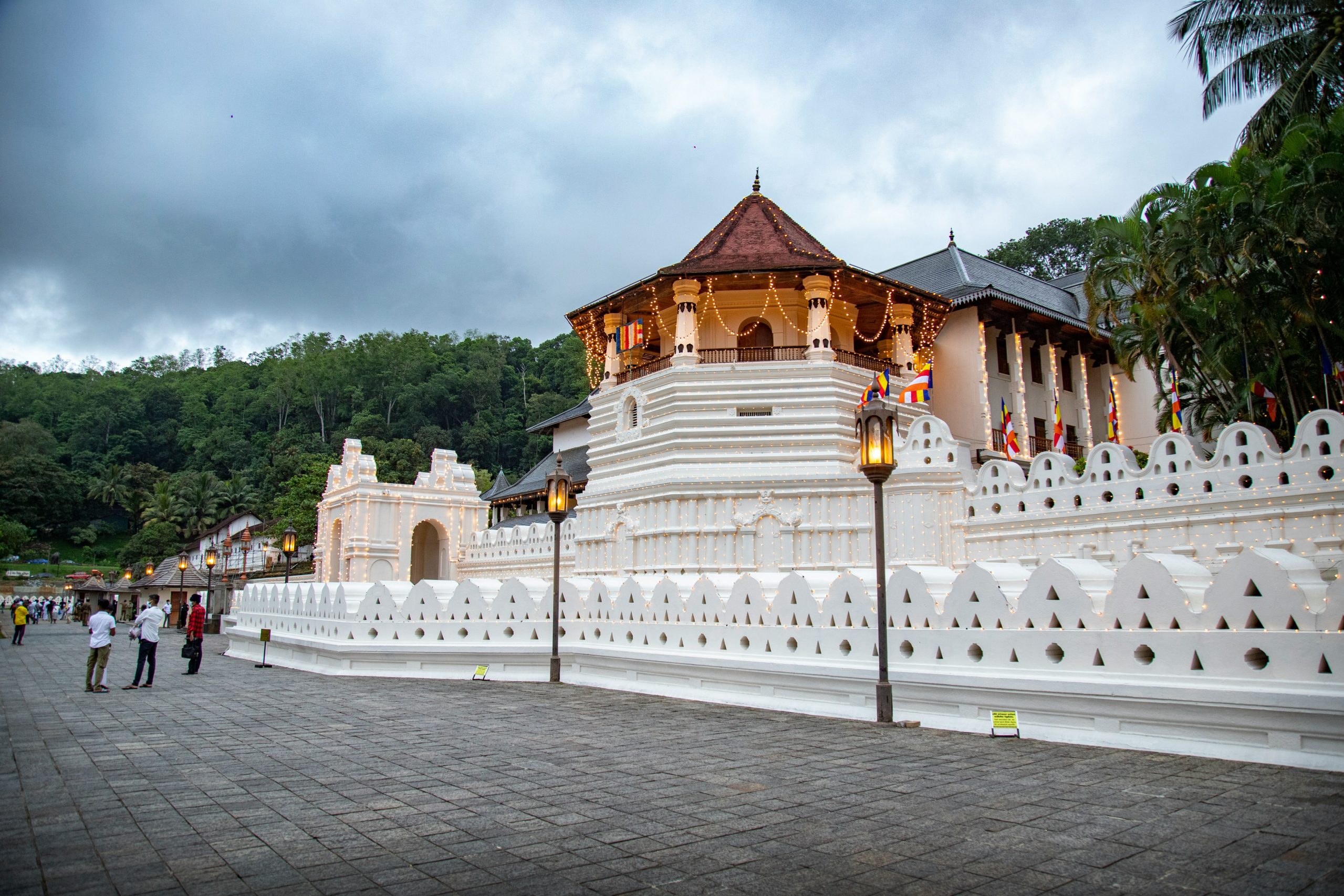
Kandy is where the island starts to climb. It’s a lakeside city ringed by green hills, and it makes an easy base for two very different days out. Arrive by bus, not train: the line into Kandy was badly damaged by Cyclone Ditwah, and in January 2026 the authorities were still working to reopen it within a year, with the Peradeniya railway bridge alone needing US$18 million to rebuild, Ada Derana reported. On day 4, take a short bus ride to the Royal Botanic Gardens in Peradeniya for orchid houses, giant bamboo and avenues of palms. Entry is about Rs 3,540 for foreign adults, per Tuk Tuk Rental’s fee guide, which was checked against official rates in March 2026. On day 5, head into the Knuckles Range, a UNESCO-listed tangle of cloud forest, waterfalls and tea villages east of the city. Most travellers go with a guide, and day treks from Kandy are listed from about US$80 per adult on Lakpura. Base yourself near the lake or the hills just above it, and book through Hostelworld to see live prices and reviews.
Is the Kandy to Ella train running in 2026?
Train status checked: October 2026.
Not end to end, not yet. Cyclone Ditwah hit in late November 2025, and the Hill Country around Kandy, Nuwara Eliya and Badulla took the worst of it, says the UK government’s travel advice. The good news: the stretch from Nanu Oya to Badulla, through Ella, reopened on 20 June 2026 with four trips a day each way, Newsfirst reported. Kandy to Nanu Oya is still cut, with repairs targeted for completion in 2026.
So here’s the fix. Take a bus or private transfer from Kandy to Nuwara Eliya or Nanu Oya, then pick up the train there. You still get the best of the ride: the high tea estates, tunnels and the curve down into Ella.
Lines reopen in stages, so check with Sri Lanka Railways or ask your hostel a day or two before you travel.
Days 6 and 7: Horton Plains and World’s End
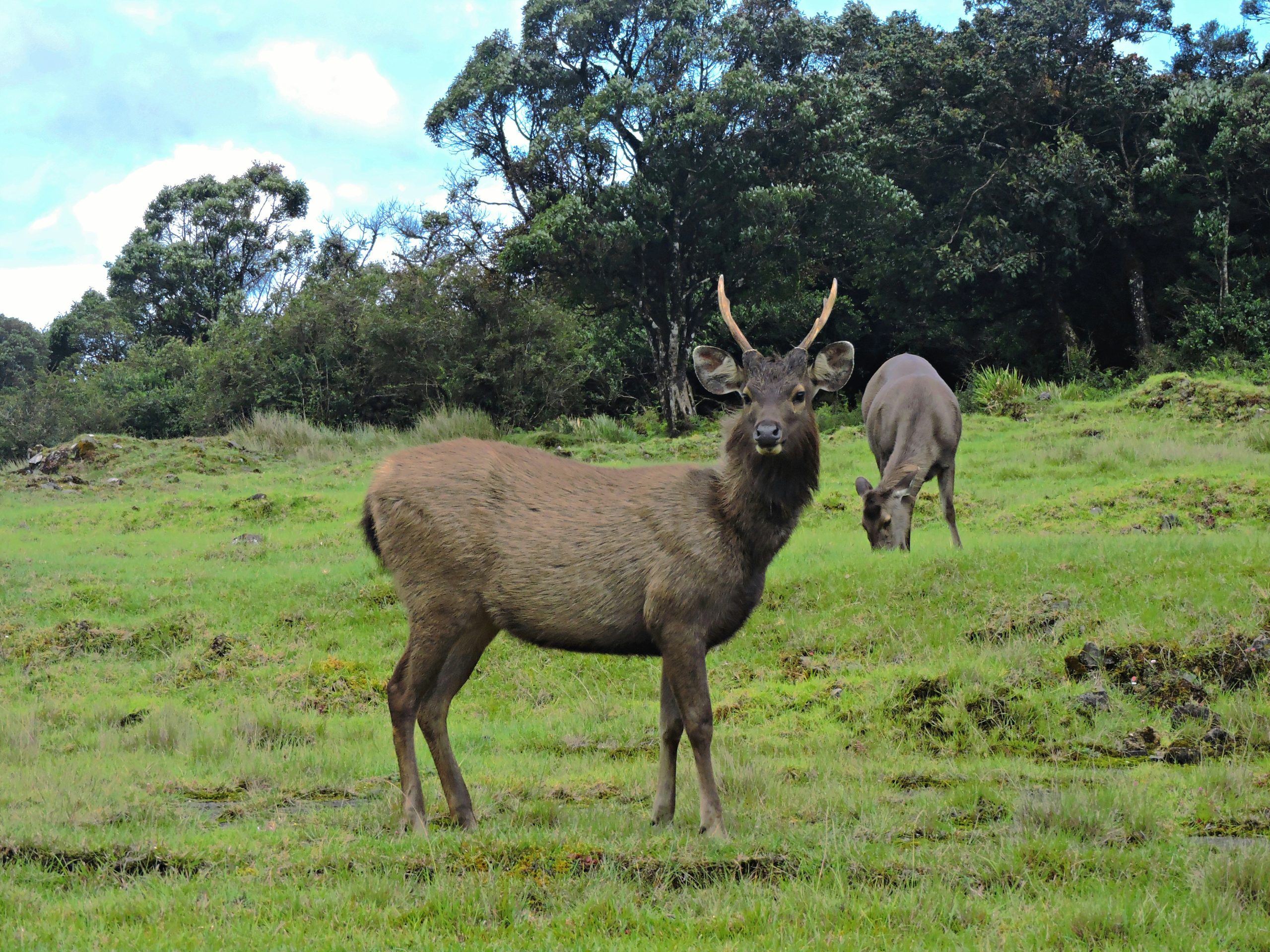
Horton Plains is high, misty cloud forest and grassland, ending at a sheer drop called World’s End. Base yourself in Nuwara Eliya or Nanu Oya for the night before.
- Leave before dawn. Mist often rolls in by around 10am and hides the view, says HIDMC’s trekking guide. Aim to be at the gate when it opens.
- Bring cash. Foreign adults pay US$25, plus a US$10 service charge, a vehicle fee and 18% VAT, per Tuk Tuk Rental’s fee guide. Card payment isn’t guaranteed.
- Walk the loop. The circuit is about 9 km, past Little World’s End and World’s End, then back via Baker’s Falls. Allow three to four hours.
Day 7 is for resting your legs among the tea estates before Ella. Our guide to backpacking Sri Lanka has more hill-country ideas.
Days 8 to 10: Ella’s hikes and the train ride
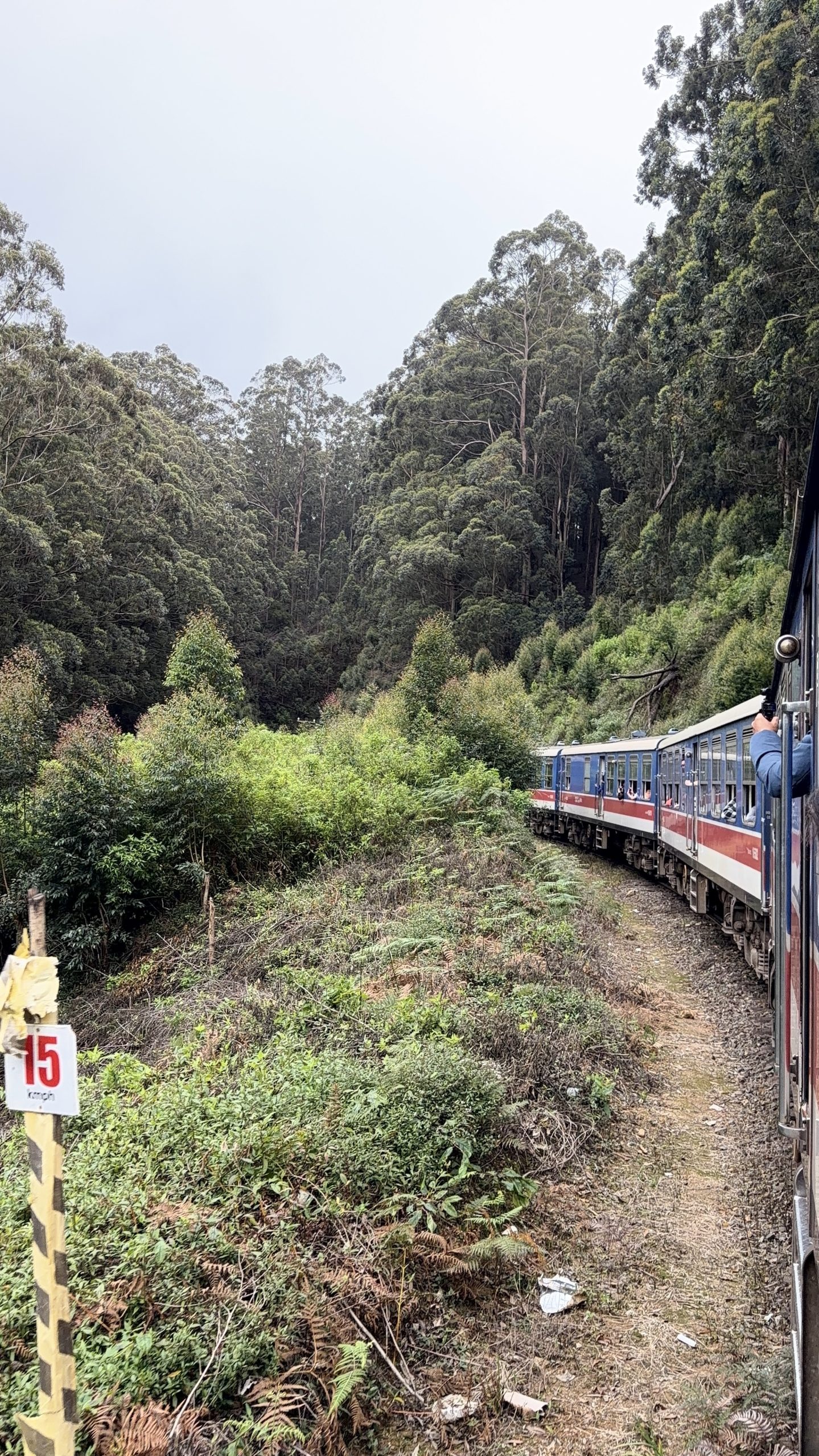
Pick up the train at Nanu Oya and ride the best stretch of the hill-country line down to Ella, through tea estates and tunnels. Ella is a small, easy-going village, and it’s the hiking base of the trip.
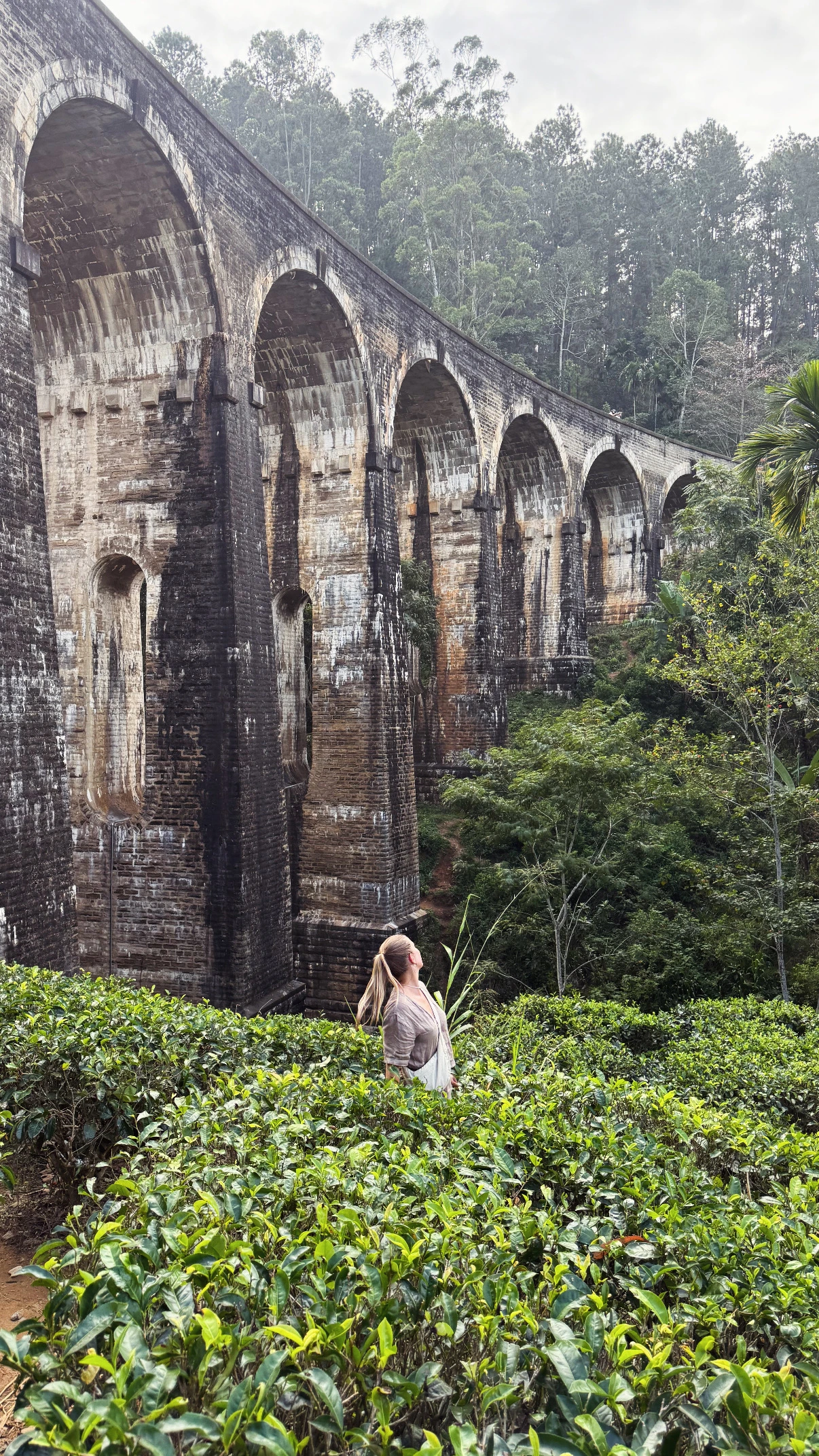
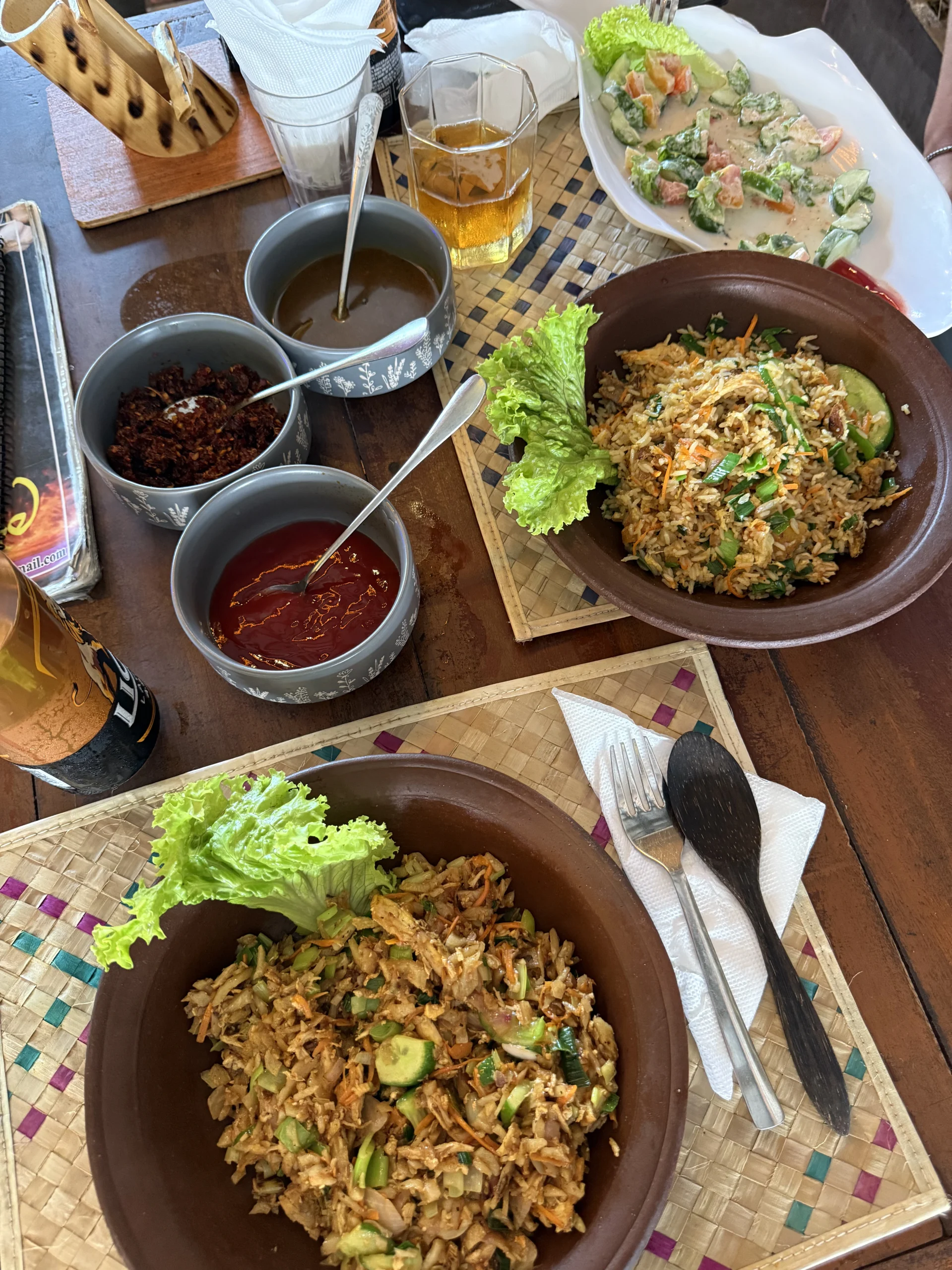
Barbara stayed at Avocado Hostel and did the big three: Nine Arch Bridge, the Little Adam’s Peak hike and a tea factory visit. Her verdict in 2026: all still worth it. Fit Ella Rock in too if your legs allow. She refuelled at Cafe Chill and The Clay Pot, with kottu (chicken or egg) and rice and curry with coconut sambol.
Hostels can organise group hikes through Linkups, and City Chats is handy for finding train buddies. Our Ella travel guide has more ideas.
Days 11 and 12: Leopards in Yala (or elephants in Udawalawe)
From Ella, the road drops out of the hills to the hot, flat southeast coast. This is safari country, and Yala is its star.
What Yala is: Sri Lanka’s best-known national park, a 103,889-hectare spread of dry scrub, rocky outcrops, lagoons and beach. It’s split into five blocks. Block 1 is the most visited because it has the most leopards, and that’s also its catch: Amazing Lanka says more than 200 jeeps usually enter through the main Palatupana gate, which can mean jeep jams around a sighting. Blocks 1 and 2 also close each year in the driest weeks (mid-September to mid-October in 2026), while the other blocks stay open.
Where to base yourself: Tissamaharama, or Tissa, is the nearest proper town, with banks, shops, a big lake and plenty of jeep drivers. Kirinda is a small fishing village on the coast, even closer to the Palatupana gate. Barbara stayed in Kirinda at Yala Ying Yang Hostel & Camping (8.9 from 17 reviews on Hostelworld, checked October 2026). She picked it for being close to the park entrance for the price, and says the host was great. In Tissa, Go Yala Hostel (9.2, dorms from €10.80) and River Face Inn (9.9, from €5.51) are the top-rated of the 10 properties on Hostelworld’s Tissamaharama page (checked October 2026).
How the safari works: you hire a jeep with a driver, usually through your hostel, and go out at dawn, when the animals are most active. The park opens at 6am. Entry is about US$25 per adult, plus a service charge, a vehicle permit and 18% VAT, per the fee guide we used earlier. Jeep hire is on top and is charged per vehicle, so the more people you share with, the less you pay. Ask for an all-in written quote before you go.
The alternative, Udawalawe: this national park sits in open grassland around a big reservoir, just south of the hill country, and you can fit it in on the way from Ella to the coast. It’s home to around 600 elephants, and with so little forest cover they’re easier to spot than in any other park, says the Rough Guide. Nearby, the Elephant Transit Home raises orphaned calves and releases them into the park.
- Pick Yala for leopards, sloth bears and a mix of jungle, lagoons and coast. Expect crowds in Block 1.
- Pick Udawalawe for close-up elephant herds, wide open views and an easy detour.
For more wild days out, see our list of top things to do in Sri Lanka.
Days 13 and 14: Blue whales and beaches in Mirissa
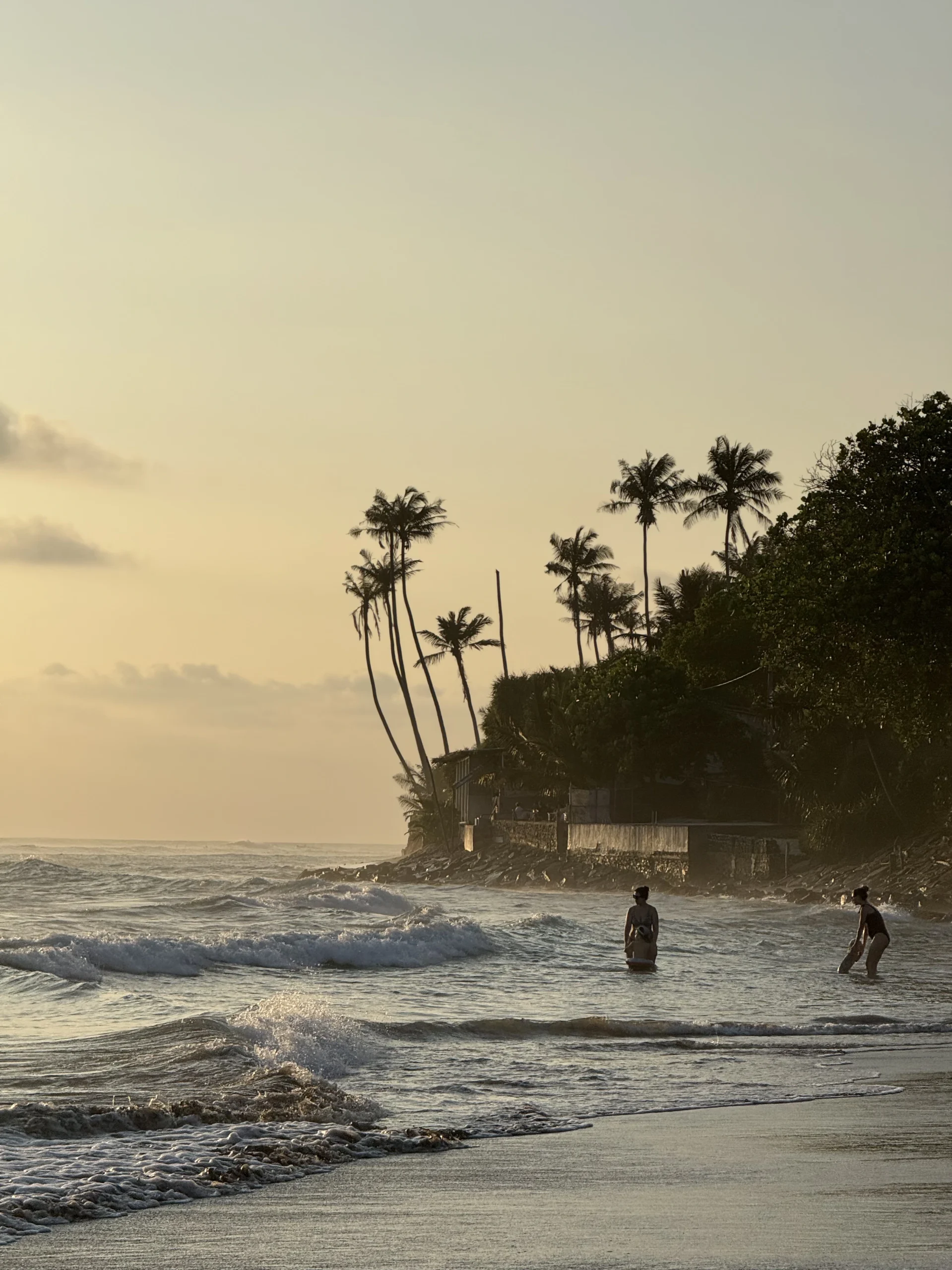
End where the island runs out of land. Mirissa is the south coast’s whale-watching harbour, with boats heading out at dawn from November to April. Pick an established operator and skip any boat that promises guaranteed sightings or races from one whale to the next. The Sri Lanka Travel Blog says good crews never drive head-on at whales and stay at least 100 m away, or 200 m when other boats are around.
Save the beach for last: Barbara surfed first, then headed inland, then went back to the coast. Once she was in beach mode, she nearly cut the inland part short. Do Sigiriya, Kandy and the hills first, then finish by the sea.
Surfers can base themselves just west along the coast in Ahangama, now one of the south coast’s main surf hubs, with 43 hostels on Hostelworld. Got a spare day? Sinharaja rainforest is within reach of the coast. Entry includes a mandatory local guide and cost 2,700 LKR in 2024, says Birdingplaces.
In Mirissa, JJ’s Hostel (9.6 from 606 reviews, dorms from €12.59) and Hangover Hostels Mirissa (8.7, from €9.00) stand out among the 29 hostels on Hostelworld (checked October 2026). Our Mirissa travel guide has more beach-day ideas.
How much does a nature trip to Sri Lanka cost?
Your bed is the cheap part. The parks are where the money goes, so budget for them first. Fees below are for foreign adults, converted at about 0.89 euros to the dollar (October 2026):
- Sigiriya: US$35 (about €31), museum included. That’s the price the Central Cultural Fund listed in March 2026, according to TukTuk Rental, though some guides still say US$30.
- Yala, Minneriya and Horton Plains: about US$25 (about €22) entry each, plus service charges, a vehicle permit and VAT. Udawalawe is cheaper at about US$15 (about €13).
- Jeep hire: about 7,000 to 8,000 LKR (roughly €20 to €22) for a half day, split between everyone in the jeep. Find people to share one with at your hostel.
- Your visa: nationals of 40 countries, including the UK, US, Canada and Australia, have got a free 30-day tourist ETA since 25 May 2026, News 1st reports. You still have to apply before you fly on the official ETA site, and other nationalities pay the usual fee.
Here’s how the paid stops on this two-week route add up, before beds and food. Taking two half-day jeeps (Minneriya and Yala) and paying for each alone, it comes to about €139; share the jeeps and it drops fast.
| Sigiriya | €31 |
| Minneriya entry | €22 |
| Horton Plains entry | €22 |
| Yala entry | €22 |
| Jeep, Minneriya (half day) | €21 |
| Jeep, Yala (half day) | €21 |
| Tourist ETA (40 nationalities) | €0 |
| Total | €139 |
Dorm prices change with the season, so check live prices on the hostel cards in each section. Our Sri Lanka travel guides have more budget tips.
Where should you stay on a Sri Lanka nature trip?
Base yourself in hostels near the parks, not in the cities. You’ll find cards for Sigiriya, Kandy, Ella, Tissamaharama and Mirissa in each stop above, and our Sigiriya guide and Kandy guide help you pick an area. Our colleague Barbara tested hostels in Sigiriya, Ella and on the edge of Yala on this route, and they’re among the cards. For Yala itself, stay right by the park gate:
Jeeps and tuk-tuks are cheaper shared. Join City Chats in the Hostelworld app to find people heading the same way, or get a Social Pass if you haven’t booked yet.
Conclusion: Is Sri Lanka worth it for nature lovers?
Absolutely. In two weeks you can climb a jungle rock at sunrise, walk through cloud forest to World’s End, ride one of the world’s prettiest trains, watch leopards in Yala and finish with blue whales off Mirissa, all on a hostel budget. That’s what makes a nature lover’s itinerary to Sri Lanka so hard to beat.
Take a tip from Barbara and keep the beach for the end: do the hills and the wildlife while you’ve got the energy, then let the coast be your reward. If you want to give something back while you’re there, read our guide to wildlife conservation projects.

 Get the App.
Comments