

Sri Lanka backpacking guide
Backpacking Sri Lanka works best on a two-week loop of Colombo, Ella, Mirissa, Galle, Kandy and Sigiriya, with dorm beds from about EUR 6 a night and a free 30-day ETA for UK, US, Australian and many other passports since May 2026. Trains and buses link almost every stop for a few dollars.
This guide was written by a Sri Lankan travel writer, and the hostels, ratings, visa rules and prices were checked in November 2026. It covers when to go, visas, getting around, hostels by town, daily costs, itineraries, food, culture and safety.
A tiny island in the Indian Ocean and often mistaken for its giant neighbour, India, Sri Lanka will amaze you with its sheer beauty. Diverse in nature and diverse in culture, the island nation offers something for everyone. While beachgoers tend to hangout in the island’s coastal belt, which is home to a thriving café and surf culture, the ancient towns of central and northern Sri Lanka keep the history buffs infatuated by their charm.
Home to trekker-friendly, mist-clad mountains, a rich cuisine, and warm, kind-hearted souls to make you feel at home, Sri Lanka is no longer a secluded destination. It’s a land where the tropical sun shines bright and waves kiss the pebbled shore a million times every day.
Contents
-
-
-
- What is the best time to visit Sri Lanka?
- Do I need a visa for Sri Lanka?
- Getting around Sri Lanka
- Best hostels in Sri Lanka by town
- How much does it cost to backpack Sri Lanka?
- Where to go in Sri Lanka
- Things to do in Sri Lanka
- Sri Lankan food
- Sri Lanka culture and customs
- Safety in Sri Lanka
- Sri Lanka travel tips for first-timers
-
-
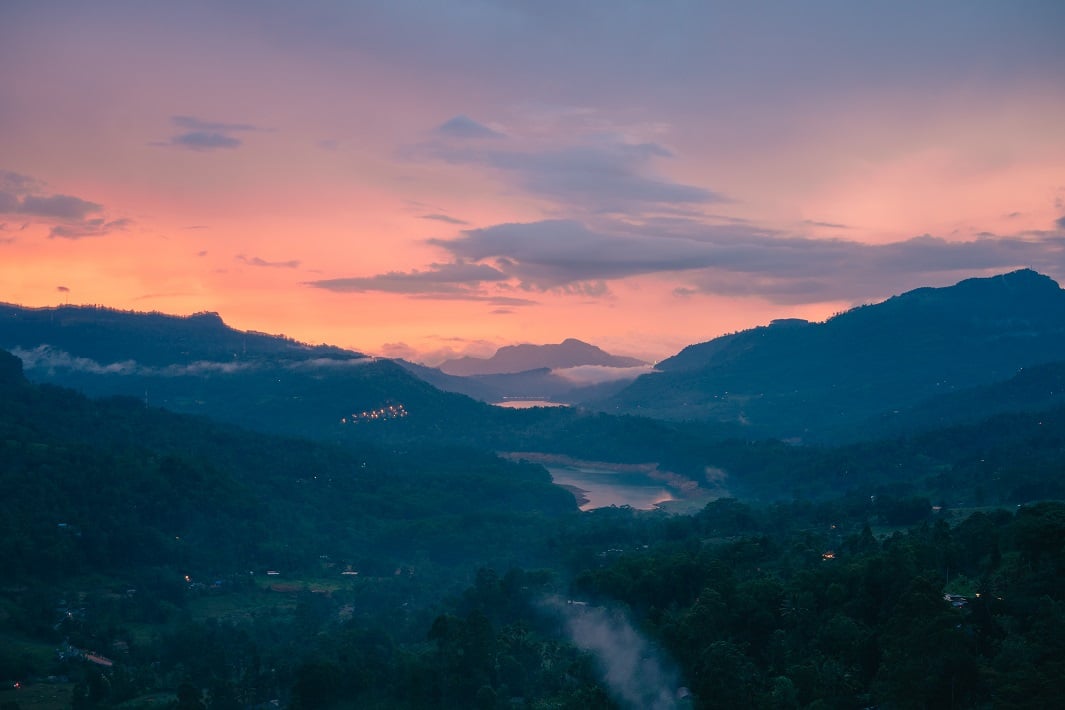
Ramboda
Photo: @vitaliitk
What is the best time to visit Sri Lanka?
Sri Lanka may be shaped like a rain drop, but don’t let that fool you, the island receives plenty of sunshine throughout the year. While the central highlands witness mild temperatures, the tropical sun shines bright along the coastline. There is hardly a bad time to visit Sri Lanka but December to March, when temperatures are slightly lower and there is less rain, is considered to be peak season. Albeit a year-around destination for backpackers, the ‘best time’ to visit Sri Lanka depends upon the purpose of your visit.
Sri Lanka weather by region
The south and west coasts are at their best from December to March, while the east coast (Arugam Bay, Trincomalee) is best from May to September. Weather in Sri Lanka is hard to predict. It’s quite possible to experience a torrential downpour in the dry season and perfectly clear, sunny days during the monsoon season. Tropical rains rarely last for an entire day. They’re generally over in a few minutes, or occasionally hours. Localised flooding can happen during the monsoons. In such cases, one can always alter their plans a bit and visit sunnier, drier parts of the island. Humidity throughout the island is quite high, ranges from 60%-90%. Since Sri Lankan weather is decided by the periodical monsoons, it’s important to know about them when you are planning your visit.
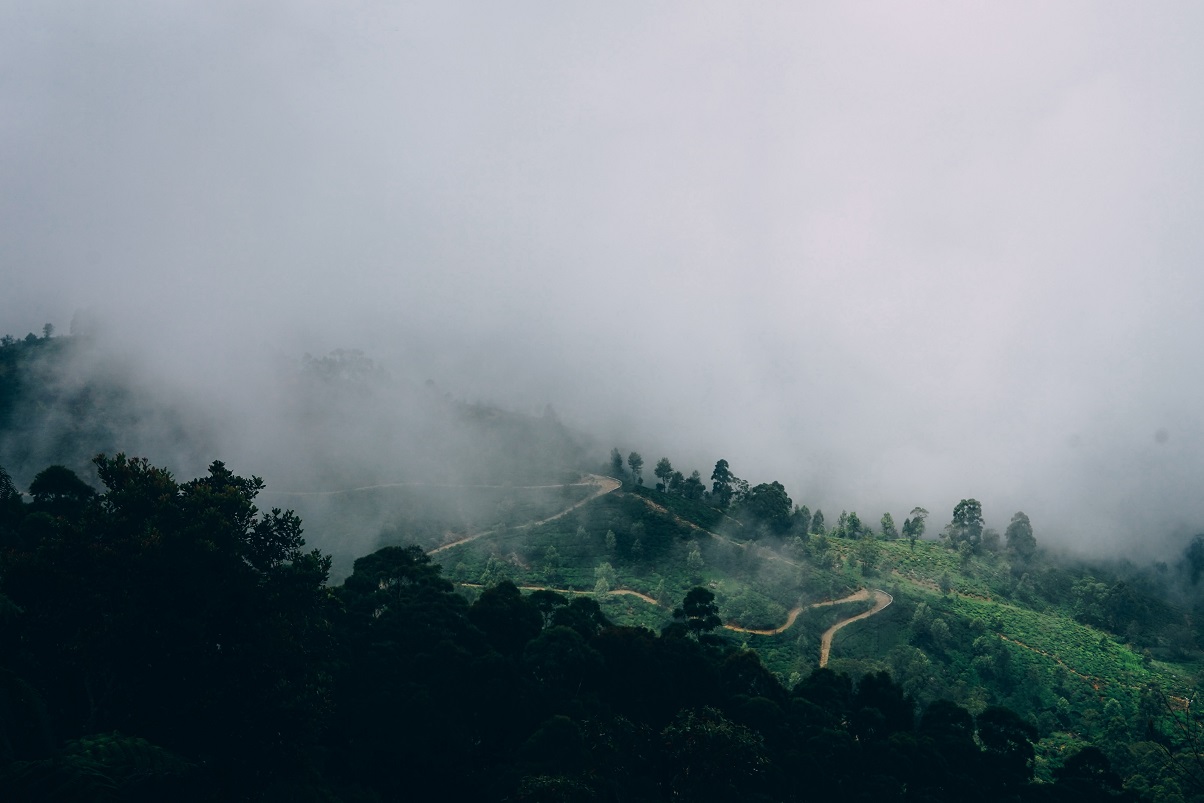
📷: @vitaliik
Sri Lanka monsoon season
Sri Lanka has two major monsoon seasons. From May to September, monsoons take place on the western and southern parts of the country, including Sri Lanka’s capital, Colombo. During these months, the east coast and northern Sri Lanka experience tropical warmth, with postcard-worthy beaches attracting all the sunseekers. When it’s clearer and sunnier in the southwest, northern and eastern Sri Lanka experiences rainy, windy conditions, influenced by the northeastern monsoons from December to February.
The tiny island also has two inter-monsoonal periods. The first one arrives in March, lasting about a month until April, bringing evening rains and thunderstorms to the southwest. October welcomes the second inter-monsoonal period, with widespread rains throughout the island and strong winds. The gloomy clouds disappear when December comes around.
Best months for Sri Lanka’s beaches
Pick your beaches and you’re good to beach hop any time of the year. To avoid the crowds in the east coast, opt for extreme ends of the season, particularly April or September. January to February is a good time to explore the south coast when crowds are fewer and families are busy with daily chores after the school holidays in December. The second half of November also has clear days in the southwest and the year-end travellers have not yet arrived.
Best months for surfing
The south coast is dotted with surf spots catering to surfers of all levels. While November to March is the best time to visit Sri Lanka’s southern coastline to catch some waves, Arugam Bay in the east is a world-class surf spot, where the surfing season runs from May to September.
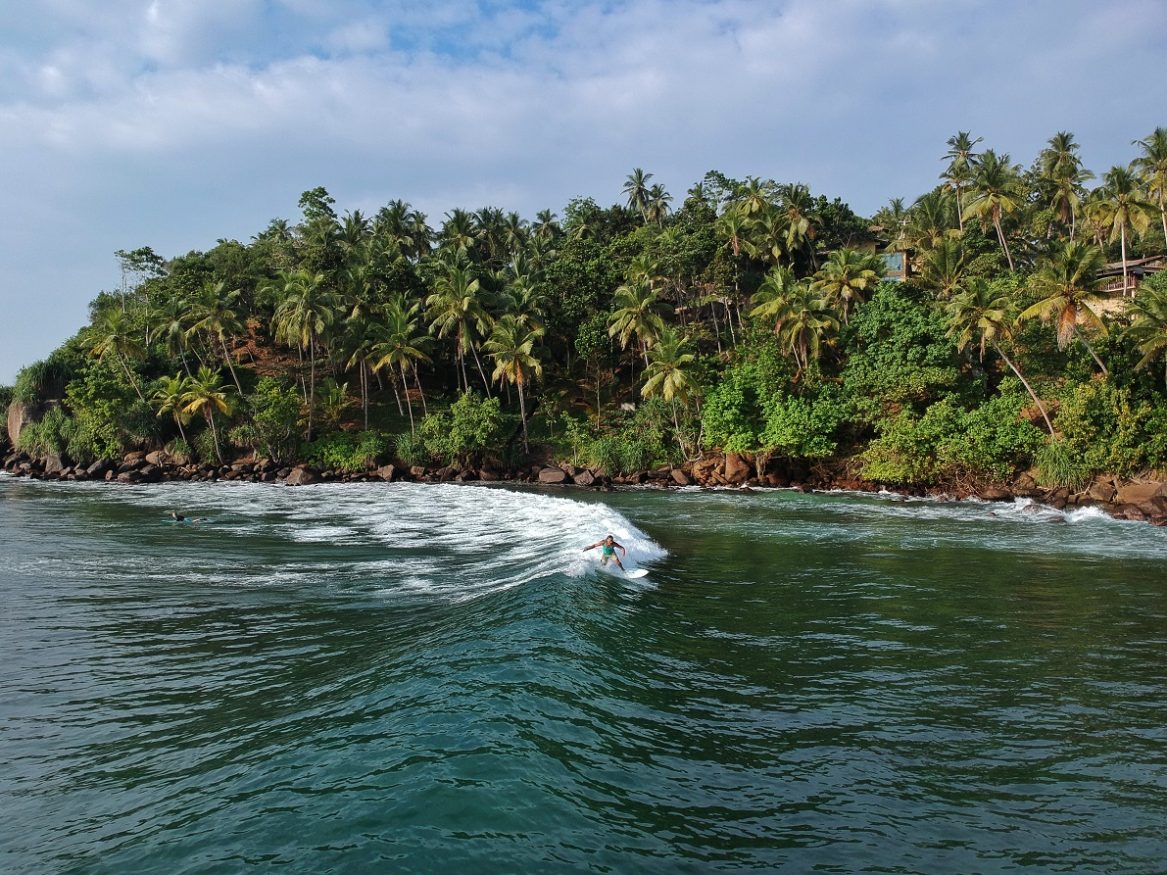
Surfing in Mirissa
📷: @sashaset
Best months for kitesurfing
Sri Lanka has a few world-class kitesurfing spots with smaller crowds. The peak season runs from May to October with June being the windiest month in Sri Lanka; however, the afternoon winds from December to March never fail to attract kiters looking to squeeze some extra activity into their backpacking adventure.
Festivals worth planning around
Most of Sri Lanka’s big festivals follow the lunar or astrological calendar, so check this year’s dates before you book your trip.
Kandy Esala Perahera
The 10-day long perahera (procession) centred around Esala Poya – which either falls in July or August – is one of the grandest festivals in Sri Lanka. There are dancers, drummers, fire-breathers and opulently decorated elephants that will leave you blown away. While the use of elephants certainly is not ethical, the various festivities, customs and rituals are hereditary and considered sacred among the Buddhists in Sri Lanka. If you’re heading to Kandy for it, here are more things to do in Sri Lanka.

Kandy Esala Perahera
Vesak
During Vesak (which usually falls in April or May), the streets and every home in Sri Lanka are lit up and colourfully decorated. The public also organizes dansal throughout the country. Dansals are where you offer free food (soft drinks, tea, rice & curry, and noodles are common) in makeshift stalls on the streets.
Nallur Festival
Spanning over 25 days in August, the Nallur festival in Jaffna is packed with Hindu customs and processions that will leave you in awe. Not only is it brimming with colourful celebrations and the longest festival in Sri Lanka, devotees also perform the act of self-mortification in honour of God Skanda.
Sinhala and Tamil New Year
In April, usually the 13th, 14th or 15th, Sinhalese and Tamils celebrate their new year in Sri Lanka. On New Year’s day, even the everyday activities such as cooking and consuming food are performed at an auspicious time throughout the island. Family trips during these days are common. If you are visiting Sri Lanka during these days, get ready to gobble up a few plates of Sri Lankan sweets and milk rice.
Do I need a visa for Sri Lanka?
Since 25 May 2026, nationals of 40 countries, including the UK, US, Canada, Australia, New Zealand, France, Germany, Japan, India and China, get Sri Lanka’s tourist ETA (Electronic Travel Authorisation) free of charge. The ETA is still mandatory and must be approved before you arrive. It gives you 30 days with double entry, and the second entry must also fall inside those 30 days, counted from your first arrival. Maldivian nationals get 90 days, and ETAs for Singapore and Seychelles nationals are also processed free. Other nationalities pay the normal processing fee. Apply only on the official ETA site (eta.gov.lk), and have a return or onward ticket and your accommodation details ready when you do.
Make sure your passport is valid for at least 6 months from the date of arrival. It’s also advised to carry proof of your return ticket and sufficient funds for your stay.
If you want to stay in Sri Lanka for more than 30 days, you can apply for an extension (and pay the visa fee) at the Department of Immigration and Emigration in Battaramulla (only a short drive from the centre of Colombo), either yourself or through an agent.
Getting around Sri Lanka
Sri Lanka is a small island, but it’s incredibly diverse in every way. To help you dive into the beauty of its diversity, Sri Lanka has a functional transport system to help you travel. Getting around the island is cheap and easy if you stick to public transport. Sri Lanka’s public transport system is nowhere near incredible, but it gets the job done. It’s also quite uncomfortable and often delayed. Below are a few tips to help you get around Sri Lanka for pocket-friendly prices.
Getting from Colombo airport to the city
Colombo (BIA) airport is actually in Katunayake, 32 km north of Colombo city centre. The air-conditioned Route 187 expressway bus leaves from the outer porch of the Departure Terminal about every 10 minutes, 24 hours a day, and takes about 50 minutes to Colombo Fort Railway Station and the main bus stand. The fare was Rs 290 (plus Rs 290 for bags over 23 kg) when the service resumed in June 2025, so check the current price with the conductor. Uber also operates in Sri Lanka if you want to go directly to your hostel in Colombo. Another way is to use PickMe, an alternative to Uber which functions better in Sri Lanka. PickMe and Uber both show you the fare in the app before you ride.
Taking the train in Sri Lanka
The trains in Sri Lanka are old-school, mostly outdated, open-door, crowded and never work on time; but, will get you where you need to go for a few bucks and are a completely unique experience. The train rides in Sri Lanka are extremely scenic, as many have already heard, the Kandy to Ella train journey is believed to be the world’s most beautiful train journey. It’s advised to pre-book your seats if you are travelling on a touristy/busy route for a longer distance. There are a few non-AC and AC intercity trains for certain routes (Colombo-Kandy, Colombo-Anuradhapura-Jaffna) and they are faster than the ordinary express trains.
Some ordinary express trains have first class, which is usually air-conditioned. Second class and third class reserved compartments do not feature air-conditioning. Since you may want to snap it for the ‘gram, it’s best to book a second or third class seat for the famous Kandy-Ella route. Unreserved tickets are cheap and sold at the station on the day, but non-reserved coaches tend to get crowded.
You can reserve seats on all routes online at the official Sri Lanka Railways portal, seatreservation.railway.gov.lk, which has sold train seats online since March 2024. Bookings open 30 days before travel and close 2 hours before departure. You can book up to 5 seats at a time, there’s a 5% convenience fee, and you need a passport number for every passenger (carry the original passport on board). Use only the official portal, because Sri Lanka Railways has warned travellers about fake booking sites. During school holidays (April, August and December), Kandy to Ella seats go fast, so book as soon as the 30-day window opens. If you want a normal unreserved ticket, simply show up at the station on your day of travel and buy it.
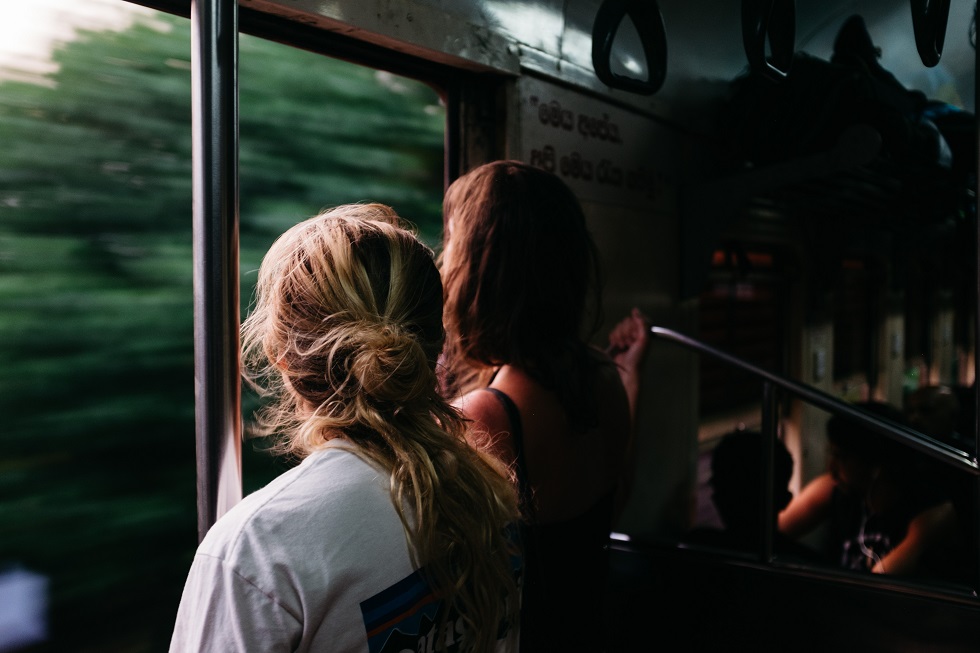
Scenic train rides
📷: @fredrikohlander
Buses in Sri Lanka
Both short distances and long distances are covered by private and state-run, ordinary buses. Private buses are frequent, run pretty much throughout the day and are adorned by artificial flower garlands, mini statues and posters of gods, goddesses and other deities. There’s no need to pre-book these apart from a few routes. The conductor will tell you how much it costs to get from point A to B. Pay your money, sit back and relax. Maybe forget about the latter – buses are pretty much like a portable jukebox. Inside Sri Lankan buses, music is a must and they play it LOUD (even at night). They are bumpy and quite uncomfortable, but they are the cheapest way to cross the island.
There are a few small, air-conditioned buses for certain long-distance routes. A few air-conditioned Volvo buses run from Colombo to far corners of Sri Lanka at night and can be reserved either on busbooking.lk or busseat.lk. Reserve a seat on one of those sites for overnight trips, as they are the most comfortable way to travel in Sri Lanka. These Volvos run throughout the day on the Southern Expressway connecting the Southern capital Galle and neighbouring Matara, which is a getaway point to smaller south coast towns.
Tuk tuks and ride-hailing apps
Tuk tuks are the easiest way to travel short distances. Unfortunately, they are infamous for ripping off the tourists and sometimes even locals. Anyone who doesn’t look Sri Lankan would likely be overcharged five or more times the regular price. There is no fixed per-kilometre rate, so either book through PickMe or Uber, which show you the fare before you ride, or agree the price with the driver before you get into a street tuk tuk. PickMe also has tuk tuks on their platform in Colombo, Negombo and in the centre of Kandy and Galle.
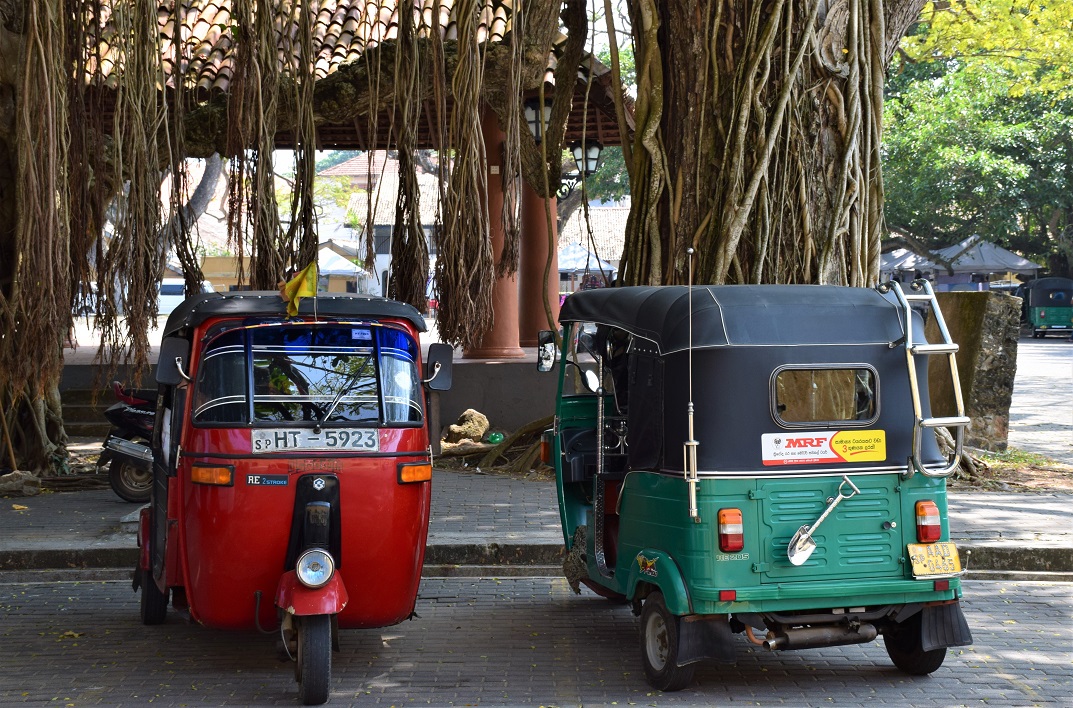
Cute tuk tuks
📷: @jess_snoek
Best hostels in Sri Lanka by town
A few years ago, affordable, quality accommodation was almost non-existent in Sri Lanka. Today, hostels have become the island’s favourite home away from home. With dorm beds from about EUR 6 a night in Colombo and Kandy (November 2026), Sri Lankan hostels are backpacker-friendly and will help you meet fellow travellers thanks to their communal vibe. Before you arrive in each town, join its City Chat in the Hostelworld app to meet travellers staying at other hostels nearby. Check out these hostels in some of Sri Lanka’s major backpacker hubs.
Colombo
Start in Sri Lanka’s underrated capital at Colombo Beach Hostel, rated 9.0 from 1,675 reviews, or Drop Inn Hostels (9.0 from 701 reviews), where one Hostelworld guest said the “atmosphere is so welcoming that many guests (including myself) end up extending their stay”. For something smaller and calmer, Ceylon StayZ scores 9.1 from 492 reviews. Ratings were checked in November 2026.
Kandy
Kandy will be your first spot before you head further into Sri Lanka’s central highlands. Eden Kandy is the top scorer at 9.8 from 320 reviews, and White Rose Hostel follows with 9.5 from 377. Deck on the Hills (8.7 from 405 reviews) is the pick if you want a communal place to meet people. Ratings were checked in November 2026.
Ella
The tiny mountain hamlet, Ella, is now a major backpacker hub. While solo backpackers may prefer tent style hostel accommodation and the fun-loving theme in Tomorrowland Hostel Ella (9.5 from 855 reviews), Hangover Hostels in Ella (8.6 from 1,285 reviews) is a more couple-friendly place with its private rooms. Ratings were checked in November 2026. One Hostelworld guest summed up the area as a “really nice area where you can hike, and take a train ride from Demodara to Ella”.
Galle
For a few days in Galle, Old Parkland Hostel is the standout, rated 9.8 from 565 reviews. The Bunkyard Galle is newer, with 9.7 from 87 reviews so far. Ratings were checked in November 2026.
Mirissa
Overlooking the beautiful Indian Ocean, it’s hard for solo travellers not to fall in love with Hangover Hostels’ kick-back-and-chill rooftop in Mirissa (8.7 from 613 reviews). Start your day with morning rooftop yoga and then enjoy the great communal vibe. JJ’s Hostel is a quieter boutique-style hostel, preferred by those who are looking for tranquillity in Mirissa (9.6 from 607 reviews). Ratings were checked in November 2026.
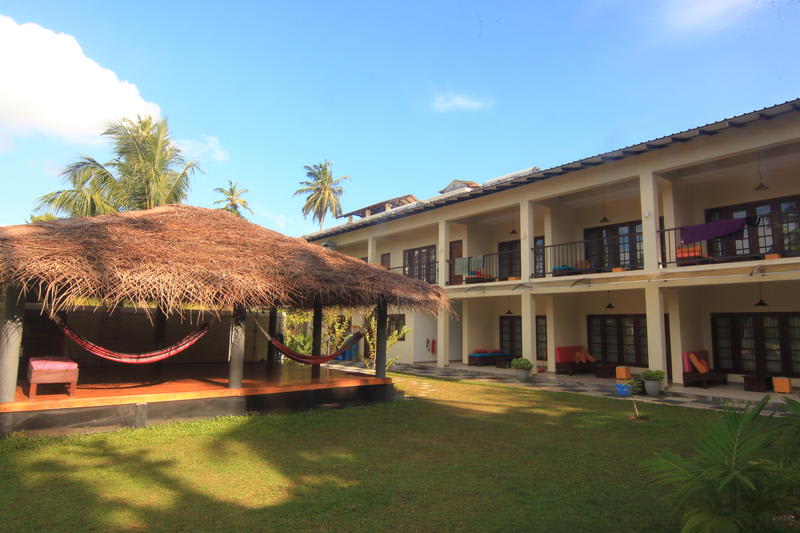
JJ’s Hostel
Sigiriya
Sigiriya is a great place to experience traditional Sri Lankan cuisine and culture. If you want to be amongst nature and wildlife, Roy’s Villa (formerly Fresco Lion Villa Hostel) is a great place to call home, rated 9.8 from 1,839 reviews in November 2026.
Weligama
Weligama is one of Sri Lanka’s laid-back surf towns, and these are three of its best-reviewed hostels. The Spindrift Hostel is rated 9.7 from 587 reviews and Wake Up Weligama 9.7 from 413, while Hangtime Hostel has 9.3 from 568 reviews (all checked November 2026). Compare all hostels in Weligama before you book.
Negombo and the airport
Negombo is the closest beach town to Bandaranaike International Airport, so it suits a first night after a late flight or a last night before an early one. Ceylon Glory Hostel is rated 9.5 from 325 reviews, Hostel Katunayake 8.9 from 176 and Ceylon Lodge Airport Transit Hostel 9.0 from 78 (checked November 2026). See every hostel in Negombo if you would rather stay on the beach.
Yala National Park
Leopard City Hostel is an ideal place to stay while visiting Yala National Park. Located in Tissamaharama, it’s perfectly located to have access to the city as well as the wonders of Yala National Park. The rooms and lounge are very spacious, and there’s even an outdoor terrace for you to relax on after a long day of exploring. Be sure to go on a safari to see the Sri Lankan wildlife!
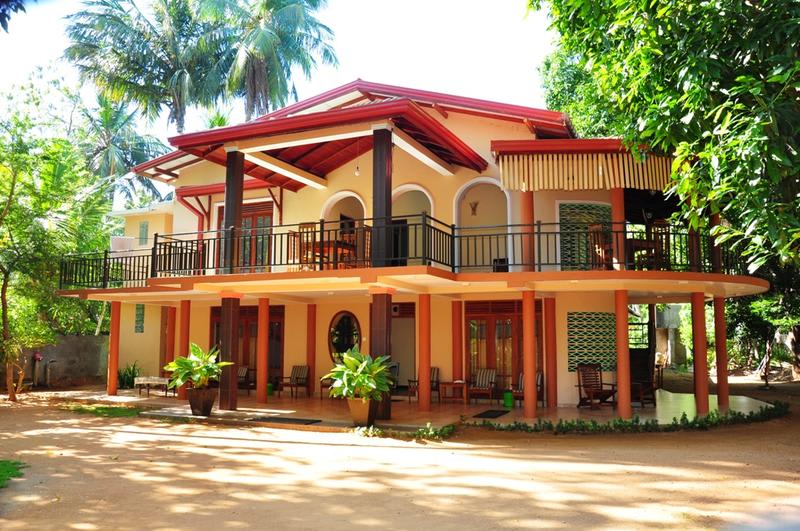
Leopard City Hostel outdoor lounge space
How much does it cost to backpack Sri Lanka?
Day to day, Sri Lanka is cheap: dorm beds start from about EUR 6 a night (November 2026), a local meal costs about USD 1-3, and buses and trains cost a few dollars. Entry tickets and safaris are the big costs, so budget for those first. For a worked example, see our guide to two weeks in Sri Lanka on a hostel budget.
While Sri Lanka is an affordable travel destination, it’s certainly a bit more expensive than neighbouring India, Nepal or other destinations in SEA. To cut down on costs, stick to public transport and the island’s mouthwatering local cuisine. Not only is it cheaper to buy from local shops and small businesses, it also supports the growth of local communities.
Sri Lankan rupee exchange rate
Sri Lankan Rupee (LKR) is the local currency, and it trades at about 337 LKR to 1 USD (Central Bank of Sri Lanka indicative rate, end of June 2026).
Daily backpacker costs in Sri Lanka
A breakdown of average daily costs for a single traveller:
| Things to buy in Sri Lanka | Approximate price |
|---|---|
| Bed in dorm room | from about EUR 6 (November 2026) |
| A meal | USD $1-3 |
| A meal in a high-end restaurant | USD $15-30 per person |
| A cup of coffee | around USD $3 |
| A co-working space | around USD $10-15 a day |
| A bus ticket | from USD $3 |
| A beer | USD $1 |
| Activities | USD $10-30 |
Many hostels are pocket-friendly, starting from about EUR 6 a night for a bed in a dorm (November 2026); even the most elegantly designed, carefully curated hostels usually only cost around 10-15 USD. If you are ready to sit side by side with locals and gobble up a few plates full of mouthwatering Sri Lankan food, a meal costs as little as 1-3 USD. Good quality Western cuisine is a rare find in Sri Lanka except for a few high-end restaurants in large cities such as Colombo and Galle. A meal usually costs 15-30 USD per person in these places.
We, Sri Lankans, love our tea, but if it’s hard to imagine giving up your coffee, cafes in major cities (such as those in Colombo with WiFi) charge somewhere around 3 USD for a cup. Sri Lanka is new to digital nomadism with a handful of co-working spaces in Colombo and a few co-living spaces on the south coast. Expect to pay somewhere around 10-15 USD a day for a co-working space in Colombo.
Buying your own groceries can work out to be fairly expensive; however, if you stick to the local markets it will be cheaper to prepare your own meals at the hostel. Public transport is also quite affordable with buses charging as little as 3 USD for even the longest route.
At just 1 USD, beer is cheap. Arrack is a popular, local drink which is widely available for purchase. Nightlife isn’t big in Sri Lanka, especially in sacred cities such as Kandy. While you may find a few happening bars and clubs in Colombo, beach parties are common during peak season along the south and east coasts.
Widely-used soap brands such as Sunsilk and Nivea only cost about 2-10 USD. Certain European brands are hard to find in Sri Lanka, so if you’re brand-conscious, bring your own toiletries.
Activities and tourist attractions will be the costliest aspect of your Sri Lankan trip. Entrance fees to temples and architectural sites are higher than neighbouring India. Sigiriya (Lion’s Rock) costs USD 35 for foreign adults (USD 20 for SAARC nationals), paid in rupees at the gate, which is why nearby Pidurangala, at LKR 1,000 cash, is so popular (2026 prices; check at the gate, as fees change). Entrance fees to national parks are approximately 20-25 USD, and you’ll have to arrange your jeep which will again cost 25-30 USD. If you’re a flying solo, teaming up with fellow travellers will bring down the costs.
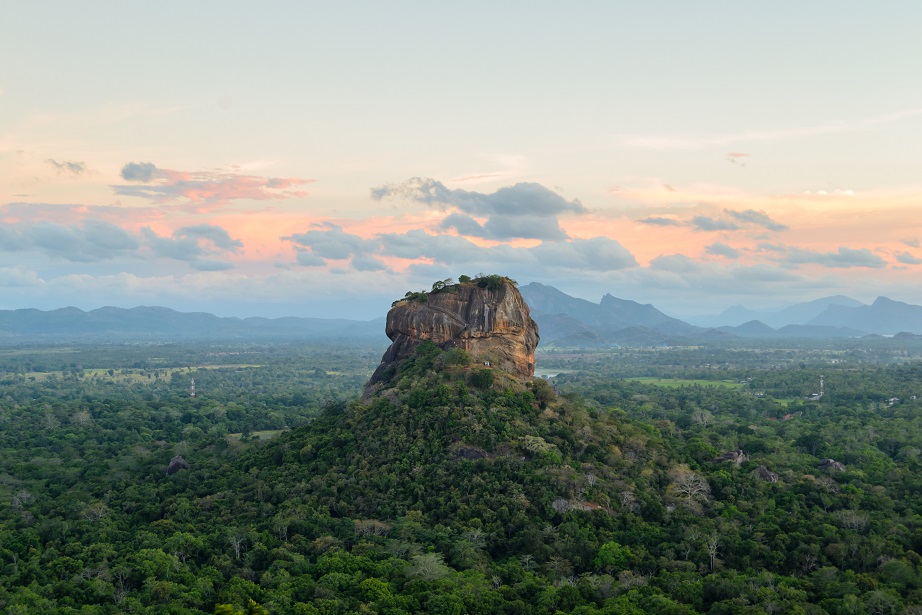
Lion’s Rock
Sri Lanka itineraries for two weeks to two months
Four two-week routes compared
Sri Lanka is tiny but mighty between its countrywide coastline, central mountains, jungle-clad southwest, rich cuisine and a plethora of temples and architectural marvels. If you only have a couple of weeks to spare, you can easily scratch the surface and cover a few exciting tourist spots. Below is a breakdown of some classic routes.
Itinerary in Sri Lanka |
Day |
Place to visit in Sri Lanka |
|---|---|---|
| A bit of everything | 1 | Colombo |
| 2-4 | Ella | |
| 5-7 | Mirissa | |
| 8-10 | Galle | |
| 11-12 | Kandy | |
| 13-14 | Sigiriya and Dambulla | |
| For adrenaline seekers and beach bums | 1 | Colombo |
| 2-5 | Ella | |
| 6-9 | Arugam Bay | |
| 10-14 | Tangalle and Mirissa | |
| For history buffs | 1 | Colombo |
| 2-4 | Anuradhapura | |
| 4-6 | Habarana, Sigiriya and Dambulla | |
| 7-9 | Polonnaruwa | |
| 10-12 | Kandy | |
| 13-14 | Galle | |
| A quieter route through the north and hills | 1-3 | Kalpitiya |
| 4-6 | Jaffna | |
| 7-9 | Kandy and the Knuckles Mountain Range | |
| 10-12 | Haputale | |
| 13-14 | Negombo |
A bit of everything
A popular route is to start from Colombo and head to Sri Lanka’s quaint mountain towns and seaside hamlets where there’s an electric backpacker-friendly vibe. This classic route is also easily navigated by public transport and allows you to experience the aroma of the green paddy fields and be completely culturally immersed.
Day 1: Colombo
One-night in Sri Lanka’s capital is enough time to visit the Gangaramaya Temple and casually wander around the Dutch Hospital Complex in Colombo Fort. If people watching is your thing, head to Galle Face Green for sunset and get a glimpse of the Sri Lankan street food scene.
Day 2-4: Ella
The popular mountain town is built for hikers. The Colombo to Ella train journey is 9-10 hours of stunning vistas and endless tea plantations. Little Adam’s Peak is a wonderful spot when the morning sun casts a golden glow over the central highlands.
Ella Rock is a strenuous 3-hour hike one way. Ravana Ella Falls are often filled to the brim with people; the stunning natural pool of Diyaluma Falls is a great alternative and a lovely place for a picnic. Time it right and head to the famous Nine Arch Bridge while a train passes over one of Sri Lanka’s stunning architectural wonders. Afterwards, be sure to sample some delicious local or Western cuisine and relax with a sundowner in one of the happening Ella cafes.

Nine Arch Bridge
📷: @danielklein
Day 5-7: Mirissa
A small surfing village on the south coast of Sri Lanka, Mirissa is a popular destination to soak up the tropical sun while exploring the quirky, colourful streets. The dome-shaped hill dotted with coconut trees is now a popular Instagram spot, but don’t worry, it’s still possible to find a quiet stretch of sand on Secret Beach. Base yourself in one of the hostels in Mirissa and you can rent a scooter/bike to explore the nearby seaside hamlets and secluded beach spots.
Day 8-10: Galle
Galle is Sri Lanka’s southern capital filled with quirky streets, artsy shops, and good restaurants. The Portuguese and Dutch influenced architecture is completely unique and has created the opportunity for a few aesthetically designed hostels to be created. You can cycle to nearby Unawatuna, a beach hamlet frequented by sunseekers, for a quick day trip.
Indulge in some delicious seafood in Unawatuna and then break it down at one of the beach parties. While Wijaya Beach tends to get crowded, Jungle Beach and Dalawella Beach are two secluded strips that you’re sure to love. The latter is also home to the Instagram-famous palm tree rope swing in Unawatuna.

Unawatuna
📷: @fredrikohlander
Day 11-12: Kandy
A direct train runs to Kandy from Galle every day. In Kandy, Sri Lanka’s most spiritual city, plan a visit to Temple of the Tooth Relic. Hidden by the masses, right in the centre of the city, Udawattakele Sanctuary is a lush forest where you can learn about flora and fauna in Sri Lanka. It’s a leisurely walk which takes 2-3 hours.
Day 13-14: Sigiriya and Dambulla
Two nights in Sigiriya will allow you to plan a quick trip to Lion’s Rock, a UNESCO World Heritage Site, or head to the nearby Pidurangala Rock for an amazing view of Lion’s Rock instead. Wildlife enthusiasts can go on a safari to nearby Kaudulla National Park. You can board the train back to Colombo from Habarana or take a direct bus back before you fly back home.
For adrenaline seekers and beach bums
If your purpose of visiting Sri Lanka is to hike, trek, climb waterfalls, soak up the tropical sun, catch some waves and experience the Ceylonese gastronomy, plan your trip around the eastern and southern coastline. More often than not, you will end up falling in love with one, or a few of these places, and you will want to come back for more.
Day 1: Colombo
Allow yourself to relax after your flight on your first night in Colombo. Sample some street food, visit a temple and people-watch as explained earlier.
Day 2-5: Ella
Consider heading to Ella and spend 3 nights soaking up the relaxing atmosphere to get into the vacation groove. A few things you can check out in Ella are explained in the first itinerary.
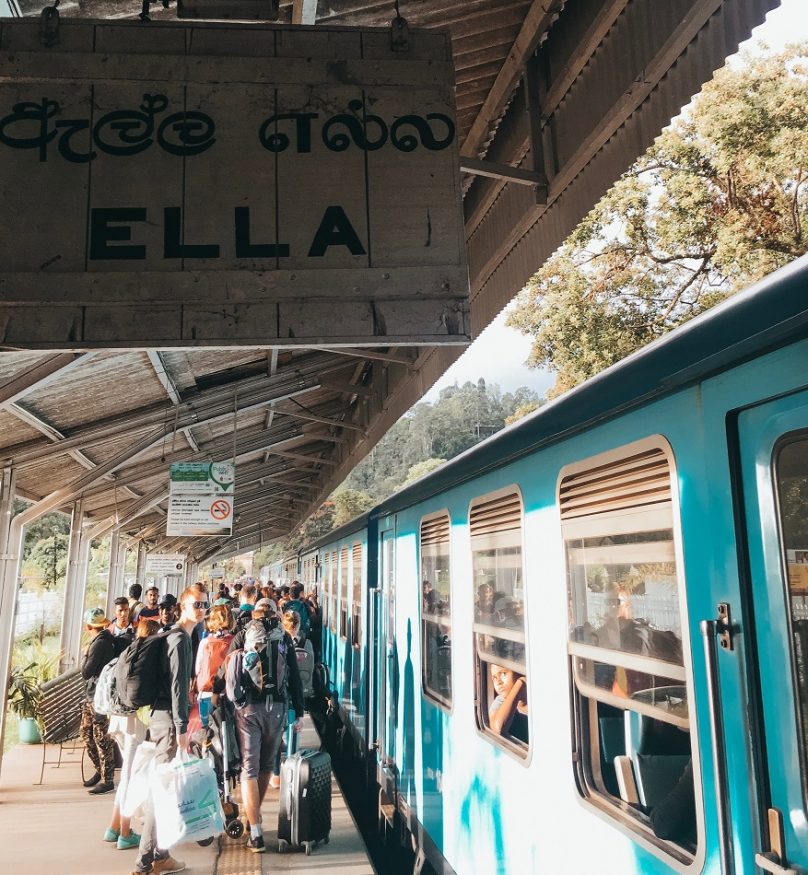
Ella railway station
📷: @frhth_
Day 6-9: Arugam Bay
Another popular backpacker hub and a world-class surfing spot, 3 nights is enough time to get a taste of this east coast hamlet. During peak season, which runs from May to September, the nightlife in Arugam Bay lights up. Witness amazing sunrises and wildlife in their natural habitats from a boat in Kottukal Lagoon; or, head south to the less explored Kumana National Park for a quiet place to see abundant wildlife.
Day 10-14: Tangalle and Mirissa
Sunkissed and trimmed with palm trees, say hello to the gorgeous vistas of Tangalle. Home to a few postcard-worthy beaches, renting a scooter will allow you to explore the nearby spots such as Rekhawa Beach, Goyambokka and Kahadamodara. Base yourself in Mirissa for your last two nights before you board the train back to Colombo.
For history buffs
If your main purpose of visiting Sri Lanka is to see beautiful temples, soak in the architectural wonders and mingle with locals in rural villages, Sri Lanka’s cultural triangle is where you’ll want to be. The cultural triangle consists of three major ancient cities: Anuradhapura, Polonnaruwa and Kandy. They’re dotted with ruins, rock temples, and dry plains that are absolutely fascinating to behold! As always, stay your first day in Colombo to relax.
Day 2-4: Anuradhapura
A few intercity trains run from Colombo to Anuradhapura every day, including an air-conditioned train. Cycle around from one stupa to the next in the ancient city of Anuradhapura. As Sri Lanka’s first-ever kingdom, built during the reign of ancient kings, the city complex houses some of the most stunning stupas there is; such as, Ruwanwelisaya, Abayagiriya and Jetavanaramaya. Climb to the top of Mihintale to get a stunning view of the ancient city before the midday sun appears. Mihintale is 16 km from the centre of Anuradhapura and can be reached by tuk tuk or bike (just has your hostel to book you one!).
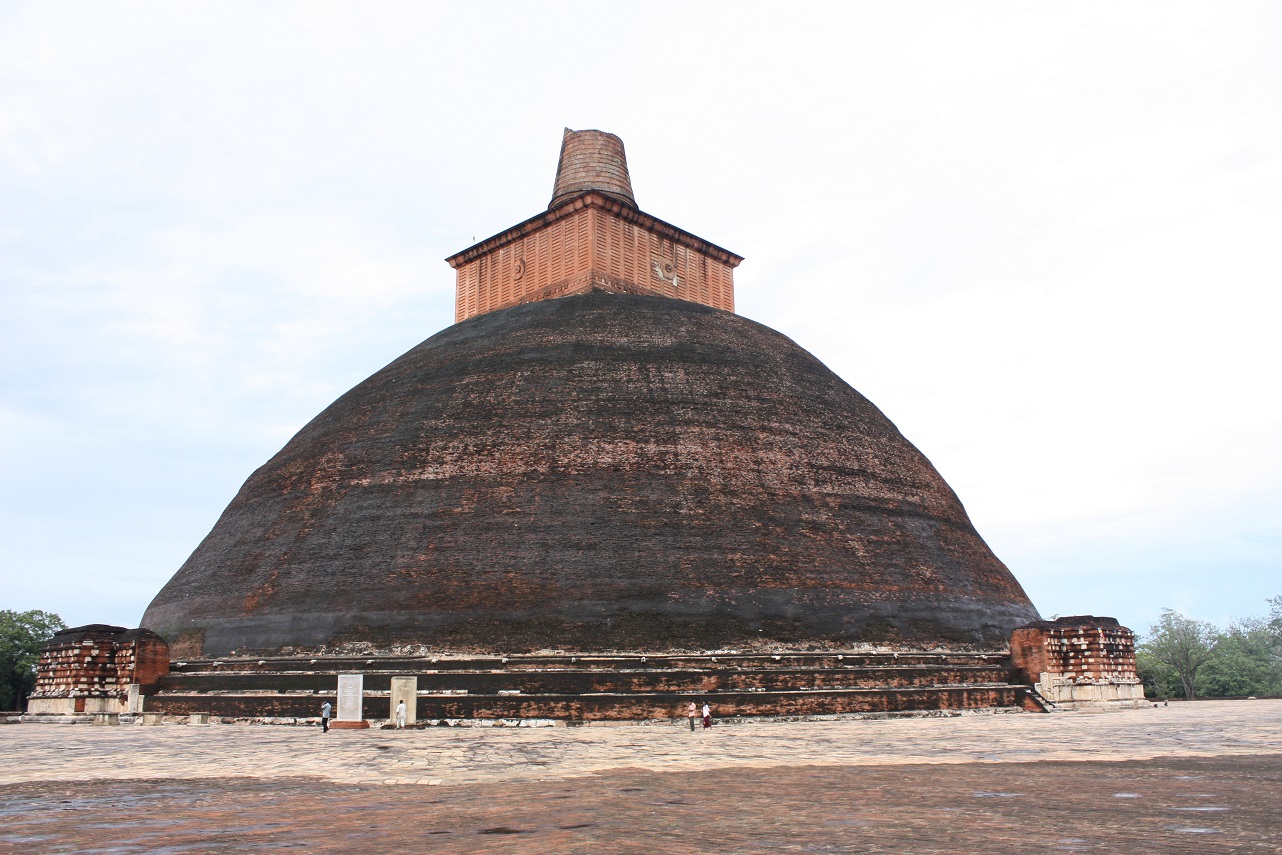
📷: Arian Zwegers
Day 4-6: Habarana, Sigiriya and Dambulla
Habarana is a short bus ride from Anuradhapura. From Habarana, explore Lion’s Rock, Pidurangala in Sigiriya, and Dambulla Rock Cave Temple. Known to few, the remains of Ritigala Monastery are captivating storytellers of the bygone era, as well as a strict nature reserve. If you want to see wild elephants in their natural habitats, hop on a jeep to nearby Kaudulla or Minneriya National Parks.
Day 7-9: Polonnaruwa
Polonnaruwa is Sri Lanka’s second ancient kingdom; however, it only lasted for 200 years. It is comprised of fascinating, monumental ruins of the kingdom and enigmatic remains, influenced by the South Indian Chola rule. A few key places to check out in the ancient city complex are Lankathilaka Image House, Vatadage and Rankot Vehera. Cycling is the best way to travel between various sites. Considered as a pinnacle of ancient Sri Lanka’s hydraulic civilization, Parakrama Samudraya is a massive tank built during the reign of King Parakramabahu I, and is the best place to witness a magnificent sunset in Polonnaruwa.
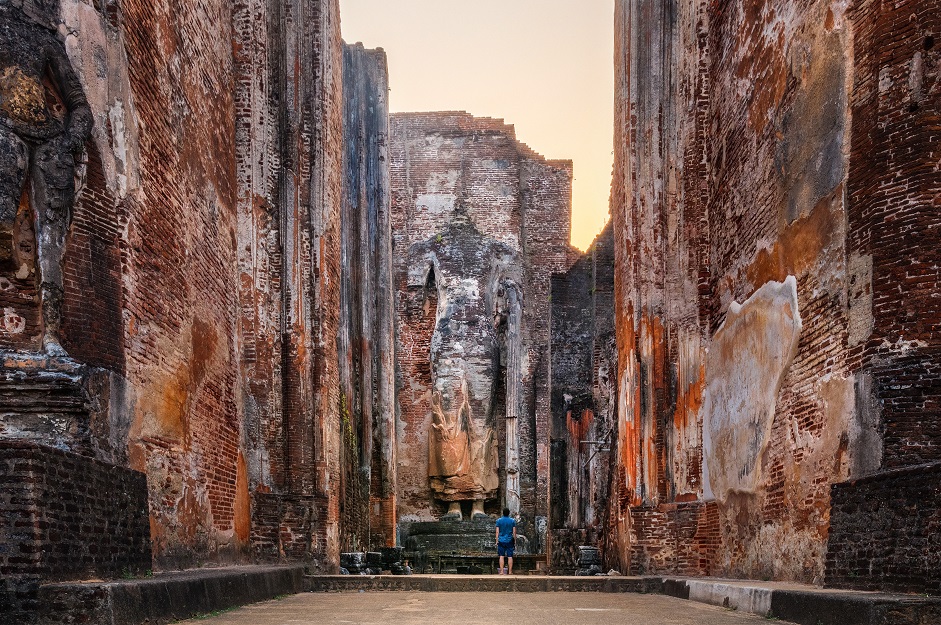
Polonnaruwa ruins
Day 10-12: Kandy
While in Kandy, plan a visit to the Temple of The Tooth Relic and the easily-missed Udwattakele Sanctuary in the city centre. Book yourself a PickMe and explore the magnificent temples, Gadaladeniya, Lankatilaka and Embekka. You’d want to stay a few hours in Bahirawakanda Temple, also known as the Big Buddha Temple for the massive Buddha statue which is visible from many parts of the town. The soothing cold breeze and pastel hues of the evening sky blend magically with the enchanting view of the city, guarded by the jungle-clad Hanthana Mountain Range.
Day 13-14: Galle
A brimming pot of everything artsy, Galle is a wonderful place to witness the colonial architecture before you leave the island. A more elaborated description is written above.
A quieter route through the north and hills
Those looking to escape the daily routine and get off the beaten track should follow this two-week trip to Sri Lanka’s less-trodden paths and more obscure attractions.
Day 1-3: Kalpitiya
The Kalpitiya Peninsula is a mere 3-hour drive from BIA Airport in Katunayake and borders the Indian Ocean. The saltwater lagoons and world-class kitesurfing spots are just some of the things you need to check out during your stay. Hop on a Colombo-Puttalam bus from Katunayake and get off at Palaviya Junction. From here, you can board another bus to Kalpitiya. Alternatively, if you time it right, you can board one of the few trains that run to Palaviya Junction from Katunayake. Settle down in a small seaside village named Kappalady where blue skies and tropical sun are plenty. Apart for a few fishmongers who bring their daily catch in the early mornings, you’ll have the beautiful sandbanks of Kappalady all to yourself. The flatwater lagoons appeal to kiters of all levels and stand-up paddlers, or you can hop on a boat to see some dolphins. Wilpattu National Park is a 2-hour drive from Kalpitiya and considered as one of the best places to spot the Sri Lankan leopard.
Day 4-6: Jaffna
A prolonged observer of shelling and battles during the Civil War, Jaffna is seldom visited by the island’s southern counterparts; therefore, the Northern capital is home to a culture of its own. Be it the gleaming walls of Nallur Kandaswamy Temple or the soft, powdery white sand on Casuarina Beach in Karainagar, Jaffna offers something for everyone.
Once you’re settled in to your hostel in Jaffna, plan a day trip to Nainativu Island and Delft Island. Public ferries run daily to these islands from mainland Jaffna and charge a nominal fee. Originally built by the Portuguese in colonial Sri Lanka, Jaffna Fort offers a picturesque view of the shallow blue lagoons from its ramparts.
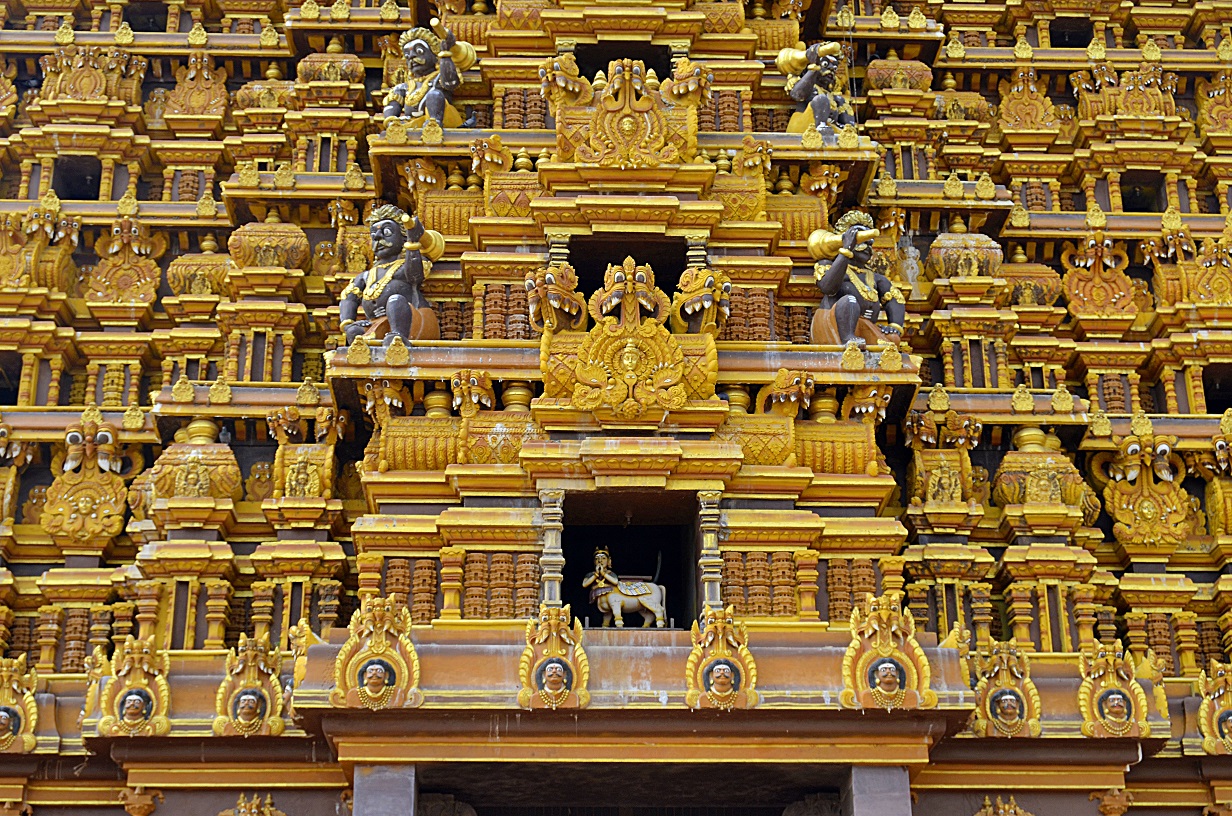
Nallur Kandaswamy Temple
Day 7-9: Kandy and the Knuckles Mountain Range
There are direct buses to Kandy from Jaffna, including a few night buses. It’s a long journey which takes 8-9 hours, so boarding a train is a much more comfortable option. When you’re coming from Jaffna by train, hop off at Polgahawela Junction and connect to another train which runs to Kandy. Enjoy a rest once you’ve settled into one of the chic hostels in Kandy. On your second day, plan a trip to the Knuckles Mountain Range. Since you only have a few days left, a day trip will allow you to see some of the island’s finest scenery. Stop by Bambara Kiri Ella Falls, Pitawala Pathana and trek to beautiful Sera Falls in the Knuckles Mountain Range.
Day 10-12: Haputale
A misty mountain town in Sri Lanka’s highlands, Haputale is still undiscovered by the mass tourism. Simply roam around this little town to get a feel of the daily life as a local. Adisham Bungalow is a stunning country house run by Benedictine monks. Home to a myriad of stunning landscapes, the walk to Lipton’s Seat is worth the early start. Arrive early before the place is swathed by the mystic clouds. If time permits, plan a trip to Bambarakanda Falls and Diyaluma Falls, Sri Lanka’s tallest and second tallest waterfalls, respectively.
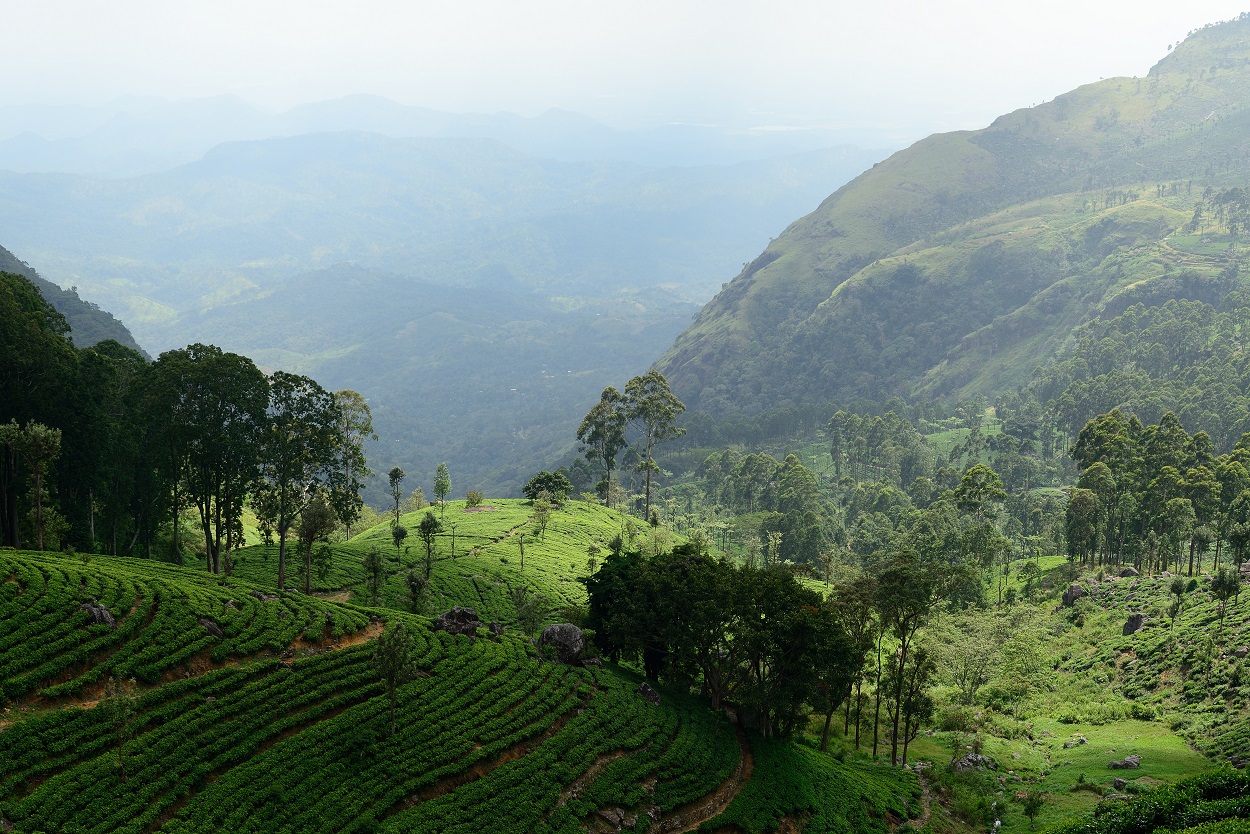
Haputale misty mountains
Day 13-14: Negombo
A night train or an overnight Volvo bus can take you to Colombo. From Colombo, hop on a highway bus to Negombo which is closer to the airport. On your last day, visit the Negombo fish market, Hamilton Canal, St. Mary’s Church and Negombo Lagoon where the city comes alive during the day with colourful boats lined up one after another. Featuring non-Gothic structures, St. Sebastian Church is a stunning landmark in Negombo. Walk to the beautiful Angurukaramulla Temple before you indulge in a seafood feast with a few drinks on your last night in Sri Lanka.
Sri Lanka backpacking one-month itinerary
A month is a great amount of time to combine your bucket list itinerary with a few off grid destinations. Be flexible with your itinerary as it’s extremely common to fall insanely in love with certain places and you want to be able to take it slow when you’re emotionally connected to a beautiful place.
Day 1-3: Colombo
In three days, you can get a general feel of Sri Lanka’s commercial capital, its quirks and everyday life. While Gangaramaya Temple is a major tourist attraction inside the city, Pettah Market gives you glimpses into the everyday life of the average Sri Lankan. Jami Ul-Alfar Mosque, one of the most popular, is inside the Pettah Market. Colombo evenings are mostly spent in Galle Face Green, surrounded by the Indian Ocean on one end and the island’s finest hotels on the other. In Galle Face Green, Colombo’s heartbeat, get ready to sample a few dishes of Sri Lanka’s popular street snacks.

Pettah Market
Day 4-5: Kandy
Spend two days on the Temple of the Tooth Relic and Udawattakele Sanctuary, as described in the first two-week itinerary above.
Day 6-9: Knuckles Mountain Range
Made for hikers, Knuckles Mountain Range is still an unexplored tourist destination in Sri Lanka. Having yourself a guide will make it easier to navigate through the hilly terrain. While Bambara Kiri Falls, Sera Falls and Pitawala Pathana are key attractions in the region, tiny hill country hamlets such as Pitawala Village will blow you away with their untouched beauty and simple, charming way of life.
Day 10-13: Dambulla, Sigiriya and Habarana
Climb Lion’s Rock or Pidurangala, visit Dambulla Rock Cave Temple and take a jeep safari to Kaudulla or Minneriya, as covered in the history buffs itinerary above.
Day 14-16: Trincomalee
Home to Nilaveli Beach, one of the finest beaches in Sri Lanka, if not the finest, Trincomalee is a quaint beach town to slow down during your one-month-long trip to Sri Lanka. Cycle your way to Koneswaram Temple. While Pigeon Island National Park is island’s only marine park, mass tourism has unfortunately done its harm to the ecosystem.
Day 17-19: Oluvil
Continue your journey along the east coast as you move to Oluvil, a secluded little town which is home to Oluvil Lighthouse. Enjoy the views and the quiet. You’ll be embraced by a mild sea breeze and greeted by a spectacular east coast sunrise each morning.
Day 20-23: Tangalle, Dikwella and Hiriketiya
Allocate a few days to explore some of the most stunning beach strips of the south coast. Co-living is slowly coming to life in Hiriketiya where electric cafes and aesthetic co-working spaces are the new trend. You can also arrange a safari to Udawalawe or Yala National Park while based in Tangalle.

Tangalle
Day 24-28: Ella and Haputale
Split five nights between Ella (Little Adam’s Peak, Ella Rock, Nine Arch Bridge) and Haputale (Lipton’s Seat, Adisham Bungalow), following the sections above.
Day 29: Colombo
Take the train back to Colombo and spend your last full evening at Galle Face Green, as in the first itinerary.
Day 30: Negombo
Finish near the airport in Negombo with the fish market, Hamilton Canal and a seafood dinner, as in the off the beaten path itinerary.
Sri Lanka two month backpacking itinerary
Two months in Sri Lanka will allow you to take it slow and spend more time in quaint beach hamlets and stunning hill country towns. Start your journey from Kalpitiya (3 days) and proceed as follows: Jaffna (5 days), Anuradhapura (2 days), Polonnaruwa (2 days), Trincomalee (2 days), Arugam Bay (3 days), Tangalle (3 days), Ella & Haputale (5 days), Nuwara Eliya (3 days).

Rice paddies near Ella
📷: @danielklein
Nuwara Eliya is a tiny mountain town in Sri Lanka. Tea is its main industry and jacket-weather is frequent throughout the year. Gregory Lake is just 2 km away and a popular spot for watersports. The Horton Plains National park trek will take 4 hours, taking you through stunning, lush scenery. Make sure you arrive early around 6 AM as the place is usually covered by mist after 10 AM.
In Pedro Tea Factory, you can taste a cup of Sri Lankan tea while you learn about how the tiny tea leaf turns into your morning cuppa. Lover’s Leap is a stunner of a waterfall; however, more enthusiastic waterfall climbers find themselves in the lesser known Bomburu Ella Falls.
The railway station in Nuwara Eliya is in the village of Nanu Oya, which is only a quick bus ride from the city centre. Nanu Oya is 3 hours from Ella by train, and it is another 3 hours to Kandy from there.
Kandy is one of Sri Lanka’s holiest cities. Spend 2 days here to enjoy the unique architecture and unique feel.
Alternatively, if you are an avid trekker, you should take two days in Hatton to hike Adam’s Peak where you’ll have to climb up 5500 steps to reach the top. The best season runs from December to May because the view is blocked by thick mist in other months. In Nallathanniya, the chilly mountain locality where Adam’s Peak is located, the morning sun peaks over the mountains, painting fluffy clouds in pastel colours.
From Hatton, hop on a tuk tuk to visit Laxapana and Aberdeen Falls, two of Sri Lanka’s stunning, but lesser-known cascades. Keep in mind that during the rainy season, which runs from May to November, Hatton is wet, slippery and extremely leechy. Surrounded by mossy green mountains, the azure blue expansion of the Castlereagh Reservoir is a popular picnic spot. Tucked away in a corner overlooking the reservoir is Christ Church Warleigh, a quaint church built in 1878.
Once your time in Hatton and Kandy comes to its end, plan a 5-day trip to the Knuckles Mountain Range from Kandy and continue your journey to Sigiriya, Dambulla and Habarana (4 days) and move to Colombo where you can spend another 4 days in Sri Lanka’s capital city.
Your next stop should be the Southern capital, Galle. Allow two-three weeks in Sri Lanka’s south coast where you can beach hop in a rented scooter. If you are missing lush greenery with icy cold natural pools and stunning hilly vistas, Deniyaya is a 4-hour bus ride from Galle. While one can easily live a few weeks on the edge of a rainforest in Deniyaya, 5 days will allow you to soak up the lush countryside beauty. Deniyaya is an entrance point to Sinharaja Rainforest, a biodiversity hotspot and a UNESCO World Heritage Site.
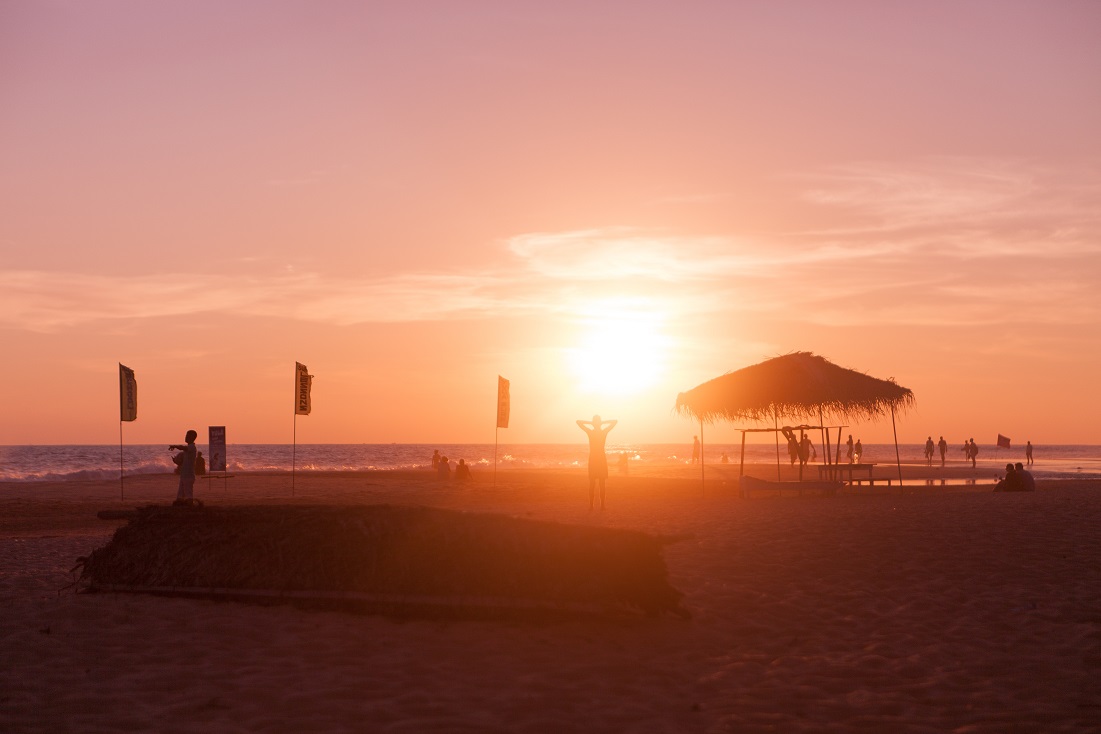
Narigama sunset
📷: @jani
Best things to do in Sri Lanka on a budget
It’s difficult to put everything you’ve got to do in Sri Lanka into one section (our guide to things to do in Sri Lanka has the full list), but if you are a first-timer, these are the ones to put first. Although it takes almost the entire day (9 hours), taking the Colombo-Ella or Kandy-Ella train journey is a fascinating experience. Climbing Pidurangala Rock before the sunrise will give you the unique experience of witnessing the sky light up over the Lion’s Rock in Sigiriya.
Go on a safari at Udawalawe/Kaudulla/Minneriya to see elephants in their natural habitat. You’ll be amazed when these gentle giants goof around like little kids in their natural habitat. Yala National Park is a popular option and there are a few budget-friendly hostels near the park, too; however, wildlife here is often disturbed by the sheer number of vehicles and visitors.
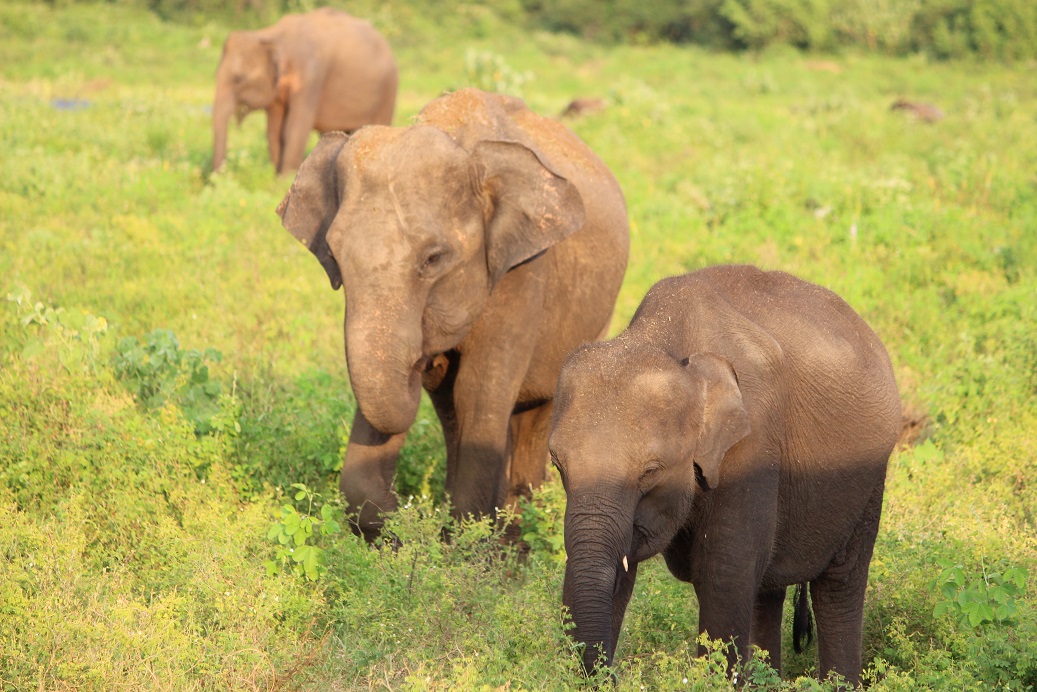
Elephants in their natural habitat
📷: @archiefantom
In Unawatuna, swing into the beautiful nothingness of the Indian Ocean on one of the rope swings. Learn to surf in the tiny east coast hamlet, Arugam Bay. For adrenaline seekers, white water rafting is available at Kitulgala, a 3-4 hour drive from Colombo.
Begin your day early with yoga and meditation when the soft rays of the morning sunshine break through the clouds. Many hostels list surf lessons and sunset yoga as Hostelworld Linkups, which you can join in the app from 14 days before check-in. Go on a boat safari to spot blue whales and dolphins in Mirissa, but make sure you contribute to an ethical organisation. Climb Ella’s Little Adam’s Peak either before the break of dawn or just before the spectacular mountains are wrapped up in the dusk. Nine Arch Bridge in Ella is on everyone’s list while Jami Ul-Alfar (Red Mosque) in Colombo makes for some pretty photos. For a more culturally immersive experience, learn to prepare Sri Lankan curries with a local family.
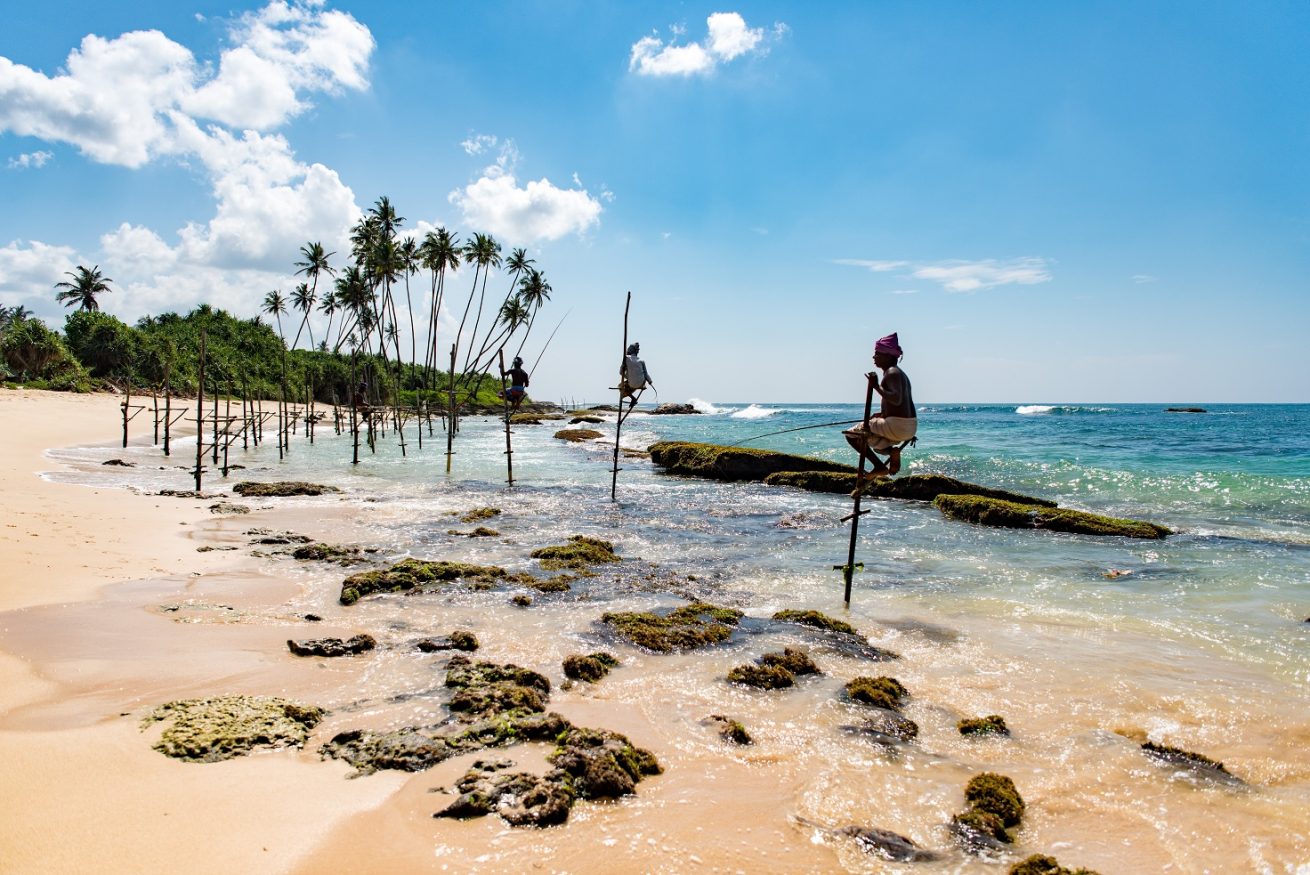
Fishermen in Marissa
📷: @danielklein
The elephant bath pictures from Pinnawala often decorate our Instagram pages; however, Pinnawala is more of a profit-making organisation where elephants are chained and exploited. Research before you takes part in unethical activities. As a local, my advice for anyone who wishes to see elephants in Sri Lanka is to go on a wildlife safari to a lesser known national park such as Kumana, Maduru Oya or Gal Oya.
In Pettah, Sri Lanka’s most happening market, get lost in a labyrinth of energetic streets. Drink a thambili (king coconut) to beat the Colombo heat, hop on a tuk tuk, chase the waves in the east coast, and watch the sunset (you’ll never want to miss one). Climb mossy-green paths but be careful, slippery when wet! As you people watch in the busy city, eat amazing food, sleep in perfect hostels, and pick up knowledge each day, you’ll learn to love the little things more and more. The pastel clouds in the evening sky, greedy monkeys in rock temples, or giggly little kids walking to school will make you feel truly alive; after all, Sri Lanka’s beauty lies in the simplest forms. Like the island itself; tiny, but beautiful.
Sri Lankan food to try
Sri Lankan food is spicy. Meat, such as chicken is popular and often prepared in a fiery, punchy red curry. Many restaurants in tourist hubs like Ella and Arugam Bay prepare more watered down versions so that more people can enjoy culinary delights of Sri Lanka. Be polite and ask for “less spice” or “no spice.” Although many of its roots come from Southern India (and a few other colonial borrowings), Sri Lankan food is unique in its own right.
Rice & curry
Best consumed by hand, rice & curry is Sri Lanka’s staple meal and is available anywhere from hole-in-the-wall eateries to luxe restaurants in high-end hotels. Rich in aroma and taste, humble curry dishes decorate the plates of rice, the main component of Sri Lankan food. While meat such as chicken, beef or pork and seafood (fish, calamari or prawns) are often available, it’s easy to find vegetarian or vegan curries almost anywhere in Sri Lanka. Often prepared using the vegan-friendly coconut milk, the Sri Lankan lentil curry and the cashew curry are a wonderful treat for your taste buds.

Rice with curry
Koththu
A pioneer in Sri Lanka’s street food scene and a dish that perfectly resembles the life of the average Sri Lankan, koththu is made of sliced flatbread (roti), mixed with meat, eggs and vegetables. It’s extremely greasy but a treat to your palate (and soul). While koththu is available at many star hotels, the best experience comes in small hole-in-the-wall type of eateries where you sit side by side with locals. Cheese koththu is a popular dish in Colombo’s street food markets; and for dinner, a sizzling plate of koththu pairs perfectly with an iced Milo drink.
Hoppers
Rooted in the southern Indian state of Kerala, hoppers are a popular breakfast or dinner option for Sri Lankans. Hoppers, which come in four variations, are essentially a bowl-shaped pancake. The savoury plain hoppers and egg hoppers are best eaten with lunu miris, a fiery red salsa made with crushed red chilli, chopped onions and smoked and dried Maldive fish, combined with a hint of lime. They are equally good with seeni sambol, a spicy, caramelized onion relish. Milk hoppers and honey hoppers are often craved by those with a sweet tooth.
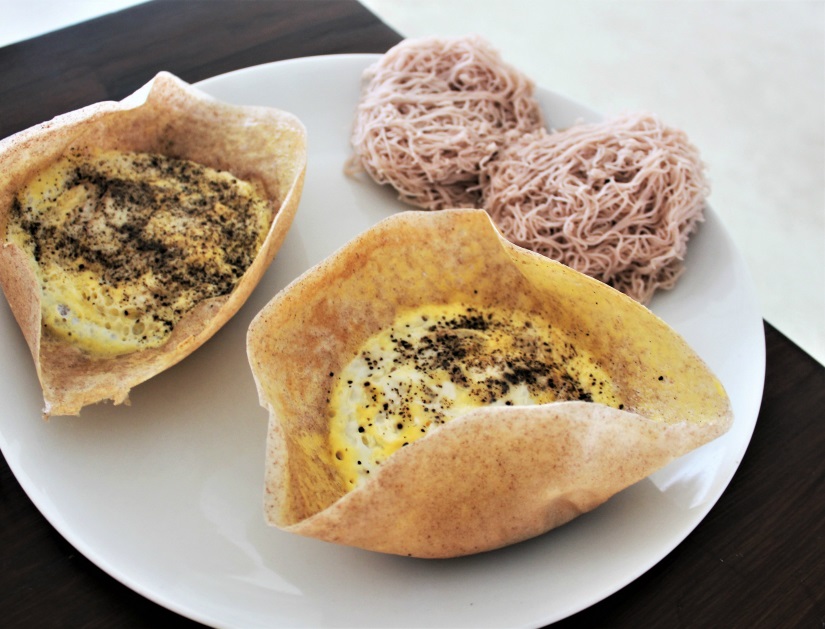
Egg Hoppers
📷: @CharlieOnTravel
Watalappan
A traditional pudding-like dessert of the Muslim community in Sri Lanka, watalappan is mostly available during Eid or Ramadhan season. Made of jaggery, milk, eggs and island spices, it’s a dish that will keep you coming back for more. While it’s commercially prepared, best watalappan is found in Sri Lankan homes.
Tips on eating out in Sri Lanka
The authentic Sri Lankan cuisine is often homecooked. Colombo is a street food hub where you can find the best koththu and isso vadai (tiny fritters made out of lentils and prawns), small eateries in the countryside offer the best rice & curry options. Sri Lanka’s coastline, especially the southern edges, are home to hip restaurants and cafes, where the seafood is plentiful. Chic and backpacker-friendly, these cafes also do some Instagram-worthy breakfasts; and you can’t go a day without heading to one of the small island shacks to pick up some fresh Sri Lankan fruit. Thambili (king coconut) is native to Sri Lanka and the perfect drink to beat the tropical heat.
While it’s not frowned upon, out of respect to the culture, make sure you don’t accidentally order pork in a Muslim restaurant. As you may have often heard, “hotels” in Sri Lanka aren’t actually hotels. They are tiny, hole-in-the-wall type of restaurants frequented by locals. Filtered water is available in many hostels, mostly for free. Plastic is a huge problem in Sri Lanka, so make sure you carry a reusable, refillable water bottle and avoid using bottled water whenever possible.
Sri Lanka culture and customs
Religion, mainly Buddhism, plays a major role in Sri Lanka, shaping the country’s value system and rituals. While shorts and mini dresses are completely okay to wear in touristy hubs such as Ella (even for solo female travellers), covering up is healthy to avoid unwanted attention elsewhere. When you are entering temples, make sure to cover your knees and shoulders. Opt for long elephant pants and flowy maxi dresses that are best suited for warm weather. Every full moon day is a Poya day and a public holiday which carries a Buddhist significance. On Poya days, alcohol is not available for purchase. Sri Lanka has its own culture, though it resembles parts of the Indian culture (especially of southern Kerala) as well, but with a bit of a softer approach.
Sri Lankan people
We, Sri Lankans, are a friendly bunch with the widest smiles. Known for our hospitality, Sri Lankans are some of the kindest and most helpful people you’ll meet. New to tourism, the countryside still carries warmth and the sincerity. We once randomly chit-chatted with a guy who owned a house in Nuwara Eliya and the next time we went to Nuwara Eliya, he was our host. Albeit friendly, Sri Lankans tend to stare a lot. It’s most often out of curiously as we tend to stare at our own people, too. Covering up helps you to take the edge off the attention. Don’t hesitate to mingle with locals – you’ll make some lifelong friendships.
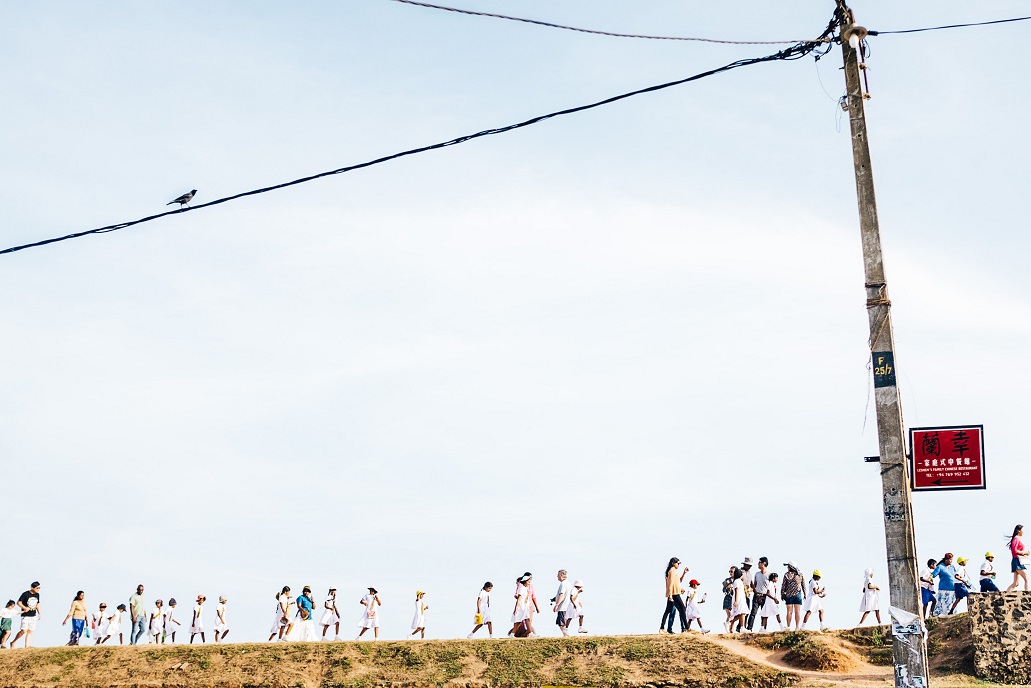
📷: @fredrikohlander
Religion in Sri Lanka
About 70% of the Sri Lankan population is Theravada Buddhists. This is different to Tibetan Buddhism practised in many parts of India and Nepal. Hinduism, Islam and Catholicism are other major religions. Leading a spiritual life, Buddhist flocks to temples on Poya days while Hindu Temples are frequented daily by colourfully dressed devotees. The island is lit up during Vesak, and Christmas is a major event in Sri Lanka where wintery Xmas celebrations take place in the midst of tropical heat. Every Friday, Muslims take a break from their work and offices to attend Friday Jumma prayers.
Safety in Sri Lanka
Sri Lankans love to talk even when there’s a language barrier. If men are too pushy or overfriendly, don’t be afraid to say no and walk off. Violence and theft, especially pickpocketing, are rare and have drastically reduced over the years; however, as in any country, keep your belongings close when you’re in public. It’s best to avoid walking alone outside at night, especially if you are a solo female traveller. The island, even the major cities, sleep early.
Scamming is common by tuk tuk drivers and anyone who call themselves “a guide.” Always book with official tour providers. Overcharging happens frequently in touristy areas as well. My tip is to do your research before your trip and always confirm the prices beforehand.
Unethical tourism practices such as taking pictures with wild monkeys and other animals happen in coastal areas where foreigners hang out frequently. Please make sure to avoid similar situations as wildlife is often exploited in Sri Lanka.

Bustling streets of Kandy
Sri Lanka travel tips for first-timers
What to wear in Sri Lanka
Sri Lanka is extremely hot. Most days are scorchers. While locals stick to body-hugging denims and six meters long saris, it’s best to avoid synthetic fabric. Cotton, linen and rayon woven are some of the most warm-weather friendly fabric. Carry a colourful scarf to cover your shoulders and look gram-friendly for photos when you visit sacred places. Shorts (for ladies) aren’t frowned upon and becoming a regularity in the coastline and other tourist hubs. However, if you are a solo female traveller on public transport, and in lesser-known destinations, cover up your knees and shoulders. A scarf comes in handy on many occasions. Our hostel packing list covers the rest of what to bring.
Travelling alone in Sri Lanka
If you are a solo female traveller, wearing a fake wedding ring will help reduce the unwanted attention you’re likely to get from local men. Avoid venturing out alone at night. People will be amazed, especially if you are a female, to see you travelling alone but, most often, they will do everything to make you feel safe and comfortable.
On buses and trains, sit next to a lady or small families and try to build conversations. It’s the best way to have a peace of mind in public transport. Earphones are your saviours and help you avoid unwanted conversations and usual catcalling.

Vaccinations for Sri Lanka
There aren’t any compulsory vaccinations required by the law for European, American, British and Australian travellers to gain entry in Sri Lanka. Sri Lanka is declared as a rubella free country and the WHO certified Sri Lanka malaria-free in September 2016. The country was declared as a Neonatal Tetanus-free country in 2017 as well. Hepatitis A, Tetanus, Typhoid and Poliomyelitis vaccinations are recommended for all travellers (see a travel clinic 6 to 8 weeks before you go) while Hepatitis B and Rabies are recommended for trekkers. If your plans include heading to extremely rural areas, Tuberculosis and Japanese B Encephalitis vaccinations are recommended.
Volunteering in Sri Lanka
Volunteering in Sri Lanka is a great way to learn the local culture and life while you contribute to the growth of local communities. Childcare and teaching programs are popular in coastal towns and rural areas. Volunteers are expected to contribute with their teaching and social work skills in daycare centres, kindergartens, schools and monasteries. While teaching English is common, there’s a high demand for other subjects and IT education.
Another popular way is to trade your skills for accommodation and meals. Volunteering is popular with many hostels on the island where you can help the hostels as a front desk officer, social media manager or an event organizer. There are also certain programs where you contribute to the women’s empowerment by supporting local women to sharpen their skills, launch their small-scale businesses and start their journey as an entrepreneur.
Book Colombo and the Ella train first
Book your first nights in a Colombo hostel near Colombo Fort, where the Route 187 airport bus stops and the trains leave. Next, reserve your Kandy to Ella seats on seatreservation.railway.gov.lk as soon as the 30-day booking window opens, because seats on that line go fast in April, August and December. Then join the Sri Lanka City Chats in the Hostelworld app to find people heading the same way.
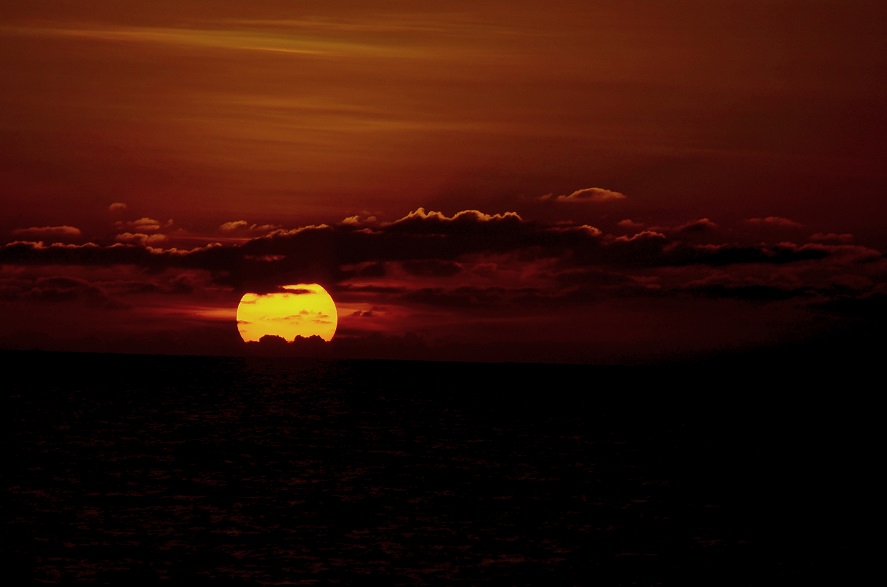
📷: @maazphotography
Sri Lanka backpacking questions
Is Sri Lanka expensive to visit?
No, day to day it is cheap. Dorm beds start from about EUR 6 a night (November 2026) and buses and trains cost a few dollars. The big costs are entry tickets: Sigiriya (Lion’s Rock) is USD 35 for foreign adults (2026), so many backpackers climb Pidurangala for LKR 1,000 instead. The rupee traded at about 337 LKR to 1 USD at the end of June 2026.
Do I need an ETA for Sri Lanka in 2026?
Yes. Since 25 May 2026 the tourist ETA is free for nationals of 40 countries, including the UK, US, Canada and Australia, but it is still mandatory. Apply on the official site, eta.gov.lk, and wait for approval before you fly. It gives you 30 days with double entry.
Can you book Sri Lankan trains online?
Yes. Reserved seats on all routes are sold on the official Sri Lanka Railways portal, seatreservation.railway.gov.lk, from 30 days before travel until 2 hours before departure. You need a passport number for every passenger, and Kandy to Ella seats go fast in April, August and December.

 Get the App.
Comments