
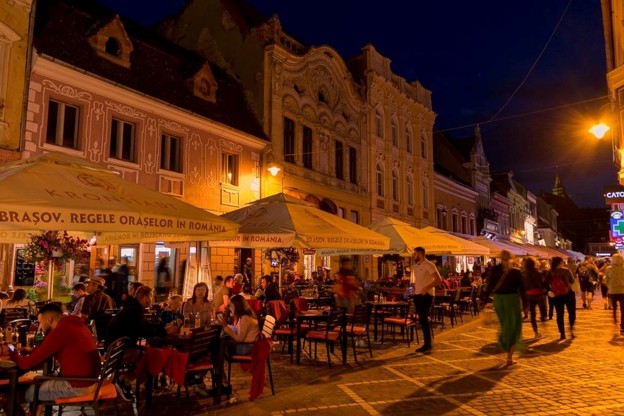

Brașov, Romania, is known for its medieval charm, mountain views and rich history. But inside one hostel on the city’s main pedestrian street, another story has been quietly unfolding.
For more than a decade, Centrum House Hostel has helped young people gain experience, confidence and practical skills through hospitality.
What began as part-time student jobs evolved into something much bigger: a community-led approach to youth development, engagement and opportunity.
Bringing the world to Brașov
The story of Centrum House Hostel began in 2013, when founder Szigeti Jozsef saw the potential in a historic building on Brașov’s main pedestrian street.
The original plan was to create luxury apartments. But somewhere along the way, the team realised the building could become something far more interesting: a place where people, cultures and stories from around the world could come together.
And so, it became a hostel.
Community has always been a natural part of that story. Located in Transylvania, a region shaped by Romanian, Hungarian, German and Saxon influences, Brașov has long been a place where different cultures, languages and histories exist side by side.
Those influences helped shape the hostel’s simple but important approach from the very beginning:
“Our differences don’t have to separate us. Given the right environment, they can be exactly what brings us together.”
More than a decade later, those values remain at the heart of Centrum House Hostel: respect, meaningful human connection and a little bit of serendipity.
A first job, a first opportunity
Very soon after opening, young people from Brașov began approaching the team looking for part-time work at reception. Many were students, and some were just reaching the legal working age and looking for their first real experience of independence.
What started as a simple student job soon became something much more, and very naturally too.
The team quickly realised that a hostel could offer something quite unusual. You can learn how to process a payment or manage a reservation almost anywhere. But behind a hostel reception desk, you might speak with someone from Australia in the morning, help a traveller from South America in the afternoon and hear the story of someone backpacking across Europe that evening.
The world arrives at reception
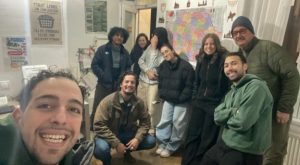
“For a young person who hasn’t travelled much yet, suddenly the world comes to them.”
Over the years, Centrum House Hostel has worked closely with Áprily Lajos High School in Brașov, giving business and economics students the opportunity to experience how a hospitality business operates from the inside.
For many, the experience became about much more than learning practical skills.
As Lorand explains, one of the most valuable outcomes for the students is what he calls multicultural intelligence:
“Hospitality combines hard and soft skills in a very particular way. You learn systems and procedures, but you also learn how differently people communicate, what makes someone feel welcome and how much someone’s cultural background and personal story influence the way they see the world.”
A hostel makes those differences impossible to ignore, in the best possible way.
“We hope young people leave understanding that it isn’t despite our differences that communities become interesting; very often, those differences are precisely what bring people together.”
A story that stayed with us
Reflecting on former students, Lorand fondly remembered one in particular:
Vlad.
A psychology student from Brașov when he first joined Centrum House Hostel.
During his early shifts at reception, he became fascinated by the diversity of the people walking through the hostel and the different ways they communicated.
Today, Vlad is a psychotherapist.
Looking back, he told the team that his time at reception was surprisingly relevant to the work he eventually chose, helping him develop practical people skills.
For the team, Vlad’s story captures something they have seen repeatedly over the years: hospitality skills don’t necessarily stay in hospitality.
The confidence, perspectives and opportunities gained through those first jobs often go on to influence careers, life choices, future ambitions long after students have left the hostel.
As Lorand explains:
“After countless conversations with backpackers, some of the myths surrounding travel begin to disappear. They discover that travelling doesn’t necessarily have to be expensive or inaccessible. In a way, travellers come to Centrum House to discover Transylvania, while some of the young people working here discover the world through the travellers walking through our doors.”
Seeing former students return years later, whether as a guest, colleague or simply to say hello, knowing the hostel played a small part in their journey, remains a privilege to the team.
The impact
For Centrum House Hostel, the most visible impact is often seen at an individual level.
Over the years, students and first-time employees have gained confidence, new perspectives and practical skills that help prepare them for their future careers.
Beyond the individual impact, each interaction between a local young person and an international traveller creates a different relationship between tourism and the community itself.
🌍 Exposure
- Young people interacting with travellers from around the world
- First multicultural working experiences
💡 Skills
- Communication
- Adaptability
- Problem-solving
- Responsibility
🚀 Opportunity
- First employment experiences
- Confidence building
- Career development
🤝 Community
- Partnerships with schools
- Youth initiatives
- Local organisations
✨ Long-term Impact
- Former students returning
- Vlad – A story that stayed with us
- Careers beyond hospitality
Beyond the hostel
Alongside its work with local students, the team has partnered with organisations including the European Youth Parliament and Rebuild Ukraine Lab, supporting young people who are looking to make a difference within their communities.
As Lorand explains:
“We don’t think a hostel should exist completely separately from the community around it.”
Many of the challenges younger generations are trying to address won’t be solved quickly or by one organisation. Meaningful change is often built through small, consistent actions.
“Sometimes supporting a project, offering a space, making an introduction or simply showing up may seem insignificant at the time. Collectively, those actions can have a much larger impact.”
Youth travel, learning & sustainable tourism
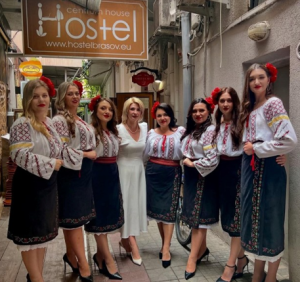
Youth engagement and development are an important part of Centrum House Hostel’s sustainability journey.
“It’s about what kind of communities and organisations we leave behind.”
Young people today are entering the workforce during a period of significant change that is reshaping hospitality, commerce and the way we think about work itself. Giving them practical experience, confidence and the ability to adapt is an investment in the future of both local communities and the tourism industry.
“For us, youth development and sustainability are naturally connected: stronger people build stronger communities, and stronger communities create more sustainable destinations.”
The same philosophy shapes how the hostel approaches tourism.
Brașov is more than a destination. It’s someone’s home. Guests are encouraged to experience the city beyond a tourist checklist by supporting independent businesses, engaging respectfully with local people and taking the time to understand the culture and history around them.
Alongside environmental initiatives such as waste reduction and recycling, the social side of sustainability remains equally important.
“When tourism remains connected to local businesses, local culture and local people, visitors aren’t simply consuming a destination. They’re participating in it.”
Advice for the industry
When asked what advice he would give to both hostel owners and the wider travel industry, Lorand’s message was simple:
“Listen before judging.”
Young people entering their first workplace often arrive with different levels of confidence, experience and opportunity. Someone who struggles to communicate isn’t necessarily disengaged; they may simply still be learning how to express themselves professionally – we all started somewhere.
For Lorand, supporting young people starts with being prepared to live your values, not just talk about them.
“It’s easy to write values on a wall. It’s harder when a student needs flexibility because of an exam and someone still needs to cover reception.”
Over the years, the team has learned that supporting young people requires both flexibility and accountability. Listening matters, but so do clear expectations, structure and feedback. While it isn’t always easy or convenient, a little encouragement can transform a young person’s relationship with work. That doesn’t mean lowering standards; it means combining standards with patience, feedback and the willingness to teach.
“The travel industry is fundamentally a people industry. If we want exceptional hospitality in the future, investing time in the people who will eventually provide it is one of the smartest things we can do today.”
Looking ahead
When reflecting on the role hostels can play in developing the next generation of talent in hospitality, tourism and travel, Lorand pointed to a quote from the hostel’s training materials:
“Service is black and white. Hospitality is colour.”
For the Centrum House Hostel team, hospitality is about more than completing a transaction correctly. Hostels are uniquely placed learning environments, bringing together people who would otherwise never meet.
A reception desk can become a window into dozens of cultures. A common space can turn strangers into travel companions. A simple recommendation can become someone’s favourite memory of a city.
Lorand continued:
“For a young person entering hospitality, that’s an extraordinary classroom. Hostels can teach professionalism and responsibility while still leaving room for spontaneity, curiosity and serendipity.”
Those lessons remain valuable whether someone chooses to build a career in hospitality or a completely different career path.
If you’re visiting Brașov, here are a few of Lorand’s local recommendations
📍 Explore beyond the usual viewpoints
Watch the sunset from Brașov Fortress. While many visitors head to the Old Town and Tâmpa, the fortress offers a beautiful and different perspective of the city and surrounding mountains.
🌮 Support local favourites
La Cueva del Taco, right next to the hostel (we love our neighbours), and exactly the kind of independent spot we encourage travellers to discover.
🚶 Travel responsibly and respectfully
Walk whenever you can, support local businesses and remember that Brașov isn’t only a destination, it’s also someone’s home. Enjoy it, explore it and leave it just as beautiful for the locals and future travellers.

 Get the App.
Comments