
The 12 must-do things to do in Florence
More than 5 years have passed since my Erasmus experience in Florence, the capital of Tuscany, in Italy, and I still feel nostalgic when someone mentions it or I come across a photo of the place. Firenze (its name in Italian) leaves an indelible mark on the hearts of all those of us who have at some time strolled through its streets and have been intoxicated by its unique atmosphere. Wherever you look you will see art, historic buildings, unique churches… It was not in vain that the French writer known as Stendhal experienced his famous indisposition, a period of dizziness, exhaustion and tachycardia known as the Stendhal Syndrome, which was caused by a binge of art. A kind of emotional saturation from being exposed to too much beauty in a short space of time, which manifests itself in physical symptoms.
Florence has so much to see and enjoy that even in a lifetime we wouldn’t be able to see it all, but since I was lucky enough to spend several months of my life there, I’m going to tell you a few things you can’t miss if you visit the City of Art. And don’t worry, we’ll combine the “must” visits with more alternative plans to prevent you from collapsing from too much art!
1. Piazza del Duomo

how about starting with one of the most famous sights in Florence? Yes, we’re talking about the Piazza del Duomo!
It is dominated by its immense cathedral, Santa Maria del Fiore, also known as Il Duomo and without a doubt one of the must-see places in Florence, as well as a true icon of the city.
The queues of tourists waiting to visit one of its attractions, those who stroll through and stop for a selfie with the imposing marble façade of the Duomo behind them and the fiaccherai waiting with their horse-drawn carriages for a tourist to ride fill the square with life.
Opposite the cathedral is the Battistero, which is also worth a visit. It used to be the place where all the Christians in the city were baptised (hence its name). Take a good look at one of its three entrances, the one with the doors known as “The Gate of Paradise”, a real gem! Although it is a replica, because when the original gates began to show signs of deterioration they were moved to a place where they could be properly preserved.
And next to the Duomo, the impressive Campanile di Giotto, a sort of bell tower which, as was customary in Italy, was built in a separate building from the church to prevent vibrations from damaging it.
2. Piazza della Signoria
 : Dim 7
From Piazza del Duomo we walk down Via dei Calzaiuoli, a lively shopping street, until we reach Piazza della Signoria, which is considered the most important square in the city and which, I must confess, is my favourite.
This square is home to the Palazzo Vecchio, a beautiful historic building with a 94-metre high tower known as Torre di Arnolfo. The Palazzo Vecchio can (and should) be visited, as apart from the building itself, which is very well restored and preserved, it houses a museum. Today it is also the seat of the town hall.
But in the Piazza della Signoria we find many other tourist attractions, such as the replica of Michelangelo’s incredible David or the Fontana di Nettuno, which was the first public fountain in the city and is formed by an impressive set of statues dominated by Neptune, the Roman God of the Sea and the Waters. It was the work of Bartolomeo Ammanatti.
And then we come to one of my favourite corners of the city, the Loggia dei Lanzi. It is a beautiful portico in Gothic style that was built to house assemblies and ceremonies and ended up becoming an open-air museum because of the sculptures on display there. The most important is undoubtedly Cellini’s Perseus, which depicts the Greek myth in which he cuts off the head of Medusa. It is said that this statue hides a self-portrait of the author himself (note the nape of Perseus’ neck).
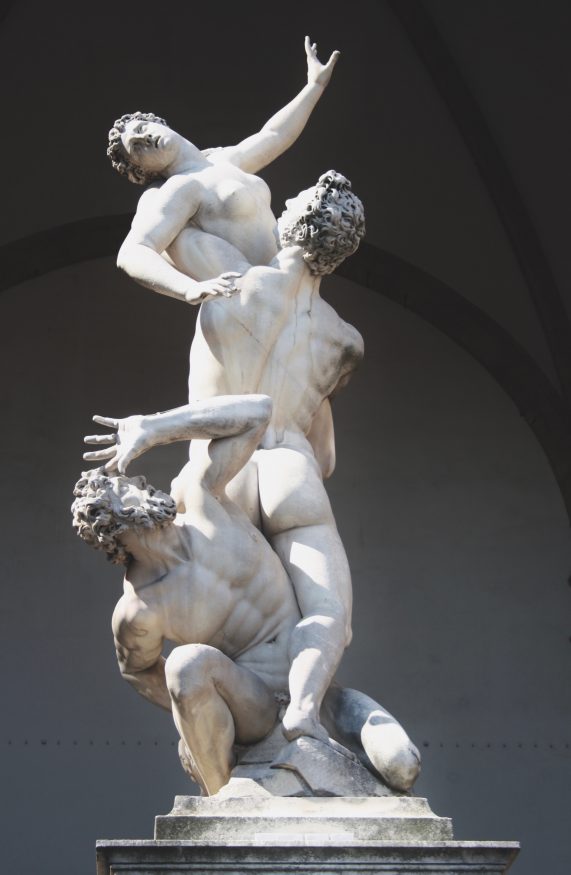
One thing I used to do when I lived in Florence was to sit in the loggia and look around me, soaking up the atmosphere while admiring the statues. Despite the awfulness of the myth it represents, I admit that one of my favourites is Giambologna’s The Rape of the Sabine Women, which is meant to be admired from any perspective.
3. Gastronomy

Now we come to the favourite part for many: the food chapter! You know that in Italy, eating well is almost a religion, and Florence is no exception!
You can’t miss the bistecca alla fiorentina, a beef sirloin steak similar to the Galician chuletón, which is prepared in a very special way. But make sure you organise to share it with your fellow travellers, because we’re talking about 1kg of meat!
A good idea if you’re short on time and want to eat good, nice and cheap is to buy a slice of pizza al taglio or go to a tiny place called All’antico Vinaio, on Via dei Neri, where for around €5 you can get a schiacciate (a kind of sandwich) that you’ll never forget. Beware of sitting in any corner of the street eating it: you could be fined! It’s best to eat while you walk or find a suitable place to stop.
Aperitivi are also very common in Florence. Before dinner, people gather with friends in some bars where you can order a drink for between 6 and 8€ (while you’re there, we recommend you try the Aperol Spritz) and help yourself freely from the buffet of food available. It’s a good occasion to try different dishes!
And, of course, you can’t miss the pizzas and Italian pasta. A good place to do this is at Mostodolce, a small birreria located on Via Nazionale (near the train station) where you can enjoy a delicious traditional home-cooked meal accompanied by craft beer.
You can’t leave Florence without eating a good gelato. One of the most famous ice cream parlours is La Carraia, which has several locations in the historic centre. It will be hard to choose the right flavour!
4. Ponte Vecchio
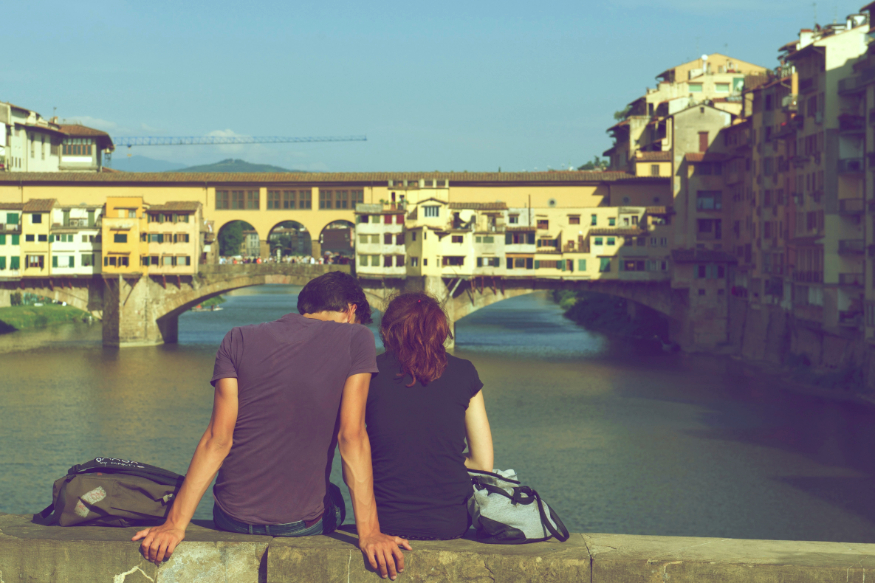
It is the turn of another of the icons of this city: none other than the Ponte Vecchio. It is the oldest bridge in Europe and it is very curious to admire how the houses and shops that occupy it (mostly gold and jewellery shops) overhang the back of the bridge, hanging over the Arno River. Apparently it was the only bridge in the city to survive the German bombs during the Second World War.
Unfortunately, this bridge has also become the custom of attaching padlocks symbolising the love of the couples who hang them, but please don’t do it! It is a practice that damages the bridge and costs the city money because they have to be constantly removed.
Instead, look at the top of the shops that line the bridge: you’ll see windows running along it. This is the Vasari Corridor, a passageway that links the Palazzo Vecchio with the Palazzo Pitti on the other side of the river. It was designed so that the Medici could get from one side to the other without mingling with the people of the city at a time in history when they had lost some of their popularity.
A good idea to get the most classic photo of Florence is to admire the Ponte Vecchio from its neighbouring bridge, the Santa Trinità.
5. Oltrarno
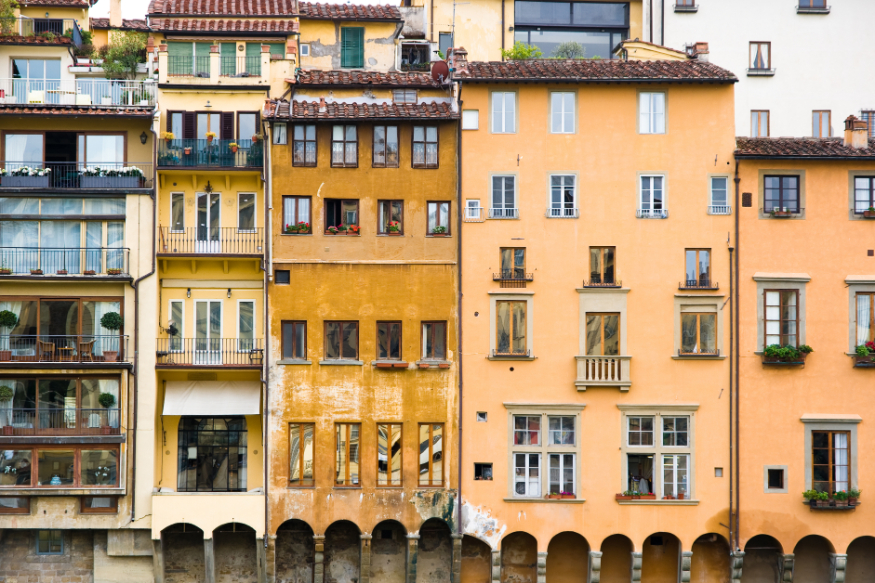
And since we have already mentioned the Palazzo Pitti, which was also the residence of the Medici, let us move on to the other side of the river, an area also known as the Oltrarno. There we can visit this imposing Palazzo, relax for a while lying in the sun in the square that precedes it while admiring its façade, and stroll through the most bohemian quarters of Florence (Borgo San Frediano and Santo Spirito), full of shops, galleries and artists’ studios.
It is also in this area that you will find the Boboli Gardens, a green oasis in the city ideal for strolling, relaxing and learning more about the history of the Medici. These beautiful gardens are no more and no less than 45,000 square metres filled with pathways through the carefully tended vegetation, marble statues, fountains, pergolas, several grottoes, and even a small lake! There is an entrance fee but it is well worth it.
6. Café and Piazza della Repubblica
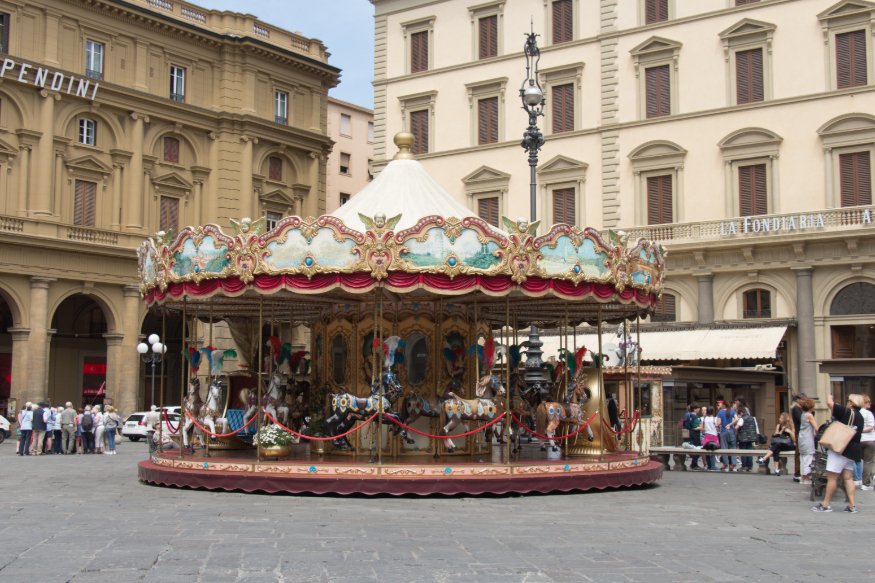
Tired, aren’t we? We’d better stop for a coffee. A good place to do so is Café Concerto Pazskowski, one of the oldest establishments in the city and located in Piazza della Repubblica. It is worth having it at the outside tables, admiring the square and its famous merry-go-round. Depending on the time of day, you may be lucky enough to catch one of the mini live music concerts organised by the establishment itself.
A good trick to make your visit more economical is to go in, order your coffee (or any of their delicious pastries) at the bar and take it yourself to the outside table, because if you sit down directly and ask for it to be brought to you, you will be charged for the service (and it’s not cheap). Once inside, take the opportunity to admire the interior of the restaurant, a meeting point for countless Florentine intellectuals or those passing through Florence in its golden age. Oh, if only the walls could talk…!
7. Markets
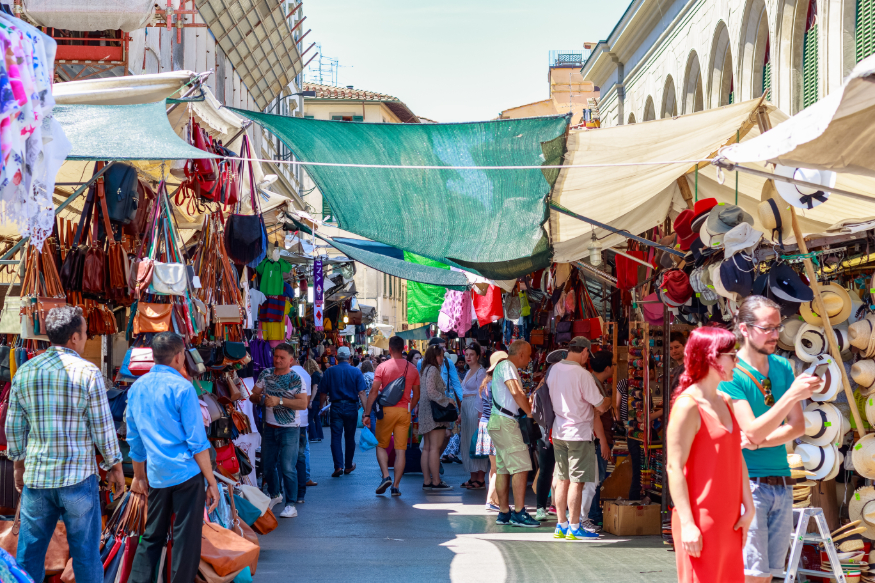
would you like to buy some souvenirs from the capital of Tuscany? I recommend you do so at any of its markets. One of the most famous is the San Lorenzo market, where you can buy souvenirs and typical products, such as leather crafts, at the stalls set up in the surrounding streets every day except Mondays, or go inside the Market building and take advantage of the opportunity to buy food at the stalls or dine in the establishments.
Another market not to be missed is the Mercato Nuovo, also known as the Mercato del Porcellino for its famous bronze sculpture of a wild boar. This sculpture, which is actually a fountain (a trickle of water comes out of the animal’s mouth), is the “Fontana di Trevi” of the Florentines, as there is a legend that it is able to grant wishes in exchange for coins. You have to rub the coin against the animal’s snout while making your wish and release it. By the way, if the coin slips through the slit, it means you will return to Florence!
8. Views from the heights
We’ve already walked through much of thehistoric citycentre (which is a World Heritage Site, by the way), but how about a bit of perspective? Florence has a few key points that will allow you to see it from above.
One of them is the dome of the Duomo, designed by Brunelleschi. You can go up to admire the view, but be prepared to climb its 436 steps! You can also go to the top of the Campanile di Giotto (414 steps), but my favourite view is from the viewpoint of the Piazzale Michelangelo, on the other side of the river.
This viewpoint is an ideal spot to watch the sun rise or set over the city. If you do it first thing in the morning you will be very quiet, practically alone, but it is well worth going there mid-afternoon and sitting on the steps to enjoy the view, enlivened by the live musicians who perform there every evening. The experience results in a magical moment of communion between all those present and of connecting with oneself at the same time – I am not responsible for any tears of emotion that may arise!
9. Museums
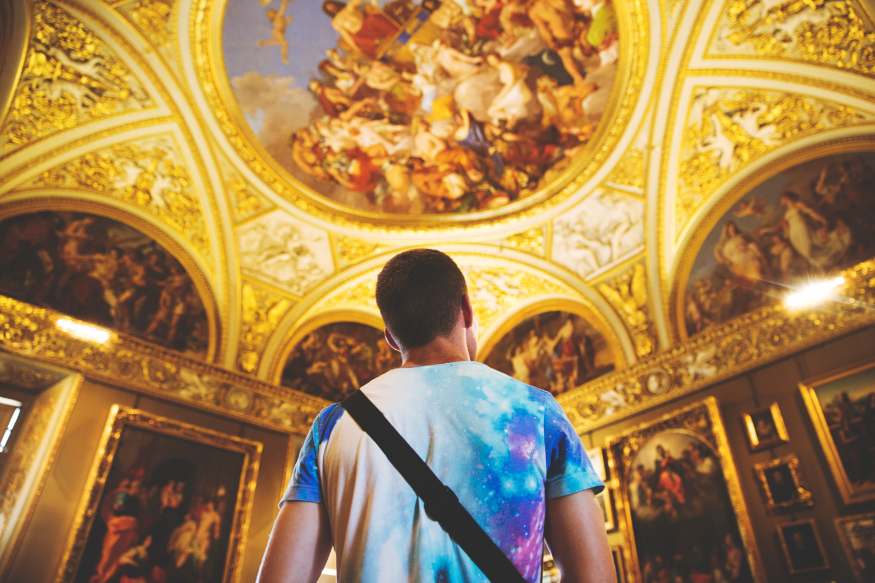
Well, did you really think I was going to forget about the most important works of art to be found in the city? You can’t miss the Uffizzi Gallery, where you will find one of the largest and most important art collections in the world. Da Vinci, Botticelli, Michelangelo, Raffaello, Titian? As essential as it is impressive. I recommend you take a guided tour so that you don’t miss any of the details!
And, of course, you can’t leave Florence without admiring its most beautiful inhabitant in person: Michelangelo’s David. The original is in the Galleria dell’Accademia and, although it houses many other important works, this sculpture alone is worth a visit. Sit on the bench around the David, leisurely, and take your time to look at it – it’s so perfect that it even seems to breathe!
10. Street art and corners of the city
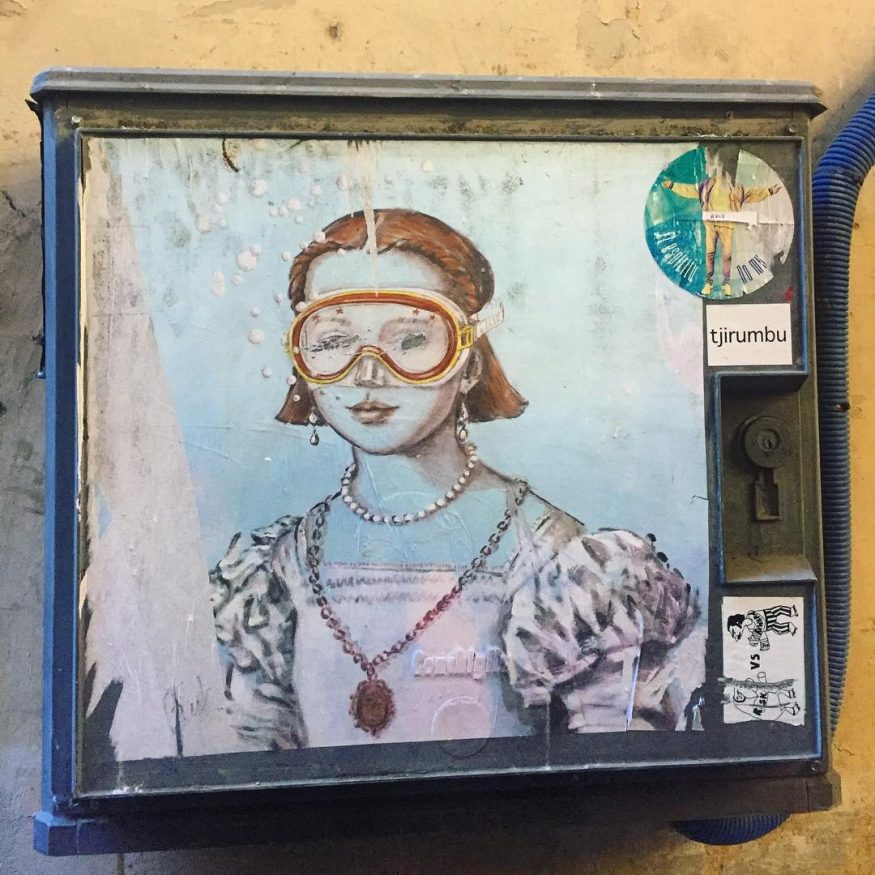
But museums and galleries are not the only art to be found in Florence. The city is full of street art, and as we walk around the city we will have the opportunity to buy prints and canvases from artists who show their work standing in the street, admire painters who reproduce famous paintings by painting the ground with coloured chalk, and have fun spotting the work of one of the city’s most famous street artists, Clet Abraham. Clet has reinvented Florence’s road signs by adding elements that give them a touch of humour, each one more original than the last!
This city has such a particular charm that just walking through its streets is an experience in itself, but if you also visit some key corners (outside the tourist circuit) you will fall in love with the place. One of them is the Piazza della Santissima Anunziata, where if you look in the direction of Via dei Servi you’ll get a picture worthy of the best Instagram posts, as the dome of the Duomo rises above the houses of typical Florentine aesthetics. You can choose whether or not to include the equestrian sculpture that dominates the square.
And speaking of the dome of the Duomo, it is interesting to enter the Le Oblate complex (in Via dell’Oriuolo), a former convent that houses a library and a café from which you can admire it face-to-face while sipping a good cappuccino.
11. Santa Croce
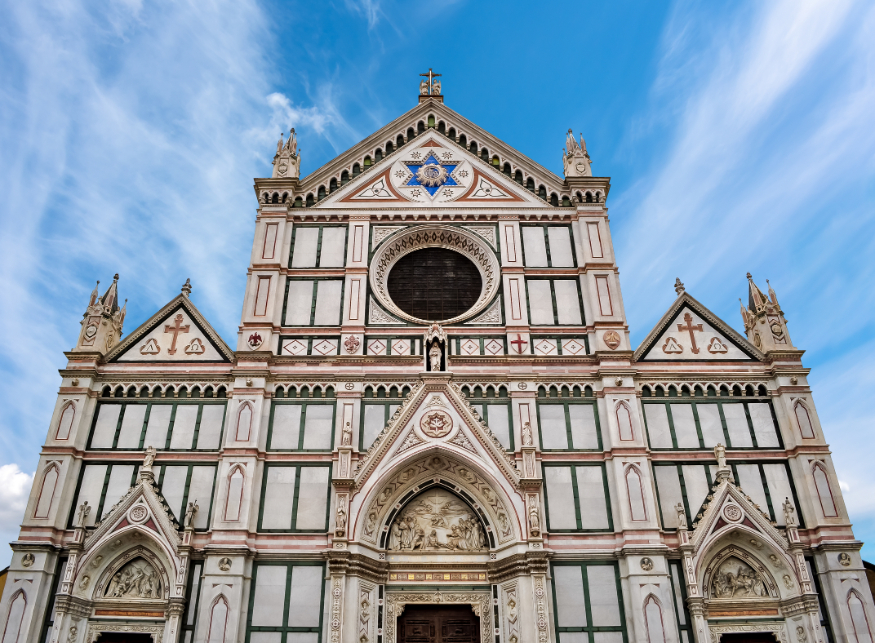
The church of Santa Croce deserves special mention, which is no less than where Stendhal experienced his famous Syndrome. This important Franciscan church, beautiful both inside and out and a symbol of Florentine art, houses the tombs of Michelangelo, Galileo, Dante Alighieri and Machiavelli, among many other important figures, as well as the Pazzi Chapel, another marvellous work by Brunelleschi.
The large, rectangular, lively square of the same name as the church is a good place to sit and soak up the atmosphere of the city, either on the steps in front of the chiesa or on one of the benches around the central part of the square, admiring the façade.
12. A stroll through Tuscany
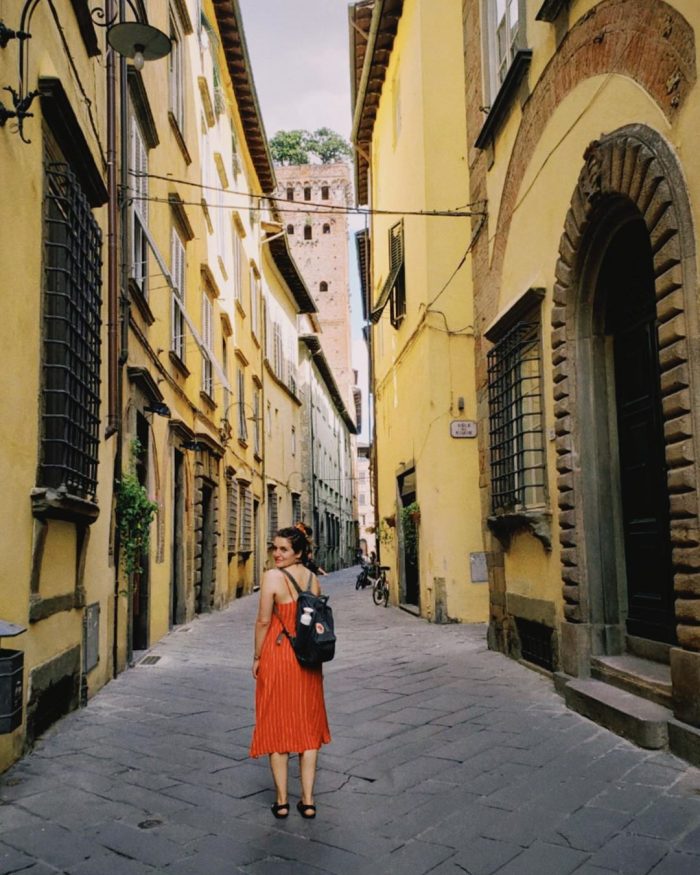
And, of course, you can’t leave this incredible place without leaving the city and discovering rural Tuscany. Any little town you want to stop in will transport you to a world of tan and green colours, delicious food, cobbled streets and spectacular views, but I especially recommend you visit San Gimignano, Lucca and Siena (where every summer the Paglio, a horse-riding competition between districts that maintains the original tradition, is held). You can also visit Pisa and its famous leaning tower, although the city has little else to offer.
 About the author
Mariona Sanz (Barcelona, 1989) Mediterranean journalist and writer in Lapland. I travel slowly and write about Sustainability, Responsible Tourism and Personal Growth. I love animals, walking in nature and reading by the fire. IG @sanzmerions / marionasanz.com.

 Get the App.
Leave a Reply
You must be logged in to post a comment.