
Christmas traditions around the world
All around the world people are either flocking home to celebrate Christmas, or gearing up to spend the holiday abroad. Either way, the festive period is a beautiful time of reflection, joy and giving, and is full of wonderfully different traditions from every corner of the globe. Here are some of our favourite Christmas traditions from around the world:
1. Austrian Christmas Traditions
“As soon as the sweet smell of “Weihnachtsbäckerei” (Christmas cookies) is in the air and people are wandering around our enchanting Christmas markets, I know Christmas is near… Every region and every family in Austria is celebrating Christmas a bit differently, and everyone has their own special traditions. But some things are the same everywhere… A few days before Christmas my mum and I start to make our own Christmas cookies. Normally we spend an entire Saturday in our cheesy aprons (we only use them once a year), listening to Christmas carols on the radio and drinking tea (or mulled wine in the evening) – last year it even started to snow.

In Austria the “Christkind” (Christ-child) brings the presents on the 24th December (Heiliger Abend – Christmas Eve). My parents always tried to hide our presents and locked up the tree in our living room (we always smelled through the keyhole if the tree is already here). Nowadays we decorate the tree all together in the afternoon and prepare food for the evening. Showtime is as soon as the Christkind rings a bell and the kids are allowed to see the tree. It’s magical with the lights and the presents! Normally people sing in front of the tree, read Christmas stories and pray before they open the presents. After Bescherung (gift giving) we’re eating lots of food. In our family we always have special Austrian meat – it’s a proper feast.

After that, we always go to the Christmette in the church. After Heiligabend on the following days people visit their family and friends to celebrate (and eat!) together. And of course it’s typical for an Austrian Christmas to always hope for a White Christmas…”
👉 By Viktoria Troescher
2. French Christmas Traditions
Christmas in France is all about spending time with friends and family, which like most other French events involves a lot of food and wine! Depending on the family tradition, we usually gather at home for the Réveillon de Noël on the evening of the 24th for a delicious meal that can last 5 hours or more (yes, true story). The menu is different according to the region but wherever you’re spending Christmas in France, this dinner has to be huge and without limits (forget your diet straight away). Oysters, smoked salmon and the traditional foie gras are the traditional entrées, often followed by the Christmas turkey with vegetables or a sea food platter (plus wine of course). We then eat a massive salad with a huuuge cheese platter and (more) red wine, before finishing things off with a “bûche de Noël” (a Christmas Yule log), a jelly roll cake coated with chocolate cream and a few all-important macaroons. To keep us hydrated, we also open a bottle of champagne. Be prepared, very long meals are a social custom in France!

When midnight strikes, the most religious families go to Midnight Mass. Père Noël (Santa Claus) leaves all the presents underneath the (heavily decorated) Christmas tree during the night, and everybody open them in the morning (but let’s be honest, most of us open it on the 24th just after midnight). On Christmas day, even if you’re completely full, there will be more food. We gather again at lunch time to eat another huge meal with the family (with again, Champagne and wine).
From the Christmas tree to the tables, decorations are really important at Christmas. Everything has to look elegant, festive and refined (forget Christmas jumpers, it’s all about French elegance haha).

New Year’s Eve is the time to party all night with friends. Like in Spain we do have the three kings, but it is not a big celebration, we usually just eat the traditional “Galette des Rois” (King’s cake) at tea time and the person who finds the “fève” in the galette is the King/Queen (which often means buying the next one).
👉 By Dorothee Gomez
3. German Christmas Traditions
Just like in Austria, Christmas time in Germany is all about Christmas Markets, baking cookies together (in the Weihnachtsbäckerei), decorating the house and the tree and listening to the same ol’ Christmas songs every year (but we admit, we all love it). Starting from Mid-November, excitement for Christmas and the whole family getting together for dinner is too much to bear!

Every year on December 6th, Nikolaus day is celebrated in Germany. The day before children clean their shoes – usually the biggest they have – and put them in front of the door. The next morning, they traditionally find their shoes filled with candy, mandarins and peanuts (sometimes small gifts as well). This tradition is based on the memory of Bishop Nikolaus from Myra, who lived in the 4th century and was known for his kindness. Today the Nikolaus, who brings the treats overnight, looks just like Santa Claus, but is a completely different person!
👉 By Rayhana El-Mahgary
4. Italy Christmas Traditions
Christmas is such a wonderful time in Italy. It’s not so much about lights on the streets, but the marvellous “torroni” (typical Italian chocolate bars) and Panettoni and Pandori. Christmas means family in Italy. Christmas is that moment of the year where everyone sits together at the same table forgetting (and forgiving..) old arguments and problems. When you meet again you mother’s aunt that can’t really help herself (I don’t think she even tries..) by asking you: ”Well, when are you going to get married?” and you answer every year: “Let’s see next Christmas auntie!”
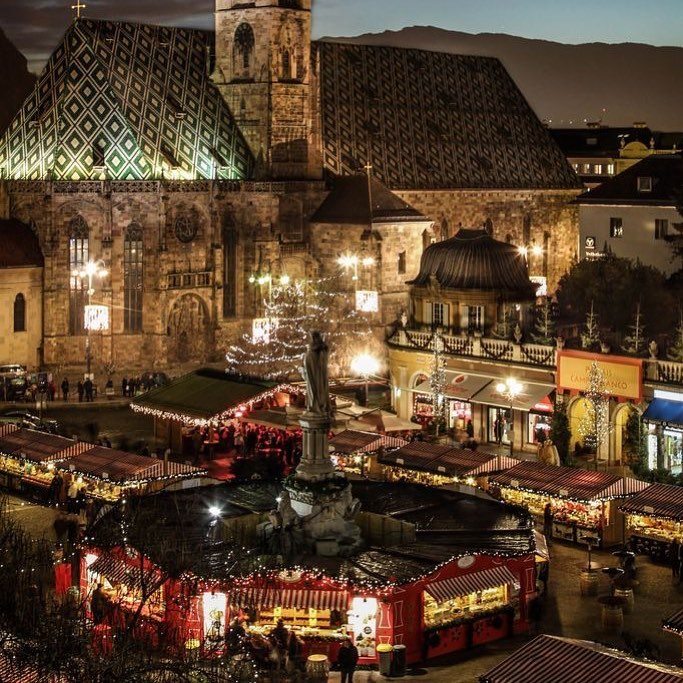
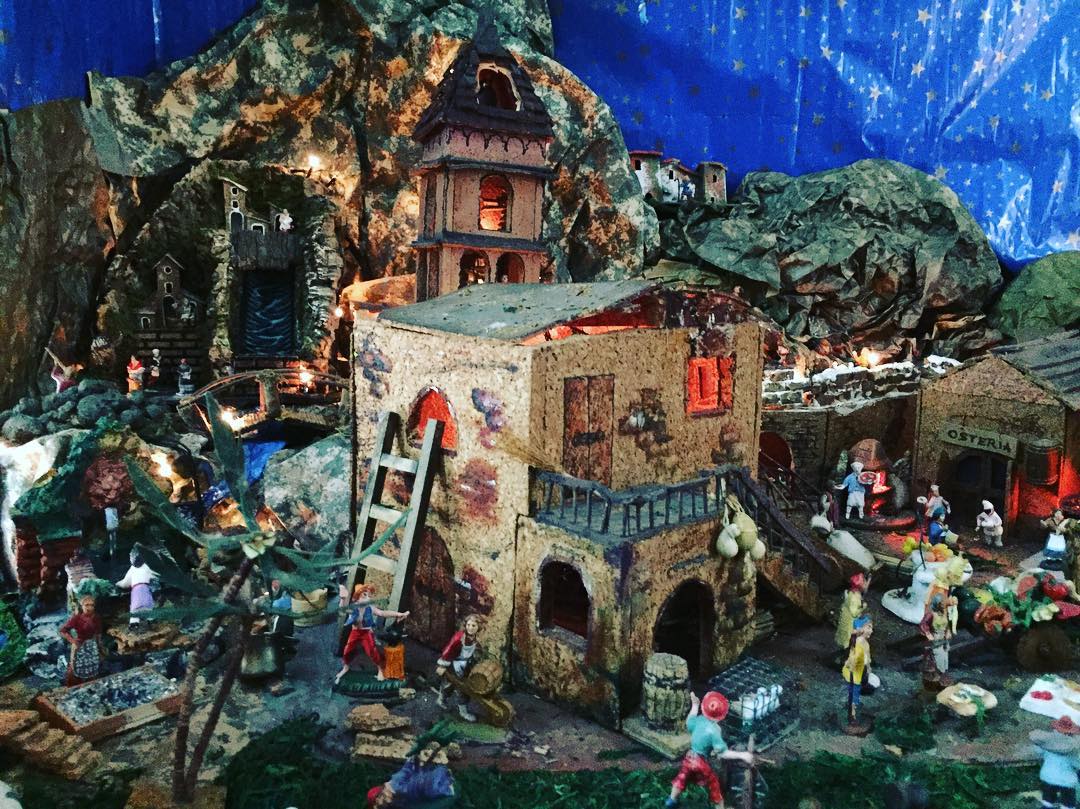
Italy is full of different traditions but there are two things bonding Italy as a whole country. The first one is the “Presepe”. Yes, we do our Christmas trees (on the night of the 8th as tradition wants of course..) but we do the “Presepe” too: a small and iconic representation on the Nativity. In Naples, it reaches its greatest heights, with small stands all over the city selling incredibly fascinating hand-painted statues.
The second tradition (I’d say passion in this case..) is.. FOOD! We eat fish only on the night of the 24th (when Santa brings presents to children) and meat on the 25thand 26th lunches. Each of these meals start with the table covered with an uncountable number of starters; followed by several types of pasta and then some “mains” (usually 2 or 3 different types for those who can make it..) with sides. Fruit and Christmas sweets abound, and each meal lasts between 3 and 8 hours! In Italy, it’s all about being together. But when there is food, it’s better! 😉
👉 By Roberto Ferrone
5. Egyptian Christmas Traditions
Most of Egypt’s Christian population is Coptic, and therefore Christmas traditions in Egypt are veeeery different from European traditions. The Coptic church follows a different calendar and celebrates Jesus Christ’s birth on January 6th. The Christmas fasting begins 43 days before Christmas Eve and during this period Copts follow a strict vegan diet – with fish being the exception! Then, on January 6th , the families go to church for the Christmas Mass and after midnight celebrations begin with LOADS of food (including meat – finally!) and presents. The following days are usually reserved for family visits and many many many traditional Ka’ak (cookies).

👉 By Rayhana El-Mahgary
6. Australian Christmas Traditions
Christmas in Australia is an amazing balancing act between the British traditions and the Australian reality. We may be one of the furthest outposts of the Commonwealth but that doesn’t stop us from embracing all things festive like we live in a cold climate. December in Australia is officially the start of summer, which sees temperatures soar well into the 30s (and sometimes even reaching 40 degrees), but you’d be forgiven for thinking we’re a little deluded by the way we pretend that we’re also in the midst of winter. Shopping centres are filled with displays of fake snow, spray-on frost is added to the edges of windows and festive cards depicting wintery scenes are exchanged by people who’ve never even seen a white Christmas. Funnily enough, when you grow up with this you don’t really question it: this is just what the festive season is like.

Of course, we’ve adapted some Christmas traditions from the Northern Hemisphere to suit our Southern style. It’s pretty common to see a Santa wearing his suit with red shorts and a pair of thongs (or “flip flops” as they are called in the UK) and Aussies will rock a Christmas t-shirt rather than a jumper. We also love to create our own twist on festive carols, such as Aussie comedy duo Bucko & Champs’ songs “Aussie Jingle Bells”, “Deck The Shed With Bits of Wattle” and “We Wish You A Ripper Christmas”. As with most things in Australia, the season is approached in a pretty laid-back way and with a sense of humour.

The question I’m always asked about the festive season in Australia is what do we actually do on Christmas Day? Well, it starts pretty much the same as the UK: you wake up, exchange gifts, have a few drinks followed by an epic lunch. Depending on the family, the lunch could be a proper roast, a seafood buffet, or a big BBQ. As with everything, it’s the UK tradition with an Aussie spin. We have traditional festive crackers, eat Christmas pudding and indulge ourselves to the max. In the afternoon, if you live near the coast you’ll probably go to the beach. If not, you might go for a swim in yours (or your neighbours) pool. Or if it’s an absolutely scorching Christmas, and way too hot to go outside, you’ll turn the air con up to the max and enjoy a nap in the cool.
👉 By Bronwyn Griffiths
7. Spanish Christmas Traditions
In every part of Spain, Christmas is a very special time of the year. The festive season is especially celebrated by those who come back home. Christmas is all about spending time with family and friends, and, above all, eating. Because of this, during this time all the local markets in each city get extremely busy, as everyone is looking for the best meat and seafood to bring to the table on the most special evening, which is Christmas Eve: Nochebuena (“the good night”).
During the whole Christmas season it’s lovely to walk down the streets of the towns and feel the festive atmosphere in every local cafe, visit the Belen nativity scene and of course, check out the big Christmas tree in the Main Square. All cities in Spain have one main square and therefore a big Christmas tree to match.
The evening of 24th December is a key date during Christmas in every single corner of Spain. People have dinner with the family whilst enjoying amazing seafood as a starter and fish or meat as the main course. When it comes to desserts, we enjoy different types of turrón (a sweet nougat), mazapanes (marzipan) and polvorones (shortbread that melts in your mouth). It’s important to mention that Spaniards accompany the dinner with wine, cava and coffee liqueur with the desserts. After opening the presents at midnight (if your family follows the Santa Claus tradition) some people go out with friends after having dinner.
But if there is a big day on the calendar to enjoy outdoors, that´s the evening on the 5th January, the time of the year to watch the popular and colourful “Cabalgata de Reyes” (the Parade of the 3 Kings). It doesn´t matter if you are a kid or an adult as we all fight to get the sweets!
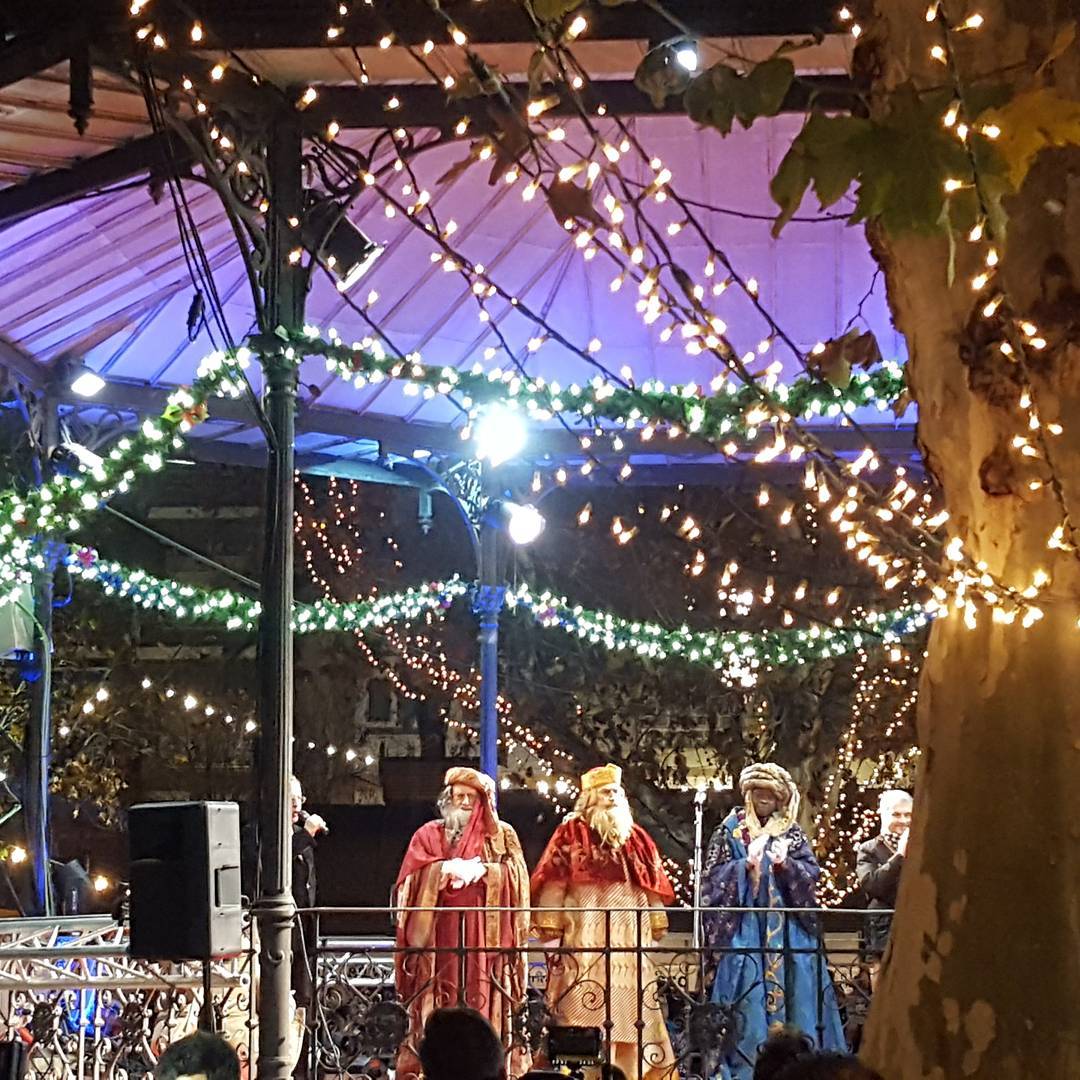
Most families open the presents the day after, early in the morning, on Día de Reyes (Three Kings’ Day also known as Feast of the Epiphany). However, in Spain it´s common to hear people asking each other: “Which side are you on: Santa Claus or the 3 Kings? As there are people who follow one tradition or the other… or in some cases, both! But kids would go to bed early on the 5th and grownups will celebrate this night in bars and clubs with their friends – didn’t we say that going out is also a key element for Spanish people at this time of the year? Children and adults leave one shoe right outside their doors or under the Christmas tree, so the Three Kings know which present belongs to who!
The next day we say bye to Christmas by opening the presents and enjoying the classic Roscón de Reyes (King´s cake) with small trinkets hidden inside. If you find one of those you are supposed to pay for the cake! Last but not least, if you ever visit Spain during this festivity don´t forget to wish a Merry Christmas to the locals with “Feliz Navidad!”

👉 By Silvia Cornejo
8. Christmas Traditions in Brazil
Christmas is all about snow, hot drinks and funny jumpers, right? Wrong! =P In Brazil we celebrate the Holidays during summer and yes, we have a very tropical Christmas time! December is when you’ll start to see decorations everywhere, from shops, to houses, some offices and doctors waiting rooms. The decoration is pretty much the same as most of the countries in the world: Christmas tree, lights, red and green everywhere, Santa costumes and all. Sometimes you can spot Santa’s wearing swimming suit’s in shops here and there, but since he comes all the way from North Pole, we usually keeps his clothes from home.
On the night of the 24th is when the families get together to wait until midnight celebrate the birth of baby Jesus. We exchange presents between each other, some people do secret Santa (we usually have to go one by one and describe who you’ve got so people can guess – this can get really funny depending on the participants). At midnight we have a big dinner together with traditional Christmas food like roasted turkey and smoked pork, but the sides are more Brazilian: Farofa (like crumbs with bacon toasted with butter), Salpicão (like a Mayo salad) and mixed rice (with pea, corn, raisin, egg). We also have chestnuts and the most delicious sweet thing in the world: Rabanada! (it’s similar to a french toast). After all that, we get the kids going to bed so in the next day they’ll see Santa’s gifts!

The 25th is a resting / playing with gifts day. Most people do a big lunch with, either a simpler menu, or th
e leftovers from last night or even a barbecue that goes on the whole day long!
👉 By Carol Guido
9. British Christmas Traditions
Christmas in the UK is not often full of snow, but it’s certainly a time for family and friends. Often people start getting into the festive spirit all throughout the month of December, with office parties, extended hours for holiday shopping at most stores, and of course, all the typical Christmas movies making the rounds on TV. London, like most bigger cities always make a big deal of the Christmas lights being switched on, to mark the official start of the holiday season. Decorations of holly, presents, reindeer and tinsel line every shop window, and most people do something similar to their living rooms.

After all the counting down and advent calendar chocolate consuming, the actual celebration kicks off on Christmas eve, with Midnight mass, carolling, gift exchanging, drinking, and for those who observe the religious side of the event, the reading of the Bible’s account of the nativity story. Christmas Day comes around all too soon and presents are exchanged and stockings opened. A wonderfully delicious turkey dinner with roast and mashed potatoes, veggies, Brussels sprouts, gravy and of course Yorkshire puddings is essential. We definitely can’t forget the traditional Christmas crackers, the paper covered tubes that when pulled burst open with a band, bringing forth treasures such as a paper party hat, a corny joke and a little prize!

Boxing Day, the day after Christmas is also observed as a holiday in the UK, and is filled with football and massive sales at the shops (the British equivalent to Black Friday).
👉 By Colin Rivera
10. American Christmas Traditions
In the USA, Christmas partners with Thanksgiving to create ‘the holiday period,’ a glorious time in which cheer is all around (at least, that’s what the movies tell us!) During December, Americans decorate their homes in true festive style and every fading popstar releases a Christmas single… No offence Biebs! The month is filled with office parties, ice-skating, booze, and awkward mishaps under the Mistletoe!

On Christmas Eve, eager children hang stockings along the fireplace waiting for Santa and his reindeer to arrive. Adults tend to opt for a rather, umm, boozier tradition, sipping on delicious Eggnog. A staple drink of American Christmas, Eggnog is a beverage made from eggs, cream and bourbon, and no we’re not yolking!
Christmas Day is a time for families and food – lots and lots of food! Turkey, a dish usually associated with Christmas, is not often served in the US as its reserved for Thanksgiving. Instead, roast ham or roast beef tend to be the main event served with potatoes and vegetables, but save room for dessert! A typical Christmas desert in the US is pie. Pumpkin pie and apple pie and yam pie (oh my!) are particularly popular.
After dinner, it’s time for games, carols, Christmas movies, and falling asleep in front of the TV listening to Grandpa’s gentle snoring. It’s the most wonderful time of the year!

👉 By Annabel Usher
11. Portuguese Christmas traditions
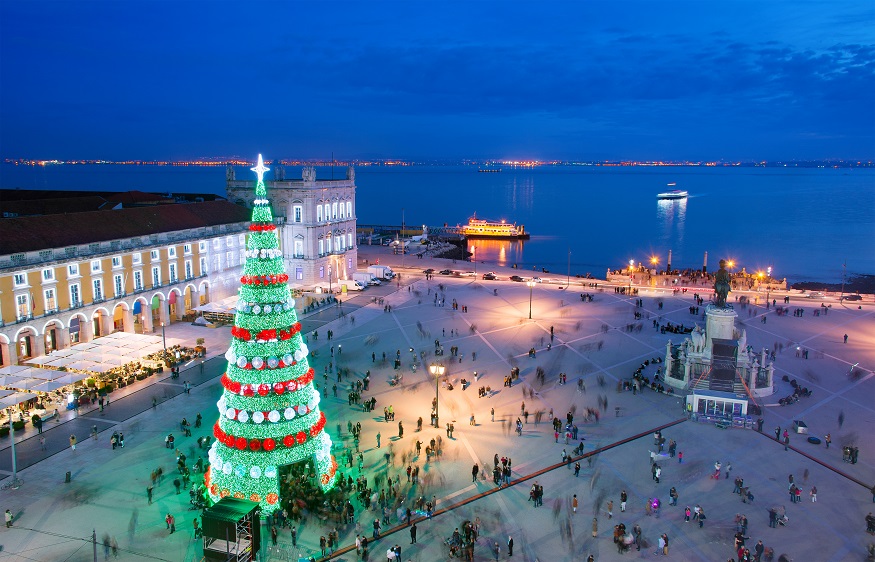
Christmas display in Lisbon, 📷:Getty Images
Christmas in Portugal is driven by family and food… a lot of food!
Throughout my life, we always started to gather at the chosen house mid-afternoon on the 24th. We used to rotate: one year at Mom and Dad’s house, another at my Godparents’ and another at Grandpa and Grandma’s. Eventually we ended up going every year to Grandpa’s, as the main focus of Christmas and presents is on the youngest and the oldest in the family (they should be the most comfortable and happy!)
My grandmother always cooked us a big tray of rabanadas, a sweet bread with cinnamon, sugar and lemon, one of the most typical Portuguese Christmas desserts. During the afternoon, we would gather all the presents under the tree and start the fireplace, then we’d start to prepare the big feast! At our table there was always codfish, potatoes and greens soaked in the best quality olive oil.
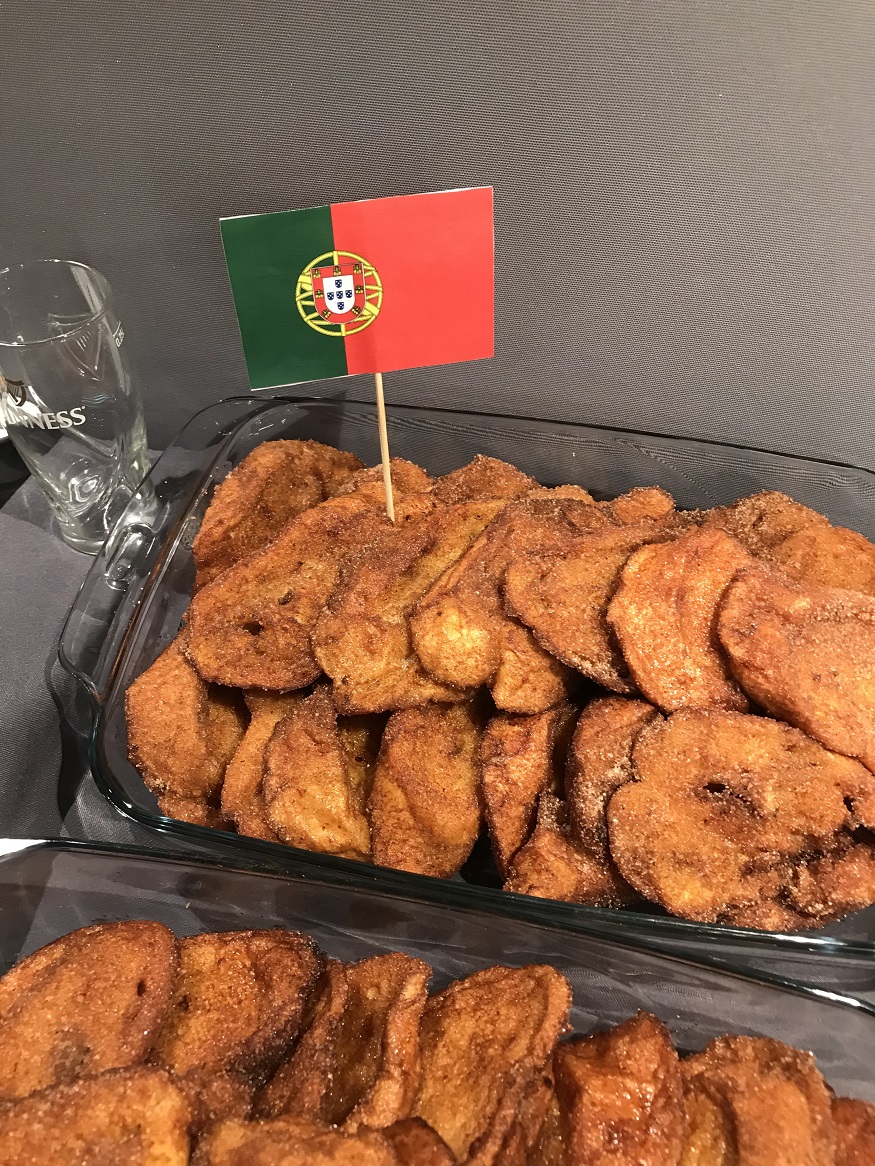
Speaking of olive oil, there’s a TV commercial that’s always been on air every year at 8pm…and that’s coincidentally the same time we would start the Christmas dinner! After that, it’s time for a big range of desserts, like rabanadas, bolo rei, pão de ló, aletria, strong cheese and a good few sips of Porto wine!
In my family, the time between dinner and opening our presents at midnight usually calls for typical Portuguese games like dominos, cards, pião, rapa and loto!
On the 25th we make traditional Farrapo Velho with the codfish leftovers… and we eat it for days at every meal. Yes, including breakfast! Other families and regions have other traditions, such as eating turkey, desserts like sonhos e farófias, going to the midnight mass or just opening presents on the morning of the 25th.
👉 By Sara Neves

 Get the App.
Leave a Reply
You must be logged in to post a comment.