Interlaken centre
First-timersBetween the West and East stations: the Höhematte, restaurants, tour offices and most beds.

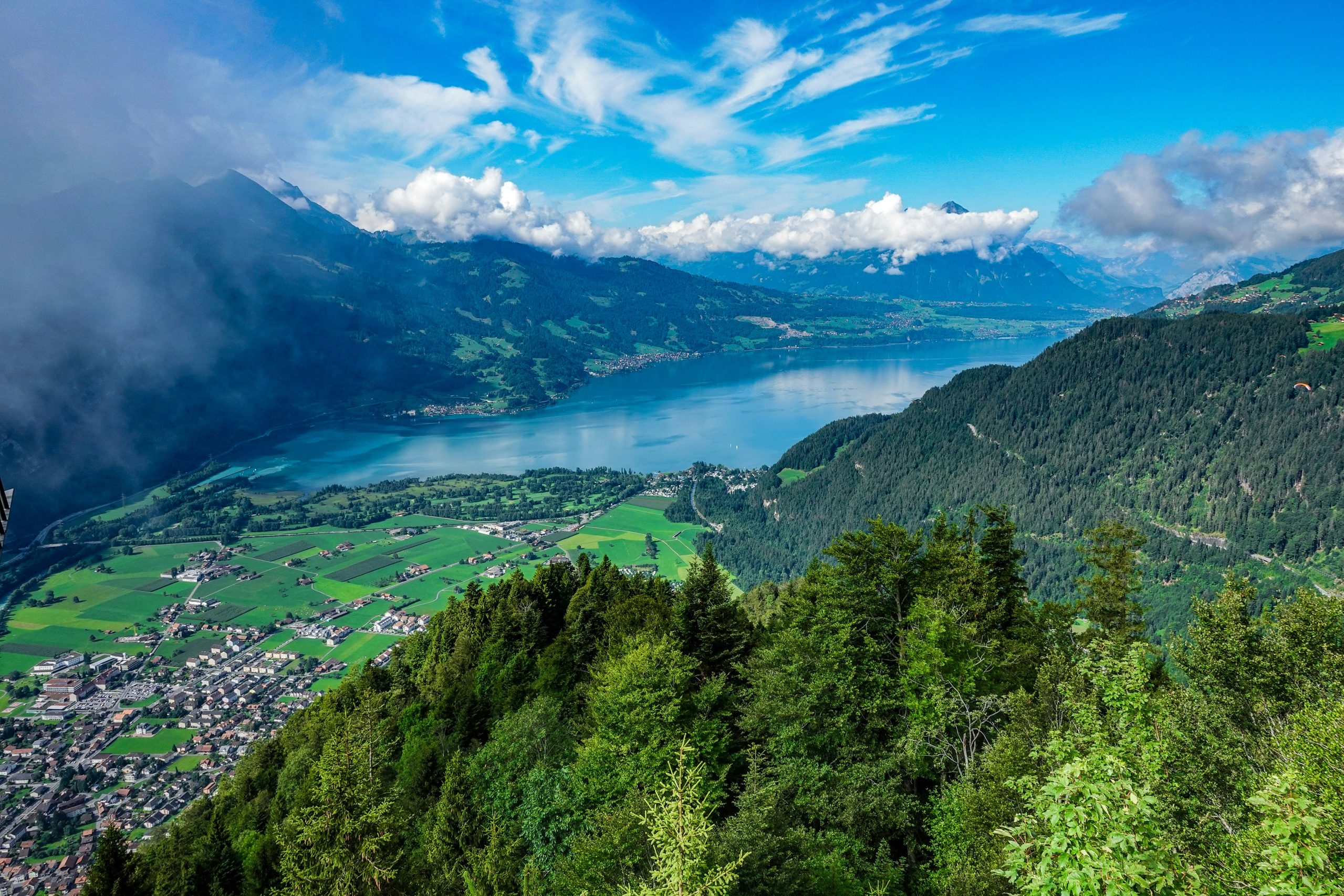
Between two turquoise lakes under the Eiger, Mönch and Jungfrau: the adventure sports capital of the Alps, with paragliders landing in the middle of town and the Top of Europe station above.
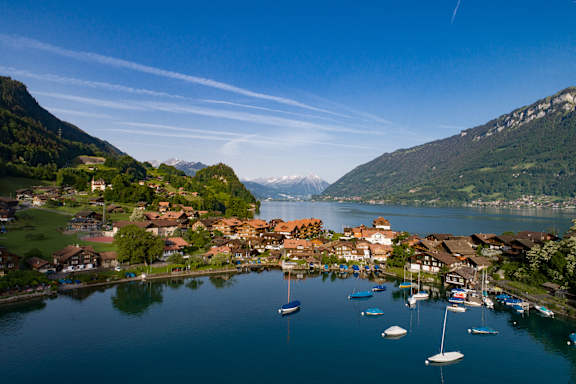
Interlaken sits on a strip of flat land between Lake Thun and Lake Brienz — the name means between the lakes — with the peaks of the Jungfrau region rising to the south.
The town itself is small and mostly a base. Its central meadow, the Höhematte, is where paragliders land all day in summer, and the town has built itself around adventure sports: paragliding, skydiving, canyoning, bungee, rafting.
From here, mountain railways climb to Grindelwald, Wengen, Mürren and Lauterbrunnen, and to the Jungfraujoch, at 3,454 metres the highest railway station in Europe, marketed as the Top of Europe.
The lakes are an extraordinary milky turquoise, coloured by glacial silt, and boats run on both.
It is expensive, and the Jungfraujoch in particular is one of the most expensive excursions in Europe.
Two or three days, as a base.
A small town between two railway stations, with villages in the valleys beyond.
Between the West and East stations: the Höhematte, restaurants, tour offices and most beds.
By the East station, where the mountain railways leave.
Orange labels are neighbourhoods, dots are the 6 top-rated hostels. Map © MapTiler © OpenStreetMap contributors.
Paraglide. Tandem flights from the slopes above town land on the Höhematte in the middle of Interlaken, and it is the thing the town is known for. Expect around CHF 170 to 220 (about €180–233).
Go up Harder Kulm, the viewpoint above town, by funicular, for the view of both lakes and the Eiger, Mönch and Jungfrau.
The Jungfraujoch, at 3,454 metres, is the highest railway station in Europe, with a glacier, an ice palace and the Sphinx observatory. It is very expensive — a return costs well over CHF 200 at full price, reduced with passes — and the view depends entirely on the weather. Check the webcam that morning before you pay.
Take a boat on Lake Brienz or Lake Thun, covered by the Swiss Travel Pass. Brienz, at the far end, is a pretty village known for woodcarving.
Canyoning, rafting and bungee are all available. Choose operators carefully — see the safety section.
Watching the paragliders land on the Höhematte is free and entertaining all day in summer.
The lakeshores and the walk along the Aare between the lakes are free.
Walking up to Harder Kulm on foot, rather than taking the funicular, is free and takes around two hours.
The hiking trails throughout the Jungfrau region are free — it is the mountain transport that costs.
Local buses are often free for overnight guests with a guest card.
Expensive and aimed at visitors. A main is CHF 28 to 42 (about €30–45).
Fondue, raclette and rösti are the standards.
Coop and Migros are the budget answer, and self-catering is common among backpackers.
A beer is CHF 7 to 10 (about €7.50–10.50).
Backpacker-driven. The hostels and a few bars around the centre carry a lively international crowd, many of them fresh off a skydive or paraglide.
A beer is CHF 7 to 10.
Nights are shorter than you might expect, because the mountain trips start early.
Interlaken has two stations: West, in the town, and Ost, the East station, where the mountain railways to Grindelwald, Lauterbrunnen and the Jungfrau leave.
The town is walkable between them.
Bern is about an hour away by train and Zurich about two. Lucerne is about two hours on the scenic Luzern–Interlaken Express.
The Swiss Travel Pass covers the trains to Grindelwald and Lauterbrunnen and the lake boats, and gives a discount on the Jungfraujoch. The regional Jungfrau Travel Pass is another option.
Expensive, and activities drive it. Dorms are CHF 40 to 65 (about €42–69), a main CHF 28 to 42, and a beer CHF 7 to 10.
A day is €90 to €150 before activities.
Activities set the budget: paragliding CHF 170 to 220, skydiving much more, and the Jungfraujoch well over CHF 200 at full price.
The trails, the lakeshore and watching the paragliders are free.
The town is very safe. The risks are in the activities and the mountains.
Adventure sports carry real risk. In 1999, twenty-one people died in a canyoning accident in the Saxetenbach gorge near Interlaken when a flash flood hit a commercial group. Safety standards were tightened afterwards. Choose licensed operators that carry the Swiss Safety in Adventures label, ask about their weather policy, and do not do canyoning or rafting in unsettled weather.
Altitude at the Jungfraujoch, 3,454 metres, reached quickly by train, can cause headaches and dizziness. Move slowly at the top.
Mountain weather changes fast. Check forecasts and webcams.
Emergency number is 112, and Swiss mountain rescue, Rega, is 1414.
Waterfall valleys, car-free villages and the Top of Europe.
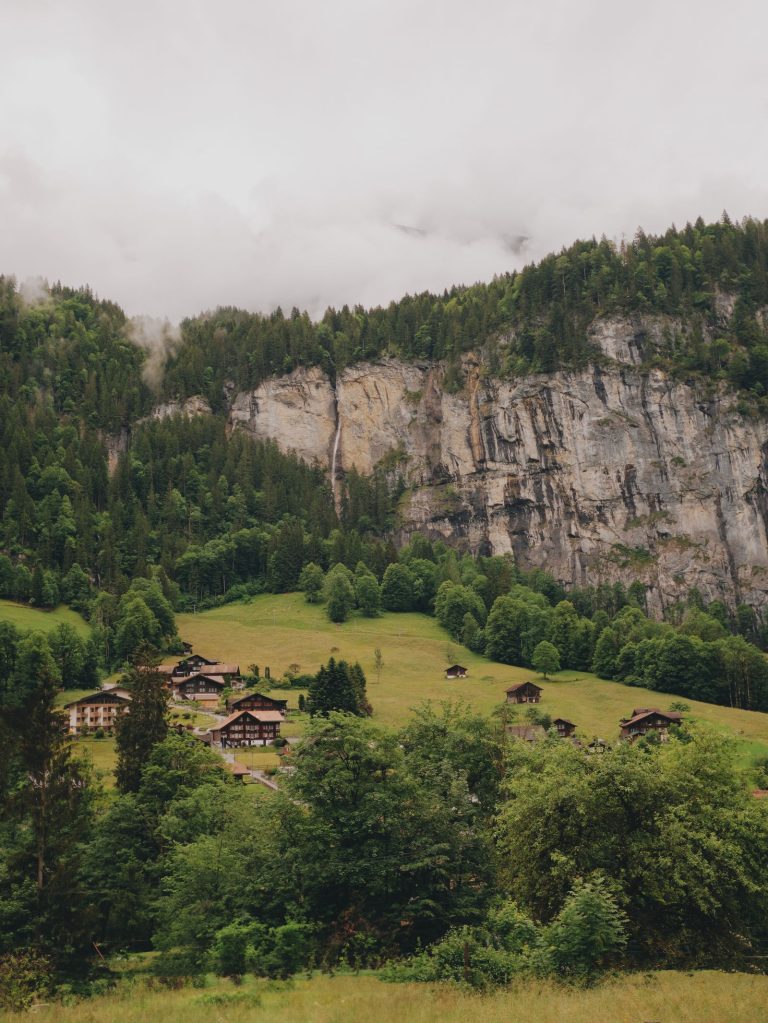
A valley of 72 waterfalls under vertical cliffs.
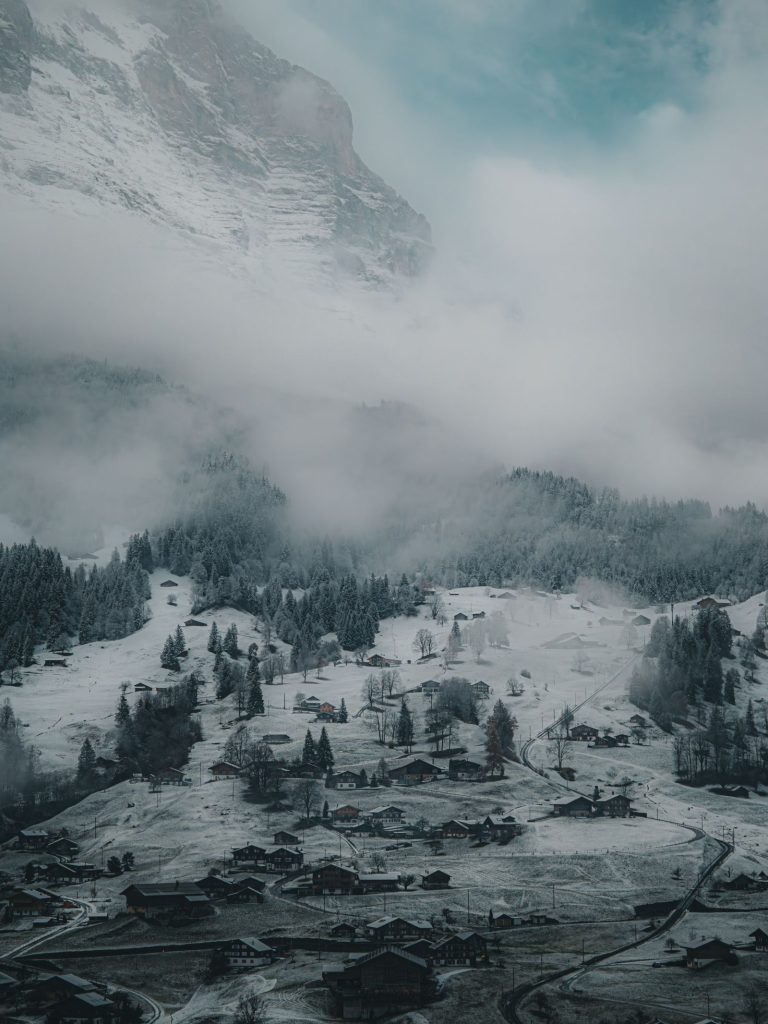
Under the Eiger north face, with the First cliff walk and gondolas.
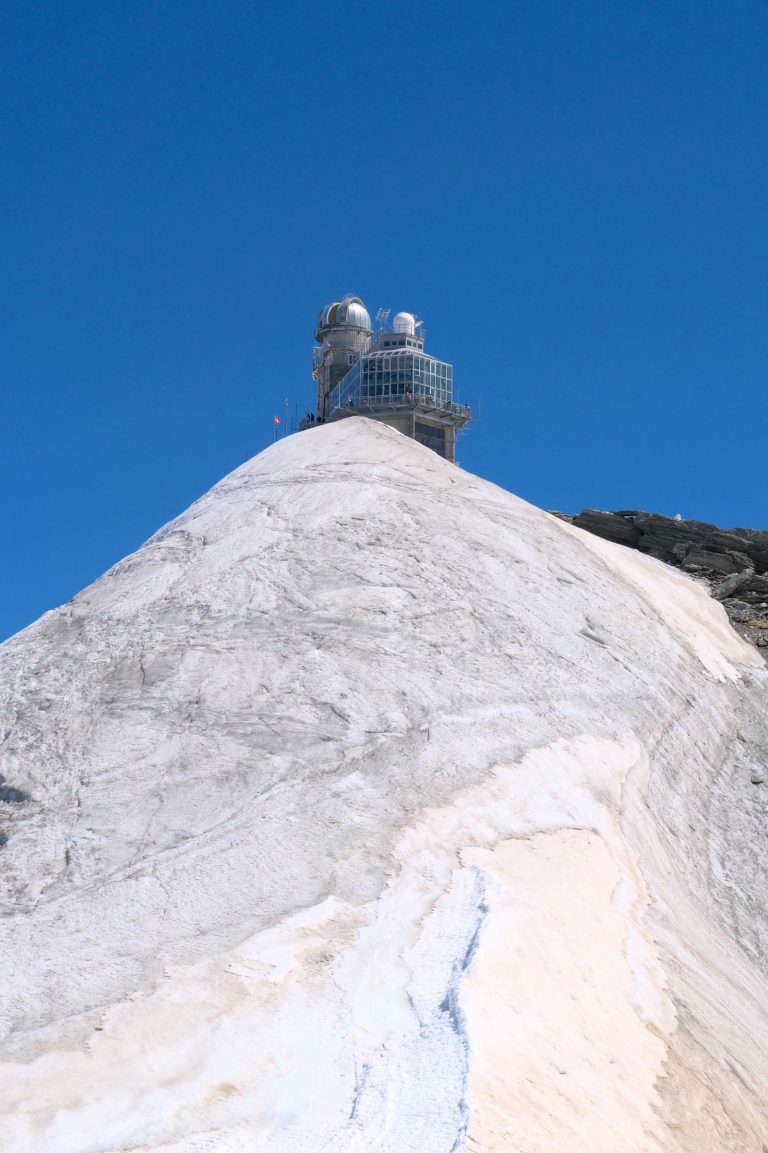
The highest railway station in Europe, at 3,454 m.
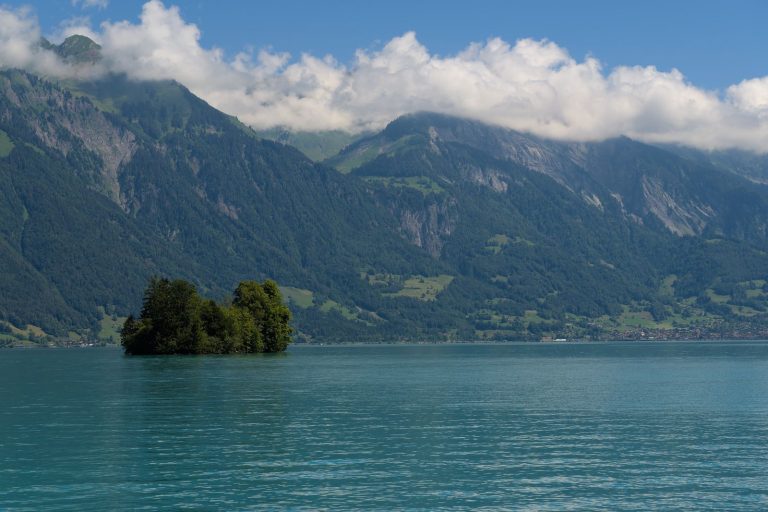
A lakeside woodcarving village, and the Brienz Rothorn steam railway.
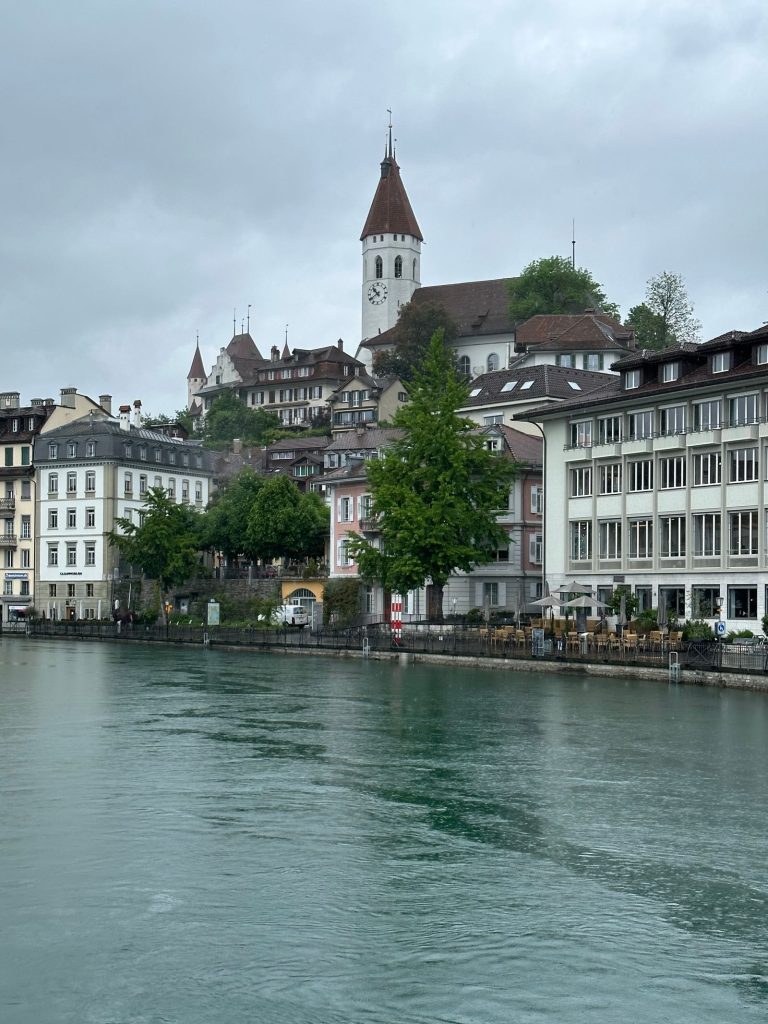
A castle town at the other end of Lake Thun.
A summer of paragliders and a mountain above the clouds.
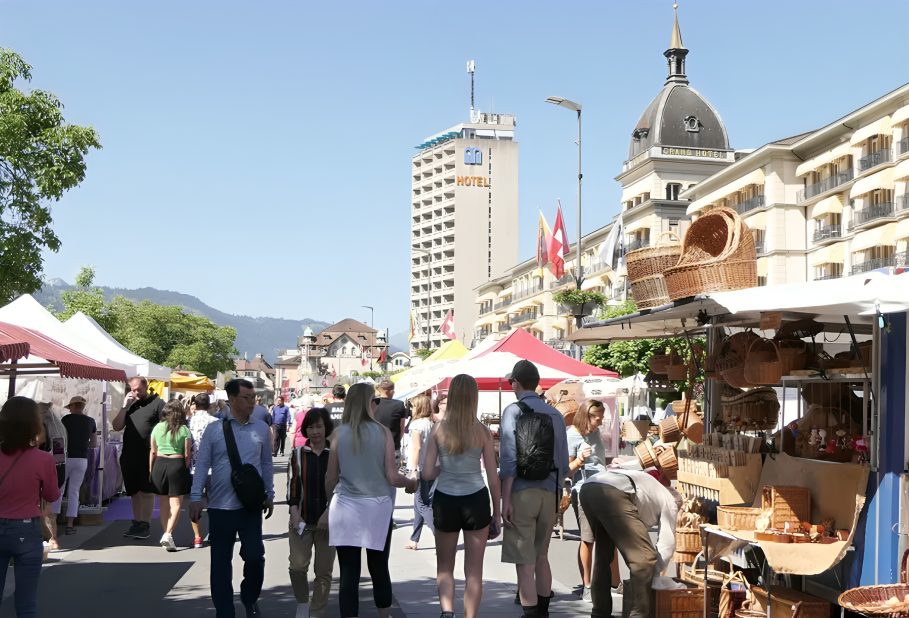
The Interlaken fair is a sensory delight, offering a plethora of market stalls featuring everything from unique jewelry and high-quality tools to fashion accessories…
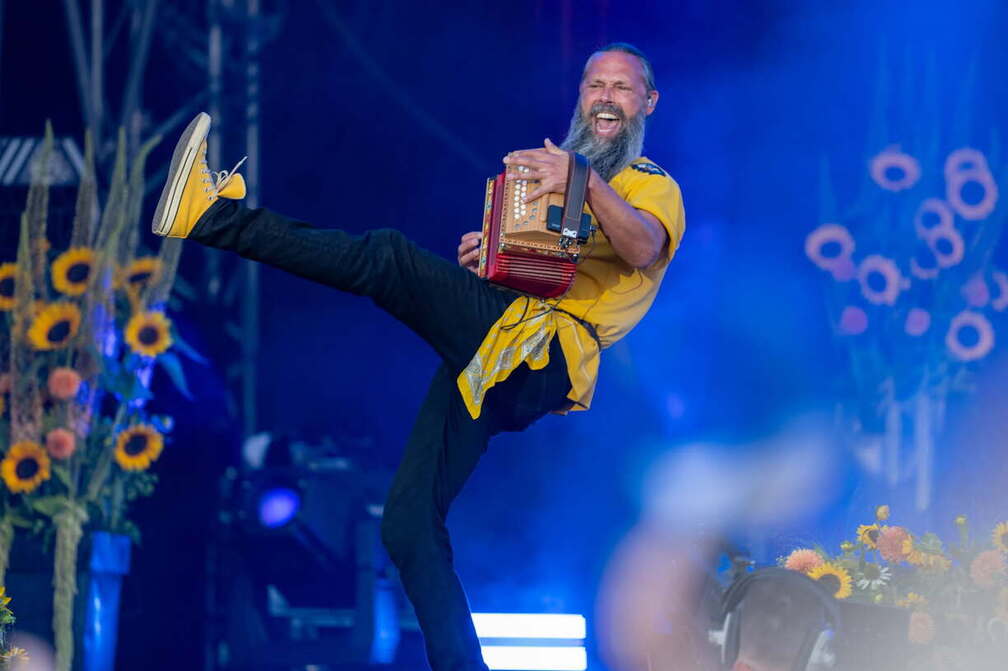
VolksSchlager Nacht brings together popular artists for an evening of lively music and entertainment. The event takes place in the Congress Kursaal Auditorium in…

Ungerwäx brings Celtic and Irish folk music to the intimate setting of Zentrum Artos in Interlaken, a venue that organises various concerts for hotel…

Noemi Beza brings her album "You'll Find Me There" to this intimate restaurant and cultural center, revealing an artist who has moved well beyond…

Hansjörg and Margrit Schneuwly bring their offbeat humor from screen to stage in this theatrical experiment that follows their journey through weed, couples therapy,…

Ben Hüter and Jürg Frei bring together language and music in a playful exploration of freedom. The duo juggles syllables and words, weaving humorous…
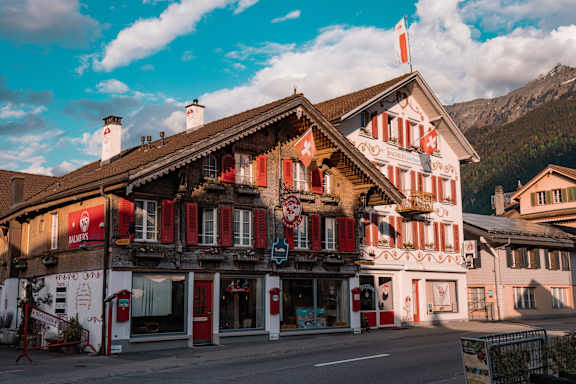
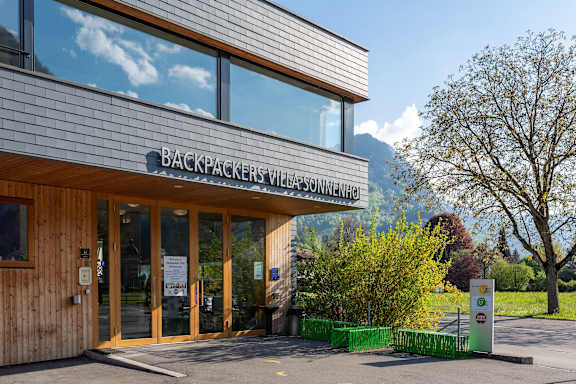
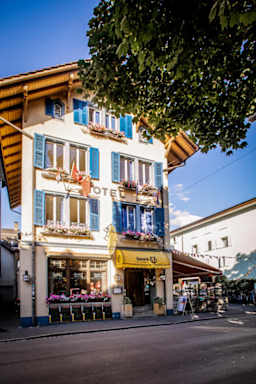
A strong backpacker scene, among the best in Switzerland. Live from Hostelworld.
 Sustainable
June to September for hiking and flying. December to April for skiing nearby.
Average valley highs. The Jungfraujoch is far colder, and can be below freezing in August.
Pick how you travel. Per person per night, in euros — you will pay in Swiss francs, at roughly 1.06 euros to the franc.
Shown in euros for comparison; you pay in Swiss francs. Activities set the doing line — one paraglide is about €180 to €233 on its own.
The ones we get asked most.
Compare Interlaken hostels — live prices, real reviews and free cancellation on most bookings. Then meet the people already there in the app.

 Get the App.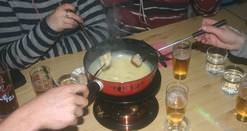
 Get the App.