


Beyond their cinnamon-spiced art of baking and brewing, Swedish food is known for its skilful use of basic but high-quality local ingredients like potatoes, fish, meat, mushrooms and berries. If you’re planning a tasty journey through Sweden (or if you’re not, then now’s the time to start!), think of this as your introduction to Swedish food and where to find the most delicious traditional dishes the country has to offer. Here are 14 of the yummiest Swedish foods to try:
1 Köttbullar
What would a list of Swedish foods be without köttbullar (pronounced shut-boo-lahr). The Ikea-famous meatballs are easily national dish number one, typically served with mashed potatoes, lingonberry sauce and peas. If you fancy something less fruity, look out for the creamy sauce version (gräddsås), or try the fish variation fiskbullar. Köttbullar can be found anywhere across the country in restaurants of varying price-classes, of which the most basic yet authentic option is the kvarterskrog, local and cheap taverns that offer the dagens rätt (dish of the day) at lunchtime, often with salad, bread and coffee included. According to restaurant portal Gastrogate, an average lunch in Stockholm cost 76.90 SEK in June 2026, as reported by Realtid, so it’s the cheapest way to eat well in Sweden.
2 Knäckebröd
You’ll find this crispbread in markets across the globe, but its origin is from Sweden. Rye barely prospers in the North, so people came up with a different idea about 500 years ago, when in need of something that keeps as long as possible through the Scandinavian winter. Today, knäckebröd is baked at over 400°C and has to be hard, it’s not supposed to give in when pressed. If you break off a piece it has to crack as loudly as if you would step on a walnut. Traditionally, it will be served with salted butter, and maybe a piece of hard cheese – everything else is luxury. It is available in every supermarket, but if you really want to look behind the scenes, check out the Wasa Knäckebrödsmuseum in Filipstad, which features in the town’s 2026 tourist guide!

📷: @petersyard
3 Surströmming
Let’s hope you don’t have a sensitive sense of smell with this one! Surströmming is the Swedish speciality that makes both locals and foreigners cringe. The stinky tradition of opening cans of fermented sour herring in late August (the season traditionally opens on the third Thursday of the month) has deep roots in the Norrland region, and has held up ever since. Commonly, the herring is eaten wrapped in tunnbröd (thin crispy bread from North Sweden), with potatoes, butter and onions. Get it while you can: Baltic herring stocks are under pressure, and Sveriges Radio reports that surströmming is no longer a given on Swedish shop shelves. If you want to try an authentic meal, head to Norrland around the premiere, when local restaurants and festivals serve it the traditional way (and preferably outdoors).
4 Sill
Herring in its more easily digestible, pickled form is called sill. It comes in a variety of flavors – like mustard, onion, or garlic and dill – and is often eaten with potatoes, sour cream, chives, hard cheese, boiled eggs and, of course, knäckebröd. While available in every supermarket, it will typically be served on a sillbord during midsummer celebrations. If the pickled version is not your thing, you can opt for smoked or fried herring. In Stockholm, check out Strömmingsvagnen, a much-loved herring cart now at Kornhamnstorg in Gamla stan, where the classic fried herring plate was 75 SEK when last reported in April 2025.
5 Kanelbullar
If you once tried a proper Swedish cinnamon bun fresh out of the oven, you won’t be able to eat the sad imitations they try to sell across the world ever again. Sweden even celebrates its own Kanelbullens Dag (“Day of the cinnamon bun”) every October 4th. Prices vary a lot: a Dagens PS price comparison found Stockholm café buns from 49 SEK at Skeppsbro Bageri in Gamla stan to 75 SEK for Café Saturnus’ giant 290g bun on Östermalm, while supermarket buns cost far less. The best kanelbulle I’m secretly still dreaming of on cold nights is from Café Husaren in Gothenburg’s Haga district, where the famous Hagabullen is roughly the size of your head.
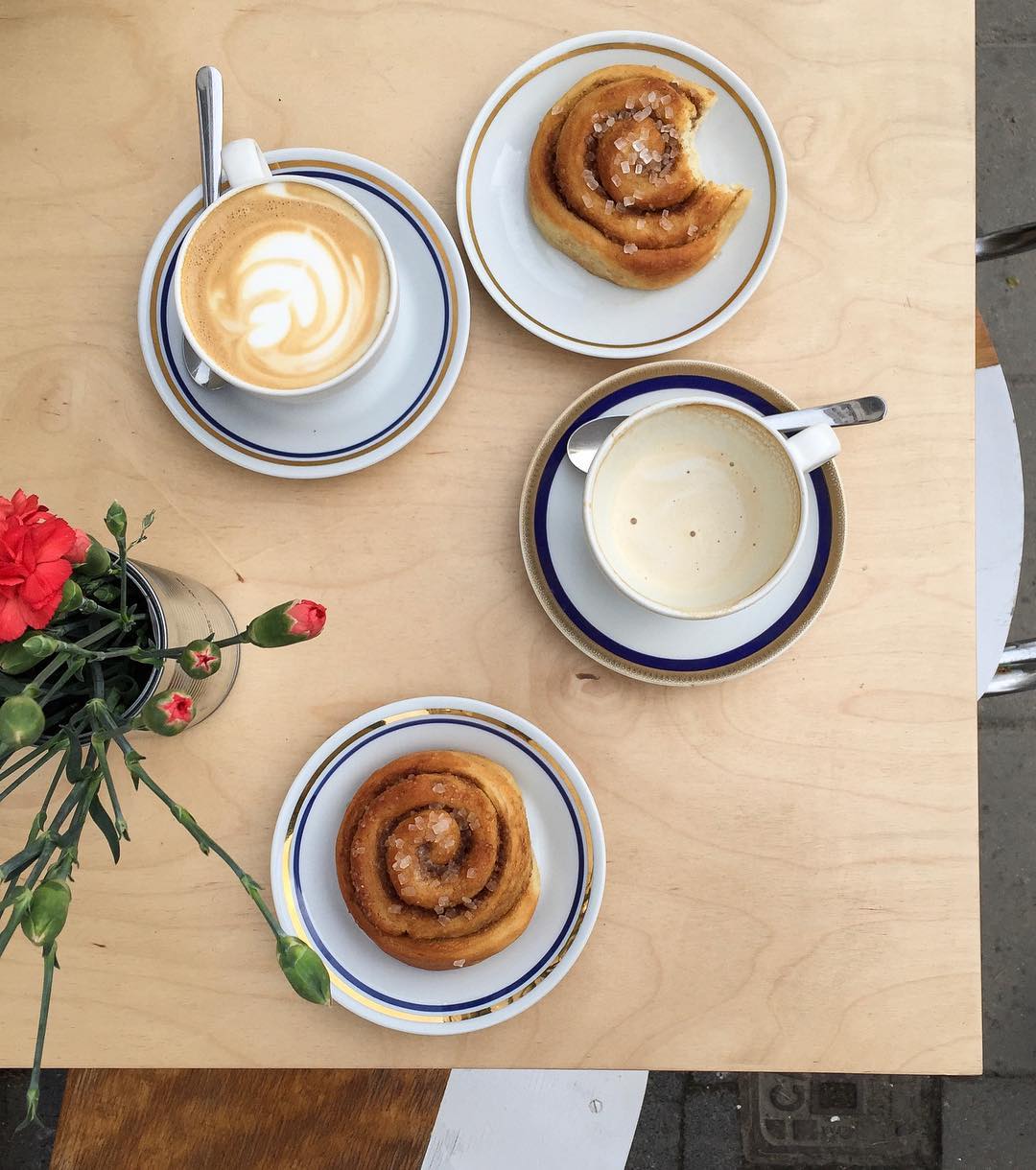
📷: @domnasrodce
6 Ärtsoppa med pannkakor
A very traditional and often weekly family meal on Thursdays is pea soup with pancakes. Its true origins from religious to social class backgrounds are widely debated, but the habit has stuck. Many lunch restaurants and kvarterskrogar still put it on the menu on Thursdays, served with lingonberry jam (and sometimes a shot of hot punsch on the side).
7 Småland’s Ostkaka
Like the name suggests, Småland is famous for its delicious cheesecake. Yep, the Swedes do take pride in their desserts, as also the ostkaka has its annual official holiday on November 14th. Traditionally eaten warm with jam and cream, fruit or ice-cream, pretty much any bakery throughout Småland will offer their own variety of cheesecake.
8 Ugnsbakad torsk
Especially the breezier West and South of Sweden are famous for their fresh fish. Gothenburg even dedicated an entire “church” (Feskekôrka) to seafood. After a four-year renovation, the 150-year-old market hall reopened in 2024 with fish counters, new restaurants and bars, and a terrace over the canal, according to Gothenburg’s official tourism site. It’s the perfect place to immerse yourself in Sweden’s fish kitchen and try some baked cod, served with brown butter and freshly grated horseradish.
9 Gravad Lax
Hundreds of years ago, the “graved salmon” was marinated in salt, sugar, dill and other spices, buried in the ground and weighed down with stones for at least three days. This process withdrew water while also fermenting the fish somewhat, so that it could keep longer. Today, the fish is not buried nor fermented, but will just be marinated and kept in the fridge for a few days. It’s then typically eaten with a cold, relatively sweet dill and mustard sauce (hovmästersås), on bread or with a salad. A popular dish throughout the country, it’s a classic starter on restaurant menus and at Christmas and Easter buffets.

📷: @driesathome
10 Hot dogs and Swedish street food
Would you have imagined that hot dogs are among Sweden’s most popular street food? At events of all sorts, student gatherings, markets or in small food stalls (gatukök), hot dogs and sausages with mashed potatoes have a solid spot in the Swedish kitchen. They’re one of the cheapest bites around (DIY chain Biltema’s café is famous for selling a korv med bröd for just a few kronor), while places around Stockholm have come up with some more exotic recipes. How about a sausage topped with räksallad (shrimps in mayonnaise)? Other Swedish street food classics to look for:
- Tunnbrödsrulle: a hot dog and mashed potato wrapped in soft flatbread, often with shrimp salad. Gloriously messy.
- Fried herring from a cart: like Strömmingsvagnen in Gamla stan (see number 4).
- Food hall counters: grab a quick plate at one of the food halls below.
Where to find a Swedish deli or food hall
If you want to try lots of Swedish food in one go, head to a saluhall (food hall), Sweden’s answer to the deli. Stalls sell cured fish, cheese, cold cuts and baked goods to take away, and most have counters where you can sit down for lunch.
- Östermalms Saluhall, Stockholm: the city’s grand old food hall, packed with fishmongers, delis and lunch counters. Base yourself nearby with our guide to where to stay in Stockholm.
- Stora Saluhallen and Feskekôrka, Gothenburg: two classic market halls a short walk apart, one for everything, one for fish.
- Malmö Saluhall: a modern food hall in a former goods depot, with street food from around the world alongside Swedish produce. More ideas in our list of things to do in Malmö.
11 Filmjölk
Filmjölk is a fermented milk that resembles yoghurt, but is produced with different kinds of bacterial cultures and lower temperatures. While generally quite popular throughout Scandinavia, Swedes have filmjölk in daily use, consumed for breakfast with fruits and muesli or pure. You’ll find it in the dairy aisle of every supermarket, so it’s an easy, cheap breakfast if your hostel has a kitchen.
12 Räksmörgås
Swedes love their open sandwiches. This goes back to the 1400s, when thick slices of bread were used as plates. One typical version that you’ll see on many menus today is the räksmörgås (shrimp sandwich), where a pile of shrimps, boiled egg slices, lettuce, tomatoes and cucumbers with a creamy dill sauce are placed on a hearty bread. In many bakeries, you can even find smörgåstårta, sandwich cake. While typically available throughout the country, you’ll find the freshest shrimp dishes in seaside cities like Gothenburg or Malmö.

📷: @imissjyl
13 Kräftor
In the 1500s, crayfish was only eaten by the Swedish aristocracy – but today it is a national delicacy. Famous in particular are the crayfish parties (kräftskivor) all over the country in August, when people get together to feast on the red freshwater shellfish, marking the end of summer. Families and friends gather to catch the crayfish themselves, or buy them ready-cooked. The crayfish is prepared with dill, one of the Swedes’ favorite herbs, but eaten cold using only fingers. Together with bread and a strong Västerbotten cheese, it creates quite a mess that is perfectly acceptable, and then is washed down with beer and the inevitable schnapps. Generally, the Swedes are proud of their festivities and will invite you if you want to find out more about a typical crayfish party. Otherwise, check the Hostelworld Events pages for what’s on, or ask in your hostel’s City Chat whether anyone’s hosting one.
14 Älggryta
Due to the long winters and harder conditions, the northern kitchen is known to cook with anything that nature gives; from leaves, berries and mushrooms, to reindeer and elk meat. Especially in Lapland, the Sami population makes use of whatever the animals can provide: All meat and organs are processed, the fur is made into clothing and bedding, bones are still used to make different tools. A rather harmless option to try the nutritious meat is the hearty goulash-like elk stew, for example in Luleå or Kiruna. Elk is a pricier ingredient, so expect it to be one of the more expensive dishes on the menu.
A word on Swedish alcohol
It’s possible to argue that it’s the long winters that make the Swedes experts on hot drinks and good liquors. They’re the makers of the internationally renowned Absolut Vodka, and no festive table is complete without snaps, usually aquavit flavoured with caraway, dill or anise, sung in with a drinking song. Colder days are withstood with the winter drink glögg (spicy hot wine) and its variations with white wine or apple cider.
To go with a casual meal, the options vary from good locally produced wines, to lättöl or starköl (light beer or strong beer). And no matter if it’s a warm summer day or during a sweaty sauna session, the Swedes love their cider with its varying degrees of sweetness and alcohol level (personally, I swear by pear or blueberry flavor). Anything stronger than 3.5% can only be bought in the government-controlled Systembolaget and is, in European comparison, quite expensive. One new exception: since 1 June 2025, small producers with a permit can sell their own drinks directly to visitors, as long as you’re 20 or over and the purchase is linked to something like a guided tour of the farm or brewery.
So waste no time and skynda dig, hurry up, and hop on a plane to Sweden! What do you think about Swedish food and what dish are you desperate to try?
Stockholm is the easiest place to start your food tour, and you can eat your way around the region with our guide to day trips from Stockholm. Find a bed in Stockholm, Gothenburg or Malmö, then use the Hostelworld app to join hostel Linkups like group dinners and fika meet-ups, or get Social Pass to start chatting with fellow foodies before you arrive.
Check out these great articles for more foodie tips!
 Bulgarian Food
Best Traditional Canadian Food
Croatian Food
Pin this blog for later!


 Get the App.
Comments